
Every choice we make can have an impact that reaches far and wide, even with something as simple as choosing an apple.
By Linda Sepp.
A very few people have managed to run the planet, it’s resources and condition, the systems people use to live together, and almost everything else, into such poor shape that most of us don’t know where to start to make things better. It’s too overwhelming, we can’t fix it all, we can’t even understand it all.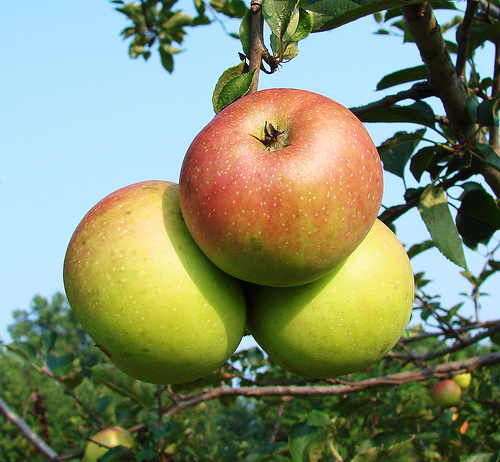
People have lost the ability to remember what it feels like to be in harmony, to be in touch, to care and be cared for. Caring is not a part of the economy, so it has been eliminated from all marketing schemes, and relegated to places it can be made fun of. Same for common sense. That term was co-opted by some greedy people, so now it’s too dirty a word to make any sense. All we’re supposed to do is bicker and snipe and be witty while we hurt our friends while trying to amass the biggest pile of disposable stuff we can get our hands on (according to most tv programming anyway).
If it doesn’t make someone money, it’s not valued anymore. That has been the message. Everything has been so run to the ground that the people who still do care are so overwhelmed and under resourced, that it’s hard to do anything but collapse at the end of the day.
And, since indoor air is so contaminated with neuro-toxic, endocrine disrupting chemicals, embedded in everyday products, marketed like mind altering drugs on tv commercials (which they are), it’s almost impossible to get any real work done during the day too… so everyone who cares ends up struggling, too.
What good are these observations without something that inspires people to do the right thing every moment they can? How do people even know what that is anymore?
Will a story help?
Choosing an Apple
Every choice we make can have an impact that reaches far and wide. But first we have to know we have a choice. We need to know what is going on. We don’t have that now.
If you take an apple as an example: someone planted a seed somewhere, then watered the seed, and watched and tended to it while it grew. Eventually the tree bore fruit, and people picked the fruit. They examined it to see what could be sold, what could be juiced, or composted… People had to transport, weigh and package the fruit, transport them again, unload the trucks and stock the shelves. Cashiers tallied your totals and bagged your foods, all so you could eat an apple.
During the growing process, pesticides and fertilizers may have been applied – where did those come from? Were they from the earth or synthetic petro-chemicals? Who applied them? Did they wear hazmat gear? Did they or their families get sick? Were they paid a decent wage or under the table pittance? Did they live in a nice house with medical insurance? Or in dorms and hovels with no health care?
What if the apple was organic? How is the growing process different? How does it affect the people involved? The air? The water? The birds and insects? Bio-diversity? And the health of all involved when no synthetic pesticides are used? When the people are paid a fair wage and take care of what they are doing?
What if apple A is organic, fair trade and costs 10-30% more than apple B which is dependent on a finite source of fossil fuels, cheap labour, and major profits for folks who just want more, no matter what happens to anyone else?
Your choice to buy apple A or apple B affects each and every person and critter who has come into contact with the life cycle of that apple, as well as the land, water, and air surrounding the apple on it’s journey from the tree to you.
That is how even a small change in your habits will have a huge ripple effect. Toxic or non-toxic, fair or not fair.
We DO have the power to make a change, especially when we choose to exercise it, too.
We do have choices, we can make things better, not just for ourselves, but for others as well.
~~~


 Seriously "Sensitive" to Pollution