
Tag Archives: Water

Detox Fashion (thank you Greenpeace)

Greenpeace is running an excellent campaign to detox the fashion industry. Sadly, textiles these days are full of toxic chemicals, chemicals which are harming the health and environment everywhere in their life-cycle, where they are made, and where they are used.

This video shows a bit of the background:

You might wonder why water pollution in China is a problem for us?

from: How to get rid of chemicals in fabrics. (Hint: trick question.)

http://oecotextiles.wordpress.com/2010/11/10/how-to-get-rid-of-chemicals-in-fabrics-hint-trick-question/

“How do these chemicals get into our bodies from the textiles?  Your skin is the largest organ of your body, and it’s highly permeable.  So skin absorption is one route; another is through inhalation of the chemicals (if they are the type that evaporate – and if they do evaporate, each chemical has a different rate of evaporation, from minutes or hours to weeks or years) and a third route:  Think of microscopic particles of fabric that abrade each time we use a towel, sit on a sofa, put on our clothes.  These microscopic particles fly into the air and then we breathe them in or ingest them.  Or they  fall into the dust of our homes, where people and pets, especially crawling children and pets, continue to breathe or ingest them.”

Going after  manufacturers to detox their practices is a logical step.

And it’s working:

Levi’s shapes up to become a Detox leader
http://www.greenpeace.org/canada/en/Blog/levis-shapes-up-to-become-a-detox-leader/blog/43437/

read more here:

Toxic Threads – Product Testing Results
http://www.greenpeace.org/international/en/campaigns/toxics/water/detox/Toxic-Threads/

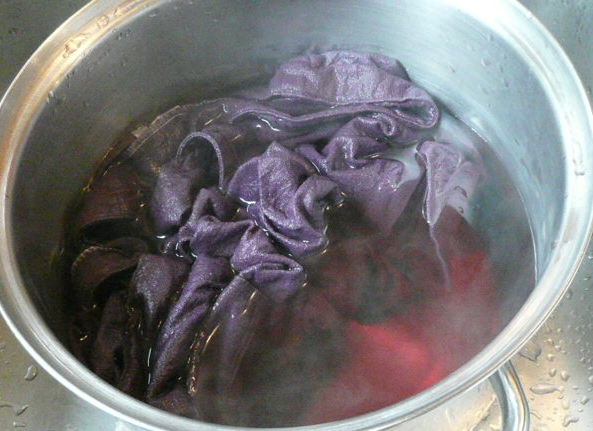
And if you can’t wait that long for safer clothing, you can check the list of safeR options listed in the “CHEMICAL-FREE CLOTHING (WE WISH)” tab at the top of the page here and then work on detoxing those at home using decontamination protocols found here: https://seriouslysensitivetopollution.wordpress.com/2012/09/08/laundry-decontamination-protocols/
P.S.

I forgot to mention that if you are trying to get toxic chemicals out of your clothing, using conventional, everyday laundry products isn’t going to get you non-toxic clothes… Not when the laundry products themselves are full of toxic chemicals: https://seriouslysensitivetopollution.wordpress.com/2012/04/03/toxic-chemicals-in-everyday-laundry-products/
 

My clothing issues

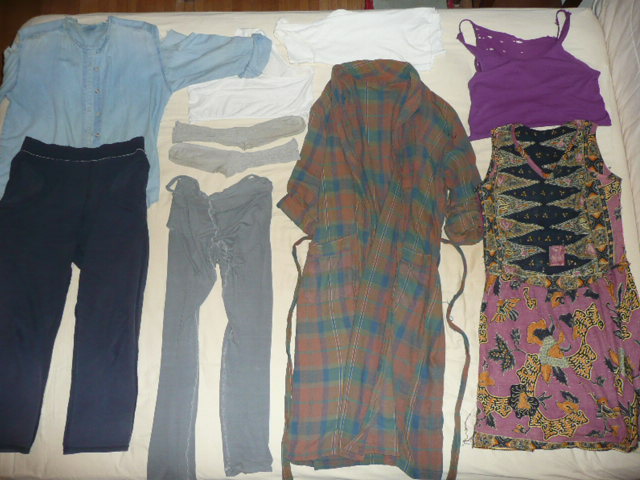
This is my entire collection of safe clothing: about a dozen pieces. I have nothing else I can wear.

By Linda Sepp.

Many of you have over-stuffed walk-in closets full of clothing. Every day you choose from a wide assortment of seasonally appropriate clothes to wear to work or out to play.

I can put everything I can wear into a regular sized (plastic) grocery bag. Look above to see a photo of what I’m wearing these days.

I live in Toronto, Canada, and depend upon Ontario Disability Support Program for all my income (ODSP is provincial welfare for the disabled) because I have severe Multiple Chemical Sensitivities/Environmental Sensitivities (MCS/ES).

In addition to these fine clothes, I have another pair of underwear, a tank top, and a t-shirt which was being washed when I took this photo.

This is my entire collection of safe clothing. I have nothing else I can wear.

Some of these pieces are so shredded they will not withstand another wash (the purple tank top, the blue shirt, but the grey leggings might have one more wash in them, the socks are developing holes which get larger when washed, not sure how long they will last–it’s is my one safe pair).

I wear all these items at the same time to be warm enough, taking off the robe, black summer capri pants with worn out elastic waist, and blue shirt only when I go to bed.

The other clothes (and the t-shirt not pictured) I wear 24/7 (except for the 12 or so hours I must wait for them to dry after a rare washing).

Continue reading

Clothing and water issues

Due to the severity of my Multiple Chemical Sensitivities/Environmental Sensitivities (MCS/ES), I need completely chemical free clothes (very expensive) and a way to wash them.

By Linda Sepp.

I might be homeless in April without more clothing to wear than a tattered summer outfit and robe.

I cannot use the tap water, and require a heavy duty whole house water filtration system to make the water safe for washing hands, dishes, myself and my clothing, towels and bedding.

The delivered glass bottled spring water is expensive and heavy but I have to wash my one safe disintegrating outfit in it as I have no other choice. I can no longer afford to pay for this either, as ODSP is now deducting the $ from my cheque for heating this entire 3 story 100 year old leaky house, despite that I only use 4 rooms here (+some storage). I’m actually only able to wash my undies and tank top so that I can change them once a week now. Gross? You betcha. Dignified? Not at all.

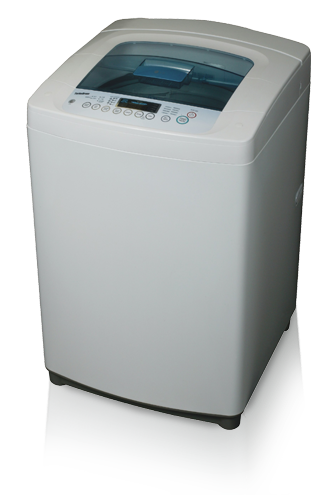
In addition to safe water, I need a heavy duty, all metal, portable washing machine (pictured above), as I cannot use the basement laundry room here anymore due to the mould.

The Ontario Disability Services Program refuses to cover any of my medically required disability related needs.

In her report to ODSP in February 2006, when the Special Diet allowance was revised, Dr. Lynn Marshall, the previous director of the Environmental Health Clinic at Sunnybrook & Women’s College Hospital, outlined my health needs as follows:

“The most effective means of managing this condition is by avoidance of known triggering chemicals, and minimization of exposure to other ‘everyday’ synthetic environmental chemicals in food, water, air, and consumer products. As with intolerances to foods themselves, it is highly challenging and expensive to minimize such exposures. She (Ms Sepp) requires food (water, air, and consumer products) containing the lowest possible amounts of synthetic chemicals permanently to help maintain, and hopefully improve, her health status.”

My doctor wrote about my water needs as being:

“She also requires whole house water filtration (like that available in the Environmental Health Clinic, Dallas) to filter all the water including for cooking and drinking, as well as for washing clothes and bedding.” (See AEHF Whole-house Water Filter with Prefilter)

Imagine getting sick every time you wash your hands, dishes, or self. Imagine not being able to have a hot shower or bath to relieve your aching body when the aches and pains of fibromyalgia flare up? Imagine not being able to wash bedding or towels for a year. Sound dignified?

January 9th, 2009, was the day my water was contaminated with up-the-pipe repair chemicals, ruining almost all my clothing in the washing machine, and I could not go back to drinking or using it safely after.

The system is supposed to allow for basic needs and some level of dignity:

The Ontario Disability Support Program (ODSP) was created to meet the unique needs of people with disabilities. The program provides income support including health and other benefits for people with disabilities in financial need.

The intent of the program is to provide the supports necessary to enable individuals and families to live as independently as possible in the community and lead more productive, dignified lives.

So why am I not receiving the help I need?