Category Archives: Housing

Update on my situation, dated April 25

Note: I wrote this on April 25, 2010, just prior to eviction from my home on May 4.

Despite trying to make something work, there have been many obstacles. My Multiple Chemical Sensitivity is very severe.

I react to the chems in tap water so cannot wear clothes washed with it (and haven’t been able to afford whole house water filtration despite needing it for over a year). I cannot wear my safest sandals for more than a few minutes without my skin and muscle being affected. So, I have no clothes I can wear out, and this also means that the chemical residues in floors, walls, etc, will be more than I can live with. I haven’t used chemical cleaners on my floors here in 20 years, the walls haven’t been painted in at least 12, the exposures that have affected me here blow in from outside my unit (the 2nd floor of a 3 story house).

I’ve been here deteriorating since 2006 when I was already so severely affected that the house-hunting then made me crash for months and that was topped off by 4 rounds of asphalt on the road, in front as well as a slew of other serious exposures that I was unable to escape.

I very nearly died and it has taken all my efforts to survive, to stay alive, in hopes that all the time that was passing could allow something safe enough to be created, as it was becoming increasingly clear that everything already out there was not going to allow me to live. I don’t have the physical reserves I used to have. They’ve been depleted several times over.

The offer from the landlord seemed great on paper, yet they wouldn’t pay an expert within the budget, and it took till the end of November to have a qualified expert agree to work without pay but for a bonus after the fact. We discussed what needed to be done and determined that without a new build, we’d have to gut and rebuild a good deal of the interior of any existing place. He created a list of “bones” that a house would need to have to make it worth gutting and rebuilding for me. And the area could not have any sources of major pollution, so that I could be outside as much as possible, especially if there needed to be more offgassing etc.

By the time he came on board there was 3 feet of snow in many places in the province and the market was shutting down for the holidays. When things started thawing a bit all we found were places with major pollution nearby, or places that did not have the “good bones”, or they were too expensive, or not empty. The average price of a house in this province is $333,000.

There was one place that seemed a possibility, but it was a real dump inside, and he was out of the country for a few weeks at the end of my deadline period. I was also told it was too far for him to travel to personally oversee any work. That meant it could not be done safely, if at all.

After the deadline I was contacted about a place that was built for and by someone with Environmental Illness, but it was a 1bdrm house and $40,000 over budget. It also needed a wall built to create a 2nd bedroom as it was open concept and I need the 2nd room to keep many of my things in (there was no other storage there). Admittedly the bathroom seemed big enough to throw a single cot into so I could have also slept in there.

The Member of Parliament (MP) contacted the landlord about this option but it was decided that it was well over budget and there-fore a no go.

Toronto Housing did find a 1 bedroom apartment that they could have washed down with baking soda for me. It was on the 2nd floor of a many unit building, and even if they agreed to wash the stairs and the 2nd floor hall with safer products, the residues from other people would have meant that I would have become a prisoner in the unit, with no chance of ever walking out. The bldg also has several wireless antennas on the roof which affected me merely being driven past them last year, and I’ve become more EMF/EMR sensitive since then.

I have not committed any crimes, I have not murdered anyone or stolen millions of dollars… yet I was expected to voluntarily accept what amounts to a prison cell where I would have been tortured 24/7 with chemical residues and EMF/EMR from within the unit and from outside the unit. I would not have survived the move, I’d never walk out of there alive, and no hospital room in this province was willing to prepare a safe enough room for me in advance.

To me it seemed like a waste of energy to have people go to all the work to move me there if it’s just to die.

My criteria developed because of the severity of my MCS/ES. People who have not spent months near death (not merely thinking like you’re going to die as with a bad flu, or after “a” bad exposure, but having several bad exposures when already depleted…) have no way of understanding.

I keep having people get upset with me for not accepting what has been offered, they tell me to think more positively. If that’s all it took, I would have been out of here years ago. I’d also be rich now, I’d have built MCS villages in every part of every country.

I was willing to accept palliative care when in the winter it was looking like nothing was going to work out. But one of the team members kept telling me to imagine a happy life with my cats (while they were trying to get me a safe room that I wouldn’t be able to leave to pee or shower or cook, wouldn’t be able to use my computer in as it would offgas too much, would have been a prisoner -and to have 3 cats in there with a litterbox and cat food? The visualization was not working for me so I started imagining being happy with the cats in a place I could LIVE and not die. But all that was coming my way were places I could die.

Wishful or positive thinking and fear do not make a person with severe MCS (who has already lived through several rounds of making a home safer and losing much of everything that anyone can lose) more able to survive exposures to chemicals and other substances that disable the brain and body. The body cannot “mask” or adapt when the load is too great.

A few people who have survived have all had able and willing close friends or family to take care of all the other details. I do not have this. Most people in my position have already died. They don’t live long enough to have their story told.

As the reality of the housing situation has developed, I’d already lost contact with most previous “normal” friends, and my family members are not in any position to do much to help. The people who have tried to help have all been brick walled by lack of finances, resources, systemic obstacles and toxic chemicals.

MCS/ES is a recognized disability and as such, there should be some appropriate accommodation in the world out there for us. Right now there is nothing here. There is no health-care, no housing, no home-care, no safe appliances, technologies, or repair people, no funding for life support systems like adequate water filtration, etc. We are abandoned to die if we cannot be shoved into a toxic box to live… well, we’ll all be shoved into a toxic box one way or another.

So while there are people who have been trying to help, they have not had the tools or resources that are needed to help. I am without almost every single practical support that they have tried to arrange for me. And the few supports (like getting the heat back on and side door garbage pickup) that they did arrange were plagued with problems.

The oxygen came full of chemical residues and issues that took weeks of recovery time and offered no benefit…

My food (organic veg from a farmers market and dry goods from a health food store) has been brought to me for 3 years now by my over 80 yr old father who’s health has been declining since his last surgery in the fall, and more recently by another friend who I met online. I don’t have people able to shop or search for other needs I have, and most of the time I am unable to pursue much myself. Most of my inquiry emails go unanswered and using the phone can be very painful and often disables me for the whole day.

So when I’m told, or even encouraged to accept that all I can have is a toxic prison cell where I will be tortured 24/7 by exposures to things that disable me, where I won’t be able to think clearly, and I won’t be able to get out of bed to feed the cats or prepare my own food, or take the litter and garbage down the hall to the chute, but that they will try to get me help, when in 3 years no-one could arrange for safe water and clothing, or help me cook and clean, etc, then pardon me for turning down what would amount to a horrible death, imprisoned and tortured for crimes I did not commit. I cannot see how that is in my best interest. I don’t see how that is in anyone’s best interests.

I am not afraid of death. I just don’t want to die in horrible pain with a mind that is poisoned from toxic exposures. I’ve already very nearly died. I’ve volunteered in palliative care, and been there with people who are dying. In many ways death would be a relief, IF I can die with a clear mind and conscience. If indeed my only options are death by a toxic house or apartment (I would have turned down a toxic million dollar mansion too) or homelessness, then perhaps someone will drive me somewhere with a view so I can die outdoors, but at least with a clear mind instead of one poisoned by toxic chemicals.

If the powers that be have determined that I don’t have enough value to be protected, safely housed and appropriately cared for, that people like me (and many of you) are not worth saving, that it’s ok to discard honest disabled people who care about the welfare of others, while bailing out crooks in financial and industrial circles, and if there are others who have the means to be doing something for chemically injured people, but instead choose to do something easier, then good luck to everyone.

Linda was evicted from her home on May 4

The day Linda Sepp had dreaded arrived with a knock at the door on Tuesday.

Posted by admin.

The Star reports on Linda Sepp’s eviction, which took place at 10:00 a.m on Tuesday, May 4.

Toxic dilemma: Landlord, non-profit centre attempt to find replacement home for woman with chemical sensitivity, but without success.

The 50-year-old woman with chemical sensitivities was roused from her sleep by enforcement officers from the sheriff’s office. After a four-year eviction battle, they had come to throw her out of her High Park apartment.

Four enforcement officers dressed in white haz-mat coveralls and face masks — meant to keep Sepp safe from them should they have worn cologne or washed their hair with strong shampoo — hauled the woman’s possessions onto the front porch. From there, her 82-year-old father lugged bags and boxes down a flight of steps to her car.

“I’m beyond panicked. I’m blank. I’m numb,” said Sepp, who has Multiple Chemical Sensitivity (MCS), a condition that causes rashes, headaches and burning sensations when she is exposed to chemicals in the environment.

[..]

She considered spending the night under the trees in High Park but changed her mind when it started to rain.

Instead, she has opted to camp out in her car in the dusty parking lot of a Buddhist temple in the west end.

Even though it’s beside a mound of garbage bags and a construction site, she says it’s the lesser of many evils.

“I don’t have anywhere to go. I’m just at a loss.”

Click here for full report at The Star.

5/6 UPDATE: Reported in Health Zone: Woman with chemical sensitivities camps out on condo balcony.

Letter to Premier of Ontario and his response

Monday, April 5, 2010

Greetings Dear and Honourable Premier of Ontario:

I need you to intervene to prevent my death, as only you can do that now. The Ontario Government has not provided equal access to essential services or housing for people with my types of disabilities. You can correct this oversight.

I have severe Multiple Chemical Sensitivities / Environmental Sensitivities / Electrohypersensitivities (MCS/ES/EHS) as well as Fibromyalgia (FM). I am housebound, unable to work, and dependent on ODSP as a result.

ODSP provides my sole means of support for all needs of life.

I have written to you several times over the past few years, asking for help as my condition and circumstances have been deteriorating.

I have now received notice that I will indeed be evicted this week, despite having no safe place to go, that is, a medically required place that will also accommodate my severe disability related needs. In other words, all pre-existing places do not accommodate my needs, are not accessible, will subject me to noxious substances and acceleration of death, as will homelessness.

I believe it is your job to act in the best interest of ALL the people of Ontario, and to follow the Human Rights Code as well as respecting the Criminal Code.

You can prevent my death and avoid contravening both Human Rights and Criminal Code violations.

You can ensure that I have enough time here in my current home, which I am being evicted from this week so my landlords can pursue demolition of the block, and you can also order the resources made available for a safe place to be prepared that will accommodate my disability related needs and allow me to live instead of being put on life support (much more expensive) and very quickly accelerating my death, as my disability responds best to prevention of symptoms.

As someone with severe chemical and environmental sensitivities I need a home free of noxious substances found in everyday personal care and cleaning products and building materials, as well as away from wireless technologies. Even going outside subjects me these chemicals blowing out of dryer vents or coming off people as they walk by.

I need a safe home.

The Ontario Government needs to accept responsibility and provide medically required, disability related accessible housing for me now.

I look forward to hearing from you at your earliest convenience.

Regards,
linda sepp

Toronto, Ont
M6P 3K6

Attached:

The Ontario Human Rights Code (the “Code”) provides for equal rights and opportunities, and freedom from discrimination. The Code recognizes the dignity and worth of every person in Ontario and applies to the areas of employment, housing, facilities and services, contracts, and membership in unions, trade or professional associations.

In the workplace, employees with disabilities are entitled to the same opportunities and benefits as people without disabilities. In some circumstances, employees with disabilities may require special arrangements or “accommodations” to enable them to fulfill their job duties.

Customers, clients and tenants with disabilities also have the right to equal treatment and equal access to facilities and services. “Facilities and services” could be restaurants, shops, hotels, and movie theatres, as well as apartment buildings, transit and other public places. Public and private educational providers also need to make sure their facilities and services are accessible and that appropriate accommodation is available for students with disabilities….

[…]

“Disability” covers a broad range and degree of conditions, some visible and others not. A disability may have been present from birth, caused by an accident, or developed over time. It includes …,*** environmental sensitivities, as well as other conditions.

Persons with disabilities face many kinds of barriers on a daily basis. These can be physical, attitudinal or systemic. It is more effective to identify and remove barriers voluntarily rather than waiting to respond to individual accommodation requests or complaints.

Identifying and removing barriers also makes good business sense. In addition to responding to the needs of customers or employees with disabilities, barrier removal enables fuller participation by others, such as older persons and families with young children, who also benefit from increased accessibility.

Employers, unions, landlords and service providers can start by conducting an accessibility review of their facilities, services and procedures to see what barriers exist. An accessibility plan can then be developed and immediate steps taken to begin removing barriers. Developing an accessibility policy and a complaints procedure will also help to address existing barriers and avoid creating new ones.

In fact, the best way to prevent barriers is to design inclusively. This means that when planning new facilities, undertaking renovations, purchasing computer systems or other equipment, launching Web sites, setting up policies and procedures, or offering new services, design choices should be made that avoid creating barriers for persons with disabilities.

Keep in mind that barriers aren’t just physical. Taking steps to prevent “ableism” – attitudes in society that devalue and limit the potential of persons with disabilities – will help promote respect, dignity and the full participation of persons with disabilities in the life of the community.

Duties Tending to Preservation of Life

215. (1) Every one is under a legal duty…

(c) to provide necessaries of life to a person under his charge if that person
(i) is unable, by reason of detention, age, illness, mental disorder or other cause, to withdraw himself from that charge, and
(ii) is unable to provide himself with necessaries of life.
(due to my disability and lack of access to any appropriate accommodations, I am dependent upon ODSP to provide financial and other support for the necessities of life)

Offence

(2) Every one commits an offence who, being under a legal duty within the meaning of subsection (1), fails without lawful excuse, the proof of which lies on him, to perform that duty, if
(a) with respect to a duty imposed by paragraph (1)(a) or (b),
(i) the person to whom the duty is owed is in destitute or necessitous circumstances, or
(ii) the failure to perform the duty endangers the life of the person to whom the duty is owed, or causes or is likely to cause the health of that person to be endangered permanently; or
(b) with respect to a duty imposed by paragraph (1)(c), the failure to perform the duty endangers the life of the person to whom the duty is owed or causes or is likely to cause the health of that person to be injured permanently.

Duty of persons undertaking acts

217. Every one who undertakes to do an act is under a legal duty to do it if an omission to do the act is or may be dangerous to life.

Duty of persons directing work

217.1 Every one who undertakes, or has the authority, to direct how another person does work or performs a task is under a legal duty to take reasonable steps to prevent bodily harm to that person, or any other person, arising from that work or task.

Criminal negligence

219. (1) Every one is criminally negligent who
(a) in doing anything, or
(b) in omitting to do anything that it is his duty to do,
shows wanton or reckless disregard for the lives or safety of other persons.

Death that might have been prevented

224. Where a person, by an act or omission, does any thing that results in the death of a human being, he causes the death of that human being notwithstanding that death from that cause might have been prevented by resorting to proper means.

Acceleration of death

226. Where a person causes to a human being a bodily injury that results in death, he causes the death of that human being notwithstanding that the effect of the bodily injury is only to accelerate his death from a disease or disorder arising from some other cause.

Administering noxious thing

245. Every one who administers or causes to be administered to any person or causes any person to take poison or any other destructive or noxious thing is guilty of an indictable offence and liable
(a) to imprisonment for a term not exceeding fourteen years, if he intends thereby to endanger the life of or to cause bodily harm to that person; or
(b) to imprisonment for a term not exceeding two years, if he intends thereby to aggrieve or annoy that person.

###

The Premier’s response:

An open letter to MP Gerard Kennedy, MPP Cheri DiNovo, and City Councillor Bill Saundercook

February 23, 2010.

Dear Minister of Parliament Gerard Kennedy, Minister of Provincial Parliament Cheri DiNovo, and City Councillor Bill Saundercook,

I have resided in this ward for about 20 years now. I raised two children who attended schools here, and although they had to leave home, they still live in the ward, as do both of my parents (although not together).

It was while living here that I was chemically injured, not once, but several times. Not from industrial accidents, but from legal and toxic consumer products and roadwork.

I have done everything in my power to protect and regain my health, but all my efforts have been in vain as it’s the activities of others that have injured me. I have no power or ability to prevent those activities, despite doing everything I possibly can.

I have also contacted all of your offices for help, not once, but numerous times over the past several years, and often from what very nearly became my deathbed. Despite my pleas, I remain without any means to ensure I live instead of dying a completely preventable death.

My time is now running out. The Landlord Tenant Board (LTB) decided last year that I have until April 4, 2010, to vacate my home of 18 years.

I have been trying to find appropriate, medically required housing since 2005. I have had a large number of people helping me look, including people from Toronto’s Shelter Support and Housing Administration (SSHA) and the not-for-profit organization Center for Equality Rights in Accomodation (CERA). In five years, we have not found a single, suitable, affordable place that would allow me to survive.

Due to the deteriorating circumstances here, my health has continued to decline, and still there has been no effort to make medically required, non-toxic housing available and accessible for people like myself, who are disabled by Environmental Sensitivities, Multiple Chemical Sensitivities, and Electro-Hyper Sensitivities (ES/MCS/EHS). Safe housing is our number one medical need, a place we can avoid the triggers and substances that disable us, in order to heal.

All levels of government are responsible for allowing this travesty to occur. There is no regulation of toxic chemicals and harmful substances in everyday consumer goods and housing, no accessible or appropriate healthcare for people injured and disabled by them, and no appropriate assistance or access to services that everyone else takes for granted. This is discriminatory and possibly even Criminally Negligent (bodily harm, death that might have been prevented, acceleration of death, administering noxious things).

I ask you all now to change the trajectory, to intervene on my behalf, to show that you have hearts, and that you care about the people you represent: First, to make sure I am not made homeless in April; and then to ensure that I have a safe place to move to from here, where I can recover my health and abilities, so that I can again become active in society, able to share the gifts I have been given and have developed.

I have assembled a team of people willing to help accomplish this, but we need your help to make it happen.

I await your responses at your earliest convenience.

Regards,

Linda Sepp

Toronto, Ont
https://seriouslysensitivetopollution.wordpress.com/
Facebook page

~~~

A note to my blog readers:

If you can take a moment to email or call and ask these representatives in government to intervene on my behalf, here is their contact info:

Gerard Kennedy
Member of Parliament
KenneG1@parl.gc.ca
gerard@gerardkennedy.ca
Telephone: (613) 992-2936
Fax: (613) 995-1629
Constituency office Telephone: (416) 769-5072

Cheri DiNovo
Member of Provincial Parliament
Queen’s Park
dinovoc-qp@ndp.on.ca
Tel 416-325-0244
Fax 416-325-0305
Constituency office: dinovoc-co@ndp.on.ca
Tel 416-763-5630
Fax 416-763-5640

Bill Saundercook
Toronto City Councillor
City Hall
councillor_saundercook@toronto.ca
Phone: 416-392-4072
Fax: 416-696-3667

Bea Mozdzanowski
Constituency Assistant
416-338-5165
bmozdza@toronto.ca

~~~

The health and ability for those with environmental sensitivities rests with the choices and actions of others.

~~~

My list for the quintessential safe home

By Linda Sepp

Good bones list:

  1. Bungalow / ranch style (preferred) with unfinished or slab basement (slab is best).
  2. No air fresheners, scented candles, indoor smoking or in house pesticide applications.
  3. No plastic/vinyl siding OR recent renovations.
  4. Acreage with sunny food garden potential, minimum 3 acres, the more the better.
  5. Away from nearby houses, rail, hydro lines, cell towers, agricultural or golf course pesticides and fertilizers, and other air pollution.
  6. Vacant /unoccupied, unless they have MCS and or use only natural fragrance-free products and materials.
  7. Electric heat preferred … no in-floor heat… electric/wood can be upgraded to just electric, and forced air can be changed over to electric (if necessary for a good house).
  8. Room to use as vented appliance room (i.e. laundry room near kitchen).
  9. With unpaved driveway, garage.
  10. Within one hour of a year-round source of organic food and produce not in a supermarket.

Any carpet, laminate flooring, plastic tubs and surrounds would have to be removed and replaced so the purchase budget would drop and reno budget rise accordingly.

It should be at least 15 years old (for the formaldehyde to have offgassed enough) and have no mould/mildew/damp issues.

The TOTAL budget is $200,000 which includes closing costs and renovation, so unless the house is built solid and chemical-free, owned by an MCSer or people who cleaned with baking soda and borax and didn’t use pesticides etc, the purchase price will need to be up to $50,000 under to allow for some major changes.

The ideal wish list is for a modest 3 bdrm brick bungalow with a garage and a barn and a bunkie (and a gazebo) in a fair sized clearing surrounded by acres of wooded and not built up land with a couple of fenced in veggie gardens already in place. I need the barn for the goat and chickens who will keep my lawn maintained.

I think my main thing is I need space away from people and pollution. With some good sunny space for some veggie gardens. I need a fair amount of “privacy” from pollution.

I also need a decent working kitchen, where I have room to learn canning and dehydrating, etc., and a way to create a vented appliance room beside the kitchen, maybe two vented appliance rooms so food and laundry don’t mix.

Outbuildings: garage and a vented storage that isn’t in the garage–maybe that’s the 3rd bedroom?–and a visitor’s bunkie would be good.

The search area is this:

Continue reading

Clothing and water issues

Due to the severity of my Multiple Chemical Sensitivities/Environmental Sensitivities (MCS/ES), I need completely chemical free clothes (very expensive) and a way to wash them.

By Linda Sepp.

I might be homeless in April without more clothing to wear than a tattered summer outfit and robe.

I cannot use the tap water, and require a heavy duty whole house water filtration system to make the water safe for washing hands, dishes, myself and my clothing, towels and bedding.

The delivered glass bottled spring water is expensive and heavy but I have to wash my one safe disintegrating outfit in it as I have no other choice. I can no longer afford to pay for this either, as ODSP is now deducting the $ from my cheque for heating this entire 3 story 100 year old leaky house, despite that I only use 4 rooms here (+some storage). I’m actually only able to wash my undies and tank top so that I can change them once a week now. Gross? You betcha. Dignified? Not at all.

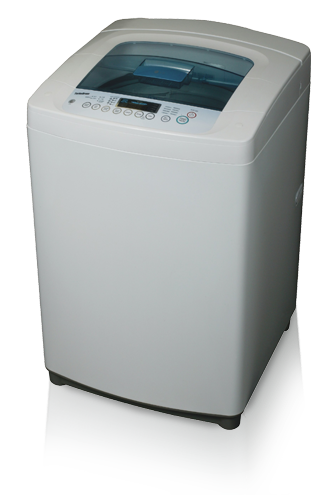
In addition to safe water, I need a heavy duty, all metal, portable washing machine (pictured above), as I cannot use the basement laundry room here anymore due to the mould.

The Ontario Disability Services Program refuses to cover any of my medically required disability related needs.

In her report to ODSP in February 2006, when the Special Diet allowance was revised, Dr. Lynn Marshall, the previous director of the Environmental Health Clinic at Sunnybrook & Women’s College Hospital, outlined my health needs as follows:

“The most effective means of managing this condition is by avoidance of known triggering chemicals, and minimization of exposure to other ‘everyday’ synthetic environmental chemicals in food, water, air, and consumer products. As with intolerances to foods themselves, it is highly challenging and expensive to minimize such exposures. She (Ms Sepp) requires food (water, air, and consumer products) containing the lowest possible amounts of synthetic chemicals permanently to help maintain, and hopefully improve, her health status.”

My doctor wrote about my water needs as being:

“She also requires whole house water filtration (like that available in the Environmental Health Clinic, Dallas) to filter all the water including for cooking and drinking, as well as for washing clothes and bedding.” (See AEHF Whole-house Water Filter with Prefilter)

Imagine getting sick every time you wash your hands, dishes, or self. Imagine not being able to have a hot shower or bath to relieve your aching body when the aches and pains of fibromyalgia flare up? Imagine not being able to wash bedding or towels for a year. Sound dignified?

January 9th, 2009, was the day my water was contaminated with up-the-pipe repair chemicals, ruining almost all my clothing in the washing machine, and I could not go back to drinking or using it safely after.

The system is supposed to allow for basic needs and some level of dignity:

The Ontario Disability Support Program (ODSP) was created to meet the unique needs of people with disabilities. The program provides income support including health and other benefits for people with disabilities in financial need.

The intent of the program is to provide the supports necessary to enable individuals and families to live as independently as possible in the community and lead more productive, dignified lives.

So why am I not receiving the help I need?

A victim in my own house

The story of my life was published in November of last year, it would have been nice if they got it right.

By Linda Sepp.

The Star reported on my housing situation on Nov. 12, 2009:

A victim of her own environment: Linda Sepp fought being evicted because of her allergies. But now she’s being poisoned at home.

To read the article below, click on photo to enlarge.

And here is my Letter to the Editor in response:

Continue reading

What the doctors say

Is it right that people who suffer chemical injuries and are disabled as a result are abandoned by the systems designed to help other people?

By Linda Sepp.

In her report to the Ontario Disabilities Support Program in February 2006 when the Special Diet allowance was revised, Dr. Lynn Marshall, the previous director of the Environmental Health Clinic at Sunnybrook & Women’s College Hospital, outlined my health needs as follows:

The most effective means of managing this condition is by avoidance of known triggering chemicals, and minimization of exposure to other “everyday” synthetic environmental chemicals in food, water, air, and consumer products. As with intolerances to foods themselves, it is highly challenging and expensive to minimize such exposures.

She (Ms Sepp) requires food (water, air, and consumer products) containing the lowest possible amounts of synthetic chemicals permanently to help maintain, and hopefully improve, her health status

In a letter regarding my housing needs she wrote:

Dear _____,

If Ms. Sepp is exposed to allergens or triggers such as in scented products, laundry and cleaning products, carpeting, particle-board, pesticides, moulds, wireless technologies, etc. she suffers from inability to concentrate, poor memory, profound fatigue and muscle weakness that makes it difficult for her to walk, migraine headaches, and generalized muscle pain.

In order to avoid repeated episodes of such severe symptoms, Ms. Sepp must avoid exposure to her allergens and chemical and electromagnetic triggers.

… she is in urgent need of safe housing, a situation she has been unable to rectify since I saw her in 2005, and that her health has deteriorated considerably since then. In my opinion, from my further communication with her, if Ms. Sepp is unable to live in safe housing to meet her special needs, it is probable she will require ongoing help and assistance with activities of daily living. As it is, she requires assistance when shopping for groceries due to her deteriorating health and the increased use of strong fragrance and air freshener chemicals being used and sold in grocery stores, some of which cannot be effectively removed from areas they have been used.

Ms. Sepp is unable to use a public or shared laundromat due to the chemicals used in regular laundry products, which severely impair her ability to function. She requires her own washing machine at home to avoid these triggering substances.

She also requires whole house water filtration (like that available in the Environmental Health Clinic, Dallas) to filter all the water including for cooking and drinking, as well as for washing clothes and bedding.

…She cannot share air with other people, either by HVAC or through cracks in units or shared hallways and requires a detached two bedroom home in a chemically safe area.

In my view, it is urgent that some mechanism be found to assist Ms. Sepp to locate a suitable home to prevent even more suffering and deterioration in her already extremely compromised health.

Yours truly,

Lynn M. Marshall MD FAAEM FRSM MCFP

From a submission to ODSP, Dr Armstrong writes:

Continue reading

Why this blog was started

I am disabled from chemical sensitivities, fibromyalgia, and electro hypersensitivity. My critical and urgent needs list includes: 1) a whole house water filtration system and installation, 2) a washing machine, 3) clothing, 4) a housing search and preparation, and 5) an advocate to help me navigate the processes to secure it all. Are you able to help me in any way?

By Linda Sepp.

I developed Multiple Chemical Sensitivities / Environmental Sensitivities (MCS/ES) in 1994 after a toxic carpet installation in an apartment below mine. I had been slightly “sensitive” to many perfumes and personal care products since the 1970s, only I didn’t know what that meant at the time. These and other experiences led me to research building and construction materials, indoor and outdoor air quality, household products, and the political landscape surrounding MCS/ES and environmental health. When I am able, I continue to spend my functional time researching material to help educate others about the toxic nature of everyday products and how they affect both people and the environment. Most notably, I’ve researched and compiled information on the housing needs of people with MCS, as this is the most important determinant of health and the most difficult component to achieve without assistance and support. I am a contributor at MCS America and other MCS and environmental health organizations. I am a Canadian mother of both two- and four-leggeds, and hope to have safe housing soon, where I can recover enough to become a storyteller who inspires people to do the right thing simply because they can.

My Current Situation

I am disabled and housebound from severe Multiple Chemical Sensitivities / Environmental Sensitivities (MCS/ES) and chemically induced Fibromyalgia (FM) as well as some ElectroHyperSensitivity (EHS). My symptoms and abilities are directly, and often severely impacted by exposure to petro-chemicals, moulds, wireless technologies and high electrical fields, yet most resolve when I am able to avoid exposures. There may be some residual and permanent brain damage, but we won’t know until I have safe housing and the therapeutic supports required to repair and heal the damage.

The director of the Sunnybrook /Women’s Hospital clinic that diagnosed me wrote:

“The most effective means of managing this condition is by avoidance of known triggering chemicals, and minimization of exposure to other ‘everyday’ synthetic environmental chemicals in food, water, air, and consumer products.

As with intolerances to foods themselves, it is highly challenging and expensive to minimize such exposures.” … “She (Linda) requires food (water, air, and consumer products) containing the lowest possible amounts of synthetic chemicals permanently to help maintain, and hopefully improve, her health status.” (2006)

“… In order to avoid repeated episodes of such severe symptoms, Ms. Sepp must avoid exposure to her allergens and chemical and electromagnetic triggers.” (2009)

“In my view, it is urgent that some mechanism be found to assist Ms. Sepp to locate a suitable home to prevent even more suffering and deterioration in her already extremely compromised health.” (2009)

Shouldn’t I have affordable access to these basic things as prescribed by my doctors?

The Ontario Disability Support Program (ODSP), Ontario Health Insurance Plan (OHIP) and the various Ministers of the Ontario Government apparently think not. They are prepared to let me die or is it force me to die, instead of helping me recover.

Living in an old, mouldy house that is leaky, allowing pollution and chemicals used outside to enter and affect me, contributing to my poor health, has still been a better choice for me than being moved to a place with toxic chemical residues which completely incapacitate me. My floor of this house has not had toxic chemicals used since I moved here in 1991. Still, I have been too sick and disabled to survive more than a brief weekly visit to a health food store, never mind a move to a toxic place.

My only other options include homelessness or moving to a $454 room that will become my prison where I won’t be able to leave on my own two feet, where I will be slowly poisoned to death for crimes I never committed. Unless being poisoned and disabled by toxic chemicals in everyday products is a crime.

Let me review the following issues:

1. Chemical free (no VOC) safe housing
2. Tap water
3. Clothing
4. Doing Laundry
5. Shopping
6. Canada Post
7. Other
8. The Landlord’s offer
9. Actions Needed Recap

1. I need chemical free (no VOC) housing away from neighbours dryer vents, agricultural chemicals, cell towers, WiFi and power lines.

My doctors say I need chemical free housing, I have a total of $454 month dedicated for all shelter costs from ODSP. OHIP does not help with this medical need.

According to the Landlord Tenant Board I have until April 2010 to be out of here.

I cannot share air with anyone else, even with others with MCS/ES as we all different.

I have a list of basic requirements as far as the building materials and any renovations are concerned and another one regarding chemical use by occupants (these seem extensive and over the top to anyone unfamiliar with the issues, but my life depends on them)

If safe housing was available for this price, which it is not, I still can’t search on my own.

I can only spend a few minutes a day on the telephone due to severely debilitating symptoms that make further use of the phone even more harmful and damaging and can take days to weeks to recover from. My cognitive abilities are often severely compromised. Many places do not or will not communicate by email.

I have been looking for appropriate and affordable housing since 2005, in different forms, (rentals and for sale at different price points) with the help of many, including family, friends, support groups, someone from Toronto’s Shelter Support Housing Admin (SSHA) and the Center for Equality Rights in Accommodation (CERA).

Some, like my friend Kathi in Nova Scotia, have spent countless hours on the phone (long distance) and online over the years on this. We have not found anything I could afford where I could remain functional. All that I can afford is a place to die. The places I visited in 2005 and 2006 made me quite ill, eventually requiring months to recover from.

I need a qualified expert to inspect a possible place for suitability before I can risk going in myself, and then to design and choose materials and workmanship to make a place safe enough for me to actually live in it and remain independently functional, if a place with the potential to be made suitable were found. I simply cannot visit places without this.

If a place that was safe enough were to be found, it surely won’t be affordable without a subsidy, and will have a ton of regular people in line for it. This means it would be lost even before I had a chance to get it. The province won’t give me a portable subsidy.

My target area has been north of Highway 7, east of Parry Sound, south of North Bay, and west of Perth /Renfrew, in areas without agriculture, industry or other pollutants.

Making any place safe could require several months and I am running out of time.

ODSP and OHIP provide nothing towards this. Neither does anyone else.

2. The chemicals in tap water have been making me sick since January 9, 2009.

In order to avoid chest pains, heart palpitations, dizziness, headaches, breathing problems, and the long term fatigue that comes from dealing with exposures when I wash my hands, dishes, or have a shower, I need a whole house water purifying system like this one. It is now $1999.67 U$ + S&H + duty and tax + exchange rate + professional installation without plastic parts. It was $400 cheaper when I 1st asked ODSP for help with it. Hopefully such a system would allow enough water to pass through the pipes here and reach me upstairs, as the water pressure and plumbing really suck here.

ODSP and OHIP do not cover medically required water filters or installation there-of.

I have been ordering spring water, delivered in re-usable heavy 11 liter glass bottles to drink and cook with, at a cost of $12 a bottle. Sometimes 40 bottles a month.

I have to use this water to wash my only articles of safe clothing, as using tap water, even through double shower filters, leaves residues that feel like my skin is burning and like I am wearing a lead or cement suit that drags me underwater soon after putting them on.

ODSP does not cover safe medically required bottled water. Nor does OHIP.

I had to make a choice; pay for water or pay for heat.

It costs a lot to heat this large old leaky house, an expense that used to be shared with others, especially my mother who lived downstairs in a separate unit. My landlords gave her an offer she couldn’t refuse, to move to an apartment in September 08 where she would no longer have to try to pay attention to the products she used, and where expenses were much lower than here. I was left alone, responsible for all the expenses, despite them knowing that my cheque from ODSP did not even cover half. At the same time, my dependent daughter moved out so my cheque from ODSP was further reduced by about $500 a month, just when I needed it most to cover the much higher expenses. My $454 is supposed to cover all rent and utilities costs. ODSP tells me to move somewhere cheaper.

When the problems with water began in January, I had to start using money from my shelter allowance to also pay for the safe water I need.

ODSP refused to help. I tried to find help from the City but their best response was that they are only required to make the water safe for healthy people.

I could not pay all the gas bills and as a result the gas was cut off on July 23rd. From that time I was no longer able to shower, had to boil water to wash dishes, and carry pots full of hot water to the bathroom in order to have sponge baths (remember that I suffer pain from FM and co-ordination difficulties from the MCS), and then I almost froze to death.

I have a hard time with cold temperatures to begin with due to circulation problems from the MCS/ES. From September 28th the temperature here fell to under 60F, and after 2 weeks it dropped below 50 degrees F. All I had to wear was a set of tattered summer clothes (no socks, no slippers, no hat or gloves or warm sweater) before a number of people made a lot of noise to my MPP, Enbridge and others, and finally someone from SSHA was able to negotiate for 2 days with the OEB to pay the amount owing, but that ODSP would take over paying the gas directly from my cheque.

Since the cost of gas for this large leaky old house is often more than my entire shelter allowance, and the hydro costs are on top of that, it will now come out of my food and basic needs allowance. I am barely able to get enough nutrients as is.

My basic needs and special diet allowances of $554 and $205 just barely cover the organic food and supplements that I require just to keep myself alive, in fact they take up most of that. Cat food and safe for me litter, telephone, tv and internet take up the rest.

Remember that these allowances are designed for people who can buy and use regular products, who are not housebound, who do not REQUIRE chemical free food, water, clothing and all other materials in order to survive. Chemical free and organic versions of the same things cost a significant amout more IF and when they even exist.

From my monthly cheque, after paying for my organic foods, supplements, cats, utilities phone, cable and internet, there is nothing left over for safe clothing, entertainment, music, movies, books or anything else people take for granted. Just the bare essentials.

I do not go out, anywhere. I am completely housebound because the chemicals in laundry and other products can completely disable me, (besides, I have no clothes I can wear out of the house) so even the transportation costs to procure groceries are borne by others.

The rent of $51.06 a day ($1531.80 or $1582.86 a month) + 3% interest (as decided by the LTB) is not being paid and is accruing, but the landlord knows they can turf me out in April and then demolish the house (according to the OMB), so have not filed for another eviction process. How that money will ever be repaid, or what it will do to my future remains to be seen. Their offer to subsidize another place for me did not extend to subsidizing me here until a suitable place was found. They know I can’t afford it here.

3. I have only a few mostly tattered articles of clothing that are safe enough to wear.

I have almost totally worn out all my safe clothes (they were over 10 years old) and am now wearing a couple of tattered pieces along with a couple of other pieces that are just barely safe enough to wear but still give me some symptoms (burn my skin and feel like I am wearing a lead or cement suit that drags me underwater soon after putting them on ). These are summer clothes, and not warm enough for cold weather, even with heat. I have no safe slippers to warm my feet, and only one pair of somewhat safe socks.

Chemical free clothing is very rare and hard to come by, and then it is very expensive. Most of it also has to be shipped from across the border so has added costs from exchange rate, shipping and handling, customs fees, duty and taxes.

I have found some chemical free clothing online from Rawganique (not all their clothing says chemical free) but they are very expensive.

ODSP does not cover it. OHIP does not cover it. Goodwill does not sell it.

People have tried to send me used clothing, even from as far away as Hawaii, but as I am unable to use the soaps or detergents those have been washed with, some of which seem to become permanently embedded in the textiles, I haven’t been able to wear those.

Other people have tried to detox cheaper organic cotton clothing for me, but this still contains chemical finishes that have not been removed as well as tap water residues.

The only person I found who had a whole house water filtration system and didn’t use many of the products I cannot be exposed to, managed to safely wash an old (previously somewhat safe) set of sheets for me, and once washed a pair of pants and top that had been previously safe, almost safely, but after I had something spill all over them from a shattered glass during the cold here, when she rewashed them, she got soap residues that I do not tolerate into the clothes and was not able to remove them before she moved, so now those pants and top are also unwearable, possibly permanently.

At least it proved that with a decent water filtration system, and serious attention to detail (detoxing the machine first and not using anything other than the tiny amounts of borax, food grade hydrogen peroxide and baking soda that I am ok with) that there is a safe way to wash clothes for me.

4. Doing the Laundry.

I still need clean towels and sheets which cannot be washed by bottle. And the safest of available chemical free / chemical reduced new organic clothing still has manufacturing, shipping and handling residues, which can require at least a dozen washings to remove.

The laundry room here has been contaminated by mould since Christmas Eve 2008. I cannot go downstairs without having my legs go weak, and the mould causes congestion, severe depression and other brain issues. Also, just the shower filter like I had rigged up to the machine is no longer sufficient to filter the chemicals out of the water for me.

To be able to do laundry again, I need water filtration and a new portable machine. I can only handwash my little summer outfit with the heavy $12 glass bottles of spring water, and have only a thin summer robe to wear while I wait for them to line dry in the house. I wear these all at once just to keep warm enough, even with the heat on, so get cold. As a result of not having other clothes, I have to put dirty clothes back on after I bathe.

A heavy duty all metal portable washing machine can be used in the downstairs kitchen (which is now empty). There is an electrical outlet and a kitchen sink there. Here I only have one outlet in my kitchen, my fridge and an extension cord for small appliances and over the sink light are plugged into it. It’s too far away to plug a washer into.

There’s a washing machine that seems it could work if it could be cleaned*. There are a few cheaper models but they have plastic shells and don’t stand up to regular use, never mind heavy duty use required by someone with MCS/ES (repeated washes and rinses).

LG WT1485CW Portable Top Load Washer $750 Recommended Price

* Cleaning, to make it safe for me, someone would have to take it apart in a fragrance free environment, scrub it down to remove residues of manufacturing oils etc with safe for me cleaning materials, and cover the cord with washed down foil tape, and then put it through a few empty cycles to offgas residues from the motor before bringing it here.

5. Shopping.

I am housebound. I need people to shop for me. My 80+ yr old father took me when I could still go out, and did most of my shopping until recently, when he had to have an angioplasty procedure. I have 2 friends who help when they are able, but it isn’t enough.

My shopping involves:

– *Every Thursday afternoon going to the Dufferin Grove Organic Farmer’s Market. This is the only place I can get fresh produce that is not contaminated by store VOC’s.

– Every week going to a specific local health food store (HFS) in BWV where they accept my cheques and I know their stock (this store does not have scented soap or incense).

– About once a month going to an organic coffee shop on Roncesvales for 1 lb of coffee, and Global pets on Bloor W. every month or 2 for cat food and litter.

– Less frequent trips to the Big Carrot on the Danforth in the east end.

I do not qualify for any free helpers or homecare or shopping assistance from anywhere.

6. Canada Post.

Canada Post is sending packages back to senders because the rest of the block is boarded up and they couldn’t be bothered checking my address to see I am still here. Several packages and the mailing costs have have not been recovered.

I have been trying to resolve this, but as I cannot use the phone much and their email system is not very user friendly and accessible. My MP’s office would not help, and I have not been able to resolve the situation or receive a refund for the lost shipping costs, or to pay for the box of well water washed organic undies that is back in South Carolina after being shipped to me in September but returned to sender.

I need a refund of the lost postage fees, a guarantee that they will deliver here (or to someone else who can accept packages and pay for customs fees etc) and someone to pay by paypal to reship the box of organic undies I have waiting for me in the states.

7. Other

In early March, my LTB lawyer and I put together an appeal to ODSP and in April I appealed to the Social Benefits Tribunal, to ask that the amount I received for my daughter be reinstated on human rights grounds, to cover some of my additional expenses, as well as asking for additional funds to cover my current housing costs while here, until another place is found for me to live.

I hired another lawyer with the help of Legal Aid, and he said he needed more time to develop my case, so it was postponed from July until mid October. I almost froze to death waiting, and the lawyer ended up turning my human rights appeal into a charter appeal without advising me, when the Tribunal didn’t even have the authority to hear Charter Challenges.

So, somehow, the Tribunal event in mid October turned into a sideshow with ODSP claiming it had every right to deduct the funds since my daughter moved out, which of course they did, and nothing about the human rights grounds or the situation I was asking for additional money for.

Because they are refusing to provide medically required water filtration or assistance with medically required chemical free clothing (not simply organically grown), or any help towards medically required housing related needs, I am almost naked and homeless.

Not only that, but despite the Duty to Accommodate, my ODSP office refuses to communicate with me via email.

8. The Landlord’s Offer

In 2008, my landlord put an offer on the table which looked great, in theory. It was to purchase a house, remodel it to make it safe for me, and then rent it to me for $500 a month, utilities included. Wow! (So why won’t they subsidize me here, I wondered.)

The TOTAL budget for a new place including renovations was $200,000. This was ok because I need to be out of Toronto. Surely that would be enough, as it was double the previous amount someone had offered for the purchase of a house they could rent to me.

The biggest problem has been that (in addition to everything on MLS already being fluffed for sale with cheap and toxic materials, or that an occupied house is full of people’s chemically laden posessions making it impossible to tell if the house would be safe enough without them) that within the budget they’ve refused to pay for a qualified expert who could check any potential (pre-screened by phone or email) empty properties for me, decide if they were candidates for a safe remodel, and then oversee any remodel by people who were trained on how to do safe jobs for people with MCS.

Without such expert assistance, it is impossible for someone with severe MCS to be safely housed. Without paying for the work, and having the pay being dependent on factors outside the experts control, they set up a system that was guaranteed to fail, despite looking great on paper. No-one would work under those conditions.

UNTIL RECENTLY.

The expert I can count on has finally come on board willing to work with the difficult situation we have, and not go for the profit, bless his heart. He wants to put everything possible into the modification budget, so won’t do advance testing and screening for me, as that is expensive. We think that it might be necessary to gut and rebuild a lot of the house because of chemical contamination (a regular house to a person with severe MCS is like a meth lab is to a regular person- very dangerous)

Combing through MLS over the years has been an effort and a half for several people and numerous real estate agents. Agents do not need to ask questions about people’s chemical habits (what products, fragrances, pesticides, materials, etc they have used in the house) in order to make money, and make more money when the houses are cosmetically (and toxically) fluffed for sale.

Safe housing, while being the number one medical need for people with MCS/EHS, is nearly non-existent unless one can afford to build from the bottom up, and has help to find a chemically and energy safe area to do so.

We are running out of time now. There really isn’t enough time and money to make the kinds of changes needed to an ordinary house and have them off-gas. A safe enough house is almost non-existent, and how to find it without a whole team of people? What if something safe isn’t found? Who will appeal to the province and city to help me so I don’t land on the street?

Conclusion

It will take months to do the work on a place and allow even the safest of materials to off-gas inside the house so I can safely be in it, and we no longer have months. I have to be out of here in April 2010. I don’t have the resources now to go to the landlord tenant board (LTB) to ask for extension of time, and we’re not sure what the landlord would do anyway, if they will still purchase and remodel a place once the time has run out, so time is of the essence in locating a suitable place where I can also get outside to breathe the fresh air that is so vital to life.

The Ontario government, Ministers and my MPP have so far refused to provide ANY assistance for medically required safe housing I need, despite having the ability to do so.

I could die a completely preventable death if I don’t get the help I need.

Will you help?

A team of people is required to resolve this mess, a mess caused by the government’s refusal to do the right thing, to look after the medical needs of people with chemical injuries.

People with other health needs and disabilities receive assistance, why don’t we?

Many of these things should be funded by OHIP and ODSP, but they are not. Nor are there any other agencies who provide practical and appropriate support for people with MCS/ES.

I am a rarity that I can put my experiences into words, that I can write like this, that I have had a roof over my head since June 30, 2006, when we were supposed to vacate, that I have not died from some of the exposures the last few years that would have killed many of us (although I came far too close), and that I have not committed suicide.

ODSP has now started deducting money for gas heat and electricity directly from my cheque. This means that the money I was using to buy safe water is no longer available.

Since the summer, I was ordering 18-20 bottles every 2 weeks so that in addition to washing the pair of underwear and tank top that I am not wearing, that I could attempt to wash some warmer clothes to be safe enough when the cold weather came. That has been unsuccessful because repeatedly washing clothing bigger than a tshirt using bottled water is exhausting and too expensive.

I now need help to have safe water for drinking, cooking, and washing my one pair of socks and the underwear as often as people think I should have clean underwear to wear.

My outerwear, if you can call it that, is not being washed and has started to burn my skin and cause painful rashes because they are so dirty. The leggings and shirt have almost completely disintegrated. No-one should have to live like this in this country.

To avoid a near certain death and have a chance to recover, I need, ASAP:

Practical help

  • As I am usually unable to use the phone for more than a couple of minutes a day, if that, I need someone who will make necessary phone calls on my behalf.
  • Ideally I need a Dedicated Disability Advocate to co-ordinate everything:
  1. Assistance for shopping, make sure someone is available every week.
  2. Assistance to take out the green bin and garbage or recycling every week
  3. Assistance to shovel the steps to the front door for mailman and water delivery, a path to the side door where the bins are accessible to me, the plowcrete if the snowplows come, so that my food and water can be delivered to me, and minimally, enough snow from the driveway that a car could park there while someone delivered things to me, but preferrably the whole driveway so that my car could be used in case of an emergency.

Financial

  • Funding for water filtration unit and installation.
  • Funding for glass bottled spring water until whole house system is installed and fully functional.
  • Safe clothing from Rawganique (or elsewhere if found), list provided on request.
  • Portable washing machine, LG WT1485CW, thoroughly cleaned and cords and hoses covered with foil tape or someone with whole house water filtration who uses nothing but borax, baking soda, hydrogen peroxide for laundry to do my laundry for me.
  • Discuss financial issues with ODSP office to ensure continued assistance from them

Housing

  • Secure funding to contract the expert to make some modifications in current home to make it safer to live in for now, allowing me to recover some health for the move out of here.
  • Contact head offices of Real Estate agencies and communicate to them what is being looked for, and request they assist finding suitable properties in landlord’s price range of $200,000.00, the price which also must include all necessary modifications and expert completion of such modifications, not just oversight.
  • Comb listings/classifieds and make 1st calls regarding chemical evaluation (a questionnaire is available that lists a lot of the things we need to consider).
  • Take initial calls from agents or landlords to screen for suitability, with me doing the final step in giving approval.
  • Once suitability potential is determined, have qualified expert evaluate the home for chemicals, moulds, wiring issues, and other environmental safety factors.
  • If place passes initial inspection, arrange for me to visit proposed residence.
  • If suitable, help plan necessary modifications, with RS as chief supervisor of project, and oversight regarding cleaning, preparation, purchasing, offgassing and installation of safe equipment for water filtration, heating, laundry, and kitchen appliances. More funding may be required for safest appliances.
  • Call moving companies to find safe truck and movers. No pesticide residues, chemical cleaners, or “air-fresheners” in truck. Movers must be non-smokers without fabric softener, scented detergents, aftershave, cologne, or soap residues.
  • People to assist me on moving day to relocate her and possessions into new home and help with basic set up.
  • Someone to locate assistance in new area, and to shop for my needs for a period of 2-6 months after moving, until my health returns to the point I can be independent again.

Or, if the purchase plan with the landlord fails:

  • Secure a sufficient rental subsidy guarantee from government if suitable place is to be found without current landlord co-operation.
  • Search for other means necessary to aquire and prepare appropriate medically required housing.
  • Make sure the preparations are appropriate.
  • Research all the issues required to make a safe move as noted in the purchase plan above.

Summary

To review, the Ontario Disability Support Program does not cover the actual cost of rent, heat and hot water, spring water or filtered water system necessary for my drinking, eating, bathing or laundry, chemical-free clothing, and all-organic food and supplements required to sustain my life.

ODSP and OHIP do not provide chemical-free healthcare or housing, which are among my primary medical needs. In short, no agency exists to provide any practical support for someone with my disabilities. These shortfalls must be addressed to ensure my health, safety and welfare.

Ultimately, everyone disabled by MCS/ES/EHS should receive the support required to live in this society without having to endure constant and unnecessary suffering. Anyone capable of political action on these issues is greatly appreciated.

Linda Sepp
January 2010