Tag Archives: chemicals in clothing

Pesticides in Shipping Containers and Contents

Did you know that there can be massive amounts of highly toxic pesticides used in the shipping containers, especially when products and materials are shipped over seas?

The Toxins Return

In a world where recycling is being encouraged, this presents some potentially serious  problems that aren’t being widely discussed. Some things have simply not been designed to be reused, and recycling toxic materials just spreads the contamination further afield, causing low level poisoning and some kinds of chronic health problems.

The trend to build all kinds of indoor furniture and garden beds out of pallets is quite troubling. The pallets used in these containers would also have absorbed the pesticides and be unsafe for re-use. This article describes other issues with pallets.

potentially dangerous pallet reuse google imagesScreen shot from google image search of reused pallets
Note potentially hazardous furniture for children and food use

Converting shipping containers into homes is another big trend (see below).

The following documentary depicts some serious problems related to clothing (as well as some other items that were shipped long distances) when saturated with health harming levels of pesticides. Manufacturing issues are also examined in this video.

Continue reading

In the News: Toxic Troubles


toxic troubles in the news

The evidence (and casualties) are piling up

– Articles about the neurotoxic pandemic
– From Harvard… on Everyday Toxic Trespass
– Powerful article about perfumes  for children
– Pesticides in flea collars harm children too
– Important news about ALL pesticides
– Someday there will be less toxic clothing
– Driveway sealants are bad for Your health
– Doctors can’t be counted on to help treat oil related illnesses
– Illnesses linked to toxic chemicals increase health care costs
– Chemically injured woman has to sleep in a tent
– Some Things We Can Do

Why do we need much better laws and regulations to protect us and future generations?  Have a look at the following articles:

Continue reading

Monsters In Our Closets!

Greenpeace reveals more details about toxic chemicals in clothing:

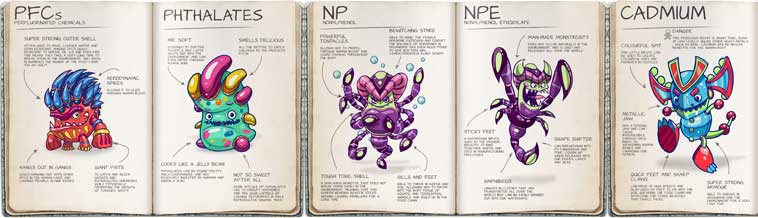
A new investigation by Greenpeace has found a broad range of hazardous chemicals in children’s clothing and footwear across a number of major clothing brands, including fast fashion, sportswear and luxury brands.

The study follows on from several previous investigations published by Greenpeace as part of its Detox campaign, which identified that hazardous chemicals are present in textile and leather products as a result of their use during manufacture. It confirms that the use of hazardous chemicals is still widespread – even during the manufacture of clothes for children and infants.

greenpeace-monsters-guide

Continue reading

Ask Major Retailers to Eliminate the Toxic 100+

Mind the Store

New Mind the Store initiative calls on the largest U.S. retailers to restrict the most Hazardous 100+ chemicals.

“It’s not feasible to ask the average person to keep 100+ chemicals in their head when they go to the store”

In fact, it’s usually impossible for us to find out if and where these chemicals are lurking, and they are lurking almost everywhere! Store buyers can, however, ask their suppliers to provide supply chain information on chemicals used, and can ask for safe, non-toxic products and materials for their customers.

“Our coalition came together around a shared critique of our government’s failure to protect the public from toxic chemicals and a shared platform for how to fix our policies. But most importantly we came together with a shared moral urgency to reduce the suffering caused by chronic diseases like cancer, disabilities and autism that are linked to chemical exposure.”

What is the Hazardous 100+ list?

Continue reading

Endocrine disruptors – in fabric?

O Ecotextiles is a great blog to follow if you are interested in what’s happening in the textile world. Lots of excellent information about why those of us with MCS/ES and Fibromyalgia can have so much difficulty finding safe (non-toxic) clothing to wear, as well as safe beds and furniture to rest our weary bodies on.

Here’s their latest, a subject that is worth understanding, as endocrine disruptors are found in so many of our everyday products and materials, and our endocrine systems are responsible for regulating so much of our lives, processes that we seem to have taken for granted for far too long…

Endocrine disruptors – in fabric?.

A big thank you to Patty and Leigh Anne who founded O Ecotextiles in 2004 and keep us so well informed.

Toxic Chemicals in Fragranced Laundry Products and Health Effects

toxic chemicals in laundry products

Some people wonder what the fuss about laundry products is all about.

What follows is Dr Anne Steinemann’s research on specific chemicals and their health effects. These are not just benign additives. They cause serious harm, and they are accumulating in ourselves and the environment, where they also harm other species.

Toxic Chemicals in Fragranced Laundry Products and Health Effects

Principal Investigator: Anne C. Steinemann, Professor, Civil and Environmental Engineering, and Public Affairs, University of Washington.

Chemicals identified by gas chromatography/mass spectrometry (GC/MS) headspace analysis.

Health and regulatory information obtained from databases compiled by the National Institutes of Health, Environmental Protection Agency, and other federal agencies.

Note that fragranced consumer products are not required to disclose all chemicals, not even ones classified as toxic or hazardous. None of these chemicals were listed on any product label or material safety data sheet.

ACETALDEHYDE (75-07-0)
Recognized Carcinogen
Suspected Developmental Toxicant, Immunotoxicant, Kidney Toxicant, Neurotoxicant, Respiratory Toxicant, Skin or Sense Organ Toxicant
Regulated as toxic/hazardous chemical under the following law(s):
Air Contaminants (OSH Act); Hazardous Air Pollutants (CAA); Hazardous Substances (CERCLA); Regulated Toxic, Explosive, or Flammable Substances (CAA); Toxic Release Inventory Chemicals (EPCRA)

Continue reading

Laundry Decontamination Protocols

Safe clothing can be a huge challenge for people with MCS/ES. Most clothing is not chemical free. Even organic clothing can be treated and finished with the same toxic chemicals found in regular clothes (see link at the end of this post for more details)

Sometimes it is possible to detox regular clothing. For mildly sensitive people it might just take a few regular washes with a tolerable detergent. For more sensitive people, a more involved protocol may do the trick. For others, we often end up without much in the way of clothing and bedding, because even the trace chemicals can be too much.

Here are some methods many people have used to successfully detox their clothing. As always, individual results may vary according to personal sensitivities, water conditions, products available, and whatever might be in the clothing to begin with.

Updated Version of Ellen’s Laundry Decontamination Protocol

Originally posted at MCS-Canadian-Sources and at The Canary Report        (copied with permission)

When I joined the MCS… list in 2005, I learned what other members of the list were doing to decontaminate their new clothes. I made some changes, the main one being that I soak the new items in plastic bins, rather than soaking them in my washing machine.

I have an expensive front-loading washing machine, with a maximum soaking time of 35 minutes, which is totally inadequate for decontaminating new or really smelly fabrics. I continue to make changes as I find problems or improvements.

If you have a top-loading washing machine, soaking times can be set much longer, because the timer can be turned off after the soaking ingredient and machine water are completely mixed.
I am including the latest version of my protocol here.

Please note that I have only tested this protocol on cotton, cotton/bamboo blends, cotton/polyester blends, and a very few totally synthetic fabrics. It is not safe to use on silk.

Continue reading