Category Archives: Government

Toronto: ME/CFS, Fm and MCS Awareness Day‏ May 12, 2012.

City of Toronto Proclamation
Myalgic Encephalomyelitis/Chronic Fatigue Syndrome, Fibromyalgia and Multiple Chemical Sensitivities Awareness Day
May 12, 2012

WHEREAS the Myalgic Encephalomyelitis Association of Ontario is a non-profit organization that has served our community since 1991, to support individuals living with Myalgic Encephalomyelitis/Chronic Fatigue Syndrome, Fibromyalgia and Multiple Chemical Sensitivities.

Over 568,000 Ontarians are afflicted by these three chronic illnesses. Once diagnosed, one is often ill for years and as many as 70 per cent are disabled for life. These illnesses affect men, women and children of all backgrounds and presently the cause is unknown.

Myalgic Encephalomyelitis (ME), commonly known as Chronic Fatigue Syndrome (ME/CFS), is a neurological and autoimmune disease characterized by overwhelming fatigue, pain, headaches, cardiac symptoms, immune disorders, dizziness and balance problems.

Fibromyalgia (FM) is characterized by severe musculoskeletal pain and tenderness in many areas of the body, along with fatigue and sleep dysfunction, generalized or regional stiffness and in some cases neurological and cognitive symptoms. This pain can become strong enough to prevent people from working or engaging in physical activities for months and even years.

Multiple Chemical Sensitivities (MCS), also called Environmental Sensitivities or Intolerance, is characterized by an unusually severe sensitivity or allergy-like reaction to many different kinds of pollutants such as chemicals, perfumes and other environmental triggers.

NOW THEREFORE, I, Mayor Rob Ford, on behalf of Toronto City Council, do hereby proclaim May 12, 2012 as “Myalgic Encephalomyelitis/Chronic Fatigue Syndrome, Fibromyalgia and Multiple Chemical Sensitivities Awareness Day” in the City of Toronto.

Mayor Rob Ford

http://www.toronto.ca/proclamations/2012/chemicalsensitivities2012.htm

Imagine VOC labels for all products, materials and buildings!

Imagine looking at a product or material and seeing if it was safe to bring indoors, or if a building was safe to breathe in, before buying or entering!

The French have developed a regulation for building materials, with a simple, easy to understand label.

* Information sur le niveau d’émission de substances volatiles dans l’air intérieur, présentant un risque de toxicité par inhalation, sur une échelle de classe allant de A+ (très faibles émissions) à C (fortes émissions).

Approximately translated as “Information on the level of risk from inhalation of toxic volatile substances in interior air on a scale of A+ (very low emissions) to C (high emissions)”

Of course, we wouldn’t NEED anything like this if products and materials were free of toxic chemicals, but since they aren’t, we need to know the risk we’re being subjected to.

So… I LOVE THIS!  And I want it required on every product, material, and building that has a VOC!

Here’s info from the source, we just need to take it a few steps further

French Regulations on VOC emissions from construction products / Compulsory VOC emissions labelling

http://www.product-testing.eurofins.com/information/compliance-with-law/european-national-legislation/french-regulation-on-voc-emissions.aspx


ACCESSIBILITY 1

The CDC and MCS

There have been questions about whether or not the CDC (Center for Disease Control) recognizes MCS.

Their Indoor Environmental Quality Policy from 2009 explicitly states:

Fragrance is not appropriate for a professional work environment, and the use of some products with fragrance may be detrimental to the health of workers with chemical sensitivities, allergies, asthma, and chronic headaches/migraines.” …

Potential hazards include chemicals, biological agents, fragrant products, and physical conditions that may cause irritation, illness, or exacerbate existing health conditions.

Here are a few more excerpts:

Continue reading

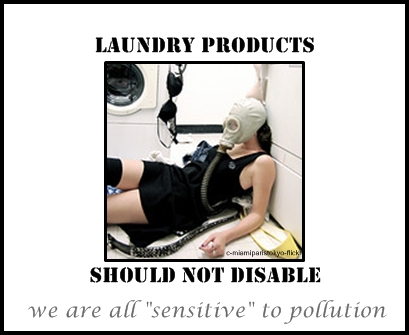
Toxic chemicals in everyday laundry products!?!

During the last couple of years we’ve  seen a lot of research validating what Canaries (people with chemical sensitivities)  have been telling everyone for years: Everyday laundry products contain harmful toxic chemicals!

see: Toxic Chemicals in Fragranced Laundry Products and Health Effects

Below are links to articles and independently done (and funded) published research  that show SOME (not all) of the toxic chemicals in conventional, everyday laundry products. Chemicals  we  have 24/7 contact with, because not all of them get rinsed out of clothing and bedding… Chemicals  that get washed down our drains and  into waterways, and don’t get adequately filtered out of our drinking water… Chemicals that  if your municipality sells sewage sludge, then also get spread onto farmers fields as fertilizer (for food you buy and eat from  the supermarket)… Chemicals that get blown off laundry lines or pumped out of dryer vents (that were only designed to emit moisture) off your property and into the surrounding neighbourhood air for everyone else to breathe…

laundry products should not disable

Note that even the “natural” and fragrance-free products can contain toxic chemicals, because the industry is not regulated and they can say and do pretty much what they want.

Links updated October 24, 2015.

Continue reading

Members of EU Parliament recommend recognizing and protecting people with MCS and EHS

Written declaration on the recognition of multiple chemical sensitivity and electrohypersensitivity in the International Statistical Classification of Diseases and Related Health Problems (ICD)

The European Parliament,

– having regard to its resolution of 4 September 2008 on the mid-term review of the European Environment and Health Action Plan 2004-2010, particularly recital J thereof,

– having regard to Decision 1350/2007/EC establishing a second programme of Community action in the field of health (2008-2013), and the White Paper ‘Together for Health’ (COM(2007)0630),

– having regard to its resolution of 2April 2009 on health concerns associated with electromagnetic fields,

– having regard to Rule 123 of its Rules of Procedure,

A. whereas health inequalities between different European countries should be eradicated;

B. whereas multiple chemical sensitivity (MCS) patients are vulnerable to environmental pollution and electrohypersensitivity (EHS) patients to electromagnetic radiation, both involving serious risks in several areas over which they have no influence, such as the air they breathe and exposure to EM radiation;

1. Recommends that Member States which have not yet done so include MCS and EHS in their own ICDs and in their ILO-based Lists of Occupational Diseases; suggests that the WHO Assembly include MCS and EHS in its upcoming ICD-11;

2. Urges Member State governments to apply existing rules regarding EM radiation and exposure to harmful substances and to apply the precautionary principle strictly, with effective health and environmental measures, in order to immediately protect those affected, whose number is growing exponentially;

3. Suggests harmonising the rules on physical agents and harmful substances in the Member States, on the basis of the strictest existing criteria, and also placing controls on imported products;

4. Instructs its President to forward this declaration, together with the names of the signatories, to the Council, the Commission and the parliaments of the Member States.

PDF

Video: Multiple Chemical Sensitivity: How Chemical Exposures May Be Affecting Your Health

An older but still relevant documentary about MCS, featuring patients, parents, doctors and more…
“Interviews with leading physicians and people whose lives have been changed by chemical sensitivity.”
Produced and directed by Alison Johnson, with cinematography and editing by Richard Startzman. Visit http://www.alisonjohnsonmcs.com for more information and to order this film or Alison Johnson’s book Casualties of Progress: Personal Histories from the Chemically Sensitive, which contains the the stories of the people appearing in this film.

What do tobacco smoke, fragrance chemicals, food, drugs, supplements, health food stores and incense have in common?

Tobacco smoke contains so many harmful chemicals causing health problems, that smoking has been banned from most public indoor environments. Work remains to be done in shared housing, where neighbours are forced to breathe in 2nd and 3rd hand smoke.

Since fragrances  also have  many harmful chemicals,  including too many  of the same chemicals found in tobacco smoke, they should also be banned from indoor environments. Well, (unless  certified organic), they should just be banned period  since they also pollute the outdoor air when expelled from dryer vents, and also pollute our  waterways.

Just like sitting in a smoky room for 10 minutes will make your hair and clothes smell like smoke, sitting in a fragranced room for 10 minutes will do the same. In fact, foods absorb smoke   and fragrance too, including those that can’t be washed (breads, salt, etc) and if you are attending a wine tasting event, you’re asked not to smoke or wear fragrances since they interfere with people’s ability to taste and smell.

Most fragrance chemicals weren’t designed to be eaten (although IFF would probably beg to differ ) and most of us certainly don’t want to be eating plastics, do we? Makes you wonder why phthalates  are found in drugs and supplements?    Especially since so much evidence is mounting regarding harm.

So what to do? One might assume that shopping for food, especially organic food, at health food stores (HFSs) would be safer. One would be thinking wrong if the HFS sell  fragranced products and  incense, which is linked to asthma, dermatitis,   and cancer,    and most HFSs do sell these products.

They don’t sell cigarettes, which are even triple wrapped despite not containing any VOC’s when unlit, yet the incense and other fragranced products are often unwrapped, or sold in flimsy plastic bags which do nothing to contain the VOCs, or keep them from migrating into other foods and products in the store.

I don’t know about you, but when I pay extra for organic foods, I don’t want them tasting like incense or other fragrance chemicals. I don’t want to be eating phthalates and BPA, so I avoid plastics, I don’t want to be breathing in the chemicals in tobacco smoke, yet buying food from most stores means these toxic chemicals are getting into the foods they sell.

Buying veggies and fruit from farmer’s markets,    CSA‘s    or organic delivery services usually eliminates this problem, but some warehouses have so-called air”fresheners”     or allow staff to use scented soaps   etc, which end up leaving residues on the food, and not all kinds of foods are available from these sources.

Food should not be kept in the same air space as these toxic chemicals. Volatile toxic chemicals should be sealed in impenetrable packaging as long as they are still legal. Stores that sell both food and items that contain volatile chemicals  should be required to separate the fragranced items from the foods, including using different ventilation systems.  It shouldn’t be so difficult for anyone, let alone those of us with a medical need,  to find safe, chemical and fragrance free foods.

An open letter to MP Gerard Kennedy, MPP Cheri DiNovo, and City Councillor Bill Saundercook

February 23, 2010.

Dear Minister of Parliament Gerard Kennedy, Minister of Provincial Parliament Cheri DiNovo, and City Councillor Bill Saundercook,

I have resided in this ward for about 20 years now. I raised two children who attended schools here, and although they had to leave home, they still live in the ward, as do both of my parents (although not together).

It was while living here that I was chemically injured, not once, but several times. Not from industrial accidents, but from legal and toxic consumer products and roadwork.

I have done everything in my power to protect and regain my health, but all my efforts have been in vain as it’s the activities of others that have injured me. I have no power or ability to prevent those activities, despite doing everything I possibly can.

I have also contacted all of your offices for help, not once, but numerous times over the past several years, and often from what very nearly became my deathbed. Despite my pleas, I remain without any means to ensure I live instead of dying a completely preventable death.

My time is now running out. The Landlord Tenant Board (LTB) decided last year that I have until April 4, 2010, to vacate my home of 18 years.

I have been trying to find appropriate, medically required housing since 2005. I have had a large number of people helping me look, including people from Toronto’s Shelter Support and Housing Administration (SSHA) and the not-for-profit organization Center for Equality Rights in Accomodation (CERA). In five years, we have not found a single, suitable, affordable place that would allow me to survive.

Due to the deteriorating circumstances here, my health has continued to decline, and still there has been no effort to make medically required, non-toxic housing available and accessible for people like myself, who are disabled by Environmental Sensitivities, Multiple Chemical Sensitivities, and Electro-Hyper Sensitivities (ES/MCS/EHS). Safe housing is our number one medical need, a place we can avoid the triggers and substances that disable us, in order to heal.

All levels of government are responsible for allowing this travesty to occur. There is no regulation of toxic chemicals and harmful substances in everyday consumer goods and housing, no accessible or appropriate healthcare for people injured and disabled by them, and no appropriate assistance or access to services that everyone else takes for granted. This is discriminatory and possibly even Criminally Negligent (bodily harm, death that might have been prevented, acceleration of death, administering noxious things).

I ask you all now to change the trajectory, to intervene on my behalf, to show that you have hearts, and that you care about the people you represent: First, to make sure I am not made homeless in April; and then to ensure that I have a safe place to move to from here, where I can recover my health and abilities, so that I can again become active in society, able to share the gifts I have been given and have developed.

I have assembled a team of people willing to help accomplish this, but we need your help to make it happen.

I await your responses at your earliest convenience.

Regards,

Linda Sepp

Toronto, Ont
https://seriouslysensitivetopollution.wordpress.com/
Facebook page

~~~

A note to my blog readers:

If you can take a moment to email or call and ask these representatives in government to intervene on my behalf, here is their contact info:

Gerard Kennedy
Member of Parliament
KenneG1@parl.gc.ca
gerard@gerardkennedy.ca
Telephone: (613) 992-2936
Fax: (613) 995-1629
Constituency office Telephone: (416) 769-5072

Cheri DiNovo
Member of Provincial Parliament
Queen’s Park
dinovoc-qp@ndp.on.ca
Tel 416-325-0244
Fax 416-325-0305
Constituency office: dinovoc-co@ndp.on.ca
Tel 416-763-5630
Fax 416-763-5640

Bill Saundercook
Toronto City Councillor
City Hall
councillor_saundercook@toronto.ca
Phone: 416-392-4072
Fax: 416-696-3667

Bea Mozdzanowski
Constituency Assistant
416-338-5165
bmozdza@toronto.ca

~~~

The health and ability for those with environmental sensitivities rests with the choices and actions of others.

~~~

On being an environmental refugee in Ontario

People with any other disability are allowed appropriate health care and related aids, tax breaks, subsidies, insurance benefits, accommodations, and accessible housing. People with chemical injury, with MCS/ES, are denied access and even obstructed at every turn.

By Linda Sepp.

This is an excerpt from what I sent to Ontario politicians for Earth Day 2009:

People with any other disability are allowed appropriate health care and related aids, tax breaks, subsidies, insurance benefits, accommodations, and accessible housing. People with chemical injury, with MCS/ES, are denied access and even obstructed at every turn.

The same synthetic substances that people with MCS/ES have been disabled by for years (we’re like canaries in the coal mine) now cause cancer and other chronic health problems in too many people. Children are especially vulnerable in so many ways.

This incredible suffering is preventable, and not an acceptable economic activity!

Healthy non-toxic environments allow people with MCS/ES to lead livable lives, instead of struggling to barely survive. Healthy housing, safe food and water are key needs. Simple needs. Basic health care needs. When these are met, everyone benefits.

Healthy people can create healthy economies. Sick people will drive it to a halt.

Almost 25 years ago Ontario had a guidance document to do the right thing. Instead of acting on it, many more people have been made to suffer in unimaginably difficult and trying circumstances. Too many do not make it. And more are discovering the horrors.

It’s time something was done to respect people with MCS/ES, and help them live in safety and dignity. Doing this will also make the environment safer for all citizens.

The Honourable George Thomson, in 1985:

“I chaired a committee on environmental sensitivities established by Ontario’s Ministry of Health. The committee included two eminent teaching hospital physicians and a highly respected epidemiologist. We issued a report that identified existing, publicly funded means of diagnosis, and accepted various methods of patient management, including avoidance of offending agents.

Equally important in our minds were measures, such as income support, that would provide concrete assistance to members of this vulnerable group and reduce the risk of preventable harm.

… We also called for further research and the development of services to support that research, while also helping those who were experiencing a wide range of very difficult symptoms. We did not feel that more research was needed before these and other measures were introduced to protect patients from being caused harm through inappropriate labelling or the denial of reasonable accommodation.”

George M. Thomson, B.A., LL.B., LL.M.

What can you do to make sure safe water, food, clothing and housing are available and accessible to those of us who need them?

Linda Sepp
Toronto

Clothing and water issues

Due to the severity of my Multiple Chemical Sensitivities/Environmental Sensitivities (MCS/ES), I need completely chemical free clothes (very expensive) and a way to wash them.

By Linda Sepp.

I might be homeless in April without more clothing to wear than a tattered summer outfit and robe.

I cannot use the tap water, and require a heavy duty whole house water filtration system to make the water safe for washing hands, dishes, myself and my clothing, towels and bedding.

The delivered glass bottled spring water is expensive and heavy but I have to wash my one safe disintegrating outfit in it as I have no other choice. I can no longer afford to pay for this either, as ODSP is now deducting the $ from my cheque for heating this entire 3 story 100 year old leaky house, despite that I only use 4 rooms here (+some storage). I’m actually only able to wash my undies and tank top so that I can change them once a week now. Gross? You betcha. Dignified? Not at all.

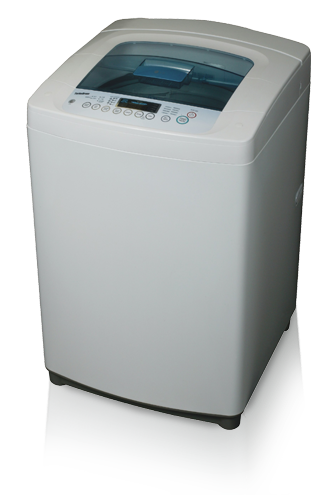
In addition to safe water, I need a heavy duty, all metal, portable washing machine (pictured above), as I cannot use the basement laundry room here anymore due to the mould.

The Ontario Disability Services Program refuses to cover any of my medically required disability related needs.

In her report to ODSP in February 2006, when the Special Diet allowance was revised, Dr. Lynn Marshall, the previous director of the Environmental Health Clinic at Sunnybrook & Women’s College Hospital, outlined my health needs as follows:

“The most effective means of managing this condition is by avoidance of known triggering chemicals, and minimization of exposure to other ‘everyday’ synthetic environmental chemicals in food, water, air, and consumer products. As with intolerances to foods themselves, it is highly challenging and expensive to minimize such exposures. She (Ms Sepp) requires food (water, air, and consumer products) containing the lowest possible amounts of synthetic chemicals permanently to help maintain, and hopefully improve, her health status.”

My doctor wrote about my water needs as being:

“She also requires whole house water filtration (like that available in the Environmental Health Clinic, Dallas) to filter all the water including for cooking and drinking, as well as for washing clothes and bedding.” (See AEHF Whole-house Water Filter with Prefilter)

Imagine getting sick every time you wash your hands, dishes, or self. Imagine not being able to have a hot shower or bath to relieve your aching body when the aches and pains of fibromyalgia flare up? Imagine not being able to wash bedding or towels for a year. Sound dignified?

January 9th, 2009, was the day my water was contaminated with up-the-pipe repair chemicals, ruining almost all my clothing in the washing machine, and I could not go back to drinking or using it safely after.

The system is supposed to allow for basic needs and some level of dignity:

The Ontario Disability Support Program (ODSP) was created to meet the unique needs of people with disabilities. The program provides income support including health and other benefits for people with disabilities in financial need.

The intent of the program is to provide the supports necessary to enable individuals and families to live as independently as possible in the community and lead more productive, dignified lives.

So why am I not receiving the help I need?