
Tag Archives: fragrance-free

More Reasons and Resources to go Fragrance Free

If fragrances and the products they are added to didn’t contain so many seriously  harmful ingredients which pollute the air we all breathe, the clothing we wear, the water we drink, and the soil we grow the foods we eat in, there wouldn’t be a need to go fragrance-free. Strangely, the fragrance industry has seen fit to include a vast array of toxic, petrochemical pollutants and highly allergenic substances in their products.

Here are some resources to use in making schools, workplaces and homes safer places to be. Some are new, some I’ve already linked to in other places on this site.

Hope you find them helpful.

access safe

from  The CDC and MCS

The CDC Indoor Environmental Quality Policy from 2009 explicitly states:

“Fragrance is not appropriate for a professional work environment, and the use of some products with fragrance may be detrimental to the health of workers with chemical sensitivities, allergies, asthma, and chronic headaches/migraines.” …

Potential hazards include chemicals, biological agents, fragrant products, and physical conditions that may cause irritation, illness, or exacerbate existing health conditions” …
Continue reading

Verified Fragrance-Free Supply Chains

Due to the increasing numbers of people with allergies and sensitivities to, and injuries from VOCs and other fragrance ingredients, there is a growing need for fully verified fragrance-free supply chains.

Many of us need products and foods handled in such a way from beginning to end, as to prevent first, second and third hand fragrance and other chemical contamination.

Organic food that has been handled by someone with scented hand lotion, or that has sat in a store full of fragrance molecules will absorb those chemicals, and potentially be as toxic as food that has pesticide residues (for people who must, for medical and health reasons, avoid petrochemical exposures). Clothing, bedding toilet paper and other materials also absorb fragrances, which can be hard (if not impossible) to remove.

This presents a business opportunity for entrepreneurs, to provide a service for people whose health depends on it, as well as for those who wish to prevent health problems.

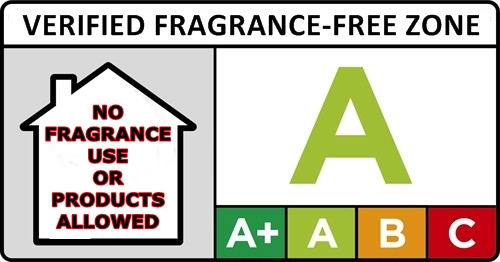
verified fragrance-free zone NO FRAGRANCE Continue reading

Women’s Voices for the Earth Report on “Secret Scents”

Women’s Voices for the Earth recently released a new report, called “Secret Scents“. It  highlights the need for ingredient transparency by the companies that create fragranced products, since right now we have almost no way of knowing what is causing the fragrance allergies and other serious health effects people experience when exposed to  fragrances. These adverse health effects are increasing, especially in children.

Amazingly, companies are not required by the FDA or EPA to disclose fragrance ingredients, so it is difficult for anyone to pinpoint specific fragrance allergens and sensitizers among the hundreds of ingredients that can make up a scent.

Another report  was also just released, this one on endocrine disrupting chemicals. Some fragrance ingredients, like phthalates (see below) are also endocrine disruptors, while others are known carcinogens and/or neurotoxic!

Continue reading

Fragrance: A Barrier to Access

Fragrance a Barrier to Access

Fragrance: A Barrier to Access

When you choose, use and wear products with fragrance, you create chemical barriers to access for people who are disabled when exposed to the toxic chemicals allowed in fragrances.
To be air safe and disability friendly, choose fragrance-free laundry and personal care products, and avoid dryer sheets and fabric softeners.

Not so Equal Access to Health Care in Ontario or Systemic Barriers to Access for People with MCS/ES

Friendship and Fragrance

There are reasons people choose and enjoy isolation, but developing disabling adverse effects from the toxic chemicals in everyday products and materials is seldom one of them.

Do you know someone who says fragrances bother or disable them? Chances are pretty good that you do, now that 34.7% of the population experience adverse effects, ranging from mild to severe and disabling, from fragrance exposures.

When your friend, family member, or colleague informs you that something you use has an adverse effect on them, how would you respond?

Do you choose the friendship? Or the product?

Continue reading