This device emits unregulated toxic chemicals to the entire neighborhood when you use conventional laundry products


This device emits unregulated toxic chemicals to the entire neighborhood when you use conventional laundry products
Posted in Chemicals, Environment, Images, Pollution
Tagged chemicals in laundry products, environment, fragrance chemicals, health, images, laundry, laundry products, toxic chemicals
So much evidence is pointing to the fact that humans were not designed to breathe, absorb, ingest oil and petrochemicals.

Petrochemicals and their byproducts, such as dioxin, are known to cause an array of serious health problems, including cancers and endocrine disruption.
See the link here for some details:
(edited March 2014 to include a different website as old link no longer works)
What is a “body burden”
http://www.chemicalbodyburden.org/whatisbb.htm
Here is a chart of petrochemicals and where they are found
(in case you want to reduce your dependence on them)
Posted in Chemicals, Environment, Health, Pollution
Tagged Chemicals, fragrance chemicals, health, science
Climate change is a symptom of a problem. The problem is pollution!
And this includes the pollution caused by everyday products like those used for laundry and personal care!
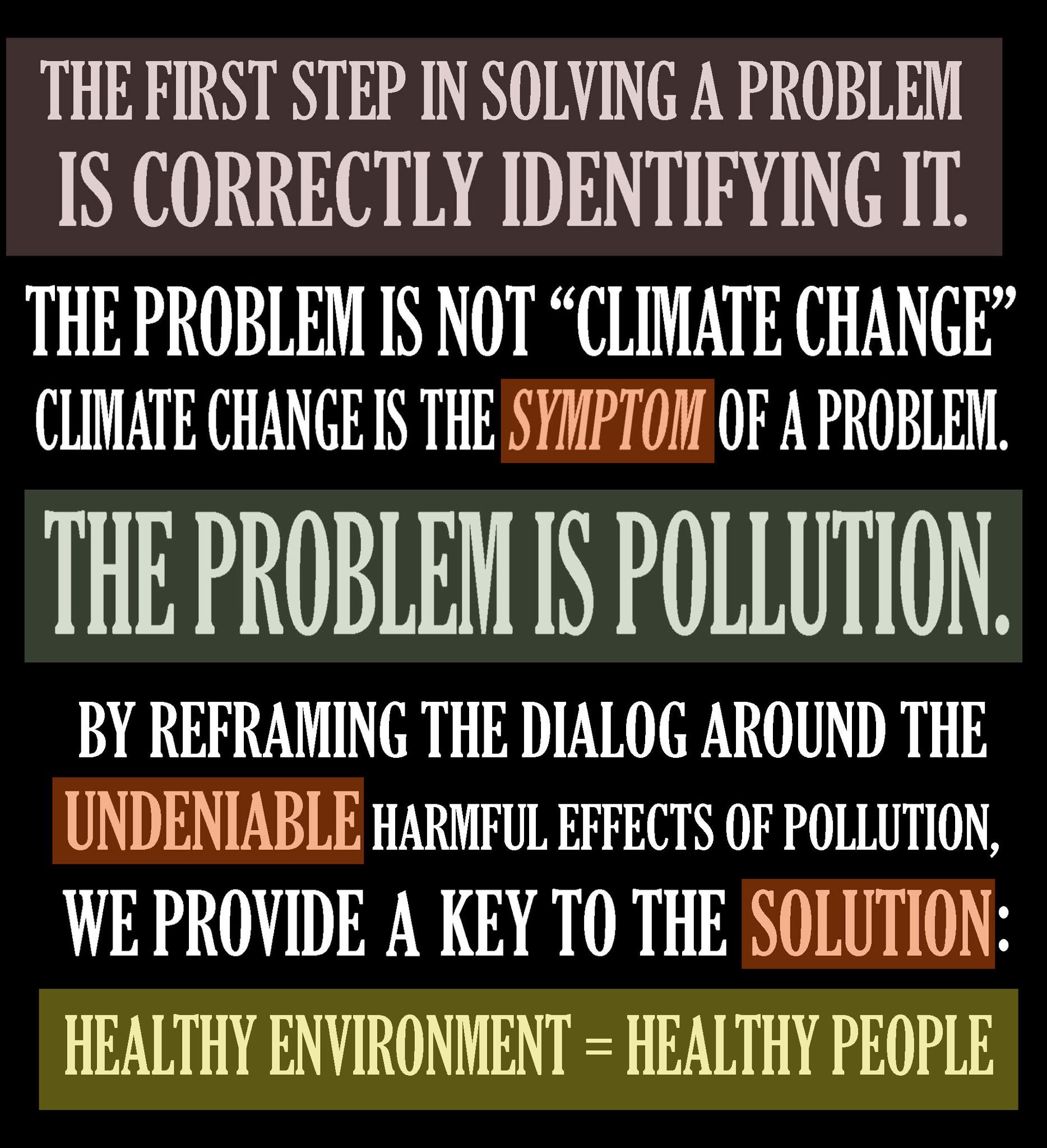
When we truly care about ourselves and each other, we realize that we also have to care about our environment, since without clean air, water or food, we cannot survive long.
Pollution includes the toxic petrochemicals in everyday products and materials, like those used for laundry, personal care, cleaning, carpeting, shower curtains, back packs and clothing, pesticides, roofing materials, air “fresheners”…
Personal Care Sprays Curbed in Smog Fight
http://articles.latimes.com/1989-11-09/news/mn-1427_1_personal-care-products
Aerosol antiperspirants and deodorants–which account for 25% of product sales–spew up to five tons a day of smog-causing volatile organic chemicals into the atmosphere statewide–an amount equivalent to the emissions from a typical oil refinery.
…
Chemicals in Home a Big Smog Source
Cleansers, cosmetics and other products pump 100 tons of pollutants daily into the Southland’s air, ranking second to tailpipe emissions, studies show.
http://articles.latimes.com/2003/mar/09/local/me-homesmog9
Regulators have long known that smog-forming chemicals escape with every squirt of antiperspirant, each bubble of detergent and every spritz of aerosol hair spray. And they have been controlling some products’ emissions for years, with mixed success. But new research shows that products common in kitchens, bathrooms and garages contribute more to Southern California’s smog problem than previously thought.
…
The offending items include detergents, cleaning compounds, glues, polishes, floor finishes, cosmetics, perfume, antiperspirants, rubbing alcohol, room fresheners, car wax, paint and lawn care products.
…
Consumer products send out nearly twice as many hydrocarbons — a key precursor to ozone — as all of the SUVs and light trucks operating in California.
…
And MCS/ES is another symptom of the same pollution problem. As are many other chronic health conditions.
Let’s take better care of the planet and of ourselves and each other.
IDLE NO MORE
Posted in climate change, Environment, Health, Images, Pollution
Tagged Chemicals, climate change, environment, health, images
Greenpeace is running an excellent campaign to detox the fashion industry. Sadly, textiles these days are full of toxic chemicals, chemicals which are harming the health and environment everywhere in their life-cycle, where they are made, and where they are used.
This video shows a bit of the background:
You might wonder why water pollution in China is a problem for us?
from: How to get rid of chemicals in fabrics. (Hint: trick question.)
“How do these chemicals get into our bodies from the textiles? Your skin is the largest organ of your body, and it’s highly permeable. So skin absorption is one route; another is through inhalation of the chemicals (if they are the type that evaporate – and if they do evaporate, each chemical has a different rate of evaporation, from minutes or hours to weeks or years) and a third route: Think of microscopic particles of fabric that abrade each time we use a towel, sit on a sofa, put on our clothes. These microscopic particles fly into the air and then we breathe them in or ingest them. Or they fall into the dust of our homes, where people and pets, especially crawling children and pets, continue to breathe or ingest them.”
Going after manufacturers to detox their practices is a logical step.
And it’s working:
Levi’s shapes up to become a Detox leader
http://www.greenpeace.org/canada/en/Blog/levis-shapes-up-to-become-a-detox-leader/blog/43437/
read more here:
Toxic Threads – Product Testing Results
http://www.greenpeace.org/international/en/campaigns/toxics/water/detox/Toxic-Threads/
 Toxic Threads: Under WrapsPublication
 Toxic Threads: Putting Pollution on ParadePublication
 Toxic Threads: The Big Fashion Stitch-UpPublication
 Dirty Laundry: ReloadedPublication
 Dirty Laundry 2: Hung Out to DryPublication
 Dirty LaundryPublication
And if you can’t wait that long for safer clothing, you can check the list of safeR options listed in the “CHEMICAL-FREE CLOTHING (WE WISH)” tab at the top of the page here and then work on detoxing those at home using decontamination protocols found here: https://seriouslysensitivetopollution.wordpress.com/2012/09/08/laundry-decontamination-protocols/
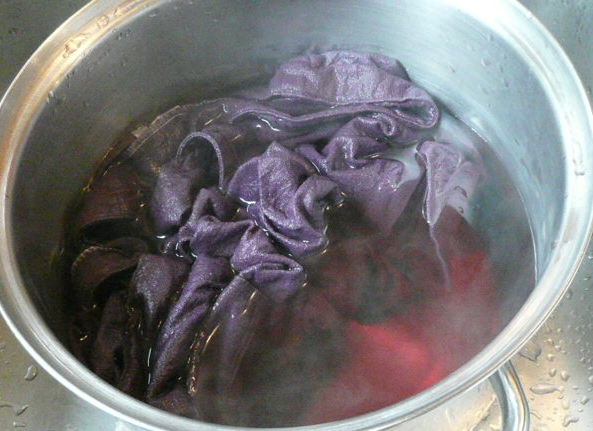
P.S.
I forgot to mention that if you are trying to get toxic chemicals out of your clothing, using conventional, everyday laundry products isn’t going to get you non-toxic clothes… Not when the laundry products themselves are full of toxic chemicals: https://seriouslysensitivetopollution.wordpress.com/2012/04/03/toxic-chemicals-in-everyday-laundry-products/
Posted in Chemical Free Clothing, Environment, Products
Tagged Chemicals, Clothing, environment, laundry, Products, Water
Can you grow it or make it yourself?
If not, then consider the following:
1. Do I really need this? Is there anything I can use instead?
Here’s where the joys of ingenuity come in. It’s fun to find substitutes. For instance, do you really need a nightgown or pajamas when a big shirt will do as well?
2. How will this item affect the quality of my life?
Will it help me engage in life more fully, like sheet music or gardening supplies or a swim suit? Or will it just make me more passive – like an extra TV?
3. Is the cost of the item worth the amount of time it takes to earn the money to buy it?
This is the question suggested by Dominguez and Robin in Your Money or Your Life. For instance,
How many hours do you have to work to buy your daily espressos?
Is it worth it?
You may say yes, but at least you’ve thought about it.
Posted in Dharma, Environment, Interconnectedness, Products, Responsibility
Tagged caring consumer, environment, shopping
I’ve just added a new page to the top of the blog.
If you are looking for safer clothing, textiles, footwear or bedding, I’m adding links of places that offer them to hopefully make the search a little bit easier, since so many people land on this blog when searching for chemical-free clothing.
Since the level of sensitivities varies between people, there’s no way to say that something will be safe for everyone, or how many washings it might take to make something safe.
Some of the places deal with chemically sensitive clientele on a regular basis. This doesn’t mean that you can assume they know what you as an individual might need, so please be very clear if you have severe sensitivities. Discuss in advance the circumstances for returns also, as it’s unlikely anyone will accept anything that has been washed a dozen times if it still isn’t safe enough for you.
Some places will wrap things in extra cellophane or foil or even plastic, if postal fragrance and pesticide residues are of concern. Other places might not be willing to do that. Ask, and ask nicely.
This list is just a starting point for people who are searching, and will be a work in progress… Also, if I only listed places that met my standards in all areas, there wouldn’t be a list… And I’d be naked…
See the list here (or click on the tab at the top of the page):
https://seriouslysensitivetopollution.wordpress.com/chemical-free-clothing-we-wish/
Safe clothing can be a huge challenge for people with MCS/ES. Most clothing is not chemical free. Even organic clothing can be treated and finished with the same toxic chemicals found in regular clothes (see link at the end of this post for more details)
Sometimes it is possible to detox regular clothing. For mildly sensitive people it might just take a few regular washes with a tolerable detergent. For more sensitive people, a more involved protocol may do the trick. For others, we often end up without much in the way of clothing and bedding, because even the trace chemicals can be too much.
Here are some methods many people have used to successfully detox their clothing. As always, individual results may vary according to personal sensitivities, water conditions, products available, and whatever might be in the clothing to begin with.
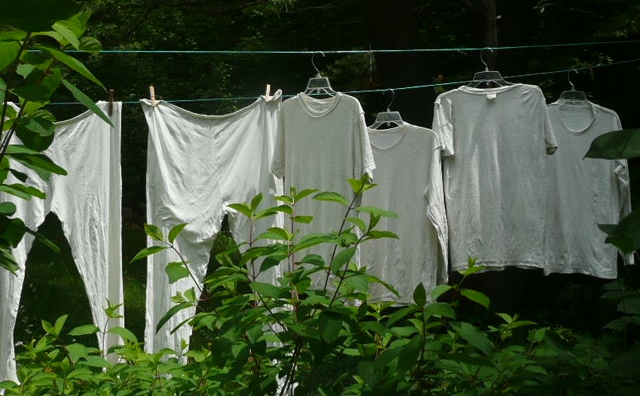
Updated Version of Ellen’s Laundry Decontamination Protocol
Originally posted at MCS-Canadian-Sources and at The Canary Report (copied with permission)
When I joined the MCS… list in 2005, I learned what other members of the list were doing to decontaminate their new clothes. I made some changes, the main one being that I soak the new items in plastic bins, rather than soaking them in my washing machine.
I have an expensive front-loading washing machine, with a maximum soaking time of 35 minutes, which is totally inadequate for decontaminating new or really smelly fabrics. I continue to make changes as I find problems or improvements.
If you have a top-loading washing machine, soaking times can be set much longer, because the timer can be turned off after the soaking ingredient and machine water are completely mixed.
I am including the latest version of my protocol here.
Please note that I have only tested this protocol on cotton, cotton/bamboo blends, cotton/polyester blends, and a very few totally synthetic fabrics. It is not safe to use on silk.
Independent researcher Dr. Anne Steinemann was recently interviewed by Dr. Joseph Mercola about undisclosed toxic chemicals found in laundry products, air fresheners, cleaners, lotions and other (mostly) fragranced consumer products.
She will be testing foods found in supermarkets for fragrance chemicals. Many of us have had to stop buying food from supermarkets etc because they taste like fragrance and cleaning product chemicals.
She also notes that just because a product is “fragrance free”, doesn’t mean it really is, or that it doesn’t contain other harmful chemicals.
Important, worthwhile interview, especially if you don’t know what all the “fragrance-free” fuss is about.
For more info, see Dr. Steinemann’s website
The Environmental Health Clinic at Women’s College Hospital in Toronto recently held an educational event on the environmental health condition called electromagnetic hypersensitivity (EMS, aka EHS). Dr. Ray Copes, chief, environmental and occupational health, Public Health Ontario, Dr. Magda Havas, associate professor of environmental and resource studies, Trent University, and Dr. Riina Bray, medical director, Environmental Health Clinic, WCH were among the speakers.
“We need to create more awareness about this condition,” said Dr. Riina Bray. “Health-care practitioners need to better understand EMS (EHS) so they can help their patients prevent and manage their symptoms. The public needs to know how to protect themselves from the broad range of health impacts electromagnetic fields have on their minds and bodies.”
Recognition of EHS is slowly growing as more people are affected. The number of wireless devices is growing, and it’s difficult to avoid exposure. Smart meters on every house, cell phones in nearly every pocket, cell towers in every neighbourhood, wifi in every other café and home… Never before in human history have we been exposed in this way.
I personally am lucky that compared to some people, my EHS symptoms are mostly mild to middling, although they have been severe at times.
Posted in Disability, EHS, Environment, Health Care
Tagged diagnosing EHS, EHS, Electromagnetic Hypersensitivity
Hot on the heels of several eye-popping reports about how toxic chemicals and industry bought politics are impacting our health, including the Chicago Tribune’s expose of how the chemical industry has succeeded in getting toxic flame retardants added to home furnishings in amounts that harm us but do nothing to prevent fires, indeed making fires more toxic too, from Bill Walsh at the Healthy Building Network comes news of how the chemical industry is blocking efforts to create healthier buildings.
No wonder healthy housing is so hard to find!

By Bill Walsh, Executive Director
Healthy Building Network
May 22, 2012
The credibility of the US chemical industry has taken a beating in the press this month. But instead of apologizing, pledging to reform its ways, or disciplining a “few bad apples,” for being caught lying red handed, the industry has doubled down and launched an all out attack on the US Green Building Council.[1] The focus of the attack – modest amendments to the LEED Rating System, two voluntary credits that address the presence of endocrine-disrupting chemicals and other toxins in LEED-rated buildings.
continue reading at : Healthy Building Network
Posted in Environment, Government, Health, Housing, Products
Tagged Healthy Building Network, Housing, LEED, MCS, obstacles, toxic chemicals
 | linda @ Seriously "S… on MCS/ES |
| linda @ Seriously "S… on The CDC and MCS |
 | Tabatha Schnorr on MCS/ES |
| Tabatha Schnorr on The CDC and MCS |
| linda @ Seriously "S… on MCS and Housing |
| linda @ Seriously "S… on Hospital Protocols for People… |


 Seriously "Sensitive" to Pollution