Tag Archives: environment

Climate change is a symptom of pollution

Climate change is a symptom of a problem. The problem is pollution!

And this includes the pollution caused by everyday products like those used for laundry and personal care!
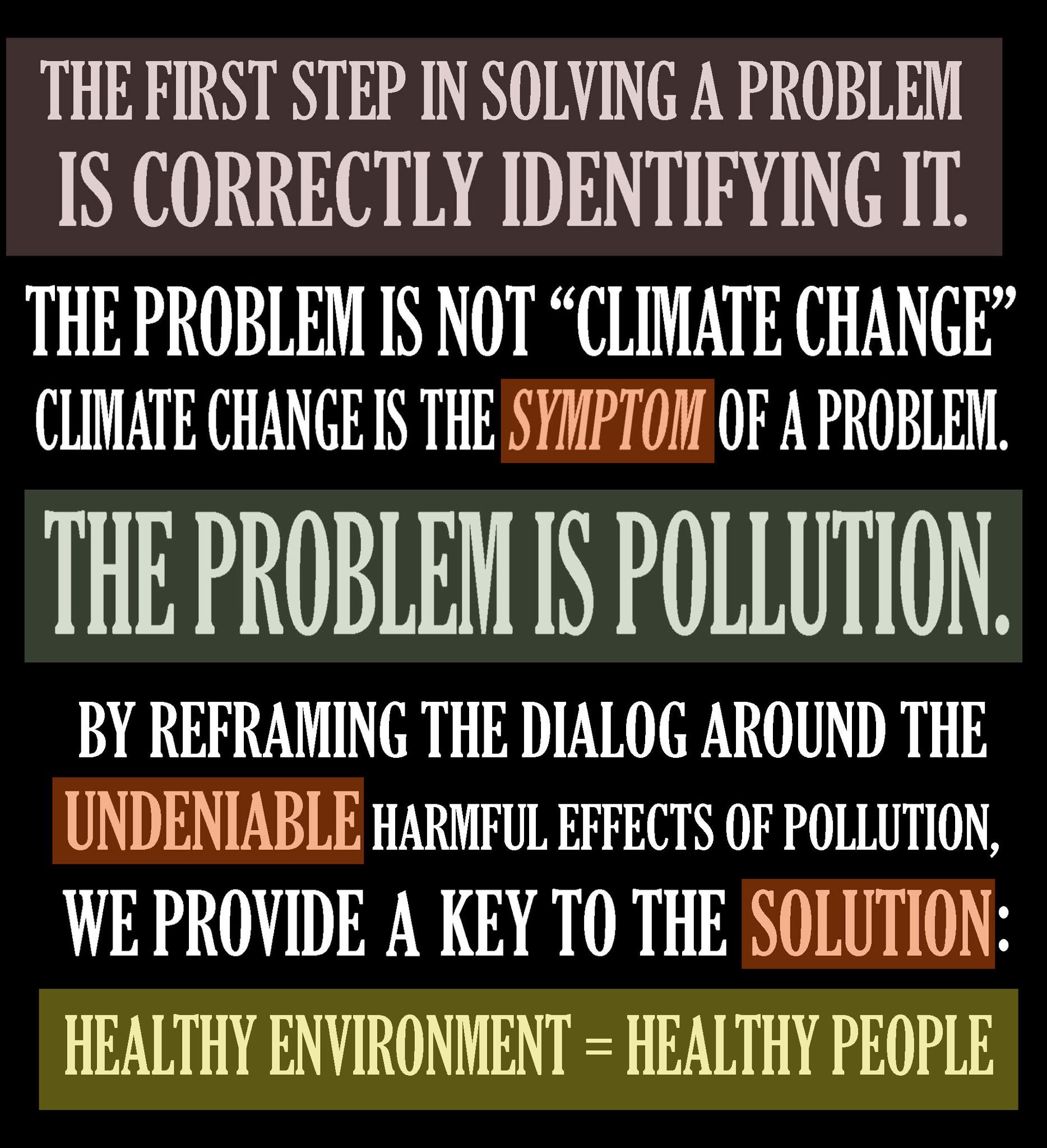
the 1st step

When we truly care about ourselves and each other, we realize that we also have to care about our environment, since without clean air, water or food, we cannot survive long.

Pollution includes the toxic petrochemicals in everyday products and materials, like those used for laundry, personal care, cleaning, carpeting, shower curtains, back packs and clothing, pesticides, roofing materials, air “fresheners”…

Personal Care Sprays Curbed in Smog Fight

http://articles.latimes.com/1989-11-09/news/mn-1427_1_personal-care-products

Aerosol antiperspirants and deodorants–which account for 25% of product sales–spew up to five tons a day of smog-causing volatile organic chemicals into the atmosphere statewide–an amount equivalent to the emissions from a typical oil refinery.

Chemicals in Home a Big Smog Source

Cleansers, cosmetics and other products pump 100 tons of pollutants daily into the Southland’s air, ranking second to tailpipe emissions, studies show.

http://articles.latimes.com/2003/mar/09/local/me-homesmog9

Regulators have long known that smog-forming chemicals escape with every squirt of antiperspirant, each bubble of detergent and every spritz of aerosol hair spray. And they have been controlling some products’ emissions for years, with mixed success. But new research shows that products common in kitchens, bathrooms and garages contribute more to Southern California’s smog problem than previously thought.

The offending items include detergents, cleaning compounds, glues, polishes, floor finishes, cosmetics, perfume, antiperspirants, rubbing alcohol, room fresheners, car wax, paint and lawn care products.

Consumer products send out nearly twice as many hydrocarbons — a key precursor to ozone — as all of the SUVs and light trucks operating in California.

And MCS/ES is another symptom of the same pollution problem. As are many other chronic health conditions.

Let’s take better care of the planet and of ourselves and each other.

IDLE NO MORE

Safe Housing – One Brick at a Time

The Environmental Health Association of Québec (EHAQ) is ready to build an ecological, affordable housing community for people with Environmental Sensitivities and related conditions. This type of housing will provide a roof for those in dire need of a healthy home, free of the triggers that make them ill.

safe and healthy home

A home that will restore dignity and health…how amazing is that?

Please watch the video

JOIN EHAQ TO BUILD A HEALTHY COMMUNITY, ONE BRICK AT A TIME
BUY A BRICK @ $10 A BRICK!

To donate and learn more:

http://www.aseq-ehaq.ca/donation/donateonline.php

banner_english_fundraising-4

Detox Fashion (thank you Greenpeace)

Greenpeace is running an excellent campaign to detox the fashion industry. Sadly, textiles these days are full of toxic chemicals, chemicals which are harming the health and environment everywhere in their life-cycle, where they are made, and where they are used.

This video shows a bit of the background:

You might wonder why water pollution in China is a problem for us?

from: How to get rid of chemicals in fabrics. (Hint: trick question.)

http://oecotextiles.wordpress.com/2010/11/10/how-to-get-rid-of-chemicals-in-fabrics-hint-trick-question/

“How do these chemicals get into our bodies from the textiles?  Your skin is the largest organ of your body, and it’s highly permeable.  So skin absorption is one route; another is through inhalation of the chemicals (if they are the type that evaporate – and if they do evaporate, each chemical has a different rate of evaporation, from minutes or hours to weeks or years) and a third route:  Think of microscopic particles of fabric that abrade each time we use a towel, sit on a sofa, put on our clothes.  These microscopic particles fly into the air and then we breathe them in or ingest them.  Or they  fall into the dust of our homes, where people and pets, especially crawling children and pets, continue to breathe or ingest them.”

Going after  manufacturers to detox their practices is a logical step.

And it’s working:

Levi’s shapes up to become a Detox leader
http://www.greenpeace.org/canada/en/Blog/levis-shapes-up-to-become-a-detox-leader/blog/43437/

read more here:

Toxic Threads – Product Testing Results
http://www.greenpeace.org/international/en/campaigns/toxics/water/detox/Toxic-Threads/

And if you can’t wait that long for safer clothing, you can check the list of safeR options listed in the “CHEMICAL-FREE CLOTHING (WE WISH)” tab at the top of the page here and then work on detoxing those at home using decontamination protocols found here: https://seriouslysensitivetopollution.wordpress.com/2012/09/08/laundry-decontamination-protocols/

P.S.

I forgot to mention that if you are trying to get toxic chemicals out of your clothing, using conventional, everyday laundry products isn’t going to get you non-toxic clothes… Not when the laundry products themselves are full of toxic chemicals: https://seriouslysensitivetopollution.wordpress.com/2012/04/03/toxic-chemicals-in-everyday-laundry-products/


The Alternative Shopping List: Becoming a Caring Consumer

Can you grow it or make it yourself?

If not, then consider the following:

1. Do I really need this? Is there anything I can use instead?

Here’s where the joys of ingenuity come in. It’s fun to find  substitutes. For instance, do you really need a nightgown  or pajamas when a big shirt will do as well?

2. How will this item affect the quality of my life?

Will it help me engage in life more fully, like sheet music or gardening supplies or a swim suit? Or will it just make me more passive – like an extra TV?

3. Is the cost of the item worth the amount of time it takes to earn the money to buy it?
This is the question suggested by Dominguez and Robin in Your Money or Your Life.  For instance,
How many hours do you have to work to buy your daily espressos?
Is it worth it?
You may say yes, but at least you’ve thought about it.

Continue reading

Chemical-free clothing (we wish)

I’ve just added a new page to the top of the blog.

If you are looking for safer clothing, textiles, footwear or bedding, I’m adding links of places that offer them to hopefully make the search a little bit easier, since so many people land on this blog when searching for chemical-free clothing.

Since the level of sensitivities varies between people, there’s no way to say that something will be safe for everyone, or how many washings it might take to make something safe.

Some of the places deal with chemically sensitive clientele on a regular basis. This doesn’t mean that you can assume they know what you as an individual might need, so please be very clear if you have severe sensitivities. Discuss in advance the circumstances for returns also, as it’s unlikely anyone will accept anything that has been washed a dozen times if it still isn’t safe enough for you.

Some places will wrap things in extra cellophane or foil or even plastic, if postal fragrance and pesticide residues are of concern. Other places might not be willing to do that. Ask, and ask nicely.

This list is just a starting point for people who are searching, and will be a work in progress… Also, if I only listed places that met my standards in all areas, there wouldn’t be a list… And I’d be naked…

See the list here (or click on the tab at the top of the page):

https://seriouslysensitivetopollution.wordpress.com/chemical-free-clothing-we-wish/  

Undisclosed chemicals in fragranced products (new video)

Independent researcher Dr. Anne Steinemann was recently interviewed by Dr. Joseph Mercola about undisclosed toxic chemicals found in laundry products, air fresheners, cleaners, lotions and other (mostly) fragranced consumer products.

She will be testing foods found in supermarkets for fragrance chemicals. Many of us have had to stop buying food from supermarkets etc because they taste like fragrance and cleaning product chemicals.

She also notes that just because a product is “fragrance free”, doesn’t mean it really is, or that it doesn’t contain other harmful chemicals.

Important, worthwhile interview, especially if you don’t know what all the “fragrance-free” fuss is about.

For more info, see Dr. Steinemann’s website

The documentary video Homesick about MCS and housing is almost done

From Susan Abod, Producer of Homesick:

Announcing an opportunity to be included in the documentary video Homesick about MCS and housing

The film is almost done, but I am looking for pictures of MCSers and where they live to create a collage showing there are lots of us out there around the world. You can view an 8 minute video clip and read more about the project on the Homesick website: http://homesick-video.com/.

If you are interested, please send a photo of yourself where you live. It could be a room that you consider your “safest” place, a picture of your whole house, or your neighborhood or surrounding area. It may look “normal” or it may have been foiled or fixed up showing what it took to make to make it safe for you. If you live in a car, trailer, or tent, send a picture of that. I hope to include people with all levels of health and show a wide variety of living situations, whether the situation is working for you, or not.

You can email me the picture as JPEG, PDF, or TIFF file to: mail@homesick-video.com. Please include your city, state, and country. You can also send your picture through the mail to: Homesick: Pictures, c/o Susan Abod, 11 Balsa Court, Santa Fe, NM 87508. Note that sending your picture grants permission for its use in the film.

If you have any questions you can email me at: mail@homesick-video.com. Please feel free to forward this to other MCSers that you may know of anywhere on the globe who might like to participate!

For more video and info visit: http://documentaries.org/cid-films/homesick/

Thank you and all the best,

Susan Abod
Producer, Homesick

Toxic chemicals in everyday laundry products!?!

During the last couple of years we’ve  seen a lot of research validating what Canaries (people with chemical sensitivities)  have been telling everyone for years: Everyday laundry products contain harmful toxic chemicals!

see: Toxic Chemicals in Fragranced Laundry Products and Health Effects

Below are links to articles and independently done (and funded) published research  that show SOME (not all) of the toxic chemicals in conventional, everyday laundry products. Chemicals  we  have 24/7 contact with, because not all of them get rinsed out of clothing and bedding… Chemicals  that get washed down our drains and  into waterways, and don’t get adequately filtered out of our drinking water… Chemicals that  if your municipality sells sewage sludge, then also get spread onto farmers fields as fertilizer (for food you buy and eat from  the supermarket)… Chemicals that get blown off laundry lines or pumped out of dryer vents (that were only designed to emit moisture) off your property and into the surrounding neighbourhood air for everyone else to breathe…

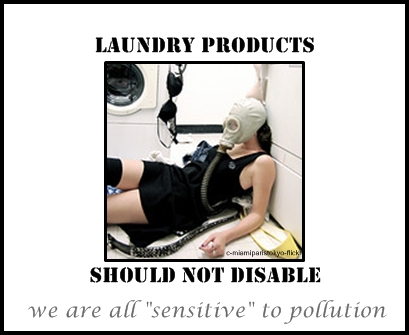
laundry products should not disable

Note that even the “natural” and fragrance-free products can contain toxic chemicals, because the industry is not regulated and they can say and do pretty much what they want.

Links updated October 24, 2015.

Continue reading