Tag Archives: health care access for people with MCS/ES

In the News: Toxic Troubles


toxic troubles in the news

The evidence (and casualties) are piling up

– Articles about the neurotoxic pandemic
– From Harvard… on Everyday Toxic Trespass
– Powerful article about perfumes  for children
– Pesticides in flea collars harm children too
– Important news about ALL pesticides
– Someday there will be less toxic clothing
– Driveway sealants are bad for Your health
– Doctors can’t be counted on to help treat oil related illnesses
– Illnesses linked to toxic chemicals increase health care costs
– Chemically injured woman has to sleep in a tent
– Some Things We Can Do

Why do we need much better laws and regulations to protect us and future generations?  Have a look at the following articles:

Continue reading

Ontario Centre of Excellence in Environmental Health Project

Ontario Centre of Excellence in Environmental Health

Business Case Proposal Project

I’ve received the following email and attachments (copied below) which we are being asked to share:

Dear Friends of the ES/MCS Community:

 We have some very important and exciting news to share with you regarding the creation of a number of key health and social supports within the health care system for people who suffer from environmental sensitivities and multiple chemical sensitivities (ES/MCS).

 We are attaching the following:

1.     Letter which is self-explanatory with the latest news

2.     Questions and Answers Background Briefing document which describes Steering Committee of the Ontario Centre of Excellence in Environmental Health Business Case Proposal project.

Please read this very important information.

Best wishes,

Denise Magi, V-P MEAO
http://www.meao.ca

AU 2011

What follows is copied from the PDFs for those who do not have easy access to downloading
(The PDF is also available for those who prefer to download files)

Continue reading

Harvard Medical School Associate Professor Speaks about MCS: Video

Dr. L. Christine Oliver is an Associate Professor of Clinical Medicine at Harvard Medical School and Co-Director of Occupational and Environmental Medicine at Massachusetts General Hospital.

This is an excellent half hour presentation.

Dr Oliver packs so much about the issues faced by people with MCS into the first 16 minutes of this video. If you can’t watch the whole video, at least watch this much.  Alison Johnson finishes off by reading from her important book Amputated Lives.

Alison Johnson is the author/producer/director of books and documentaries on Multiple Chemical Sensitivity. Visit http://www.alisonjohnsonmcs.com to download a transcript or to purchase her books or DVDs.

amputated-lives-chemical-sensitivity

Do No Harm? Disabilities and Discrimination: Elaine’s Story

When we are disabled, we can be vulnerable to discrimination, systemic abuse, and having our basic human rights violated. Like Paul Caune points out in the film Hope Is Not A Plan, “When your civil rights are violated you don’t need a good hug, you need a good lawyer”.

At the very least, we need a good advocate by our side.

Despite Human Rights “recognition”, people with MCS/ES are systemically denied safe access to even the most basic institutions of “care” that most people take for granted  due to chemical (and attitudinal) barriers and discrimination, like with the health-care systems, the very system where our health is supposed to be cared for.  I do believe there’s even an oath that some providers take to “do no harm”, but sadly, as those of us with MCS/ES have experienced, that is rarely the case when chemical and environmental sensitivities are concerned. Add more disabilities, and it can become even more challenging and rare to have our needs met with equality, dignity, and respect.

Take Elaine for example. Elaine has MCS/ES and used a wheelchair full-time for nine years because of a hereditary neurological disorder, Spino-cerebellar ataxia.  With luck, medication, some amazing people, and a reduction in toxic environmental contaminants, her mobility is now much improved.

However, due to these disabilities, she had her basic rights violated at a time when she was most vulnerable, when she required health care.

Elaine’s Story

Continue reading

Access to Safe and Appropriate Dental Care for People With MCS/ES: Part 3

Part 3: Things I Need to Do to Survive a Trip to the Dentist     

(I have severe MCS, the measures I need to take are not necessary for everyone)

In addition to making sure I am fully prepared for what I need in order to survive the days following a trip to the dentist (supplies, food, frozen foods, etc), I have to prepare for the actual visit. Depending on my state of brain fog and or brain injury symptoms, this can be very time consuming and challenging.

If possible, I discuss these measures in advance with staff when I make the appointment, to make sure they are prepared to accommodate my disability related needs, and can be comfortable explaining them to other patients who might have concerns when seeing me.

At the cabin, getting ready to go to the dentist
Continue reading

Access to Safe and Appropriate Dental Care for People With MCS/ES: Part 2

Access to Safe and Appropriate Dental Care for People With MCS/ES:

Part 2: Resources and Links

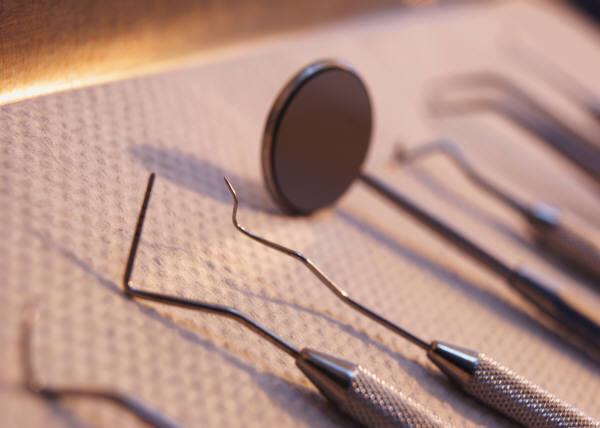
dental tools

What we really need are mobile dental vans that have no-VOC interiors and staff for people with severe MCS/ES, and safe and accessible dental offices and practitioners for everyone else. Until then, we need ways to protect ourselves and must often educate the dentists and staff as to how they can take care of our needs.

From mild to severe MCS/ES, different measures may be required.

Here are useful links that can help you prepare, and a sample office policy:

Continue reading

Access to Safe and Appropriate Dental Care for People With MCS/ES: Part 1

Part 1: The Problems

This is a subject I’ve been meaning to write about for quite some time, as I have my own serious dental issues much like like Doris, whose story follows.

We are dependent on ODSP and their dental program which does not cover our disability related medical needs of materials compatibility testing, safer materials or oxygen, all of which can be absolutely necessary to avoid serious health consequences from chemical exposures in dental offices and from incompatible materials.

Also, as Doris mentions below, most dentists have no experience with our specific needs.

I am aware of other people currently experiencing similar predicaments, in Ontario and elsewhere. I might be posting a few more stories as a part of this series.

We are looking for suggestions on how we can receive appropriate, safe and affordable dental care, which as we know is necessary for more than just dental health.

I will also be posting some steps and solutions available to those with adequate financial means to pay for them, but will start with the problems, and the request for assistance in finding solutions for those of us without adequate financial (and social) resources.

dental tools

What follows is Doris’s story, in her words…

Continue reading

Hospital Protocols for People With MCS/ES

hospital

Some hospitals around the world are developing fragrance-free policies and other less toxic practices, but most health-care environments can still be dangerous places to be for people with MCS/ES, presenting enormous challenges if health care services are needed, as I quoted from the ES-MCS Sensitivities Status Report in the post Canadian Statistics on MCS/ES.

“For ES-MCS sufferers the ideal of ‘patient-centred care’ is currently in stark contrast to realities within the health care system. Knowledgeable healthcare professionals and support workers are so few as to be virtually inaccessible most of the time. For moderately or severely chemically sensitive persons, physicians’ offices, clinics and hospitals commonly are unsafe places to wait, consult, or undergo procedures because patients can be exposed to many symptom triggers emitted from furnishings, cleaning and laundry products, disinfectants, and personal care products on staff or other patients, making their conditions worse. Fragrance/scent-free hospital, home care and rehabilitation services are very rarely available, and there are no chemically safe emergency shelters. Consequently, patients with severe chemical sensitivities may avoid seeking care, risking further deterioration and chronicity, thereby being “caught between a rock and a hard place.”

It can be a difficult decision for many of us when we experience symptoms, whether or not to have them checked out. Sometimes we wait too long, other times we just can’t go because the going is too dangerous for our health. Toni Bernhard touches upon it in Psychology Today, although MCS/ES adds another layer of complications to the decisions:  “5 Tough Choices You Face When Chronically Ill or in Pain

If a trip to the hospital is required, it’s best to be as prepared as possible. If it’s not an emergency, then your choice of the following documents can be forwarded and discussed in advance. Otherwise, carrying paper copies or discs with us at all times could be warranted, in case of emergency.

The following is a list of the best protocols and websites I’ve found, with important resources and documents for people willing and able to take the risks to advocate for themselves or to provide to others so they can do it on our behalf if we are not able.

Hopefully you have the time to go through them and choose what is most suitable for you before the need arises. With any luck, you won’t need them, but it’s good to be  prepared “just in case”. It will take a long time to prepare your local health care providers with protocols to reduce harm (we’re nowhere near the eliminate harm stage)  in advance.

A lot more needs to be done, because until the systemic issues are resolved, for too many of us, it’s far too dangerous to try to access health care.  The necessary negotiations are not feasible when severely disabled, ill, and in need of immediate care that does not exist.  These resources require the ability to work to implement. And there’s no guarantees that if you make progress once, the progress can be built on the next time, as far too often, it’s a start all over again from the beginning process.

Continue reading

Not so Equal Access to Health Care in Ontario or Systemic Barriers to Access for People with MCS/ES

Some places like Ontario, where I live, have disability access laws that state service providers, including those in healthcare, must accommodate people who are disabled.

On a government website, it states:

Barriers to accessibility are obstacles that make it difficult — sometimes impossible — for people with disabilities to do the things most of us take for granted — things like going shopping, working, or taking public transit… 

(or receiving health care services)

When we think of barriers to accessibility, most of us think of physical barriers — like a person who uses a wheelchair not being able to enter a public building because there is no ramp.

The fact is there are many kinds of barriers. Some are visible. Many are invisible:

•    Attitudinal barriers are those that discriminate against people with disabilities.

•    Organizational barriers are an organization’s policies, practices or procedures that discriminate against people with disabilities.

•    Architectural and physical barriers are features of buildings or spaces that cause problems for people with disabilities.
Chemical or “environmental” barriers prevent people like myself who have disabling medical conditions from breathing and functioning properly when exposed to these invisible, toxic and disabling barriers, resulting in both short and long term impacts.

How many of us do not have safe access to healthcare in Ontario?

In the ” Guide to the Accessibility Standards for Customer Service, Ontario Regulation 429/07″,  it says that Hospitals and health services provide goods or services  and as  designated public sector organizations should have been in Compliance by January 1, 2010…

It also states:
Continue reading

Air Quality and Accessibility in Health Care; Why Aren’t All Health Care Providers Fragrance-Free?

Can you smoke in a hospital or doctor’s office? No. Why not? Because smoke adversely impacts air quality and our health (despite what the tobacco industry has tried to claim).


So why then are fragrance chemicals still allowed in these environments?

One would think that with so much information about how harmful most fragranced items are, and how easy it is to find fragrance free substitutes, that the health care profession would be the first to embrace fragrance-free, low to no VOC indoor environments for both themselves and all the sick and vulnerable people they serve. This includes children, people with asthma, autism, heart and respiratory diseases, migraines, chemical and environmental “sensitivities”, and others who are prone to having symptoms greatly exacerbated by fragrance chemicals and poor indoor air quality.

We know some fragrance ingredients cause cancer. We know some are endocrine disruptors. Some are even neuro-toxic.  Fragrance chemicals trigger asthma, allergies, migraines, and mild to life threatening symptoms in people. Some of the chemicals have been linked to early puberty in girls, reduced sperm counts in men, reproductive defects in the developing male fetus (when the mother is exposed during pregnancy),  and hormone disruption which leads to some cancers, thyroid disease, obesity, and diabetes. There is also evidence suggesting that exposure to one of the ingredients that make fragrances last longer and stick to everything may cause liver and kidney failure in young children. What more are we waiting for?

Graphics by Roslyn Rodgers, health effects text by Linda Sepp.

Continue reading