Tag Archives: Research

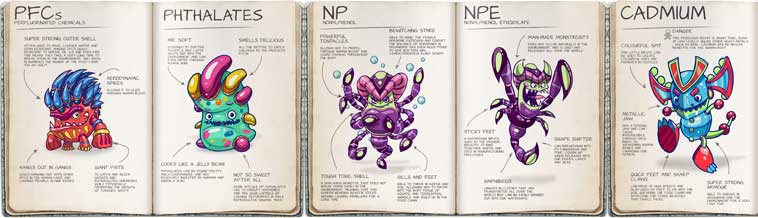
Monsters In Our Closets!

Greenpeace reveals more details about toxic chemicals in clothing:

A new investigation by Greenpeace has found a broad range of hazardous chemicals in children’s clothing and footwear across a number of major clothing brands, including fast fashion, sportswear and luxury brands.

The study follows on from several previous investigations published by Greenpeace as part of its Detox campaign, which identified that hazardous chemicals are present in textile and leather products as a result of their use during manufacture. It confirms that the use of hazardous chemicals is still widespread – even during the manufacture of clothes for children and infants.

greenpeace-monsters-guide

Continue reading

Personal Care Products, Pesticides, Health and Water…

The Toxic Evidence Piles Up and Doesn’t Wash Away

We all breathe the air. We all drink water. We all eat. We all wash ourselves.

We should be able to do this safely.

SO WHY ARE

so many toxic chemicals used in everyday products and materials, and found in our air, in our water, in our food, and in our brains and bodies?

Did you consent to this?

New reports have been released about toxic chemicals and health harm from products and materials most of us are exposed to a multitude of times on a daily basis…

Personal care products and pesticides

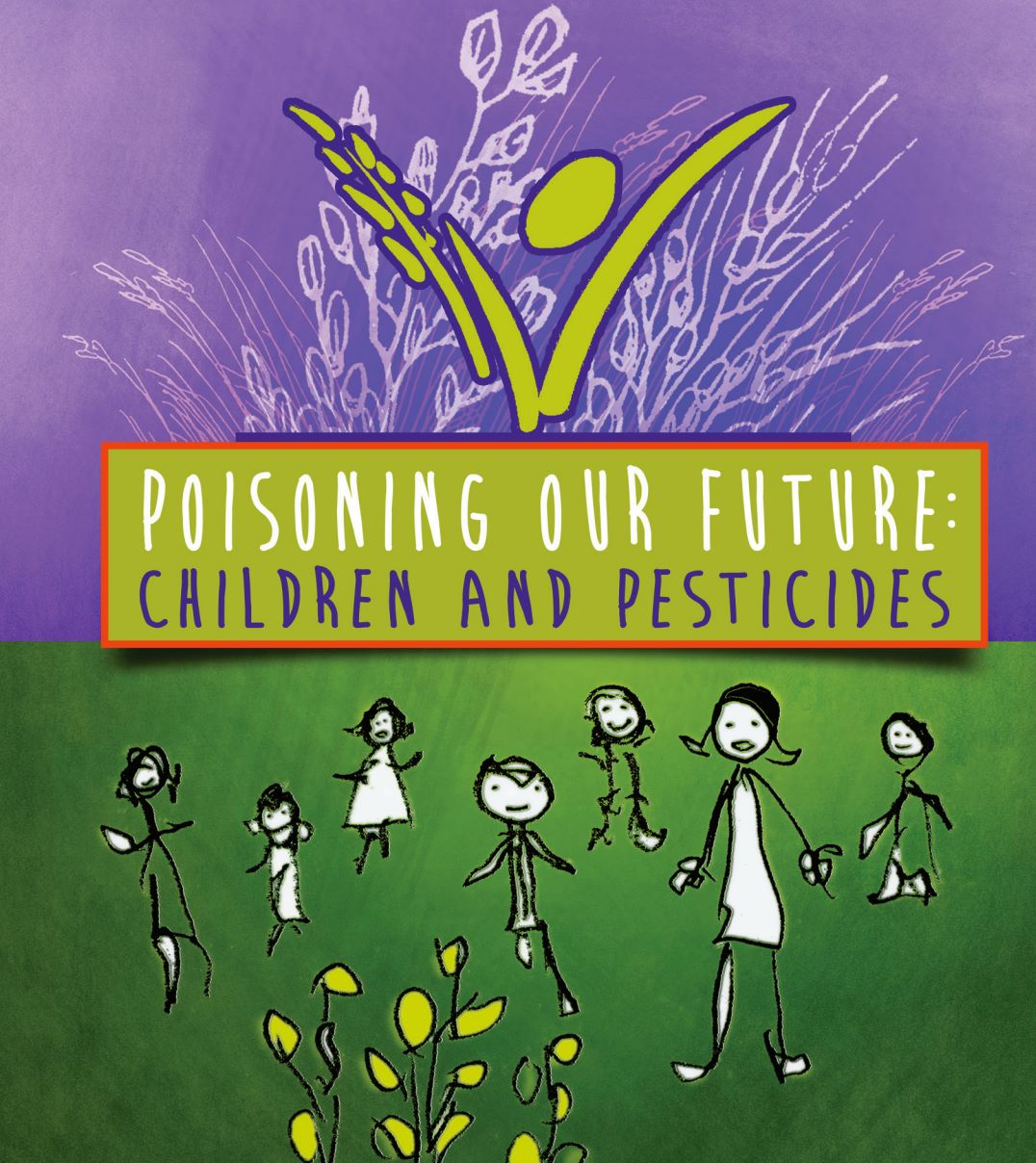
Poisoning Our Future
“Poisoning Our Future: Children and Pesticides”

PAN AP launched a (free) book on insidious effects of pesticides on children

Continue reading

How to access journal articles [Repost with additional link]

How to access journal articles [Repost with additional link].

Screen Shot 2013-08-31 at 4.03.08 AM

Good to know! Thanks Janice!

If anyone else knows of other resources, please share too!

UN and WHO say hormone-disrupting chemicals are a ‘global threat’

“Frankly, for BPA, the science is done. Flame retardants, phthalates … the science is done,” Zoeller said. “We have more than enough information on these chemicals to make the reasonable decision to ban, or at least take steps to    limit exposure.”

Phthalates are found in fragrances, laundry and other personal care and cleaning products, soft plastics, (PVC) and even in time released medications!!!

Exposures to these chemicals are currently very difficult to avoid, and require diligent personal effort and significant financial investments. But even that is not enough to avoid exposure.

edc_cover

Continue reading

Toxic Chemicals in Fragranced Laundry Products and Health Effects

toxic chemicals in laundry products

Some people wonder what the fuss about laundry products is all about.

What follows is Dr Anne Steinemann’s research on specific chemicals and their health effects. These are not just benign additives. They cause serious harm, and they are accumulating in ourselves and the environment, where they also harm other species.

Toxic Chemicals in Fragranced Laundry Products and Health Effects

Principal Investigator: Anne C. Steinemann, Professor, Civil and Environmental Engineering, and Public Affairs, University of Washington.

Chemicals identified by gas chromatography/mass spectrometry (GC/MS) headspace analysis.

Health and regulatory information obtained from databases compiled by the National Institutes of Health, Environmental Protection Agency, and other federal agencies.

Note that fragranced consumer products are not required to disclose all chemicals, not even ones classified as toxic or hazardous. None of these chemicals were listed on any product label or material safety data sheet.

ACETALDEHYDE (75-07-0)
Recognized Carcinogen
Suspected Developmental Toxicant, Immunotoxicant, Kidney Toxicant, Neurotoxicant, Respiratory Toxicant, Skin or Sense Organ Toxicant
Regulated as toxic/hazardous chemical under the following law(s):
Air Contaminants (OSH Act); Hazardous Air Pollutants (CAA); Hazardous Substances (CERCLA); Regulated Toxic, Explosive, or Flammable Substances (CAA); Toxic Release Inventory Chemicals (EPCRA)

Continue reading

Public Health: General and Applied Toxicology and Multiple Chemical Sensitivities

Petro-chemicals and synthetic substances are being linked to many chronic diseases and neurological conditions.

Multiple Chemical Sensitivities (MCS) are a huge part of a wider range of Environmental Sensitivities (ES), and affect from 3 to 30% of the population, in severity ranging from annoying to completely disabling.

It has taken far too many years for the world to start waking up to the fact that harmful substances are legally used in virtually all everyday “consumer” products (and the fact that we are referred to as consumers and not people is yet another disturbing story).

Petro-chemicals and synthetic substances are being linked to many chronic diseases and neurological conditions.

There are also a lot of symptom similarities between kids with autism and people with MCS and mould induced neurological symptoms. Adults can usually explain better what is happening to them than children can, so it has taken a long time for parents and researchers to start connecting those dots.

People with any other disability or medical condition are allowed appropriate health care and related aids, tax breaks, subsidies, insurance benefits, accommodations, and accessible housing. People with chemical injury, with MCS/ES, are denied access and even obstructed at every turn. Some but very little progress has been made for kids with autism only because they have had healthy parents advocating on their behalf.

It is beyond belief how harming people and the environment have become acceptable economic activities, while those trying to protect human and environmental health are called “special interest groups.” Something is seriously wrong with this picture.

We have a major, yet completely invisible public health crisis on our hands, and Professor Martin Pall has been working tirelessly on research to prove it. He is about to embark on another European tour to discuss his findings, and hopefully someone will invite him to Canada too. A press release about his research:

Continue reading

Why am I begging for clean air and water?

Chemical injury can happen to anyone.

(Note: Don’t miss the resources list at the end of the post.)

By Linda Sepp

It’s really hard to allow myself to think about the implications of my current situation. I’m forced to beg for un-petro-chemically-polluted air, water, food, clothing and housing.

Seems most people would rather not change their habits, both belief and practical, that they’d rather stubbornly maintain the belief that the government is protecting them, that this could never happen to them, that there must have been something bad I did to be in this position, that otherwise the safety net would be providing the help I need.

Chemical injury can happen to anyone. Some of us get cancer, or asthma, or alzheimer’s, Parkinson’s or MS, autism, ADD, or ADHD. Others develop Multiple Chemical Sensitivities (sensitivities is a misnomer–multiple chemical hells would be more apt) or Environmental Sensitivities, as it is more commonly called in Canada (MCS/ES).

What this means is that our bodies are negatively affected by minute quantities of chemicals. Sometimes it’s more of an annoyance on par with seasonal allergies, but often, when the body cannot escape exposures, the symptoms become completely debilitating and life threatening. Think being drugged and unable to think or function, in pain for weeks, and the only things that help are clean air, food and water. Things that are in short supply now, things we have no control over unless we are wealthy enough to buy 100 acres in the middle of no-where, so that someone’s dryer vent or pesticides don’t blow toxic chemicals our way, a place to have our own safe home with air and water filtration systems… things most people don’t notice because they are themselves covered in so many chemicals, living and working in neuro-toxic environments, finding it harder and harder to get by themselves, even begrudging our need for those things as frivolous.

So we become the hidden and often homeless. Invisibly disabled, abandoned, ignored and ridiculed. How is it possible that inhaling anyone’s laundry product or body spray could disable someone for over a week? That there are no clothes that are chemical free? That all housing has been allowed to be completely contaminated by useless chemical residues allowed into fragranced personal care or cleaning products, or worse yet, those so called air-fresheners? How could a few inches of some simple caulk render someone semi-comatose for 4 months? How are neuro-toxic, carcinogenic, endocrine disrupting chemicals allowed into things we slather onto our bodies, wash our clothes with, rinse into our water supplies, in our foods, and in building materials? Synthetic petro-chemicals that will injure people’s brains and central nervous systems? How indeed.

Protecting Industry is more important than protecting public health. It is that simple. The same chemical industry that creates all the toxins that cause so many chronic or otherwise debilitating illnesses, also supplies the pharmaceutical companies with synthetic petro-chemical ingredients to make drugs that will hopefully alleviate some of the symptoms of our damaged bodies without killing us completely in the process. This is called making a killing financially and keeping the economy growing.

Continue reading

A victim in my own house

The story of my life was published in November of last year, it would have been nice if they got it right.

By Linda Sepp.

The Star reported on my housing situation on Nov. 12, 2009:

A victim of her own environment: Linda Sepp fought being evicted because of her allergies. But now she’s being poisoned at home.

To read the article below, click on photo to enlarge.

And here is my Letter to the Editor in response:

Continue reading