Category Archives: Environmental Health

50% of US Population Breathes Unhealthy Air!

Outrageous!

“Nearly 150 million people, roughly half of the population in the United States, currently live in areas with unhealthy levels of air pollution that is linked to serious health impacts, such as asthma attacks, lung cancer, heart attacks, strokes and even death. Children are particularly susceptible to the health effects of air pollution because their lungs are still developing. Air pollution also disproportionately impacts vulnerable populations already burdened with chronic diseases such as asthma, heart disease and chronic obstructive pulmonary disease (COPD). Scientists warn that the buildup of carbon pollution in the atmosphere leads to warmer temperatures worsening the conditions for ozone formation in some places, and making it harder to achieve healthy air for all.”

50 percent air pollution

Georges C. Benjamin, MD, Executive Director, American Public Health Association:

Continue reading

MCS/ES Awareness Month 2014

 It’s that time of year again. Welcome to MCS “Awareness” Month!

People with disabilities have the right to equal treatment and equal access

Barriers to access can be physical, attitudinal or systemic. Conveniences can also create barriers. If you are unable to remove a barrier to accessibility, consider what else can be done to provide services to people with disabilities. No-one should live without safe access to the necessities of life.

What is disability? (Ontario Human Rights Commission)

“Disability” covers a broad range and degree of conditions, some visible and some not visible. A disability may have been present from birth, caused by an accident, or developed over time. There are physical, mental and learning disabilities, mental disorders, hearing or vision disabilities, epilepsy, drug and alcohol dependencies, environmental sensitivities, and other conditions.”

Removing barriers and designing inclusively

Persons with disabilities face many kinds of barriers every day. These can be physical, attitudinal or systemic. …

Identifying and removing barriers also makes good business sense. As well as meeting the needs of customers or employees with disabilities, removing barriers can also help other people…

Employers, unions, landlords and service providers can start by doing an accessibility review of their facilities, services and procedures to see what barriers exist. You can then make an accessibility plan and begin to remove the barriers.

It is also helpful to create an accessibility policy and a complaints procedure. These steps will help you remove existing barriers and avoid making new ones. The best way to prevent barriers is to design inclusively

Barriers aren’t just physical. Taking steps to prevent “ableism” – attitudes in society that devalue and limit the potential of persons with disabilities – will help promote respect and dignity, and help people with disabilities to fully take part in community life…

The duty to accommodate

Even when facilities and services are designed as inclusively as possible, you may still need to accommodate the individual needs of some people with disabilities. Under the Code, unions, landlords and service providers have a legal “duty to accommodate” persons with disabilities. The goal of accommodation is to allow people with disabilities to equally benefit from and take part in services, housing or the workplace.

Accommodation is a shared responsibility. Everyone involved, including the person asking for accommodation, should work together, exchange relevant information, and look for accommodation solutions together…

 

Some Resources: Continue reading

We Share the Air Canary

we share the air canary

Choose fragrance-free products. Clean air is fragrance-chemical-free. Fragrance chemicals create an invisible barrier to access for people who are disabled by pollutants and can cause health harm to everyone who breathes.

We share the air! Help keep it clean!

Pesticides in Shipping Containers and Contents

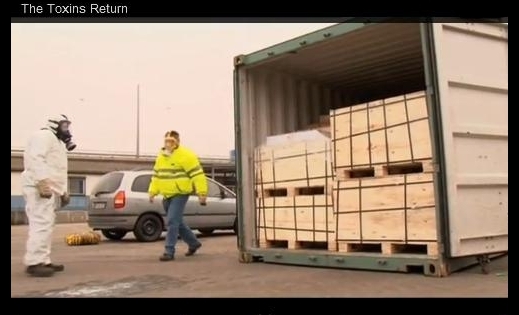
Did you know that there can be massive amounts of highly toxic pesticides used in the shipping containers, especially when products and materials are shipped over seas?

The Toxins Return

In a world where recycling is being encouraged, this presents some potentially serious  problems that aren’t being widely discussed. Some things have simply not been designed to be reused, and recycling toxic materials just spreads the contamination further afield, causing low level poisoning and some kinds of chronic health problems.

The trend to build all kinds of indoor furniture and garden beds out of pallets is quite troubling. The pallets used in these containers would also have absorbed the pesticides and be unsafe for re-use. This article describes other issues with pallets.

potentially dangerous pallet reuse google imagesScreen shot from google image search of reused pallets
Note potentially hazardous furniture for children and food use

Converting shipping containers into homes is another big trend (see below).

The following documentary depicts some serious problems related to clothing (as well as some other items that were shipped long distances) when saturated with health harming levels of pesticides. Manufacturing issues are also examined in this video.

Continue reading

Big News for Ontario

From the News Release:

“The province is providing nearly $560,000 to support two new annual fellowships over three years for a total of six new fellowships. They will allow family medicine graduates to complete an extra year of focused training in environmental health, and will help primary care providers like family doctors offer the right care to assess, diagnose and treat environmentally-linked health issues.”


“Environmental health is an emerging public health field that examines the relationship between the environment and human health. This includes the role of the environment in contributing to serious health conditions that can be disabling and even life threatening, such as environmental sensitivities, myalgic encephalomyelitis/chronic fatigue syndrome, fibromyalgia and other chronic, complex disorders. ”


“There is a growing recognition that our environment and our health are connected. Through these new fellowships, we can develop greater understanding of the links between health and the environment in order to provide better care to those suffering from complex chronic illnesses.”

~
~ Deb Matthews
Minister of Health and Long-Term Care


“The study of the environment’s effects on human health is an important emerging field of research. Support for investigating environmental impacts on health is emblematic of our government’s commitment to strengthen healthy communities.”

~
~ Jim Bradley
Minister of Environment

Full News Release:

Continue reading

Everyday Toxic Trespass

Women’s Voices for the Earth has a great page about toxic ingredients commonly found  in products women, men and children are exposed to on a regular basis, usually everyday, even when we try not to be. Check it out, get informed, and take action to protect you, your family and the planet that supports our lives.

 Skin Deep

Take Action via WVE

Mind the Store

 Sadly, our current regulatory systems do more to protect those who are polluting us, than to protect our health. I don’t know how we are going to change this without a massive outcry, but we CAN stop buying the products we learn are harmful to us and to future generations.

The Skin Deep website has information about thousands of personal care products and ingredients, WVE has recipes to make your own, and then some, and Mind the Store is successfully calling on retailers to stop selling toxic products. We have more power than we know, but only when we use it!

Proof: Pesticides Are MORE Toxic Than Declared!

‘Cides are designed to kill. Only the so-called “active” ingredients are listed and tested for how well they kill what they are sold to kill. Human, animal and other environmental effects are rarely if ever researched, and then it’s only for the active ingredients. The combinations of ingredients and the so-called “inert” ingredients which make the products flow or apply better are not taken into consideration. Those “inerts” can also be more toxic than the active ingredients, but don’t have to be listed!

Recent research tested and discovered that these combinations can be up to
1000 times more toxic than declared!

Roundup more TOXIC

Major Pesticides Are More Toxic to Human Cells Than Their Declared Active Principles

Abstract

Continue reading

There’s Petrochemicals in What?

We now breathe, drink, eat and wear petrochemicals every where, every moment, every day! There’s no getting away from them!

Where are they coming from?

“The petroleum industry includes the global processes of exploration, extraction, refining, transporting (often by oil tankers and pipelines), and marketing petroleum products… Petroleum (oil) is also the raw material for many chemical products, including pharmaceuticals, solvents, fertilizers, pesticides, and plastics.”

(https://en.wikipedia.org/wiki/Petroleum_industry)

So many of the things we use (and consume) are being made from petrochemicals.

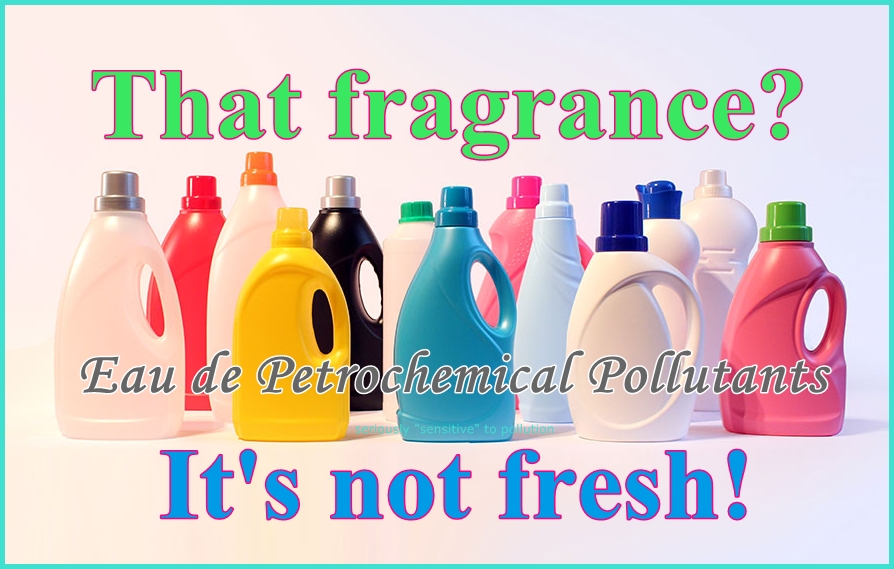
eau de petrochemical pollutants

Check out these two charts:

Continue reading

Petition to Vitamix

Vitamix makes state of the art blenders which are good for making juices, soups, non-dairy milks, nut butters, grinding flour, and more.

Sadly, their current containers are made out of plastic, and even though it’s BPA-free plastic, the substitute (Tritan) might be worse than  BPA.

Vitamix used to make stainless steel containers, and due to increasing health problems from plastic chemicals, a growing number of us want them to make them again.

Vita-Mix

Vitamix Then and Now

Beth Terry at My Plastic Free Life (a great website by the way) wrote about this in some detail in her blog post “Quick Action: Ask Vita-Mix to bring back the stainless steel blender pitcher!” and started a petition.

Please sign it! If not for you, then for me!

Continue reading

Fragrance Decision Undermines EPA’s DfE Program

EPA’s Design for the Environment (DfE) Program (claims to) work “to reduce risk to people and the environment by finding ways to prevent pollution”, yet they recently began allowing DfE-endorsed products to contain fragrances.

Of the first 119 fragrance chemicals okayed for use, 93 have “hazard profile issues” such as being known sensitizers or lacking vital data!!!

“Researchers, pediatricians, and other health experts agree that “Scented chemicals increase risk that some per cent of exposed people will have allergic and hypersensitivity reactions. Allergic and asthmatic children are at especially high risk”

Those of us with MCS/ES, along with many others who now experience adverse or disabling health effects from fragrance chemicals rarely had them before being exposed to some supposedly safe petrochemicals (in everyday use) that tipped our bodies over an edge. For too many of us, it was from fragranced products that we first experienced and continue to experience chronic health problems.

So it is wonderful to see health experts formally urging the EPA to

SAY NO TO FRAGRANCES

No Fragrance

“Pediatricians and respiratory experts, including the American Lung Association and the American Academy of Pediatrics, wrote to the EPA Administrator today raising concerns about the health impact of the recent decision of the US EPA’s Design for the Environment program to allow fragrances.”

it is standard environmental health practice to discourage the use of air fresheners, scented products, and fragrances in homes and other indoor spaces.

We were surprised and deeply disappointed to learn that the Agency’s Design for the Environment program (DfE) created a “fragrance” category of chemicals for commercial and consumer cleaning products. The vast majority of chemicals listed — 93 of the 119 total — have “hazard profile issues” because they are identified in one of
Continue reading