Category Archives: MCS/ES

Ottawa environmental doctor disciplined for treating suicidal teen with vitamins

Bad news!

I wonder how many people commit suicide due to pharmaceutical drugs that are prescribed?

How many of the doctors whose patients commit suicide due to the pharmaceuticals they prescribed are disciplined?

Dr. Armstrong has helped a lot of people over the years, people that other doctors were unable to help, or worse, subjected to harm.

Finding doctors that don’t harm people with environmental and chemical “sensitivities” (from ignorance, disbelief, or even inadvertently, while others take their oath to do no harm as an excuse to do nothing) is nearly impossible. Too many of us are forced to go without health care as a result.

Although it seems that her approach was lacking in this case (we don’t have all the details), and my condolences go out to the family who lost a loved one, in addition to the hypocrisy of not disciplining other types of doctors after patient suicides, the closing statement in the article is propaganda that will inflict harm on people whose needs are not being served by the current system:

“Critics, including many doctors, say sometimes there’s no evidence that something is dangerous because it actually isn’t dangerous, and trying to find environmental sources for particular afflictions can mean ignoring real problems.”

The critics are usually from the petroleum/pharmaceutical industry and have a lot to lose if MCS/ES is officially understood.

All too often now, ignoring the man-made environmental sources of adverse health effects means ignoring the real problems, and countless people, including children, are suffering as a result.

(continued in the comments, I don’t have the reblogging format down yet)

MCS/ES Accommodation Resources

When people develop MCS/ES, it can be extremely challenging maintaining access to jobs, housing, or other services due to the prevalence of indoor air pollution and pollutants, fragrance chemicals being a huge factor. When MCS/ES becomes disabling, it becomes a human rights issue requiring accommodation under the law in many places around the world.

Here then are some accessibility tools:

In the presentation from ADA Audio Conferencing – A program of the ADA National Network

One important point made was this:

MCS ES fragrance free policy

For people with EHS, a wireless-free policy is required, as well as other accommodations mentioned in the presentation.

Here are a few of the slides from Accommodating Persons with Environmental Sensitivities: Challenges and Solutions (which is available to download from the link below):

Continue reading

In a Doctor’s Own Words: A Toxic Legacy and 12,000 (+) Canaries Later


Dr. John Molot is a doctor who sees patients with complex, chronic, environmentally linked, and often disabling, health conditions. Although he is retiring from private practice, he is still a staff physician in the Environmental Health Clinic at Women’s College Hospital in Toronto.

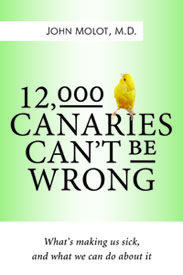
He recently released a book, “12,000 Canaries Can’t Be Wrong“,  wrote a report in support of the Ontario Centre of Excellence in Environmental Health (OCEEH), and appears in a video presentation about the health effects of common  chemical exposures (see below).

Check these out:

12,000 Canaries Can’t be Wrong
What’s making you sick & what can you do about it

Books

12000Canaries_hiRessm

Continue reading

Air Cleaners, Filters, and Purifiers

Many of us have to breathe to stay alive. Okay, all of us have to breathe to stay alive. Some of us just need cleaner air than others, or our ability to think and function is severely impaired from inhaling common pollutants found in both outdoor and indoor air.

This is where air purifiers and filtration devices come in.

Here are links to a few good documents and websites to read before you spend any money, that discuss what to look for and what to avoid:

Continue reading

“Sensitivities” in the Canadian Family Physician journal

The June 2014 edition of the Canadian Family Physician journal contains a couple of excellent articles by Dr Stephen J. Genuis. Here’s the abstract and link to one of them:

Approach to patients with unexplained multimorbidity with sensitivities

Abstract:

Objective To explore the underlying causation of unexplained multimorbidity with sensitivities and to discuss the management of patients who present with this perplexing condition.

Sources of information Medical and scientific literature was used from MEDLINE (PubMed), several books, toxicology and allergy journals, conference proceedings, government publications, and environmental health periodicals.

Main message Multimorbidity with sensitivities has become an increasingly common and confusing primary care dilemma. Escalating numbers of debilitated individuals are now presenting to family physicians and specialists with multisystem health complaints, including sensitivities and fatigue, with no obvious causation, a paucity of laboratory findings, and a lack of straightforward solutions. In the recent scientific literature, there is discussion of sensitivity-related illness, an immune-mediated disorder that frequently manifests with multisystem symptoms, commonly including sensitivities and fatigue.

Continue reading

Day 256 In the Pursuit of Love (IIAW A “Sister’s” Journey)

Colleen and her friend Beth discuss statistics and friendship challenges and benefits in another revealing post for Invisible Illness week…
Just like Colleen waited for years to get officially diagnosed with MCS, so did I, and for mainly the same reasons.
I knew that the doctors at the time knew nothing about it (or they would have given me a clue as to what the early signs were years ago).
Eventually I came to realize that statistics ARE important (to decision makers), and if we don’t make the effort to get an official dx (I say effort, because many people go from uneducated doctor to uneducated doctor for years… see my post about good news for Ontario to understand what a major deal the announcement of training 2 doctors in environmental health is) then in the eyes of decision makers, we do not exist.
That means that services for us continue to not exist also…
But when we speak up, things change.
I love how Colleen is speaking up, and how her friends are too!

Colleen's avatarLife in the City with a Future

PERSON

Image17meshovelFor day 5 of Invisible Illness Awareness Week, my buddy Beth has agreed to give her perspective of what it is like having a friend disabled from MCS. In a Canadian study, in 2010, over 800,000 people were diagnosed with MCS (Multiple Chemical Sensitivities) an 31% increase in 5 years. Those during the same time period with one or more of Chronic Fatigue, Fibromyalgia, and MCS were 1,415,000 (a 25% increase). This study excluded children with MCS and focused mostly on people with MCS diagnosed by a doctor. I personally went undiagnosed for decades. I avoided the triggers of perfume as much as I could. I figured there was nothing a doctor could do for me anyway and why be just another statistic. I now understand how important it is for our governments to have accurate statistics. The more people who give MCS a voice — the more likely we…

View original post 1,076 more words

Day 254 In the Pursuit of Love (IIAW In Mom’s Words)

A mother’s thoughts on having a daughter with disabling MCS

Colleen's avatarLife in the City with a Future

Image (11)I asked my mom for the ultimate act of love this week. I asked her tell about her journey having a daughter who is disabled with MCS. Mom asked me for questions for her to answer. These are her words:

1. What did you first think when I told you I was disabled with MCS and you would have to eliminate all toxic chemicals from your life if you wanted to physically see me?

I thought, God. How do we do that — chemicals are everywhere? How bad is this going to get for my poor daughter? And of course, I thought about myself also. I have lived for so long doing everything using all kinds of awful stuff and not even paying attention until you get an awful wake up call and have to hope and pray it is not too late.

2. Two years after my disability from…

View original post 1,027 more words

It’s What You Can’t See that Hurts You

What it can be like having a friend with MCS… from a real friend <3
“I would go through all those steps, put on my safe clothes and Colleen would still say “Nope. Still contaminated.” I wanted to punch something. Here I would do just about anything for a friend, and it still didn’t work. It didn’t dampen her spirits, though. After that happened, she would just smile and say how I had worked harder than anyone else to solve this problem, and it was too bad that it hadn’t worked. That really didn’t help me much. I still felt frustrated.”

Joe's avatarStepping Out with an Agoraphobic

Invisible Illness

This week is National Invisible Chronic Illness Awareness Week. It runs through September 14th. It was suggested to me that I write about my experiences in dealing with my illnesses, and I will – perhaps at a later date. Instead of looking within myself, I thought I would broaden the scope of my focus and talk about an invisible illness that has hit close to home, and changed how I live my life.

To have a loved one succumb to an illness is one of the most painful things imaginable – and that pain applies to friends, as well as to family. What is even worse is when that illness is new, uncommon, or even invisible. This is what has been happening to my friend, Colleen, who has Multiple Chemical Sensitivities, a crippling disease that has rendered her disabled.

I must admit that sometimes I don’t feel like…

View original post 1,156 more words

Severe MCS/ES… What Does It Mean?

To some degree, severe MCS/ES (like pain) is subjective. In other ways it’s a moving target, as we can be fine (or almost fine) one minute, and be completely incapacitated the next hour (day, week, or month) from an exposure, or combination of exposures. One day, a perfume exposure during lunch with friends might “just” give someone a throbbing headache for the rest of the day, but the next day, because there was also a cloud of diesel smoke, a fragrance contaminated piece of mail, someone installed wi-fi in the apartment next door, and someone else’s dryer vent was pumping out chemicals when we walked by with the dog, the same 3 breaths of perfume at the pet store we were trying to buy dog food from, could send us to bed for a week, or longer.

To make matters more difficult for others to accurately assess (and assumptions and clueless opinions are rampant where invisible disabilities are concerned), the recovery period, when most incapacity takes place, occurs when no-one is around to witness the effects, as many symptoms are delayed reactions. This means that people with severe MCS/ES are usually only seen during better moments, not when we’re at our worst.

severe mcs es

Something else I often see is that people’s ability to tolerate change and adversity varies greatly. Some people fall apart when faced with the slightest challenge, while others can endure unbelievably difficult circumstances and suffering without ever complaining.

One person’s severe is another person’s “just another day”. And, as I found out, when we think things are as bad as they can possibly be, they can get 1000 times worse (especially where brain function is concerned). This can really confuse people, ourselves included…

That said, there are tools that have been designed to help medical professionals assess all kinds of health and disabilities. And accurate assessment is especially important when applying for disability benefits.

What follows are a few tools that can help us understand. This information is not meant for acquiring disability benefits. I’m providing it for educational purposes only.

How can “sensitivity” symptoms affect life?

Continue reading

Environmental Sensitivities Day Event in Montreal

From the Environmental Health Association of Québec (aseq-ehaq)

May 12, ENVIRONMENTAL SENSITIVITIES DAYLet’s talk about it!

Conference on Environmental Health in Montréal May 12, 2014

Montreal, May 12 , 2014 – Today, May 12th is Environmental Sensitivities Day.

On May 12, in addition to a conference in Montreal, the Environmental Health Association of Québec is having events on Environmental Health in Québec City, Sutton, Saint Casimir and Gatineau.

The Environmental Health Association of Québec is proud to present a ground breaking conference titled:

TOXIC LEGACY & GENDER INEQUALITY
Women are more susceptible to the effects of the environment on health. How you can safeguard yourself from harm.

Simultaneous translation available

Chair:
Dr Barry Breger, M.D.

Speaker:
Dr John Molot, M.D., C.C.F.P., F.C.F.P.
Environmental Health Clinic, Women’s College Hospital, Toronto

Press Conference: 3:00 – 4:00 p.m. (Private press time with Dr Molot)

Registration including booth visits: 4:00 – 6:30 p.m.
Conference: 6:30 – 9:00 p.m.
Meet the speaker & book signing: 9:15 – 10:00 p.m.

EHAQ bilingual_conference_invitation_jpegVenue:

Continue reading