Category Archives: Pollution

What’s it Like to Have MCS/ES? Part 2: Curbs

MCS/ES (multiple chemical sensitivities / environmental sensitivities)  is a disability recognized by the Canadian and Ontario Human Rights Codes. There are over a million people with doctor diagnosed MCS in Canada, and so many more all around the world.

In the US, the latest prevalence study found that “among the population, 12.8% report medically diagnosed MCS and 25.9% report chemical sensitivity.”

The term ‘sensitivities’ seems to trivialize the condition in many people’s minds.

You may wonder what’s it really like then, if it’s not trivial?


From Amy RW Marsh:

I just wrote this analogy for a person who needed one in order to understand EI/MCS:
Continue reading

Return to Vendor

Get something stinky
as a gift?
Don’t toss it
on the street
or in the trash.
Don’t regift it
to a friend
or enemy.
Don’t donate it
to a charity.
Do send a message
loud and clear!

Now’s the time Continue reading

Choices… We Always Have Some

When Toxics Drift

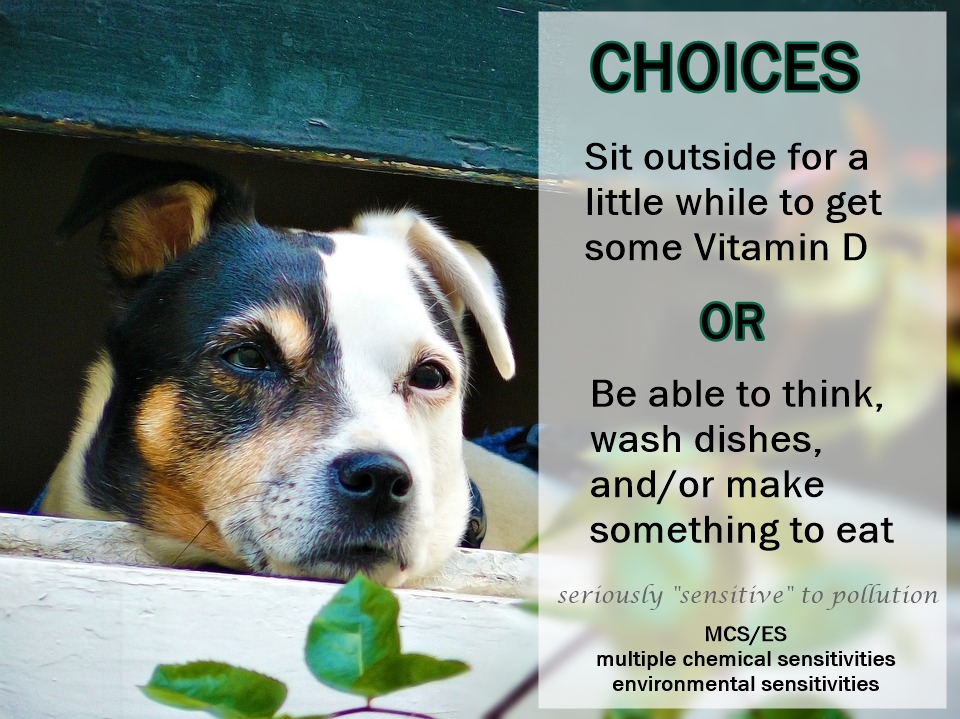
we end up with choices.

Sit outside for a little while to get some Vitamin D

or

Be able to think, wash dishes, and/or make something to eat

Continue reading

When Toxics Drift

Toxics Drift
smoke, asphalt, refineries, pesticides, gases, laundry fumes, etc

When pollutants drift, then people (and other living beings) get hurt, especially the many millions who are more ‘sensitive’ to pollution.

Smoke is one form of pollution that is visible, but other types may not be.

Here are a few images that show how different types of visible pollutants move through the air we all depend on to breathe, and how far they can travel:

Continue reading

Every Day is Earth Day

When we pollute our planet,
we  pollute ourselves.


If we don’t look after our life support system, how will we live?

We all need clean air, clean water, healthy soil, and safe food.

Continue reading

Laundry Products Harm Humans!


We often hear from people who think they aren’t wearing any fragrance while their fume trail is noticeable (and headache inducing or worse) from 100 feet away.  Not only that, but the scent residues are left everywhere these people have touched anything, including pretty much permanently in the furniture they’ve used.

How can this be?

Laundry products!


Continue reading

11 Reasons To Stop Using Fragrances and Implement Fragrance-free Policies

Here are 11 excellent  reasons to stop using and allowing fragrances in your home, at work,  in healthcare, in housing, at school, in transportation, in retail, and in other public places:

Continue reading

Canary Separates and Onesies aka Hazmat Gear

A few of us were talking about the steps some of us canaries have to take to be able to go places: masks, respirators, scarves to cover hair, lab coats, long skirts, outdoor only clothes that are removed before entering our safe homes, and clothes  that are  never worn inside due to picking up so much 2nd and 3rd hand fragrance contamination.

And  the removal and bagging for later washing of everything we did wear or have with us, and the showers we have to take as soon as we get home.

Then there’s the lunch kits and other accessories we need to pack, but that’s another blog post or three.

I’ve posted before about using tyvek suits, both to wear in order to protect us from exposures when we go out, or to have others wear to protect us from exposures to their products off-gassing when we need them to enter our space.

This time though, someone mentioned that they wanted to go to an event that lasted long enough that they would need to use the washroom while out, so a one piece tyvek suit wasn’t going to cut it.

Continue reading

If Only You Could See

Guest post and art from Gloris Smith Young 

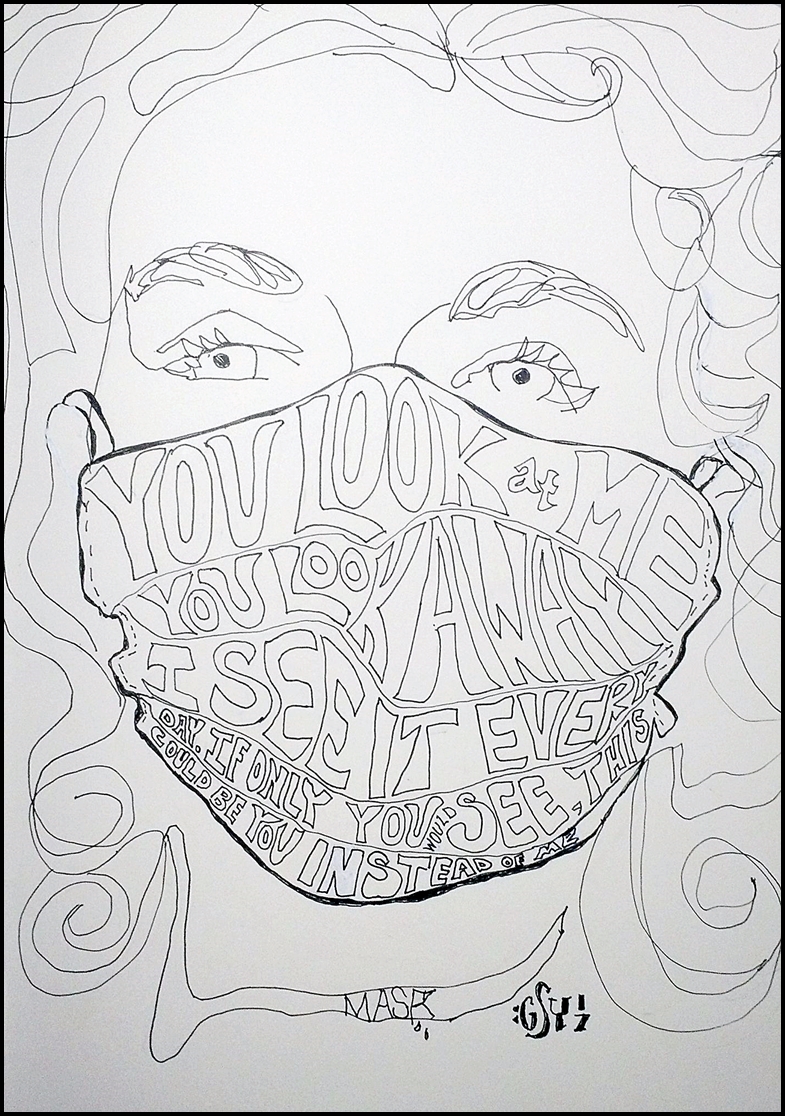
You look at me
You look away

I see it every day
If only you could see

This could be you
Instead of me

Continue reading

60 MiNueTs: Short Video Series on Environmental Health

 It’s hard to get anyone to take the time to read (let alone  understand) scientific research, but it’s so important that we educate ourselves when the opportunity arises. People have short attention spans these days, probably from all the neurotoxins and wireless radiation we’re all being exposed to on a daily basis, so it’s great when we find information that is short and to the point.

Here is a great short video series from

the UCSF Program on Reproductive Health and the Environment.

Please watch and share!

Continue reading