Category Archives: Public Health

MCS: A Life Altering Condition (Video)


Multiple Chemical Sensitivity: A Life Altering Condition

Produced and Directed by Alison Johnson
1:09:28 minutes

Note from Alison Johnson:

“Since 1998, I have made three long documentaries and three short ones. During this fifteen-year period, I have gained a much deeper understanding of multiple chemical sensitivity and its great impact upon so many lives. This new composite film contains the best and most effective sections of my six earlier films. I have chosen carefully which experts and patients to use from my earlier films so that this new film will be an effective way of helping people to understand multiple chemical sensitivity. The film contains footage of interviews with four members of Congress as well as with many important physicians.”

More info and a list of physicians appearing in the film:
http://www.alisonjohnsonmcs.com/multiple-chemical-sensitivity-a-life-altering-condition-dvd.html

Transcript:
http://chemicalsensitivityfoundation.org/multiple-chemical-sensitivities-life-altering-condition-transcript.html

mcs-a-life-altering-condition

Much gratitude to Alison Johnson for all of her work over the years.

It’s Not Personal, It’s The Chemicals #2

The images in the 1st It’s Not Personal, It’s The Chemicals  were so popular, I decided to make more while my brain was functioning in this mode. Here are a couple that were very well received on facebook, plus a few new ones featuring children and office workers, as they too are being impacted by what we choose to use and put in the air.

It s not you 16

It s not you children

Continue reading

How Acceptable Are Your Levels?

 Do you know that you have hundreds of toxic chemicals in your body right now?

Do you know that our bodies weren’t designed to deal with 24/7 exposure to the kinds of substances we are breathing, ingesting, and absorbing all the time now?

If you have MCS/ES, then yes, you know. If you are involved with the environmental health movement, then yes, you know. If you watched the interview with Bruce Lourie that I shared earlier this year, about his book ToxIn ToxOut, then yes, you know. If you or someone you know has a health condition that has been linked to chemical exposures and pollution, then maybe you know… Otherwise, probably not…

How many of you have any idea what kinds of chemicals are in your body now, and what kinds of health effects they might be having on you, or on your eggs and sperm?

Have you agreed to be a chemical experiment (and are any of you being paid for it, or receiving funding to deal with the adverse effects that might happen or are happening)?

If you are like most of us, then you are completely unaware of what we are all being exposed to and the effects these exposures are having on our health. We still believe that products have to be safe if they are being sold to us. It’s hard to believe otherwise.

Like so many others, we don’t question this belief until something goes wrong in our own lives. Ed Brown was no exception. But after his wife suffered a couple of miscarriages, he got to asking

WHY?

And he made a film about his quest for answers:

Unacceptable Levels

Continue reading

It’s Not Personal, It’s The Chemicals

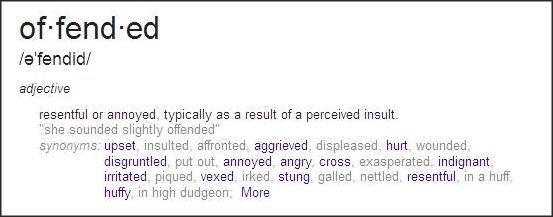
offended

Have you ever noticed how some people get offended when we are disabled by, or get sick from something in the products they’ve used?

What’s up with that?

???

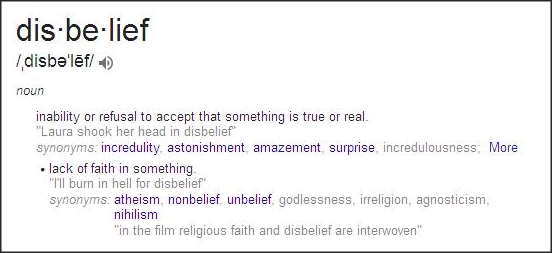
What about those who feign disbelief that we could be harmed by something they are using? Or that they could be using something that is harmful?

disbelief

While I am not up to delving into the psychological and emotional intricacies of those responses here, or how industry pays big money to create them, I did come up with a few simple images with variations of the following text:

It’s not you! It’s not personal! It’s the chemicals!

Fragrances, personal care, and laundry products
contain toxic chemicals that make it impossible
for some people to be around those who use them.

Continue reading

“Sensitivities” in the Canadian Family Physician journal

The June 2014 edition of the Canadian Family Physician journal contains a couple of excellent articles by Dr Stephen J. Genuis. Here’s the abstract and link to one of them:

Approach to patients with unexplained multimorbidity with sensitivities

Abstract:

Objective To explore the underlying causation of unexplained multimorbidity with sensitivities and to discuss the management of patients who present with this perplexing condition.

Sources of information Medical and scientific literature was used from MEDLINE (PubMed), several books, toxicology and allergy journals, conference proceedings, government publications, and environmental health periodicals.

Main message Multimorbidity with sensitivities has become an increasingly common and confusing primary care dilemma. Escalating numbers of debilitated individuals are now presenting to family physicians and specialists with multisystem health complaints, including sensitivities and fatigue, with no obvious causation, a paucity of laboratory findings, and a lack of straightforward solutions. In the recent scientific literature, there is discussion of sensitivity-related illness, an immune-mediated disorder that frequently manifests with multisystem symptoms, commonly including sensitivities and fatigue.

Continue reading

More Reasons and Resources to go Fragrance Free

If fragrances and the products they are added to didn’t contain so many seriously  harmful ingredients which pollute the air we all breathe, the clothing we wear, the water we drink, and the soil we grow the foods we eat in, there wouldn’t be a need to go fragrance-free. Strangely, the fragrance industry has seen fit to include a vast array of toxic, petrochemical pollutants and highly allergenic substances in their products.

Here are some resources to use in making schools, workplaces and homes safer places to be. Some are new, some I’ve already linked to in other places on this site.

Hope you find them helpful.

access safe

from  The CDC and MCS

The CDC Indoor Environmental Quality Policy from 2009 explicitly states:

“Fragrance is not appropriate for a professional work environment, and the use of some products with fragrance may be detrimental to the health of workers with chemical sensitivities, allergies, asthma, and chronic headaches/migraines.” …

Potential hazards include chemicals, biological agents, fragrant products, and physical conditions that may cause irritation, illness, or exacerbate existing health conditions” …

Continue reading

50% of US Population Breathes Unhealthy Air!

Outrageous!

“Nearly 150 million people, roughly half of the population in the United States, currently live in areas with unhealthy levels of air pollution that is linked to serious health impacts, such as asthma attacks, lung cancer, heart attacks, strokes and even death. Children are particularly susceptible to the health effects of air pollution because their lungs are still developing. Air pollution also disproportionately impacts vulnerable populations already burdened with chronic diseases such as asthma, heart disease and chronic obstructive pulmonary disease (COPD). Scientists warn that the buildup of carbon pollution in the atmosphere leads to warmer temperatures worsening the conditions for ozone formation in some places, and making it harder to achieve healthy air for all.”

50 percent air pollution

Georges C. Benjamin, MD, Executive Director, American Public Health Association:

Continue reading

MCS/ES Awareness Month 2014

 It’s that time of year again. Welcome to MCS “Awareness” Month!

People with disabilities have the right to equal treatment and equal access

Barriers to access can be physical, attitudinal or systemic. Conveniences can also create barriers. If you are unable to remove a barrier to accessibility, consider what else can be done to provide services to people with disabilities. No-one should live without safe access to the necessities of life.

What is disability? (Ontario Human Rights Commission)

“Disability” covers a broad range and degree of conditions, some visible and some not visible. A disability may have been present from birth, caused by an accident, or developed over time. There are physical, mental and learning disabilities, mental disorders, hearing or vision disabilities, epilepsy, drug and alcohol dependencies, environmental sensitivities, and other conditions.”

Removing barriers and designing inclusively

Persons with disabilities face many kinds of barriers every day. These can be physical, attitudinal or systemic. …

Identifying and removing barriers also makes good business sense. As well as meeting the needs of customers or employees with disabilities, removing barriers can also help other people…

Employers, unions, landlords and service providers can start by doing an accessibility review of their facilities, services and procedures to see what barriers exist. You can then make an accessibility plan and begin to remove the barriers.

It is also helpful to create an accessibility policy and a complaints procedure. These steps will help you remove existing barriers and avoid making new ones. The best way to prevent barriers is to design inclusively

Barriers aren’t just physical. Taking steps to prevent “ableism” – attitudes in society that devalue and limit the potential of persons with disabilities – will help promote respect and dignity, and help people with disabilities to fully take part in community life…

The duty to accommodate

Even when facilities and services are designed as inclusively as possible, you may still need to accommodate the individual needs of some people with disabilities. Under the Code, unions, landlords and service providers have a legal “duty to accommodate” persons with disabilities. The goal of accommodation is to allow people with disabilities to equally benefit from and take part in services, housing or the workplace.

Accommodation is a shared responsibility. Everyone involved, including the person asking for accommodation, should work together, exchange relevant information, and look for accommodation solutions together…

 

Some Resources: Continue reading

Big News for Ontario

From the News Release:

“The province is providing nearly $560,000 to support two new annual fellowships over three years for a total of six new fellowships. They will allow family medicine graduates to complete an extra year of focused training in environmental health, and will help primary care providers like family doctors offer the right care to assess, diagnose and treat environmentally-linked health issues.”


“Environmental health is an emerging public health field that examines the relationship between the environment and human health. This includes the role of the environment in contributing to serious health conditions that can be disabling and even life threatening, such as environmental sensitivities, myalgic encephalomyelitis/chronic fatigue syndrome, fibromyalgia and other chronic, complex disorders. ”


“There is a growing recognition that our environment and our health are connected. Through these new fellowships, we can develop greater understanding of the links between health and the environment in order to provide better care to those suffering from complex chronic illnesses.”

~
~ Deb Matthews
Minister of Health and Long-Term Care


“The study of the environment’s effects on human health is an important emerging field of research. Support for investigating environmental impacts on health is emblematic of our government’s commitment to strengthen healthy communities.”

~
~ Jim Bradley
Minister of Environment

Full News Release:

Continue reading

Fragrance Decision Undermines EPA’s DfE Program

EPA’s Design for the Environment (DfE) Program (claims to) work “to reduce risk to people and the environment by finding ways to prevent pollution”, yet they recently began allowing DfE-endorsed products to contain fragrances.

Of the first 119 fragrance chemicals okayed for use, 93 have “hazard profile issues” such as being known sensitizers or lacking vital data!!!

“Researchers, pediatricians, and other health experts agree that “Scented chemicals increase risk that some per cent of exposed people will have allergic and hypersensitivity reactions. Allergic and asthmatic children are at especially high risk”

Those of us with MCS/ES, along with many others who now experience adverse or disabling health effects from fragrance chemicals rarely had them before being exposed to some supposedly safe petrochemicals (in everyday use) that tipped our bodies over an edge. For too many of us, it was from fragranced products that we first experienced and continue to experience chronic health problems.

So it is wonderful to see health experts formally urging the EPA to

SAY NO TO FRAGRANCES

No Fragrance

“Pediatricians and respiratory experts, including the American Lung Association and the American Academy of Pediatrics, wrote to the EPA Administrator today raising concerns about the health impact of the recent decision of the US EPA’s Design for the Environment program to allow fragrances.”

it is standard environmental health practice to discourage the use of air fresheners, scented products, and fragrances in homes and other indoor spaces.

We were surprised and deeply disappointed to learn that the Agency’s Design for the Environment program (DfE) created a “fragrance” category of chemicals for commercial and consumer cleaning products. The vast majority of chemicals listed — 93 of the 119 total — have “hazard profile issues” because they are identified in one of
Continue reading