Tag Archives: MCS/ES

Do No Harm? Disabilities and Discrimination: Elaine’s Story

When we are disabled, we can be vulnerable to discrimination, systemic abuse, and having our basic human rights violated. Like Paul Caune points out in the film Hope Is Not A Plan, “When your civil rights are violated you don’t need a good hug, you need a good lawyer”.

At the very least, we need a good advocate by our side.

Despite Human Rights “recognition”, people with MCS/ES are systemically denied safe access to even the most basic institutions of “care” that most people take for granted  due to chemical (and attitudinal) barriers and discrimination, like with the health-care systems, the very system where our health is supposed to be cared for.  I do believe there’s even an oath that some providers take to “do no harm”, but sadly, as those of us with MCS/ES have experienced, that is rarely the case when chemical and environmental sensitivities are concerned. Add more disabilities, and it can become even more challenging and rare to have our needs met with equality, dignity, and respect.

Take Elaine for example. Elaine has MCS/ES and used a wheelchair full-time for nine years because of a hereditary neurological disorder, Spino-cerebellar ataxia.  With luck, medication, some amazing people, and a reduction in toxic environmental contaminants, her mobility is now much improved.

However, due to these disabilities, she had her basic rights violated at a time when she was most vulnerable, when she required health care.

Elaine’s Story

Continue reading

Access to Safe and Appropriate Dental Care for People With MCS/ES: Part 1

Part 1: The Problems

This is a subject I’ve been meaning to write about for quite some time, as I have my own serious dental issues much like like Doris, whose story follows.

We are dependent on ODSP and their dental program which does not cover our disability related medical needs of materials compatibility testing, safer materials or oxygen, all of which can be absolutely necessary to avoid serious health consequences from chemical exposures in dental offices and from incompatible materials.

Also, as Doris mentions below, most dentists have no experience with our specific needs.

I am aware of other people currently experiencing similar predicaments, in Ontario and elsewhere. I might be posting a few more stories as a part of this series.

We are looking for suggestions on how we can receive appropriate, safe and affordable dental care, which as we know is necessary for more than just dental health.

I will also be posting some steps and solutions available to those with adequate financial means to pay for them, but will start with the problems, and the request for assistance in finding solutions for those of us without adequate financial (and social) resources.

dental tools

What follows is Doris’s story, in her words…

Continue reading

Tax Time: Medical and Disability-Related Expenses

Tax time is approaching yet again, and there are some disability related tax credits available in Canada, even for people with MCS/ES (some of which I will post below).

There are also tax credits offered to people who need to retrofit their homes for medical reasons:

Renovation or construction expenses – the amounts paid to make changes to give a person access to (or greater mobility or functioning within) their dwelling, when that person has a severe and prolonged mobility impairment or lacks normal physical development.

Continue reading

Affordable, Healthy Housing Project in the Laurentians Deadline Extended

This is good news for people who are willing to give up their proximity to friends and family in order to live in a medically required healthy housing community. I’ve filled out my application. I can’t wait to live somewhere I can safely go outside again without being assaulted by chemicals from other people’s dryer vents or chimneys. The Laurentians are a beautiful place to be.

The Laurentians

From Association pour la santé environnementale du Québec – Environmental Health Association of Quebec | 6 Trianon, Dollard-des-Ormeaux, Québec H9A 2H8

Affordable, healthy housing project in the Laurentians deadline extended to March 1st, 2013

Have you registered? Did you fill the NEW form and return it to us?

If you haven’t done this yet and you are interested in living in affordable, healthy housing for people suffering from environmental sensitivities (multiple chemical sensitivity and electro sensitivity), please call us immediately at (514) 683-5701.

You can find the form on our website (by clicking on the brown button ‘Affordable Housing’, which is on our Home page), fill it out, print it, sign it and mail it back to us.

If you need help filling out the form or if you don’t have a printer and/or cannot leave your home to post it, please contact us. We will help you fill the form! It is important that your form reaches us on March 1st 2013 by 5 p.m.

Did you buy your bricks?

banner_english_fundraising-4

MCS/ES Safe Gift Ideas

Golden Gift

Thinking about all the toxic gifts out there, I thought that compiling a list of safeR non-toxic gift ideas might be helpful, as sometimes it’s hard to think of (or choose) something  when we are asked if we have too much brain fog going on. I know it has been for me.

I think the greatest gift would be if family and friends went fragrance and chemical free so we could enjoy their company.

Here’s a few other ideas I thought of:

Continue reading

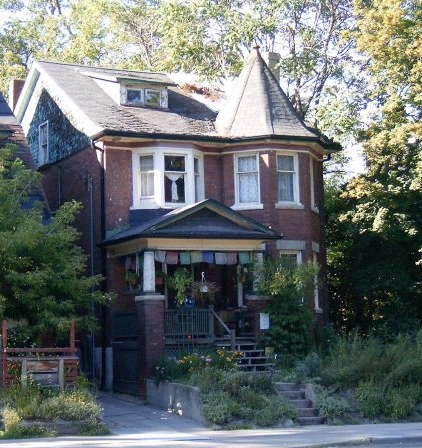
1844 Bloor St. West

1844 Bloor Street West

(1991-2010)

From fixing up the run down house in 1991, to raising my two wonderful children, planting and tending a garden, living and celebrating life with friends and family, to getting sick, to almost dying…

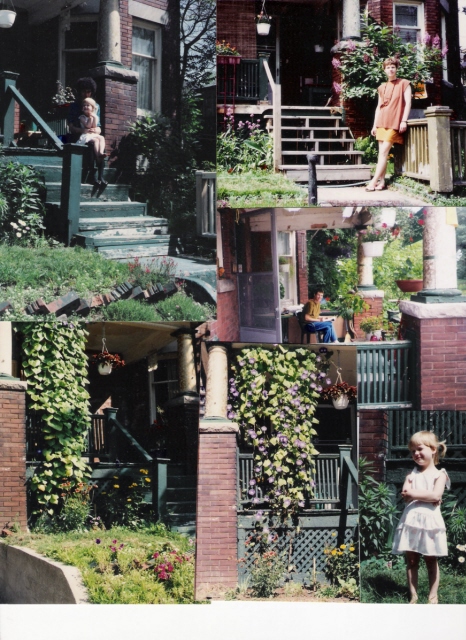
Memories of life at 1844 Bloor St W 1991-2010.

My father, daughter and son on the porch… 91 or 92.

After cleaning and painting inside, I think it took almost 20 bags to remove the weeds and garbage and unearth the garden. Only the hollyhock, a red rose, and some alyssum in the rock garden were there when I moved in.

It took a few years to get the perennial garden going. My father’s old porch railing was re-purposed as a fence for a few years. People used to smile when they went by. More people who lived on Bloor St W started planting flowers in front. People often asked me if it was my garden when I was out shoveling snow, and told me how much they enjoyed seeing the seasonal changes.

When I got too sick to care for it because of the vehicle exhaust and laundry fumes from the apartment buildings, I watched from the windows as people stole plants, rocks and other items I’d placed there.

~

Many birthdays were celebrated in 1844…

Continue reading

Not so Equal Access to Health Care in Ontario or Systemic Barriers to Access for People with MCS/ES

Some places like Ontario, where I live, have disability access laws that state service providers, including those in healthcare, must accommodate people who are disabled.

On a government website, it states:

Barriers to accessibility are obstacles that make it difficult — sometimes impossible — for people with disabilities to do the things most of us take for granted — things like going shopping, working, or taking public transit… 

(or receiving health care services)

When we think of barriers to accessibility, most of us think of physical barriers — like a person who uses a wheelchair not being able to enter a public building because there is no ramp.

The fact is there are many kinds of barriers. Some are visible. Many are invisible:

•    Attitudinal barriers are those that discriminate against people with disabilities.

•    Organizational barriers are an organization’s policies, practices or procedures that discriminate against people with disabilities.

•    Architectural and physical barriers are features of buildings or spaces that cause problems for people with disabilities.
Chemical or “environmental” barriers prevent people like myself who have disabling medical conditions from breathing and functioning properly when exposed to these invisible, toxic and disabling barriers, resulting in both short and long term impacts.

How many of us do not have safe access to healthcare in Ontario?

In the ” Guide to the Accessibility Standards for Customer Service, Ontario Regulation 429/07″,  it says that Hospitals and health services provide goods or services  and as  designated public sector organizations should have been in Compliance by January 1, 2010…

It also states:
Continue reading

I’m moving to a new “environmentally sensitive” housing unit in Ottawa!

Imagine my surprise when two weeks ago I received a phone call saying a unit had become available at Barrhaven, one of the specially built units that have the potential to meet most of my housing needs!

Linda standing near some trees. Shes' wearing a cap and has a mask dangling loosely from her neck.

This photo was taken the day before my birthday last July, after being at the cabin about three weeks.

It’s already June, over a year since I was forced from my previous home without another place to go to due to my disabling medical condition of severe Multiple Chemical Sensitivities, Environmental Sensitivities, Fibromyalgia, and Electro HyperSensitivity, none of which is properly recognized in this country. It’s almost a year since I (barely) made it to the summer cabin owned by some in my family. And half a year since my father passed away.

Despite a lot of struggle, I made it though winter with the help of a local woman and her family, some assistance from several canaries, a few friends in Toronto, and my uncle’s wife in Massachusetts (who had been paying the electric bill for the cabin for years and continued with my winter heating costs), as well as the hopes and prayers of many. I’m eternally grateful.
A small bear up on his hind feet, leaning up against the screen door, head cocked and looking straight at the camera through the screen.

Yearling bear climbing on the hand railing beside the door at the cabin.

I also was blessed by the visits of a young screech owl, wild turkeys, numerous other birds, squirrels, chipmunks, and for a short time some young raccoon siblings. I’ve learned a lot from these creatures and will treasure the photos I was able to take, as otherwise the memories would likely be lost in brain fog. The other night I was visited by a bear, a yearling, who was looking for food, alone. I got a blurry photo of him as he was about to climb on the hand railing beside the door to eat the moths circling around the light.

My challenges at the cabin have been great. No running water, no indoor toilet, no fresh organic food close enough to get for myself and too far for others to drive regularly, no insulation, no proper storage for the things I couldn’t have near me but needed to live, inadequate winter clothing, getting snowed in, and more challenges that should not be endured by anyone in a rich country like Canada, especially those with disabilities.

Through the course of it all, I discovered my situation does not fit into any official safety net mandate. There are only seven medically required housing units built for people with environmental sensitivities in Canada. I’ve been on a wait list since 2006, maybe 2007. Meanwhile, I’ve gone from a moldy home to an apartment balcony, and spent winter in a summer cabin. But despite the healing effects of the external environment at the cabin, I’ve lived here with the threat of being forcefully removed by a certain member of the family. The need to find a safer place has been a constant worry.

So imagine my surprise when two weeks ago I received a phone call saying a unit had become available in Barrhaven, one of the specially built units that had the potential to meet most of my housing needs! They wanted to know if would I please go there within a week and spend a night or two to see if it was actually suitable for me (people with MCS/ES are affected by different things, and some people are not able to tolerate the materials in these units, or the noise of the air handling system).

Continue reading