Tag Archives: autism

Gain – Sinking Your Disabled Boat

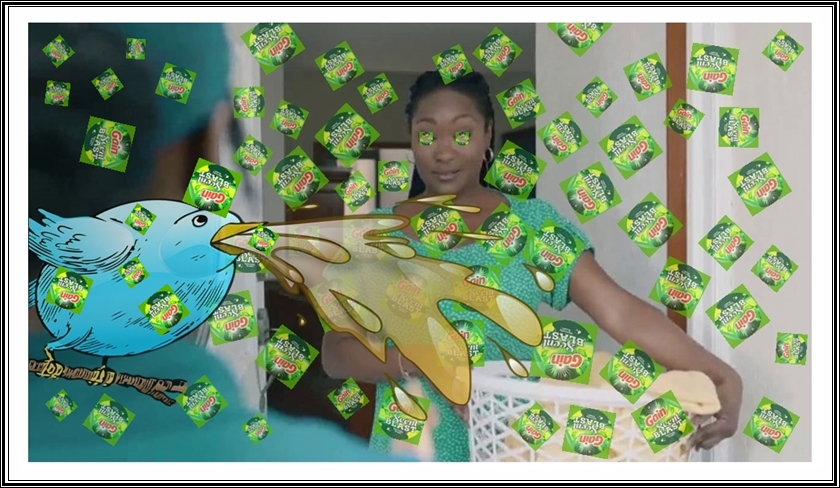
Have you seen the new  “the more the better” Gain detergent ad?

When the delivery woman tries her best not to puke from the Gain fumes,
the Gain user shrugs and the voice-over says:

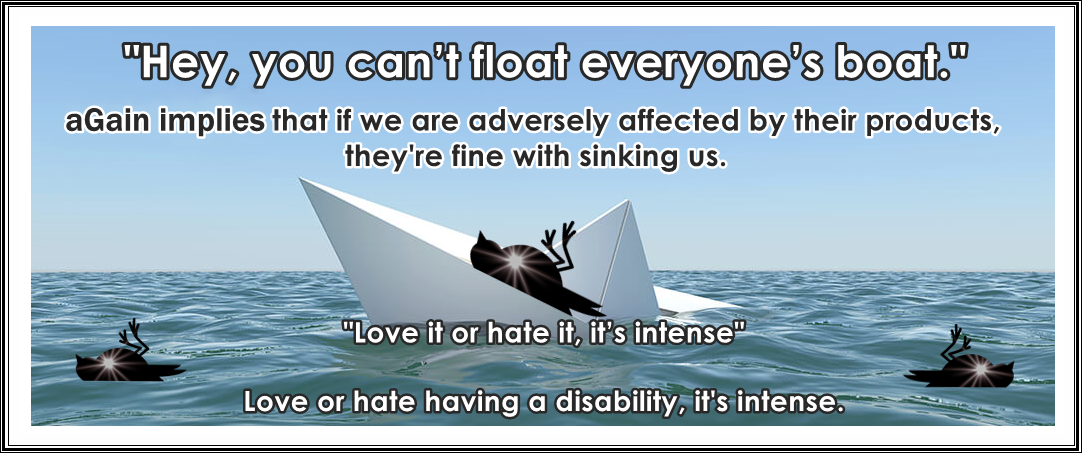
“Hey, you can’t float everyone’s boat. Love it or hate it, it’s intense.”

!!!

In other words, Gain implies they’re fine with sinking us

(More on what we all think about that later)

The ad starts off with a scene that already promotes an IAQ nightmare:

Continue reading

Are Natural Fragrances Really Any Better?

Awareness is growing about the harmful effects of synthetic, artificial fragrances. This is with good reason, but now, many people have jumped onto the natural fragrance and essential oil (EO) bandwagons, believing them to be safe alternatives.

Is this a good thing?

Some believe so, after all, what could be wrong with something that’s natural?

It’s time to have a closer look.

Continue reading

Harm Reduction Policy for People With Autism

Recent research that Anne Steinemann conducted in  three countries (United States, Australia, and the UK), found that 83.7% autistic adults reported adverse health effects from exposures to  fragranced products, effects such as:

migraine headaches (42.9%),
neurological problems (34.3%),
respiratory problems (44.7%), and
asthma attacks (35.9%)

In particular,
62.9% of autistic adults report health problems from air fresheners or deodorizers,
57.5% from the scent of laundry products coming from a dryer vent,
65.9% from being in a room cleaned with scented products, and
60.5% from being near someone wearing a fragranced product.

Health problems can be severe, with 74.1% of these effects considered potentially disabling under legislation in each country. Further, 59.4% of autistic adults have lost workdays or lost a job, in the past year, due to fragranced product exposure in the workplace.

Results show that vulnerable individuals, such as those with autism or autism spectrum disorders, can be profoundly, adversely, and disproportionately affected by exposure to fragranced consumer products.

Continue reading

The Fragrance-free Checklist


It seems like the best way to clear up some confusion about being fragrance-free, is to provide a checklist of products and places where fragrances that can make you not be fragrance-free are found, so that you don’t inadvertently bring fragrances with you when going  somewhere with a strict fragrance-free policy.

The checklist addresses some common misconceptions about what being fragrance-free really means.

Being fragrance-free is about more than not using perfume or cologne.
It’s also not about skipping deodorant, as some people seem to think.

Continue reading

When Someone Says They’re Fragrance-Free, But

When someone says they’re fragrance-free, but

they smell like

essential oils, febreze, scented candles, plug-in air effers, &/or air effing sprays…

When someone says they’re fragrance-free, but

Continue reading

What’s it Like to Have MCS/ES? Part 2: Curbs

MCS/ES (multiple chemical sensitivities / environmental sensitivities)  is a disability recognized by the Canadian and Ontario Human Rights Codes. There are over a million people with doctor diagnosed MCS in Canada, and so many more all around the world.

In the US, the latest prevalence study found that “among the population, 12.8% report medically diagnosed MCS and 25.9% report chemical sensitivity.”

The term ‘sensitivities’ seems to trivialize the condition in many people’s minds.

You may wonder what’s it really like then, if it’s not trivial?


From Amy RW Marsh:

I just wrote this analogy for a person who needed one in order to understand EI/MCS:

Continue reading

What’s it Like to Have MCS/ES? Part 1: Arms, Brains, and Legs

MCS/ES (multiple chemical sensitivities / environmental sensitivities)  is a disability recognized by the Canadian and Ontario Human Rights Codes. There are over a million people with doctor diagnosed MCS in Canada, and so many more all around the world.

The term ‘sensitivities’ seems to trivialize the condition in many people’s minds.

You may wonder what’s it really like then, if it’s not trivial?

‘have legs or brain some days but not others’

Continue reading

Statement From ARCH and CELA re MCS, ES, and the Ontario Task Force on Environmental Health

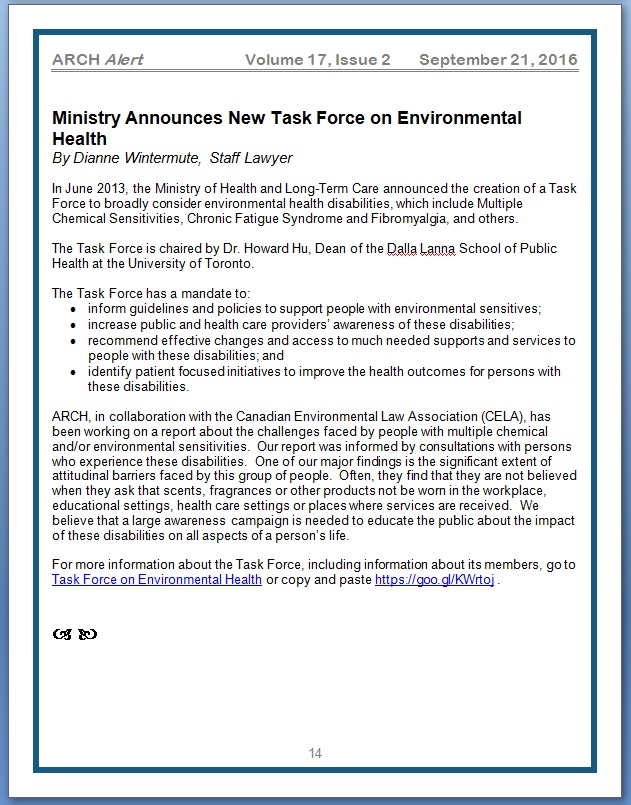
The ARCH Disability Law Centre and the Canadian Environmental Law Association (CELA) announced in September of 2016 that they were working on a report about the challenges faced by people with multiple chemical and/or environmental sensitivities.

ARCH Alert September 2016

“ARCH, in collaboration with the Canadian Environmental Law Association (CELA), has been working on a report about the challenges faced by people with multiple chemical and/or environmental sensitivities.  Our report was informed by consultations with persons who experience these disabilities. 

One of our major findings is the significant extent of attitudinal barriers faced by this group of people.  Often, they find that they are not believed when they ask that scents, fragrances or other products not be worn in the workplace, educational settings, health care settings or places where services are received.  We believe that a large awareness campaign is needed to educate the public about the impact of these disabilities on all aspects of a person’s life.”


The release of their report has been delayed because they want to respond to the Ontario Task Force on Environmental Health’s Interim Report, which came out just when their own report was intended for release.

In the November 2017 issue of Arch Alert, both ARCH and CELA  urge the Task Force to do more consultations with those of us who are living the experience:

Continue reading

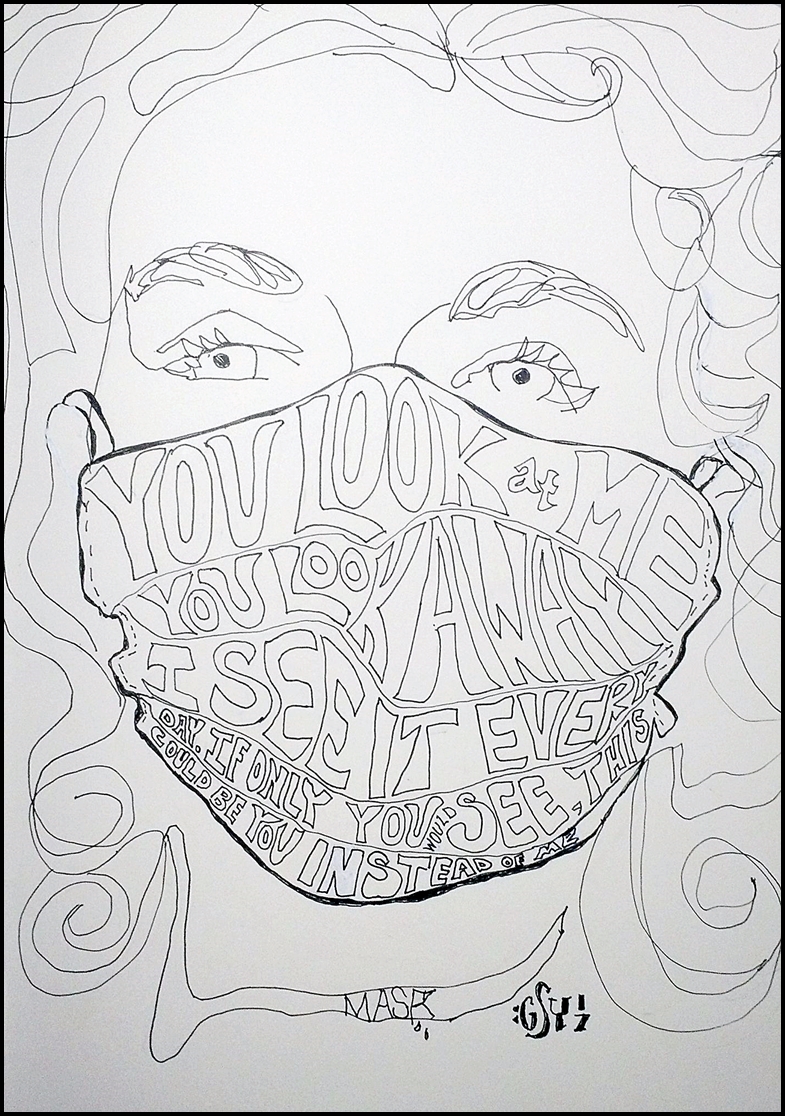
If Only You Could See

Guest post and art from Gloris Smith Young 

You look at me
You look away

I see it every day
If only you could see

This could be you
Instead of me

Continue reading

Help for How to Be Fragrance-Free

All it takes is a decision to go fragrance-free!

It should be easier than quitting smoking since there aren’t supposed to be addictive chemicals in fragrances, right?

Due to the fact that so many people are now experiencing adverse effects from fragranced products (34.7% in 2016), we are well on the way to having fragrance-free policies everywhere for the sake of protecting public health just as was done with smoking bans. It’s not just those of us who suffer immediate and disabling adverse effects from the products (1st, 2nd, and 3rd hand), but for everyone.

Here are some great resources (in no particular order) to help you go fragrance-free:

Continue reading