Tag Archives: MCS/ES

Published: “Invisible Barriers, Invisible Disabilities, Invisible People”

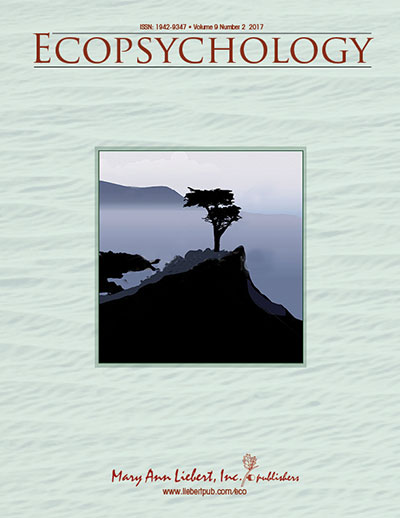
My article “Invisible Barriers, Invisible Disabilities, Invisible People”   is now available to read in the

Special Issue on Ecopsychology and Environmental Sensitivities:
Chemical, Electrical, and Beyond

All the articles in the entire special issue will be available for free until Sept. 5  2017, which is unprecedented access!

Please check them out and share as widely as possible!


Table of Contents:

Continue reading

Bubbled People


I ran across some striking photos by Alex Kisilevich (you can see them in the banner above if you squint) and I shared the link with  the intro “Food for thought… what’s outside the bubble preventing access?”  Someone responded with  “tell me about it”, so I wrote a short story before seeing what the photographer’s intent was, if it was indeed as a writer wrote, to say:

Continue reading

MCS/ES 2017 Continued: The Canaries Are Still Waiting!

The canaries are still waiting!

“We issued a report (in 1985) that identified existing, publicly funded means of diagnosis, and accepted various methods of patient management, including avoidance of offending agents.

We did not feel that more research was needed before these and other measures were introduced to protect patients from being caused harm through inappropriate labelling or the denial of reasonable accommodation.”

Excerpted from this letter by Judge George M. Thomson, B.A., LL.B., LL.M., who chaired the extensive report by the Ad Hoc Committee on Environmental Hypersensitivity Disorders for the Province of Ontario in 1985:

Continue reading

Endangered Human Art Project: Bringing Awareness to Chemical Sensitivity

WHO Says We Need Fresh Air?!

Guest Post from Marie LeBlanc

Bringing awareness to chemical sensitivity
Marie LeBlanc at the Centennial Concert Hall in Winnipeg. May 12th 2017.

I am an artist  in Winnipeg who lives with multiple chemical sensitivity (MCS) and environmental illness caused by mold exposure. My art has been in relation to multiple chemical sensitivity (MCS)/Environmental Illness (EI) and toxic environments.

“WHO says we need fresh air?!” is a series of quotes from sufferers of Multiple Chemical Sensitivity, Environmental Illness, Mold Exposure, Electrohypersensitivity Syndrome, Lyme Disease and other conditions related to Chronic/Complex Immunological Neurological Diseases.

The art installation was on display during the evening of Fri. May 12, on Multiple Chemical Sensitivity (MCS)/Environmental Sensitivities Awareness Day,  outside the Centennial Concert Hall (with a few quotes displayed on the indoor screens), and is dedicated to my friend Eliana from Mexico.

Continue reading

Dr Molot Urges Everyone to Support the Canaries

Please take a minute and eleven seconds  to watch this video from Dr.  John Molot where he talks about MCS (multiple chemical sensitivities) and how we (the people who developed MCS) have been stigmatized and that we really are canaries. He speaks about some of the other serious health problems the chemicals that disable us are causing in those who do not have MCS.
 .

Continue reading

An MCS Awareness Visualization

May 12th is International MCS Awareness Day, and May is MCS Awareness Month.  Many people who have MCS also have  MCAS – Mast Cell Activation Syndrome, where chemical and other exposures cause anaphylaxis.

Guest Post from Raven

My request for you to visualize:

I’d like to ask each of my friends to sit in a quiet space for just 15 minutes and close your eyes. Breathe and get calm and relaxed.

Now I want you to think of yourself only. Visualize yourself in your body. Once you see or feel you, I want you to see yourself  Continue reading

Profile Pictures for Awareness Month

These images are available on facebook. Feel free to download the appropriate one and use for Awareness Month, or at least for May 12th Awareness Day!

Continue reading

Research Survey: Are You Over 21 and ‘Sensitive’ to Environmental Pollutants?

Research Update

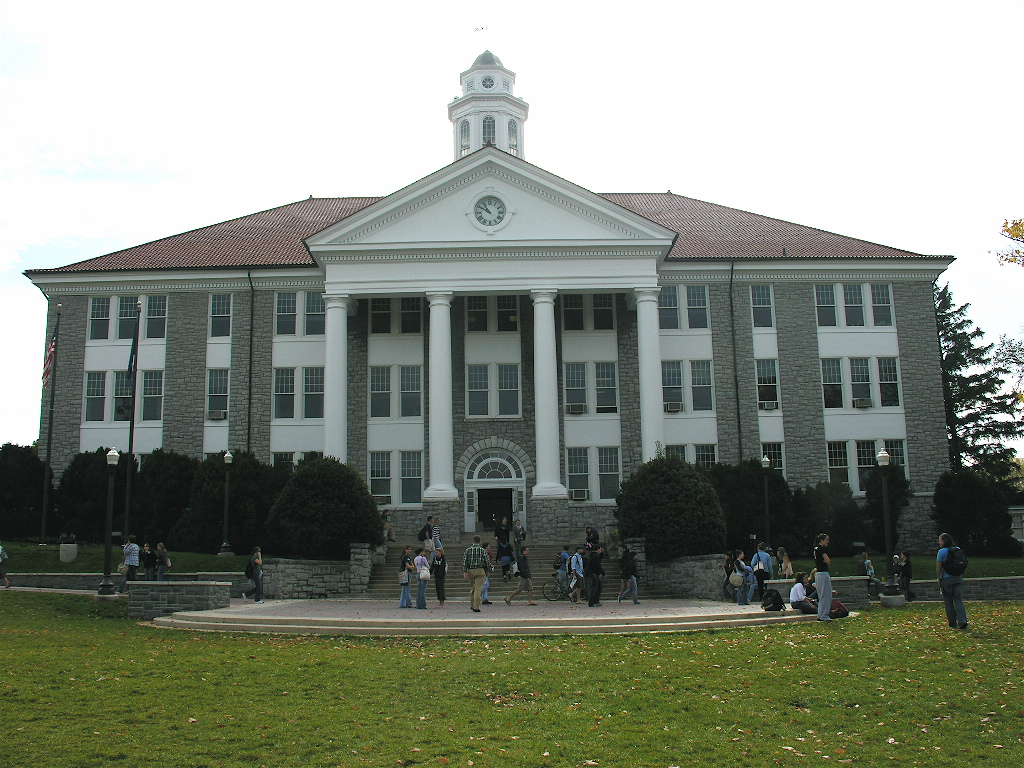
I’ve  previously posted about a research project Pamela Gibson from the James Madison University in Virginia was undertaking. She has been asking for women aged 65 and older who have experienced environmental sensitivities (chemical and/or electrical) to participate in an online study of how their needs are being met as they grow older with sensitivities, but due to a lack of participation from women over the age of 65 (does anyone want to guess why?) she has opened up the study to anyone over the age of 21.

WOMEN OVER AGE 65 STUDY MODIFIED TO INCLUDE PERSONS 21 OR OVER WITH ENVIRONMENTAL SENSITIVITIES
(CHEMICAL OR ELECTRICAL)

Continue reading

Fragrance Chemicals: Weapons of Environmental and Human Destruction

We are surrounded by and saturated with fragrance chemicals now.

but-1

Fragrance Chemicals:
Weapons of Destruction

(if you have been impacted, you know this is not hyperbole)

Most fragrances are now are made from oil and gas based chemicals.

They are in our personal care, laundry, and cleaning products. They are in garbage bags, candles, and shoes. They are in toys, fire-place logs, and diapers. They are in toilet paper, stationary, and stickers. They are in clothing, pillows, and jewellery. They are in foods, plastics, and medicines. They are in kitty litter, trash bags,  and vacuum cleaner bags. They are even in pesticides, where they are regulated by the EPA, but they are not regulated by anyone when they are added to all the other products we use and are exposed to!

There’s no escaping fragrance even when housebound, because so many  deliveries of even the basics like food, arrive fragrance contaminated!

We were not designed for 24/7 exposures to toxic chemicals

.

How much more evidence is needed before something is done about the human and environmental health problems caused by fragranced productss?

.

Here’s an info dump with some relevant links and videos:

Continue reading

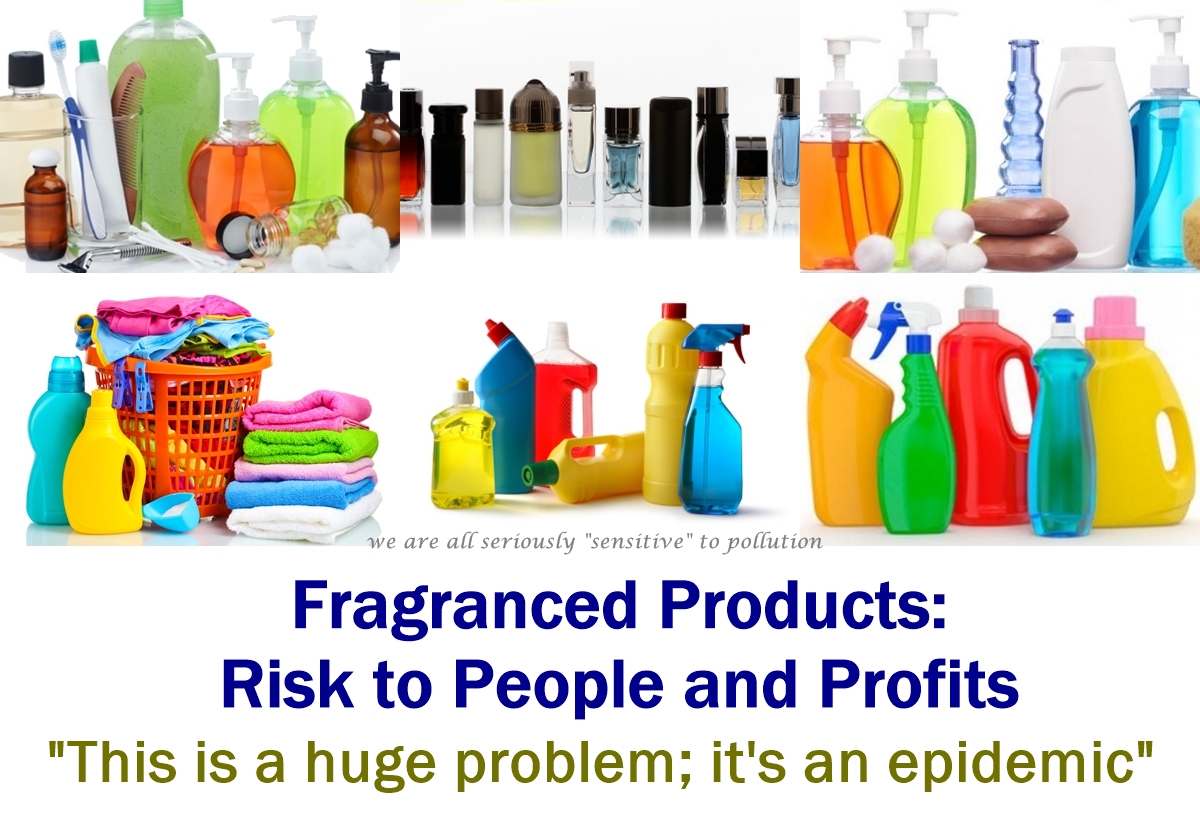
Fragranced Products: Risk to People and Profits

From Dr Anne Steinemann’s latest research
“Fragranced consumer products: exposures and effects from emissions”

“Basically, if it contained a fragrance, it posed problems for people” 


fragranced-risks

“This is a huge problem; it’s an epidemic”
says Professor Steinemann.

She is especially concerned with involuntary exposure to fragranced products, or what she calls “secondhand scents.

“Over 22% of Americans surveyed can’t go somewhere because exposure to a fragranced product would make them sick.”

“These findings have enormous implications for businesses, workplaces, care facilities, schools, homes, and other private and public places,” said Professor Steinemann. For instance, a growing number of lawsuits under the Americans with Disabilities Act concern involuntary and disabling exposure to fragranced products.”

Continue reading