Tag Archives: petrochemicals

Are Everyday Products Safe?

Sadly, too many of us have found out, with a loss of health or life, that they aren’t.

Here’s another short film about the problems with chemicals in everyday products and materials

UNSAFE: The truth behind everyday chemicals

Want to know where petrochemicals are hiding?

2012 petrochemical chart headerThere’s more:

petrochemical chart_2012 PDF download

 Please keep on informing yourself, then share what you learn with those around you.

In this day and age, we can’t depend on regulations and public policy to protect us.

It’s up to us to learn, and then demand better from manufacturers and regulators.

Be Fragrance-Free, Especially for the Children

It’s also good for you and good for me.

Being fragrance-free is especially good for children and fetuses, who are vulnerable to suffering developmental harms from chemical pollutants.

Very few fragrances these days are made from flowers and plants. Most are synthetic, petroleum based concoctions, including ingredients known to cause health harm, and  many more that have never been tested for health effects.

Fragrance is ubiquitous in indoor air, more prevalent than smoke ever was, and like smoke, fragrance also does not respect arbitrary boundaries. Remember smoking sections and how well those worked? Fragrance-free “areas” are just as ineffective. The volatile ingredients move throughout the air, everywhere and anywhere. They also cause second and third hand chemical contamination and health problems, just like smoke. This means that airborne fragrances settle into anything in the spaces they are found, and the residues from those items, your hands, hair,  or clothing, can also rub off on anything they come in contact with.

Breathing is not optional.

No-one should have to breathe toxic chemicals 24/7, especially children.

choose to be fragrance-free 3

or a stronger message

Continue reading

It’s Not Personal, It’s The Chemicals #2

The images in the 1st It’s Not Personal, It’s The Chemicals  were so popular, I decided to make more while my brain was functioning in this mode. Here are a couple that were very well received on facebook, plus a few new ones featuring children and office workers, as they too are being impacted by what we choose to use and put in the air.

It s not you 16

It s not you children

Continue reading

How Acceptable Are Your Levels?

 Do you know that you have hundreds of toxic chemicals in your body right now?

Do you know that our bodies weren’t designed to deal with 24/7 exposure to the kinds of substances we are breathing, ingesting, and absorbing all the time now?

If you have MCS/ES, then yes, you know. If you are involved with the environmental health movement, then yes, you know. If you watched the interview with Bruce Lourie that I shared earlier this year, about his book ToxIn ToxOut, then yes, you know. If you or someone you know has a health condition that has been linked to chemical exposures and pollution, then maybe you know… Otherwise, probably not…

How many of you have any idea what kinds of chemicals are in your body now, and what kinds of health effects they might be having on you, or on your eggs and sperm?

Have you agreed to be a chemical experiment (and are any of you being paid for it, or receiving funding to deal with the adverse effects that might happen or are happening)?

If you are like most of us, then you are completely unaware of what we are all being exposed to and the effects these exposures are having on our health. We still believe that products have to be safe if they are being sold to us. It’s hard to believe otherwise.

Like so many others, we don’t question this belief until something goes wrong in our own lives. Ed Brown was no exception. But after his wife suffered a couple of miscarriages, he got to asking

WHY?

And he made a film about his quest for answers:

Unacceptable Levels

Continue reading

It’s Not Personal, It’s The Chemicals

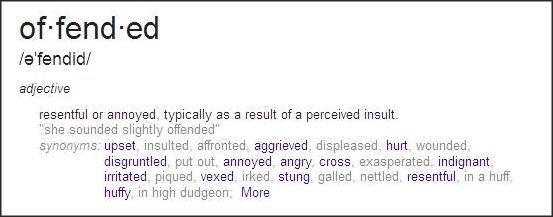
offended

Have you ever noticed how some people get offended when we are disabled by, or get sick from something in the products they’ve used?

What’s up with that?

???

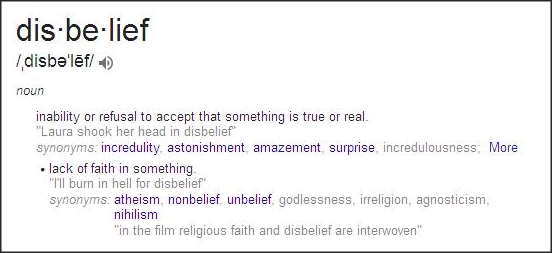
What about those who feign disbelief that we could be harmed by something they are using? Or that they could be using something that is harmful?

disbelief

While I am not up to delving into the psychological and emotional intricacies of those responses here, or how industry pays big money to create them, I did come up with a few simple images with variations of the following text:

It’s not you! It’s not personal! It’s the chemicals!

Fragrances, personal care, and laundry products
contain toxic chemicals that make it impossible
for some people to be around those who use them.

Continue reading

Video: Everyday Chemicals and Other Toxins Affect Brain Development

child health

Please watch this important and very well done new video by Dr. Bruce Lanphear, where he discusses chemicals and other toxins that affect brain development in children (and can cause MCS/ES symptoms in others) and what we need to do about it.

Little Things Matter: The Impact of Toxins on the Developing Brain

Here’s a longer video presentation by him from Autism Canada

Excavating Environmental Risk Factors for Autism: Suspects and Strategies

Continue reading

In a Doctor’s Own Words: A Toxic Legacy and 12,000 (+) Canaries Later


Dr. John Molot is a doctor who sees patients with complex, chronic, environmentally linked, and often disabling, health conditions. Although he is retiring from private practice, he is still a staff physician in the Environmental Health Clinic at Women’s College Hospital in Toronto.

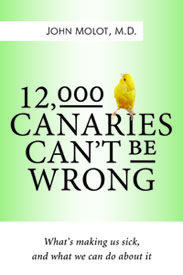
He recently released a book, “12,000 Canaries Can’t Be Wrong“,  wrote a report in support of the Ontario Centre of Excellence in Environmental Health (OCEEH), and appears in a video presentation about the health effects of common  chemical exposures (see below).

Check these out:

12,000 Canaries Can’t be Wrong
What’s making you sick & what can you do about it

Books

12000Canaries_hiRessm

Continue reading

Air Cleaners, Filters, and Purifiers

Many of us have to breathe to stay alive. Okay, all of us have to breathe to stay alive. Some of us just need cleaner air than others, or our ability to think and function is severely impaired from inhaling common pollutants found in both outdoor and indoor air.

This is where air purifiers and filtration devices come in.

Here are links to a few good documents and websites to read before you spend any money, that discuss what to look for and what to avoid:

Continue reading

“Sensitivities” in the Canadian Family Physician journal

The June 2014 edition of the Canadian Family Physician journal contains a couple of excellent articles by Dr Stephen J. Genuis. Here’s the abstract and link to one of them:

Approach to patients with unexplained multimorbidity with sensitivities

Abstract:

Objective To explore the underlying causation of unexplained multimorbidity with sensitivities and to discuss the management of patients who present with this perplexing condition.

Sources of information Medical and scientific literature was used from MEDLINE (PubMed), several books, toxicology and allergy journals, conference proceedings, government publications, and environmental health periodicals.

Main message Multimorbidity with sensitivities has become an increasingly common and confusing primary care dilemma. Escalating numbers of debilitated individuals are now presenting to family physicians and specialists with multisystem health complaints, including sensitivities and fatigue, with no obvious causation, a paucity of laboratory findings, and a lack of straightforward solutions. In the recent scientific literature, there is discussion of sensitivity-related illness, an immune-mediated disorder that frequently manifests with multisystem symptoms, commonly including sensitivities and fatigue.

Continue reading

MCS/ES Awareness Month 2014

 It’s that time of year again. Welcome to MCS “Awareness” Month!

People with disabilities have the right to equal treatment and equal access

Barriers to access can be physical, attitudinal or systemic. Conveniences can also create barriers. If you are unable to remove a barrier to accessibility, consider what else can be done to provide services to people with disabilities. No-one should live without safe access to the necessities of life.

What is disability? (Ontario Human Rights Commission)

“Disability” covers a broad range and degree of conditions, some visible and some not visible. A disability may have been present from birth, caused by an accident, or developed over time. There are physical, mental and learning disabilities, mental disorders, hearing or vision disabilities, epilepsy, drug and alcohol dependencies, environmental sensitivities, and other conditions.”

Removing barriers and designing inclusively

Persons with disabilities face many kinds of barriers every day. These can be physical, attitudinal or systemic. …

Identifying and removing barriers also makes good business sense. As well as meeting the needs of customers or employees with disabilities, removing barriers can also help other people…

Employers, unions, landlords and service providers can start by doing an accessibility review of their facilities, services and procedures to see what barriers exist. You can then make an accessibility plan and begin to remove the barriers.

It is also helpful to create an accessibility policy and a complaints procedure. These steps will help you remove existing barriers and avoid making new ones. The best way to prevent barriers is to design inclusively

Barriers aren’t just physical. Taking steps to prevent “ableism” – attitudes in society that devalue and limit the potential of persons with disabilities – will help promote respect and dignity, and help people with disabilities to fully take part in community life…

The duty to accommodate

Even when facilities and services are designed as inclusively as possible, you may still need to accommodate the individual needs of some people with disabilities. Under the Code, unions, landlords and service providers have a legal “duty to accommodate” persons with disabilities. The goal of accommodation is to allow people with disabilities to equally benefit from and take part in services, housing or the workplace.

Accommodation is a shared responsibility. Everyone involved, including the person asking for accommodation, should work together, exchange relevant information, and look for accommodation solutions together…

 

Some Resources: Continue reading