Category Archives: Human Rights

AXE (LYNX) Axed From Another School!

Children of all ages, as well as teachers, require healthy environments to thrive in. Schools, unfortunately, have notoriously poor indoor air quality.

One thing that contributes to poor IAQ is the use of fragrance chemicals in cleaning products, as well as in personal care and laundry products.

These chemicals do nothing to enhance the air quality, and much to induce cognitive and neurological impairments, sperm damage and respiratory problems.

Boys who overused sprays such as Axe Body Spray have prompted the Brandon School Division to ban perfumes and colognes.

Boys who overused sprays such as Axe Body Spray have prompted the Brandon School Division to ban perfumes and colognes. (Canadian Press) / via CBC

Over-use of these products is not the real problem.

The real problem is that these products contain toxic chemicals and serious allergens, and these chemicals and allergens do not respect personal boundaries or property lines, but trespass into everyone’s air, brains and bodies.

Continue reading

Fragrance-Free and Healthy Schools (updated)

Are you sick from sick schools?

How Healthy is Your SchoolTeachers and students suffer when school buildings are not healthy, sometimes even developing permanently disabling conditions as a result.

MCS/ES. Asthma. Autism. Learning disabilities. Behavior problems…

Unhealthy school buildings can present real barriers to access.

It shouldn’t be like that. You shouldn’t lose your health or your job or have your child’s health and future suffer because there’s something unhealthy in the air at school.

There are enough examples of the benefits of a healthy learning environment over an unhealthy one (from toxic chemicals, molds and wi-fi for example), and tools for how to make change happen.

Here are some resources (in no particular order):

Continue reading

Human Rights, Property Rights and the Environment

Toxic Chemical Trespass

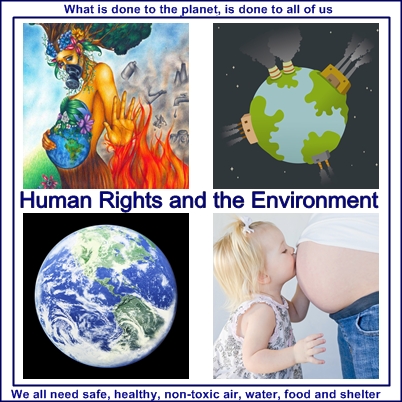
Human Rights and the Environment No More Toxic Chemical Trespass

Human Rights and the Environment
No More Toxic Chemical Trespass

Forgive us our (chemical) trespasses
By Carolyn Raffensperger
This is not a trespass in the property sense. It is a violation of our shared rights to a clean and healthy environment. Forgive us for destroying the Earth, our bodies, our communities, each other.
http://www.sehn.org/blog/?p=176

and

and this

What is done to the planet, is done to us…

Do We Not Have the Right to a Healthy Environment?

In Brazil, they now have the right to a healthy environment!

Learn more about Human Rights and the Environment here:

Continue reading

MCS/ES Page

I have finally added a Page to the top of the blog that deals with MCS/ES under the following headings:

MCS – Multiple Chemical Sensitivities, etc
Environmental Sensitivities
Categorical guidelines for levels of disability
Getting diagnosed
ICD Codes
Treatment Options
Mind and Brain
Support
Human Rights and Accommodations

https://seriouslysensitivetopollution.wordpress.com/mcses/

seriously sensitive to pollution

Accessible Parking and Invisible Disabilities

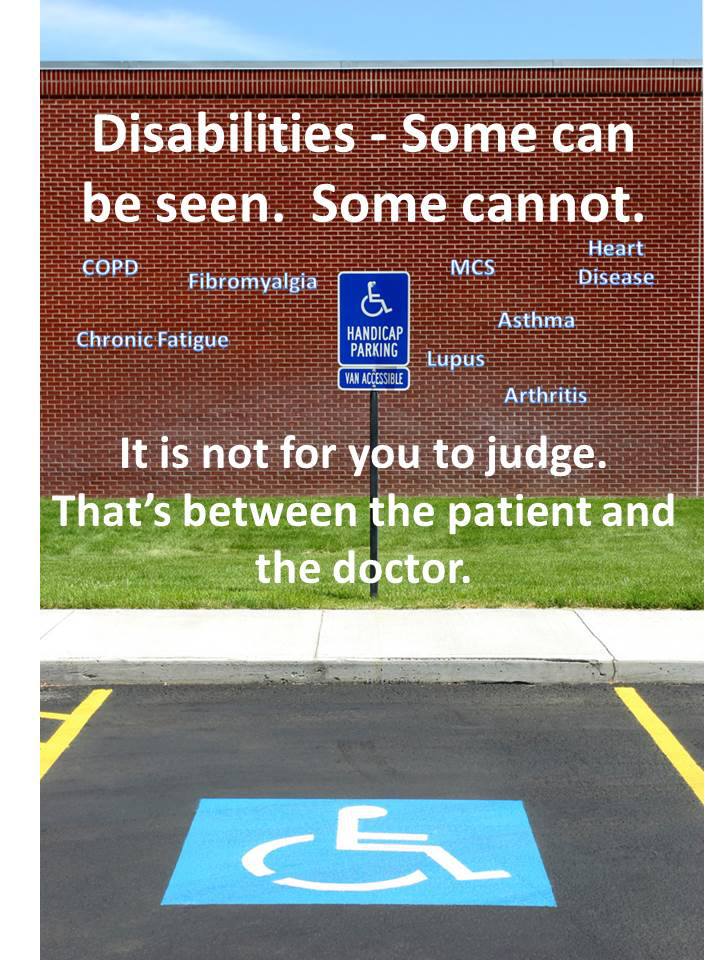
Not all disabilities are visible!

accessible parking 1https://www.facebook.com/EnvironmentalIllnessAtlanta

Yes there are a few selfish people out there who abuse any privilege or opportunity they can, but they are in the minority. Most people who look “normal” and use accessible permits have a proven, legitimate, legal, medical, human right to do so.

Resources:

Continue reading

Accessibility, Human Rights and MCS/ES

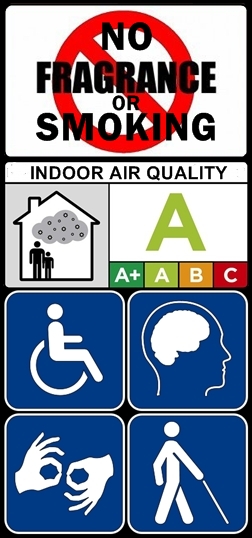
Someday, indoor air and environmental quality information could be posted on the front door of every building and most buildings and services (products and materials too) could be safe and accessible for everyone

ACCESSIBILITY 2

In the meantime, we have Human Rights laws (in some places) that we can use in order to gain safe(r) access to neccessities like employment, housing, apartment buildings… facilities (restaurants, shops, hotels and theatres…) and services (health care etc), transit and other public places, so it is a good start, since access is something many of us with MCS/ES do not have now, although equal access is, for now, probably too much of a stretch in this chemical and wireless addicted society.

Some (but not all) of the information and resources I present here are from Ontario, Canada, but they can be used to inspire similar actions everywhere.

Continue reading

Right to Housing hearing over – Court will decide by autumn if the case moves ahead

righttohousing's avatarWe need a national housing strategy now!

Thank you to all of you who came for a few hours or a few days to watch the housing & homelessness human rights case unfold. We really appreciated your being there and it was good for the judge to see that people are interested and concerned about the outcome.

Fay Faraday and Peter Rosenthal did a brilliant job on behalf of the applicants and Molly Reynolds, Jackie Esmonde/Martha Jackman and Kent Roach/Cheryl Milne were all outstanding on behalf of the interveners. We just finished the 3 days of argument and it’s not clear which way the decision will go. Justice Lederer does not expect to have a decision until next fall.

There was a good article in the Toronto Star about the motion:
http://www.thestar.com/news/gta/2013/05/26/landmark_homeless_charter_challenge_may_never_be_heard_if_government_wins_bid_to_quash_case.html

View original post

Canadian Human Rights Documents Archived

The Government here has been re-organizing and changing all of their web pages lately and some types of information seem to be disappearing.

The_Canadian_Flag

The policy on accommodating people with MCS/ES is no longer available on the website. This is what used to be there (2007-2013):

Policy on Environmental Sensitivities

This policy is issued to encourage employers and service providers to proactively address issues of accommodation for persons with environmental sensitivities.

Policy on Environmental Sensitivities

Individuals with environmental sensitivities experience a variety of adverse reactions to environmental agents at concentrations well below those that might affect the “average person”. This medical condition is a disability and those living with environmental sensitivities  are entitled to the protection of the Canadian Human Rights Act, which prohibits discrimination on the basis of disability. The Canadian Human Rights Commission will receive any inquiry and process any complaint from any person who believes that he or she has been discriminated against because of an environmental sensitivity. Like others with a disability, those with environmental sensitivities are required by law to be accommodated.

Continue reading

Accessible Customer Service – What to do When A Store is Too Polluted to Enter

Having invisible disabilities can present challenges most people don’t think of.

Modified from original image by Eurofin

Modified from original image by Eurofin

Indoor air can be too polluted for some of us to safely breathe. Those of us with MCS/ES can develop serious and life-threatening symptoms from breathing in toxic chemicals commonly found in indoor air. Even a mask may not be enough to protect us.

Or we may be having a bad Fibromyalgia flare and just be in too much pain to shop.

So what can we do when we need something?

Continue reading

Need Protection?

To Breathe, That Is…

I was looking up masks and found these ads…
I am a bit (but not entirely) speechless…

Find a Mask to Filter Fragrance From Work HVAC Systems

“Companies across the globe are including fragrances in their heating and ventilation systems. It’s part of what emotional branding companies such as DMX call a multi-sensory experience. Retail stores may use scent in combination with audio and visual systems to enhance brand awareness. Smell associations, say DMX, are so strong they can even increase worker productivity. Whatever the reason, these scent systems can make it difficult for employees working in the affected areas who have fragrance sensitivities.”

While it won’t be possible for all workers in controlled scent environments to wear respirators, for those who can, we have a few suggestions:

http://blog.pksafety.com/a-respirator-mask-to-filter-out-fragrance-from-the-hvac/

I do know people who have to wear a mask just to go to work. It’s a horrible way to have to live when toxic chemicals are used everywhere everyday by almost everyone, and so much worse when pumped into the air deliberately. In fact, I don’t think anyone with MCS/ES or respiratory symptoms could work (or visit or shop) in an environment with deliberately pumped in fragrance chemicals, even wearing a mask.

That’s why we have human rights legislation to provide fragrance or scent free policies for working environments (see the sidebar or resources page at the top). These policies actually end up benefitting everyone’s health, not just those of us who are “sensitive”. Soon (but not soon enough) that will change to basic public health legislation, as it has for smoking.

Some multi-unit housing complexes have introduced smoke free rules, but so far there are very few housing options with fragrance free rules. We need them. Wearing a mask all day and night just isn’t feasible or possible, even if we tolerate the (mostly synthetic) materials they are made of, which many of us don’t.

Did you know there are masks for kids? These just make me really sad…

Continue reading