Tag Archives: fragrance chemicals

Why We Need “Sensitive” Human Canaries

“Sensitive” humans are not defective or here to inconvenience you.

maybe it is not me

Some canary history:

“Carbon monoxide, a potentially deadly gas devoid of color, taste or smell, can form underground during a mine fire or after a mine explosion.

Today’s coal miners must rely on carbon monoxide detectors and monitors to recognize its presence underground. However, before the availability of modern detection devices, miners turned to Mother Nature for assistance.

Canaries — and sometimes mice — were used to alert miners to the presence of the poisonous gas. Following a mine fire or explosion, mine rescuers would descend into the mine carrying a canary in a small wooden or metal cage.


Any sign of distress from the canary was a clear signal that the conditions underground were unsafe, prompting a hasty return to the surface.


Continue reading

What We All Need Now: Personal Exposure Detection Devices!

.

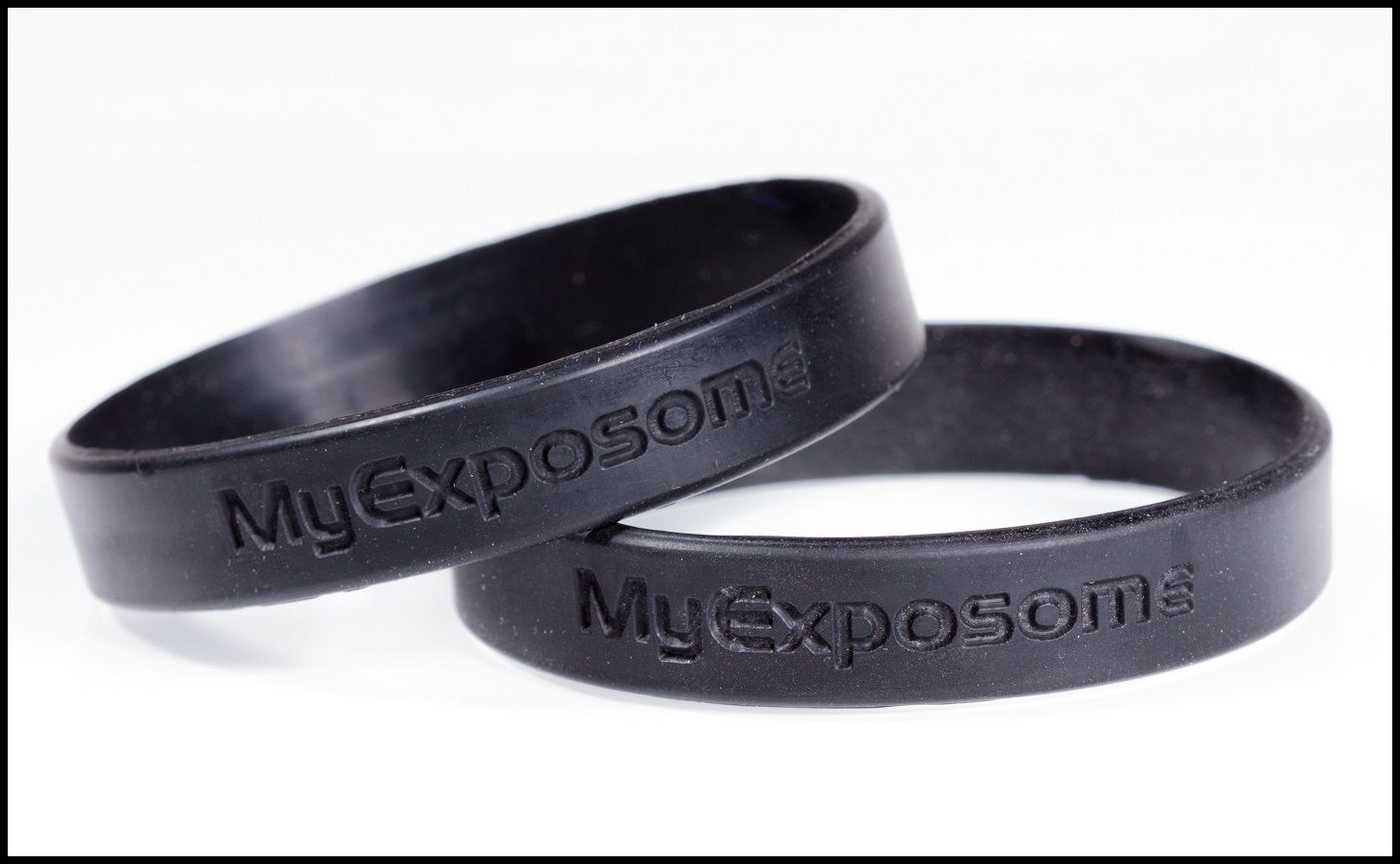
MyExposome has designed silicone wristbands (such as the ones worn in support of various causes) that are specially prepared to act as a sponge to absorb hundreds of different chemicals in our environment—the air, water, and even personal care products.

silicone-wristband-measures-1400-chemicals

The possibilities!

With all the toxic VOCs in everyday products,  the carcinogenic activity of the chemical cocktails we are exposed to on a daily basis, this is a great idea that can show people just how prevalent toxic chemicals have become, and how difficult it is to avoid them.

It would be really interesting to have a group of people with MCS/ES participate in some exposure measuring research, as those of us who have to practice extreme chemical avoidance for our health and well-being have some experiences that researchers will eventually find quite interesting.

Now, they would be able to see how difficult it is to avoid  these chemicals, even when making great efforts due to necessity (of course, different levels of MCS/ES dictate different levels of avoidance requirements and efforts too).

Continue reading

When Women Don’t Relinquish Fragrance

Guest post by By Heidi Utz

Several years ago, I posed to my women’s group a simple question: Can we ask members not to wear fragrances here? A hush fell over the room, then a silence so vast you could have heard a vial of Obsession drop. The same sweet women I’d grown to respect morphed into a pack of rabid wolves. No perfume?! It was as if I’d proposed giving up coffee, sugar, and styling gel in one fell swoop.

Since then, I have spent much time puzzling over their response. Are we so addicted to our scented products that the very notion of relinquishing them strikes terror in our hearts? Or is it more that the perfume industry has done such a stellar job in marketing its wares? Even in Santa Fe, where a comparatively high level of health-consciousness exists, we’re still susceptible to those redolent magazine ads, featuring the young and glossily naked in their evidently perfume-induced attractiveness.

But what if perfumiers, like chemical producers, were forced to include in their ads the manufacturer’s safety data sheets (i.e., the very interesting ways each spritz affects your liver)? Sound far-fetched?

Continue reading

Fragrance Facts Brochure

I’ve been looking through some of my old files and ran across this printable brochure about fragrances. Made by Betty Bridges in 2002, it has very useful information that is still relevant.

What has changed since then is that fragrance industry members voluntarily disclosed over 3000 ingredients that they commonly use (only they know how many were not disclosed, as the fragrance industry is still not regulated), and more research has come out on how harmful many of the fragrance ingredients are.

Additionally,  many  more people have become permanently disabled with MCS/ES, often originally triggered from fragrance chemical exposures (in Canada, there was a 31% increase in people diagnosed with MCS between 2005 and 2010, with many more undiagnosed due to a lack of doctors trained in environmental health matters), and  now it has become impossible to avoid 1st, 2nd and 3rd hand fragrance chemical exposures in the “developed” world, so everyone is constantly being exposed to these chemicals.

Fragrance Brochure 1- horz screenshots

Screenshot of brochure. Download the document at link below.

 ∴

Continue reading

Do It Yourself Air Filtering Mask

When air is polluted both indoors and out, when people use fragrances and other products with toxic chemicals, when we are made ill and disabled by the pollutants, then we can’t wait for better regulations to take effect, we need to do something to protect our health now.

Sometimes we can buy masks that work for us, especially if we tolerate synthetic materials, but sometimes making our own is the only way. When we make our own, we can use safe-for-us fabrics and even coordinate them to our outfits (if we’re lucky enough to have safe-to-wear outfits).

Some people use scarves as masks. You can sew a pouch on the inside to hold filtering Continue reading

But I Don’t Smell Anything!

Guest Post by Leah Spitzer

I have Multiple Chemical Sensitivity (MCS) – a “multi-system illnesses as a result of contact with, or proximity to, a variety of airborne agents and other substances. (Environmental Protection Agency).” In other words, I react to fragrances, building products and more. It is not a histamine reaction, but rather, a systemic reaction to the chemicals in fragrance and other products.

As someone with MCS, I’m also known as a “canary” with deference to the Canaries in the Coal Mine. As a canary, I often encounter looks of disbelief when I mention I can smell someone’s laundry detergent, or fragrance. I can smell it on them, their dog, their cat, their clothes, or even the package they are bringing me. I smell it in their home and in their car.

Often times, if it’s just a passing moment, I try to step back, or just tough it out, but sometimes I have to speak out. When I do, the most common response, after the surprised look, are:

“I didn’t put any perfume on this morning”
or
“I don’t smell anything”

I don't smell anything

Why the disparity in perception? There are several reasons that I have observed:

Continue reading

Wendy is NOT a Widget and She Shouldn’t be Treated Like One

Wendy is NOT a widget. Widgets can go anywhere. Wendy can’t.

“Widget” is used in texts and speech, especially in the context of accounting, to indicate a hypothetical “any-product”. Companies in such texts will frequently be given names such as “ABC Widgets” or “Acme Widget Corp.” to indicate that the particular business of the hypothetical company is not relevant to the topic of discussion.
(Widget economics – wikipedia)

“Economists often use the term widget to refer to an abstract unit of production.”

Wendy is NOT a widget as her local housing authority seems to believe. They have a capacity problem, but instead of addressing the need for improved (and accessible) capacity, they want to re-arrange people’s lives as if they were widgets, with little to no regard or understanding of the consequences.

INVESTOPEDIA EXPLAINS ‘Capacity’

“The widget manufacturer may be able to produce 150,000 widgets in a month. However, due to downtime because of equipment maintenance and worker illness, only about 130,000 widgets can actually be produced per month. Over the long run, a business can increase its capacity and output by acquiring more factors of productions. For example, if market demand for widgets spikes, the widget manufacturer can buy more equipment and hire more workers, and thus increase its capacity to 175,000 widgets per month.”

Wendy is not a widget. She is a living, breathing, human being, a human being with a complex, chronic environmentally linked condition and disability related needs, needs that widgets don’t have.

Wendy Kearly photo by ADAM MACINNIS – THE NEWS

Wendy Kearly photo by ADAM MACINNIS – THE NEWS

The housing authority from which Wendy rents her safe home has deemed her over-housed, and are in the process of evicting her, despite the fact that Wendy has no other option for medically required, safe housing available, and no safe access to any of the other places most people take for granted (see below).

In the following audio interview with Wendy, among other things, she talks about the process her grown children take to detox themselves enough to be able to safely visit with her, so that she is able to safely hug them when they come to town.

Continue reading

What If an Industry was Allowed to Disable Us and Keep Us Housebound?

Something Is Really Wrong With This Picture

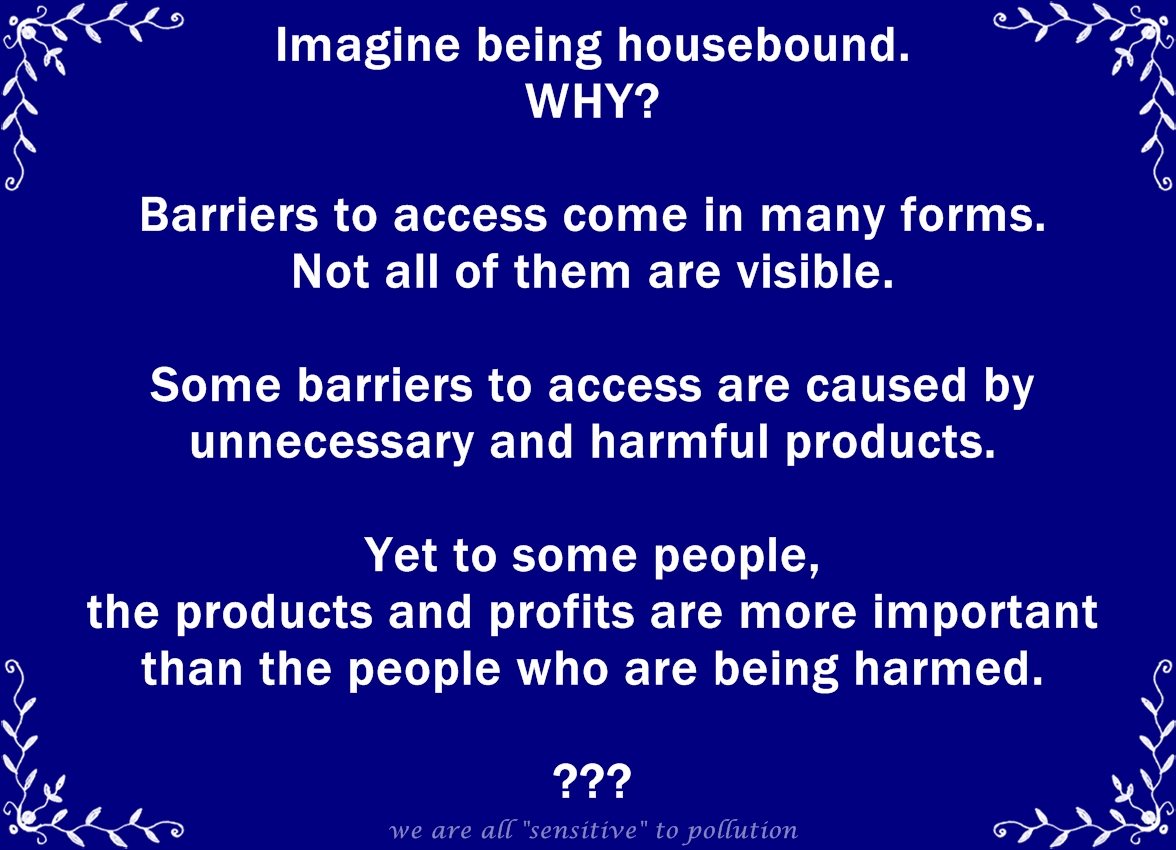
Imagine this 1

There’s a global proliferation of artificial fragrance and methods of dispersing it. Fragrance concoctions are added to almost everything imaginable (with more ridiculous ideas emerging all the time). They are sold and used everywhere at the same time as more people are developing adverse health effects from them, effects like serious allergies, disabling “sensitivities”, migraines, asthma, neurological disorders, lowered IQ, birth defects, etc. (the list keeps growing).

These health problems are due to unregulated and secret ingredients, ingredients which pollute our bodies, our air, and the waterways they get washed into from our sinks, tubs, and showers, ingredients that are impossible to avoid now, even when we don’t want them in our lives.

If you or your child had celiac disease or a severe peanut allergy, it would be the same as the peanut and gluten industries adding peanuts and gluten or peanut and gluten mist along with doses of mood altering drugs to every product imaginable, including building materials. That would be in addition to having peanut and gluten essences worn by everyone (in their hair, armpits, clothing …), pumped out of air ducts, automated devices in public washrooms, transportation, stores, apartments, offices, hotels, even medical offices, and your neighbours burning peanuts and gluten in their fireplaces, washing with laundry with them, and then pumping the residues out of their dryer vents 24/7.

You could imagine cat allergies too, but they are usually more inconvenient than life threatening and disabling.

The fragrance industry is very aware of the adverse effects its products have on people and the environment, yet they continue to look for more ways to pollute us and every product and environment conceivably possible. They knowingly create concoctions that harm and act like drugs! Yet they consider these risks reasonable and acceptable, and choose to dismiss or ridicule those who have problems, using similar tactics the tobacco industry used to deny there are problems and to continue to profit from them.

Continue reading

Endocrine Disrupting Chemicals Are Costly to ALL of Society

(not just those of us who are adversely affected before others)

“Global experts in this field concluded that infertility and male reproductive dysfunctions, birth defects, obesity, diabetes, cardiovascular disease, and neurobehavioral and learning disorders were among the conditions than can be attributed in part to exposure to endocrine-disrupting chemicals (EDCs).”

New research estimates the cost in Europe alone to be in the billions of dollars. As these endocrine disrupting chemicals have been inflicted on the global population, and are found in countless everyday products and materials, the costs to society are huge (and the profits to the chemical and pharmaceutical companies are equally huge).

“The overwhelming majority of the reported costs were from “lost cognitive potential”
Dr Leonardo Trasande

I’ve posted about EDCs a few times, including here:

Endocrine Disruption… Huh? Why Should We Care?

Many of us have no idea what “those people” are talking about when they mention endocrine disruptors. Sounds like something foreign and insignificant, or at least it did to me, until something caught my attention a few years ago. …

Here are links to some of the news articles and how you can avoid some EDCs:


Continue reading

Your Fragrance Is Less Regulated Than Fragrance For Pesticides!

No joke!

The world is an exceedingly strange place when products that are designed to kill unwanted and uncared for “pests” have fragrance chemicals added to change the way they smell, and those fragrance chemicals are better regulated than the ones in products we living (wanted and cared for?) humans are sold, for intimate use, on a daily basis.

-cide
1.indicating a person or thing that kills: insecticide
2.indicating a killing; murder: homicide

fragrance regulations

How is it that the fragrances added to pesticides are more regulated than the fragrances we are exposed to 24/7 now, from laundry, personal care, cleaning products,  scented candles and air “fresheners” (among others, as everything is fragranced these days)?

Continue reading