Tag Archives: MCS housing

“Homesick” Update … MCS/ES Safe Housing

Here’s the new trailer for the film Homesick!

I am really looking forward to seeing this important film. So many of us are in need of safe, non-toxic housing in areas with clean, non-toxic outdoor air. When we are unable to function “as designed” in “normal” or moldy housing or when neighbors do things like use pesticides, conventional laundry products, smoke and burn things, or when there are wireless devices nearby, because of the disabling effects these harmful and toxic pollutants have on us, then safe housing can make such a great difference, allowing us to be more fully human again…

From Dual Power Productions: “Homesick was originally filmed in 1995. Director Susan Abod was so sick that she couldn’t finish the film. In 2011, we came on board to help. We’re excited to bring Homesick to you on September 15, a film that is even more relevant now than when it started in ’95.”

“Homesick”

“Imagine your house is making you dangerously sick. Common products like paint, carpeting, new building materials and insecticides are now your worst enemies. Your bones ache, you’re feverish, you suffer from extreme headaches, disabling fatigue, mental confusion, asthma and nausea. The longer you stay in your house, the sicker you get but you can’t imagine how or where you’re going to find a safe home. You are one of the millions suffering from the silent epidemic of Multiple Chemical Sensitivities (MCS).

In Homesick, Susan Abod hits the road to learn whether other people with MCS are finding safe housing. On her journey to the Southwestern United States, Susan meets people from all walks of life. Their living quarters range from a house on stilts to tents and a teepee.

Join Susan as she explores a little known world and discovers how people are coping with this growing epidemic.”
More MCS Housing Resources:

Continue reading

You Can Help Provide Medically Required Safe Housing!

Safe, non-toxic housing is the primary medical need of people with MCS/ES and EHS. The number of lives affected and needing this kind of medically required housing is growing, and far too little is being done by the various governments or medical associations to address the needs of all the people who are being injured and disabled by common everyday chemical and EMF/EMR exposures.

For us, safe housing is like the cast after we break a bone. It protects us and allows us to heal while preventing re-injury, especially if the housing is in an area where the outdoor air is also safe for us to breathe. Especially for those of us who have been repeatedly and seriously injured. That means no dryer vents that emit hazardous laundry chemicals, no pesticide use, or industrial emissions or busy roads nearby.

The good people at  the Environmental Health Association of Québec (ASEQ-EHAQ) see and understand the need and are working to do something about it, by developing an ECOASIS in the Laurentian Mountains of Quebec, but they need your help to make it happen.

Help Provide An ECOASIS

If you are already convinced this is a great cause to support and just want the link to where you can donate, then please click here.

If you need to know more about why this is so important, then please keep reading…

Continue reading

Affordable, Healthy Housing Project in the Laurentians Deadline Extended

This is good news for people who are willing to give up their proximity to friends and family in order to live in a medically required healthy housing community. I’ve filled out my application. I can’t wait to live somewhere I can safely go outside again without being assaulted by chemicals from other people’s dryer vents or chimneys. The Laurentians are a beautiful place to be.

The Laurentians

From Association pour la santé environnementale du Québec – Environmental Health Association of Quebec | 6 Trianon, Dollard-des-Ormeaux, Québec H9A 2H8

Affordable, healthy housing project in the Laurentians deadline extended to March 1st, 2013

Have you registered? Did you fill the NEW form and return it to us?

If you haven’t done this yet and you are interested in living in affordable, healthy housing for people suffering from environmental sensitivities (multiple chemical sensitivity and electro sensitivity), please call us immediately at (514) 683-5701.

You can find the form on our website (by clicking on the brown button ‘Affordable Housing’, which is on our Home page), fill it out, print it, sign it and mail it back to us.

If you need help filling out the form or if you don’t have a printer and/or cannot leave your home to post it, please contact us. We will help you fill the form! It is important that your form reaches us on March 1st 2013 by 5 p.m.

Did you buy your bricks?

banner_english_fundraising-4

Gillian’s Den: Update

Here’s an update about Gillian’s Den


See  my post Gillian’s Den  for some history. Gillian McCarthy

Many thanks and much gratitude to Tony Wrench and crew for doing this!


I recently came across this website which shows what else Tony does with his time:  http://thatroundhouse.info/mission.htm  Many wonderful photos and videos to explore.

We need more safe and natural housing that respects the environment and our health!

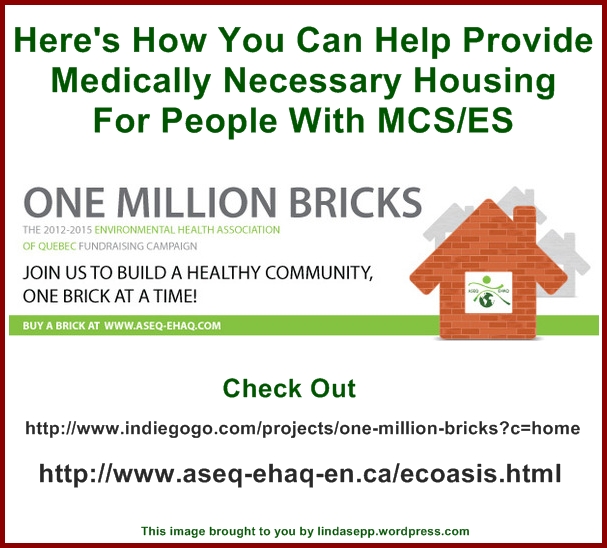
Safe Housing – One Brick at a Time

The Environmental Health Association of Québec (EHAQ) is ready to build an ecological, affordable housing community for people with Environmental Sensitivities and related conditions. This type of housing will provide a roof for those in dire need of a healthy home, free of the triggers that make them ill.

safe and healthy home

A home that will restore dignity and health…how amazing is that?

Please watch the video

JOIN EHAQ TO BUILD A HEALTHY COMMUNITY, ONE BRICK AT A TIME
BUY A BRICK @ $10 A BRICK!

To donate and learn more:

http://www.aseq-ehaq.ca/donation/donateonline.php

banner_english_fundraising-4

Gillian’s Den

Some of you may remember Gillian McCarthy from a few years ago. Her housing situation was atrocious. I lost touch due to my own housing crisis, and only recently started remembering her and wondered what had happened.

To my delight, some people have finally taken it into their own hands to keep her from freezing this winter. Somehow, they are making a small, safe, warm natural den for her, but they need our help. This is so long overdue, it brings tears to my eyes.

Building a Low Impact Den for Multiple Chemical Sensitivity

“Gillian McCarthy is a sufferer from Multiple Chemical Sensitivity caused by organophosphate poisoning early in her career. Without a warm roof over her head she will not survive this winter.

Tony Wrench and a group of natural builders are building her an emergency den. …”

http://www.permaculture.co.uk/news/2711122573/building-low-impact-den-multiple-chemical-sensitivity

The above link has the most recent updates

Gillian McCarthy

Continue reading

MCS/ES Housing Resources From CERA

This information can now be found in the Property Manager’s Guides to MCS

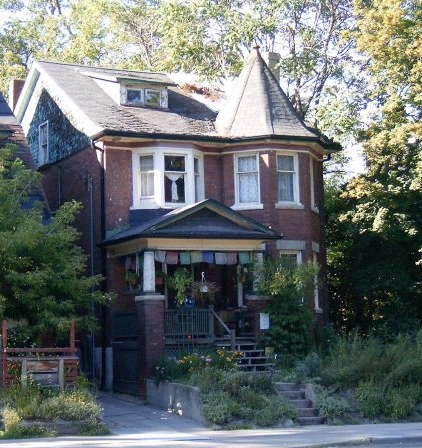
1844 Bloor St. West

1844 Bloor Street West

(1991-2010)

From fixing up the run down house in 1991, to raising my two wonderful children, planting and tending a garden, living and celebrating life with friends and family, to getting sick, to almost dying…

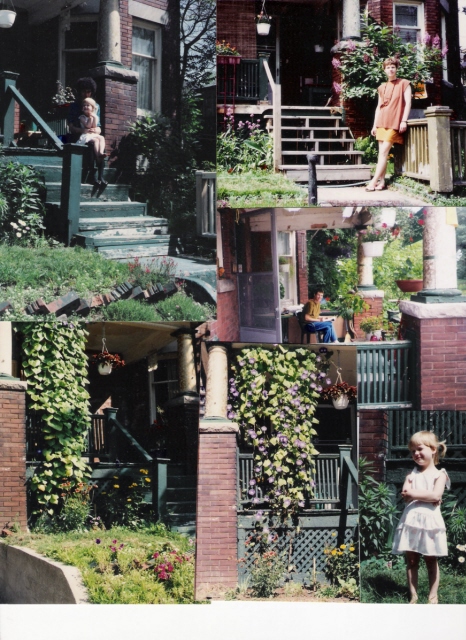
Memories of life at 1844 Bloor St W 1991-2010.

My father, daughter and son on the porch… 91 or 92.

After cleaning and painting inside, I think it took almost 20 bags to remove the weeds and garbage and unearth the garden. Only the hollyhock, a red rose, and some alyssum in the rock garden were there when I moved in.

It took a few years to get the perennial garden going. My father’s old porch railing was re-purposed as a fence for a few years. People used to smile when they went by. More people who lived on Bloor St W started planting flowers in front. People often asked me if it was my garden when I was out shoveling snow, and told me how much they enjoyed seeing the seasonal changes.

When I got too sick to care for it because of the vehicle exhaust and laundry fumes from the apartment buildings, I watched from the windows as people stole plants, rocks and other items I’d placed there.

~

Many birthdays were celebrated in 1844…

Continue reading

The documentary video Homesick about MCS and housing is almost done

From Susan Abod, Producer of Homesick:

Announcing an opportunity to be included in the documentary video Homesick about MCS and housing

The film is almost done, but I am looking for pictures of MCSers and where they live to create a collage showing there are lots of us out there around the world. You can view an 8 minute video clip and read more about the project on the Homesick website: http://homesick-video.com/.

If you are interested, please send a photo of yourself where you live. It could be a room that you consider your “safest” place, a picture of your whole house, or your neighborhood or surrounding area. It may look “normal” or it may have been foiled or fixed up showing what it took to make to make it safe for you. If you live in a car, trailer, or tent, send a picture of that. I hope to include people with all levels of health and show a wide variety of living situations, whether the situation is working for you, or not.

You can email me the picture as JPEG, PDF, or TIFF file to: mail@homesick-video.com. Please include your city, state, and country. You can also send your picture through the mail to: Homesick: Pictures, c/o Susan Abod, 11 Balsa Court, Santa Fe, NM 87508. Note that sending your picture grants permission for its use in the film.

If you have any questions you can email me at: mail@homesick-video.com. Please feel free to forward this to other MCSers that you may know of anywhere on the globe who might like to participate!

For more video and info visit: http://documentaries.org/cid-films/homesick/

Thank you and all the best,

Susan Abod
Producer, Homesick

Video: Creating Healthy Home Environments for Kids: Top 5 Tips

Great new video and resources from the Canadian Partnership for Children’s Health and Environment (CPCHE). While it isn’t made for people with MCS/ES, following their advice will make the world a safer place for us all.  It should also help convince friends and family that the accommodations we need and have been asking for are good for everyone, especially children.

“Controlling house dust; switching to less-toxic, fragrance-free cleaners; taking extreme care with renovation projects; avoiding certain types and uses of plastics; and choosing fish that are low in mercury are the five priority actions recommended by the Canadian Partnership for Children’s Health and Environment (CPCHE).”

“The 12-minute video – available in English and French and complemented by supporting print resources – is designed to be a “turn-key” solution for prenatal educators and other service providers looking for ways to address growing concerns about toxic substances and associated health risks for children.”

See  www.healthyenvironmentforkids.ca for all their helpful resources, including a brochure that goes with this video.