Monthly Archives: May 2014

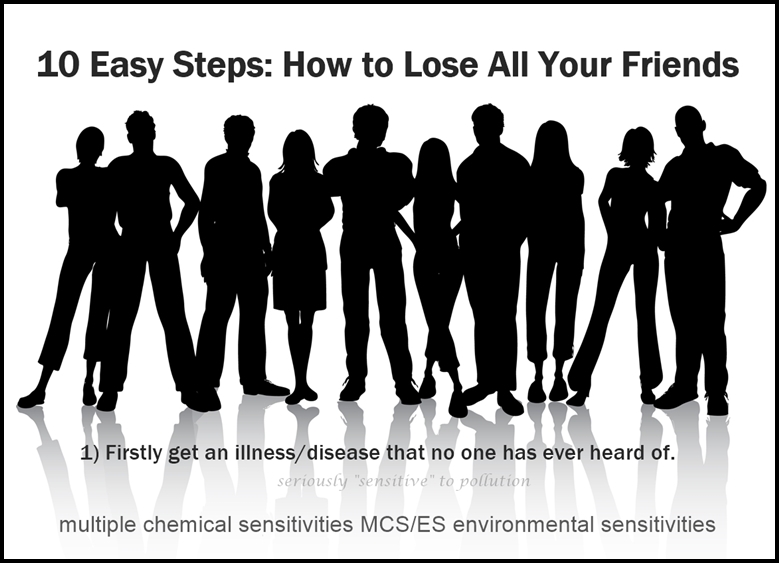
How to Lose All Your Friends

Guest Post by Candy Martin

1) Firstly get an illness/disease that no one has ever heard of. As everyone knows everything about every disease that exists, what you have can’t possibly be true or real as they have never heard of it.

2) Try to explain your illness to your friends. They still won’t believe you because they still haven’t heard of it, and frankly your explanation bores them.

3) Try to give a clearer explanation, because YOU REALLY WANT THEIR UNDERSTANDING. Now you will be accused of complaining or of being negative because you have talked about your illness for more than 1 minute.

4) Try to explain why their suggestions to get well aren’t feasible. Now you’re just being difficult and are not worth “helping” any more. Despite knowing nothing about your illness they “know’’ that exercise will help, getting out more will help, eating magic marshmallows will help etc etc. (Even if your Dr advises against it)

Continue reading

Understanding Environmental Health

Here’s a short video introduction:

#ThereIsNoAway

Everything is Interconnected

Put Away Your Devices and Look Around

put away your devices

For some of us, this (electronic social media) is all we have to ease our isolation, not because people won’t put down their wireless devices (although this is a factor for reasons not brought up in the video), but because people won’t stop buying and using products made with fragrance and other toxic chemicals.

A lot of people and sites are sharing this video (it has been viewed over 17 million times in the week since it was posted, and with good reason). Too bad there is no mention of the adverse health effects wireless radiation can cause.

What else aren’t we seeing?

Proclamations – City of Toronto – May 12th, 2014

Myalgic Encephalomyelitis/Chronic Fatigue Syndrome, Fibromyalgia and Multiple Chemical Sensitivities Awareness Day

proclamation-header-ford


Myalgic Encephalomyelitis/Chronic Fatigue Syndrome, Fibromyalgia and Multiple Chemical Sensitivities Awareness Day

May 12, 2014

WHEREAS Myalgic Encephalomyelitis/Chronic Fatigue Syndrome, Fibromyalgia and Multiple Chemical Sensitivities Awareness Day aims to raise awareness and end the stigma and discrimination that accompanies these chronic illnesses.

Over 568,000 individuals living in Ontario are afflicted with one of the three following chronic illnesses: Myalgic Encephalomyelitis/Chronic Fatigue Syndrome, Fibromyalgia or Multiple Chemical Sensitivities. Once diagnosed, an individual is often ill for years with as many as 70 per cent of sufferers becoming disabled for life.

Myalgic Encephalomyelitis, commonly known as Chronic Fatigue Syndrome, is a neurological and autoimmune disease characterized by overwhelming fatigue, pain, headaches, cardiac symptoms, immune disorders, dizziness and balance problems.

Fibromyalgia is characterized by severe musculoskeletal pain and tenderness in many areas of the body along with fatigue and sleep dysfunction, generalized or regional stiffness and in some cases neurological and cognitive symptoms. This pain can become strong enough to prevent people from working or engaging in physical activities for months and even years.

Multiple Chemical Sensitivities, also called Environmental Sensitivities or Intolerance, are initiated by an unusually severe sensitivity or allergy-like reaction to many different kinds of pollutants such as chemicals, perfumes and other environmental triggers.

Each year on May 12, communities across Ontario will join the Myalgic Encephalomyelitis Association of Ontario to increase awareness and educate the medical profession about these chronic conditions. Myalgic Encephalomyelitis/Chronic Fatigue Syndrome, Fibromyalgia and Multiple Chemical Sensitivities Awareness Day will raise funds to support the crucial services provided by the Myalgic Encephalomyelitis Association of Ontario and other organizations.

NOW THEREFORE, I, Mayor Rob Ford, on behalf of Toronto City Council, do hereby proclaim May 12, 2014 as “Myalgic Encephalomyelitis/Chronic Fatigue Syndrome, Fibromyalgia and Multiple Chemical Sensitivities Awareness Day” in the City of Toronto.

Myalgic Encephalomyelitis/Chronic Fatigue Syndrome, Fibromyalgia Day – Proclamations – City Clerk’s Office | City of Toronto.

 With thanks to MEAO (Myalgic Encephalomyelitis Association of Ontario)

Verified Fragrance-Free Supply Chains

Due to the increasing numbers of people with allergies and sensitivities to, and injuries from VOCs and other fragrance ingredients, there is a growing need for fully verified fragrance-free supply chains.

Many of us need products and foods handled in such a way from beginning to end, as to prevent first, second and third hand fragrance and other chemical contamination.

Organic food that has been handled by someone with scented hand lotion, or that has sat in a store full of fragrance molecules will absorb those chemicals, and potentially be as toxic as food that has pesticide residues (for people who must, for medical and health reasons, avoid petrochemical exposures). Clothing, bedding toilet paper and other materials also absorb fragrances, which can be hard (if not impossible) to remove.

This presents a business opportunity for entrepreneurs, to provide a service for people whose health depends on it, as well as for those who wish to prevent health problems.

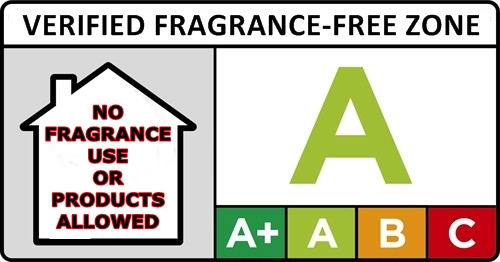
verified fragrance-free zone NO FRAGRANCE Continue reading

50% of US Population Breathes Unhealthy Air!

Outrageous!

“Nearly 150 million people, roughly half of the population in the United States, currently live in areas with unhealthy levels of air pollution that is linked to serious health impacts, such as asthma attacks, lung cancer, heart attacks, strokes and even death. Children are particularly susceptible to the health effects of air pollution because their lungs are still developing. Air pollution also disproportionately impacts vulnerable populations already burdened with chronic diseases such as asthma, heart disease and chronic obstructive pulmonary disease (COPD). Scientists warn that the buildup of carbon pollution in the atmosphere leads to warmer temperatures worsening the conditions for ozone formation in some places, and making it harder to achieve healthy air for all.”

50 percent air pollution

Georges C. Benjamin, MD, Executive Director, American Public Health Association:

Continue reading

MCS/ES Awareness Month 2014

 It’s that time of year again. Welcome to MCS “Awareness” Month!

People with disabilities have the right to equal treatment and equal access

Barriers to access can be physical, attitudinal or systemic. Conveniences can also create barriers. If you are unable to remove a barrier to accessibility, consider what else can be done to provide services to people with disabilities. No-one should live without safe access to the necessities of life.

What is disability? (Ontario Human Rights Commission)

“Disability” covers a broad range and degree of conditions, some visible and some not visible. A disability may have been present from birth, caused by an accident, or developed over time. There are physical, mental and learning disabilities, mental disorders, hearing or vision disabilities, epilepsy, drug and alcohol dependencies, environmental sensitivities, and other conditions.”

Removing barriers and designing inclusively

Persons with disabilities face many kinds of barriers every day. These can be physical, attitudinal or systemic. …

Identifying and removing barriers also makes good business sense. As well as meeting the needs of customers or employees with disabilities, removing barriers can also help other people…

Employers, unions, landlords and service providers can start by doing an accessibility review of their facilities, services and procedures to see what barriers exist. You can then make an accessibility plan and begin to remove the barriers.

It is also helpful to create an accessibility policy and a complaints procedure. These steps will help you remove existing barriers and avoid making new ones. The best way to prevent barriers is to design inclusively

Barriers aren’t just physical. Taking steps to prevent “ableism” – attitudes in society that devalue and limit the potential of persons with disabilities – will help promote respect and dignity, and help people with disabilities to fully take part in community life…

The duty to accommodate

Even when facilities and services are designed as inclusively as possible, you may still need to accommodate the individual needs of some people with disabilities. Under the Code, unions, landlords and service providers have a legal “duty to accommodate” persons with disabilities. The goal of accommodation is to allow people with disabilities to equally benefit from and take part in services, housing or the workplace.

Accommodation is a shared responsibility. Everyone involved, including the person asking for accommodation, should work together, exchange relevant information, and look for accommodation solutions together…

 

Some Resources: Continue reading