Category Archives: Chemicals

Day 256 In the Pursuit of Love (IIAW A “Sister’s” Journey)

Colleen and her friend Beth discuss statistics and friendship challenges and benefits in another revealing post for Invisible Illness week…
Just like Colleen waited for years to get officially diagnosed with MCS, so did I, and for mainly the same reasons.
I knew that the doctors at the time knew nothing about it (or they would have given me a clue as to what the early signs were years ago).
Eventually I came to realize that statistics ARE important (to decision makers), and if we don’t make the effort to get an official dx (I say effort, because many people go from uneducated doctor to uneducated doctor for years… see my post about good news for Ontario to understand what a major deal the announcement of training 2 doctors in environmental health is) then in the eyes of decision makers, we do not exist.
That means that services for us continue to not exist also…
But when we speak up, things change.
I love how Colleen is speaking up, and how her friends are too!

Colleen's avatarLife in the City with a Future

PERSON

Image17meshovelFor day 5 of Invisible Illness Awareness Week, my buddy Beth has agreed to give her perspective of what it is like having a friend disabled from MCS. In a Canadian study, in 2010, over 800,000 people were diagnosed with MCS (Multiple Chemical Sensitivities) an 31% increase in 5 years. Those during the same time period with one or more of Chronic Fatigue, Fibromyalgia, and MCS were 1,415,000 (a 25% increase). This study excluded children with MCS and focused mostly on people with MCS diagnosed by a doctor. I personally went undiagnosed for decades. I avoided the triggers of perfume as much as I could. I figured there was nothing a doctor could do for me anyway and why be just another statistic. I now understand how important it is for our governments to have accurate statistics. The more people who give MCS a voice — the more likely we…

View original post 1,076 more words

Safer Plastic Symbols Surprise!

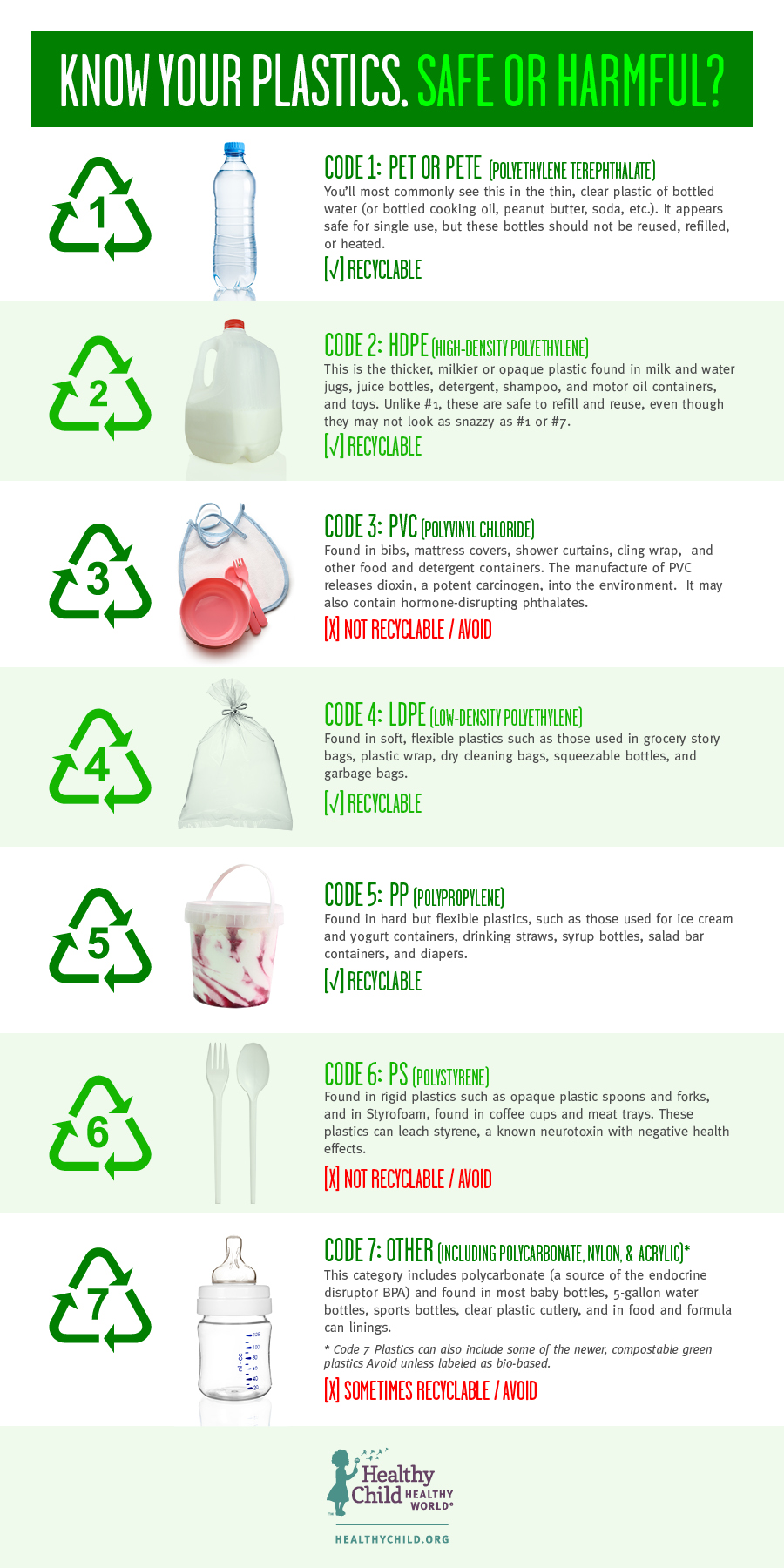
What if all the articles about safer plastics for foods and beverages were actually mistaken about these materials being safe around anything meant to be swallowed?

You know, the ones that say to avoid using containers with some symbols on the bottom, but those with other symbols are safe to use with your foods and drinks?

Like this one:

Plastics Safe or Harmful

HCHW_KnowPlastics900x1800_final

Guess what?

“The Society of the Plastics Industry (SPI) introduced its resin coding system in order to identify the various resins found in plastic bottles and rigid containers and to make sorting and recycling plastic bottles and containers easier for recyclers in Canada.

The code has no other purpose.

Despite the similarity in appearance between the SPI symbols and the Mobius loop, the presence of an SPI code does not indicate that the product is recyclable or is recycled locally.

Nor is it meant as a guide for safe use for food or beverage contact, or as an indicator of the intended use of the bottle or container…”

From: https://www.ic.gc.ca/eic/site/oca-bc.nsf/eng/ca02747.html

plastic symbols SPI

But that’s not all…

“According to a new study by the Food Packaging Forum, 175 chemicals with known hazardous properties are legally used in the production of food contact packaging in Europe and the U.S.”

!!!

Continue reading

Here’s An Interview You Don’t Want To Miss!

An Interview With Bruce Lourie

Connie from the Breast Cancer Fund recently interviewed Bruce Lourie, who has (among many other things) co-authored two books with Rick Smith. Many of you will be familiar with their first book “Slow Death By Rubber Duck”. They recently released a new book “TOXIN TOXOUT”, which was written after repeatedly being asked what could be done about the chemical body burden they discovered and discussed in their first book. In this interview Bruce very candidly discusses some of the issues we all face regarding everyday chemical exposures, and touches on what we can all do about them.

toxINtoxOUT

I’m pretty sure you will want to buy the book after you check out the interview. I don’t have Kobo (just kindle for PC) and can’t read paper and ink books, so I am unable to read the book myself, but if I won a lottery, and wanted to gift everyone I know a book, based on what Bruce discusses in the interview, I think this would be the book.

Continue reading

Everyday Toxic Trespass

Women’s Voices for the Earth has a great page about toxic ingredients commonly found  in products women, men and children are exposed to on a regular basis, usually everyday, even when we try not to be. Check it out, get informed, and take action to protect you, your family and the planet that supports our lives.

 Skin Deep

Take Action via WVE

Mind the Store

 Sadly, our current regulatory systems do more to protect those who are polluting us, than to protect our health. I don’t know how we are going to change this without a massive outcry, but we CAN stop buying the products we learn are harmful to us and to future generations.

The Skin Deep website has information about thousands of personal care products and ingredients, WVE has recipes to make your own, and then some, and Mind the Store is successfully calling on retailers to stop selling toxic products. We have more power than we know, but only when we use it!

Proof: Pesticides Are MORE Toxic Than Declared!

‘Cides are designed to kill. Only the so-called “active” ingredients are listed and tested for how well they kill what they are sold to kill. Human, animal and other environmental effects are rarely if ever researched, and then it’s only for the active ingredients. The combinations of ingredients and the so-called “inert” ingredients which make the products flow or apply better are not taken into consideration. Those “inerts” can also be more toxic than the active ingredients, but don’t have to be listed!

Recent research tested and discovered that these combinations can be up to
1000 times more toxic than declared!

Roundup more TOXIC

Major Pesticides Are More Toxic to Human Cells Than Their Declared Active Principles

Abstract

Continue reading

What is Generally Recognized As Safe, and For Whom?

It’s really beyond past the time to bust the myth that what gets sold to us has been scientifically determined to be safe for us.

Take food additives this time. Unless you are growing your own organic food, or have a lab in your back pocket, there’s no real way of knowing what the heck we are being sold and consuming.

The food safety protection system is marred by minimal supervision by the U.S. Food and Drug Administration, rife with apparent conflicts of interest in safety evaluations, and rendered all but toothless by a gaping loophole that allows companies to simply declare as safe hundreds of chemicals added to our foods—without any notification to the FDA or the public, according to an NRDC report”

For more information, please see:

Continue reading

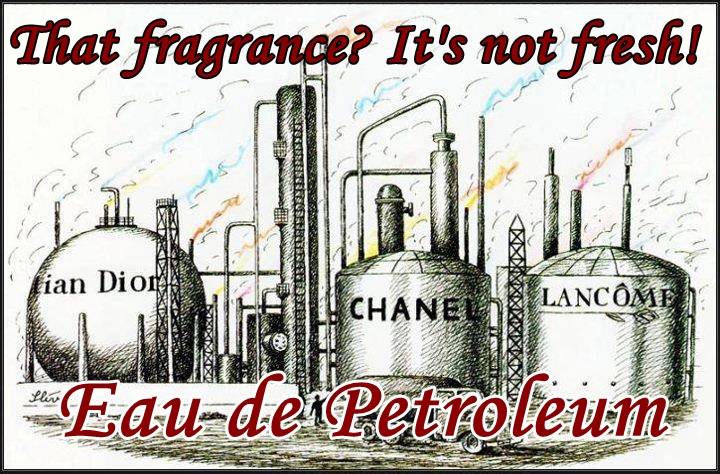
That fragrance? It’s not fresh!

eau de not fresh

That fragrance?  It’s not fresh!

Secret Scents How Hidden Fragrance Allergens Harm Public Health (WVE)

Toxic Chemicals in Fragranced Laundry Products and Health Effects

Toxic Chemicals in Air “Fresheners” and Health Effects

Fragrance Decision Undermines EPA’s DfE Program

Allergic to a World Full of Cats

(check the sidebar and tags for additional links)

Petition to Vitamix

Vitamix makes state of the art blenders which are good for making juices, soups, non-dairy milks, nut butters, grinding flour, and more.

Sadly, their current containers are made out of plastic, and even though it’s BPA-free plastic, the substitute (Tritan) might be worse than  BPA.

Vitamix used to make stainless steel containers, and due to increasing health problems from plastic chemicals, a growing number of us want them to make them again.

Vita-Mix

Vitamix Then and Now

Beth Terry at My Plastic Free Life (a great website by the way) wrote about this in some detail in her blog post “Quick Action: Ask Vita-Mix to bring back the stainless steel blender pitcher!” and started a petition.

Please sign it! If not for you, then for me!

Continue reading

The Trouble With Soot

Soot (and ‘by’products) from burning wood, diesel, coal or other fossil fuels are bad enough for the planet, but did you know that those particles attract harmful chemicals (secondary organic molecules) from the air so when we breathe them in, their adverse health effects can be multiplied?

smokestack earth

Here’s a must see two and a half minute video from The Allegheny Front, a radio program covering environmental issues in Pennsylvania.

Continue reading

Exposed to plastic fumes, women working in some factories have a 400% increased risk of breast cancer, study says

Thanks Global and 16 x 9 for looking into this.

Current chemical regulations don’t come close to protecting our health, or the health of the people who have to work with them on a daily basis.
Life (and health) really needs to be prioritized over profits. There is no good reason to allow anyone to profit while polluting or causing others to suffer. Why not have industries making things that that contribute to health and well-being?

I agree with The Science and Environmental Health Network: “Regulating hazardous waste is always problematic. The basic premise is flawed: make products that are toxic and regulate the production, sales and disposal of those products. A far better approach is based on the precautionary principle: make products out of safe materials, require producer take-back of products. Search for the best alternatives to toxic chemicals and establish zero waste policies.”