…
How Big Is Your World?
The following questions are to help us think about how much space we have to enjoy, and what if it were to be taken away.

…
The following questions are to help us think about how much space we have to enjoy, and what if it were to be taken away.
I saw this photograph on facebook of Richard Gere and Roshi Joan Halifax hugging (at the Mind and Life “Power and Care” conference), which to me exemplifies the best kind of (adult to adult) hug we humans could have.

Richard Gere and Roshi Joan Halifax
I haven’t been able to stop looking at it… and it made me start trying to remember when the last time I was able to hug someone was.
I don’t think it was in 2010 when I left Toronto, as I was so sick then, and I didn’t have any spare clothes to risk contaminating them with 2nd and 3rd hand fragrance chemicals. Continue reading
Posted in Accessibility, Air Quality, Chemicals, Community, Disability, Environmental Health, Fragrance, Human Rights, Pollution, Toxic Trespass
Tagged chemical sensitivity, environmental sensitivities, hazardous air pollutants, invisible disabilities, isolation, laundry, MCS, MCS/ES, pesticides, petrochemicals, solitary
Why do people who lose their health from being polluted and poisoned for profit end up being forced into isolation and invisibility in order to try to remain alive?

Why?
Posted in Accessibility, Air Quality, Disability, Environmental Health, Environmental Sensitivities, Pollution
Tagged allergies, asthma, cancer, chemical sensitivity, Chemicals, fibromyalgia, Fragrance, hazardous air pollutants, Human Rights, invisible disabilities, MCS, MCS/ES, petrochemicals, toxic trespass, VOCs
As more people become chemically “sensitive”, different types of human rights scenarios emerge. In their latest elearning module, the Ontario Human Rights Commission has included a case study with someone who “has been diagnosed with a chemical sensitivity disability”.
Some people think that our need for clean air interferes or competes with their imagined right to use toxic products, especially those with fragrances, but no, there is no inherent right to wear perfume or use other fragranced products!
Sometimes, though, someone may need to use a product for a disabling condition of their own. The problems arise if that product has fragrances (or some other problematic ingredients) added which cause disabling effects on another person, as the following case study from the Ontario Human Rights Commission (OHRC) shows.

Competing rights at the office
Continue reading
The Government of the Province of Ontario, specifically the Ministry of Health and Long-Term Care (MOHLTC) finally announced the establishment of a Task Force on Environmental Health.
Let’s hope this new project creates the long overdue and effective changes and access to basic services that are needed by people with environmentally linked, disabling, chronic health conditions like MCS/ES, unlike the 1985 project which created a 600+ page report with recommendations that were largely ignored (see links below), which allowed these and other problems to fester and increase in severity and magnitude.

The news release about the new task force follows:
Posted in Environmental Health, Environmental Sensitivities, Government, Health, Health Care, Human Rights, Policy
Tagged chemical sensitivity, fibromyalgia, health care access for people with MCS/ES, health effects, MCS, MCS/ES, multiple chemical sensitivities, Myalgic Encephalomyelitis/Chronic Fatigue Syndrome, Ontario, petrochemicals, toxic
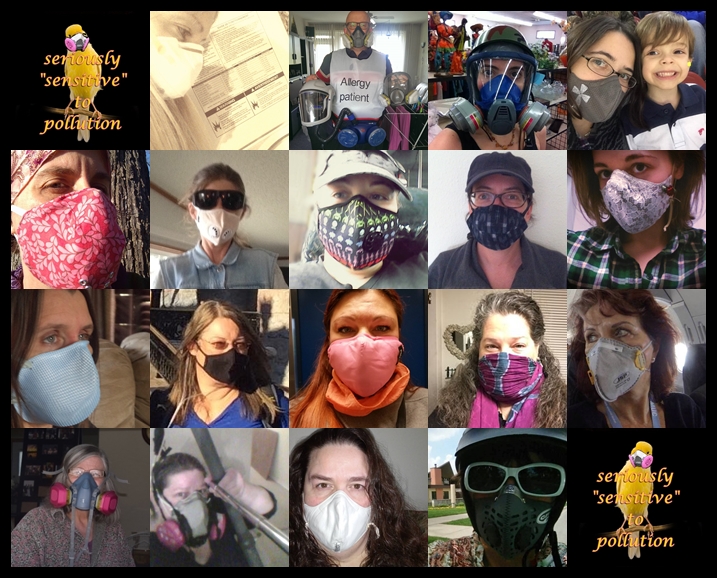 ♥
♥Many thanks to the Courageous Canaries of MCS/ES (and mask)
Awareness Month 2016!
Your courage, kindness, and willingness to share your photos and stories in the “What I Wear in Bad Air” series generated a lot of discussion in various support groups, and will benefit so many others who can see some of the options that are available, as worn by their peers, and that it’s more than ok to be visible. Continue reading
Posted in Air Quality, Disability, Environmental Health, Environmental Sensitivities, Fashion, Fragrance, Human Rights
Tagged allergies, asthma, chemical sensitivity, Fragrance, hazardous air pollutants, invisible disabilities, masks, MCS, MCS/ES, multiple chemical sensitivities, petrochemicals, Products, toxic trespass, VOCs
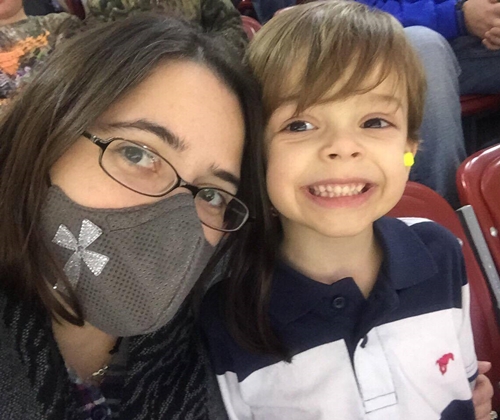 Melanie and Jaiden
When I wear my mask I noticed people couldn’t see me smile at them and would avert their eyes and not smile at me.
I will usually speak and say hello. Most people will nod or say hello back even if they don’t smile or look at my eyes. Some will shrink away like I have Ebola. I’ve felt like a leper when that happens. I just hate that my kids are learning that lesson about humanity so young. I hope it will help instill a more compassionate nature in them as they see how not to be.
I started using fabric stickers on my mask sometimes and noticed that people would smile at them. I felt less invisible even if it was my stickers they smiled at more than me. I have several different ones including penguins, crosses, and holiday relevant ones I wear around Christmas time.
Posted in Air Quality, Environmental Health, Environmental Sensitivities, Fashion, Fragrance, Pollution
Tagged allergies, asthma, chemical sensitivity, Chemicals, dizziness, Fragrance, fragrance-free, hazardous air pollutants, IAQ, invisible disabilities, masks, MCS, migraines, multiple chemical sensitivities, perfume, petrochemicals, toxic trespass

My name is Zoraida and I live in Spain. I was diagnosed with MCS two years ago, but I had been having reactions for a couple of years before that. Everything escalated suddenly in 2014, and this was when I began to need a mask for everyday life. There have been many other changes in addition to the mask. Among them, moving to a smaller, less polluted town.
My safety kit: Continue reading
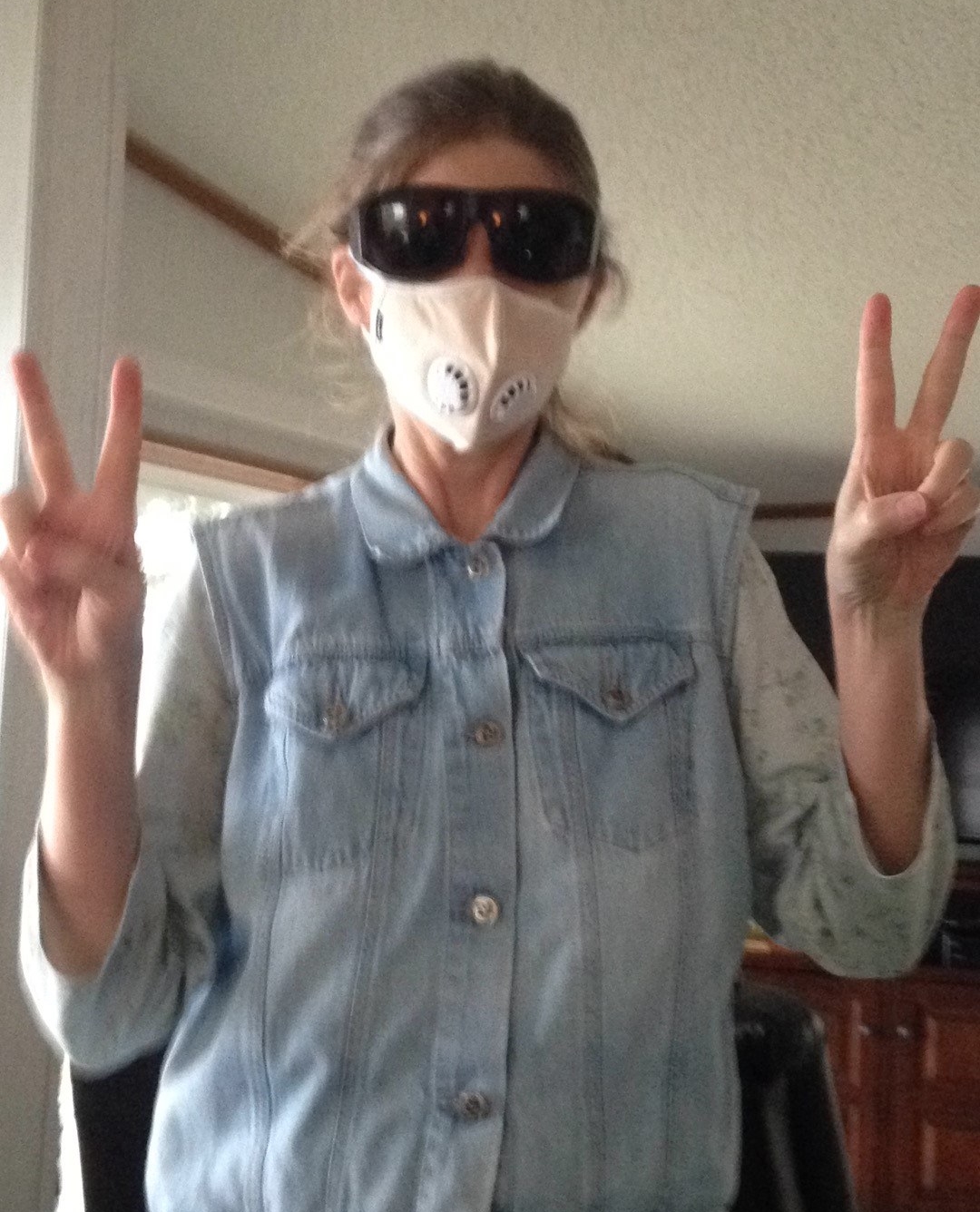
This photo was taken of me at my parent’s home, to demonstrate how I attempted to protect myself to be able to visit them, 2000 miles away.
When I can’t avoid exposures, I wear a mask to try to keep as functional as possible. Exposures affect my brain, my breathing, and I get more exhausted, etc. Even without the mask, I have challenges with my brain, breathing, energy, etc. Wearing the mask weakens me but not as much as a direct exposure would.
I am sensitive to chemicals in perfume, cologne, aftershave, hair care products, hand sanitizer, sunblock, air “freshener”, chlorine, white board and markers, building materials, cleaning products, laundry soap, dryer sheets, paints, pesticides, gasoline fumes, gas appliances, some plants, new asphalt, etc.
Posted in Air Quality, Chemicals, Environmental Health, Pollution, Products
Tagged chemical sensitivity, environmental sensitivities, Fragrance, hazardous air pollutants, IAQ, invisible disabilities, laundry products, masks, MCS, multiple chemical sensitivities, petrochemicals, toxic chemicals, toxic trespass, travel
 | linda @ Seriously "S… on MCS/ES |
| linda @ Seriously "S… on The CDC and MCS |
 | Tabatha Schnorr on MCS/ES |
| Tabatha Schnorr on The CDC and MCS |
| linda @ Seriously "S… on MCS and Housing |
| linda @ Seriously "S… on Hospital Protocols for People… |


 Seriously "Sensitive" to Pollution