Category Archives: Policy

New Link: CHRC Policy On Environmental Sensitivities

The Canadian Human Rights Commission

Policy on Environmental Sensitivities

A PDF of the policy (which I copied here when I saw it had disappeared) is now available to download from the Canadian Human Rights Commission website, having been reviewed in January of 2014. (It’s not available to view as a simple web page).

The site also includes new links to download PDFs of the 2007 documents “The Medical Perspective on Environmental Sensitivities” and “Accommodation for Environmental Sensitivities: Legal Perspective”.

The_Canadian_Flag


MCS/ES Awareness Month 2014

 It’s that time of year again. Welcome to MCS “Awareness” Month!

People with disabilities have the right to equal treatment and equal access

Barriers to access can be physical, attitudinal or systemic. Conveniences can also create barriers. If you are unable to remove a barrier to accessibility, consider what else can be done to provide services to people with disabilities. No-one should live without safe access to the necessities of life.

What is disability? (Ontario Human Rights Commission)

“Disability” covers a broad range and degree of conditions, some visible and some not visible. A disability may have been present from birth, caused by an accident, or developed over time. There are physical, mental and learning disabilities, mental disorders, hearing or vision disabilities, epilepsy, drug and alcohol dependencies, environmental sensitivities, and other conditions.”

Removing barriers and designing inclusively

Persons with disabilities face many kinds of barriers every day. These can be physical, attitudinal or systemic. …

Identifying and removing barriers also makes good business sense. As well as meeting the needs of customers or employees with disabilities, removing barriers can also help other people…

Employers, unions, landlords and service providers can start by doing an accessibility review of their facilities, services and procedures to see what barriers exist. You can then make an accessibility plan and begin to remove the barriers.

It is also helpful to create an accessibility policy and a complaints procedure. These steps will help you remove existing barriers and avoid making new ones. The best way to prevent barriers is to design inclusively

Barriers aren’t just physical. Taking steps to prevent “ableism” – attitudes in society that devalue and limit the potential of persons with disabilities – will help promote respect and dignity, and help people with disabilities to fully take part in community life…

The duty to accommodate

Even when facilities and services are designed as inclusively as possible, you may still need to accommodate the individual needs of some people with disabilities. Under the Code, unions, landlords and service providers have a legal “duty to accommodate” persons with disabilities. The goal of accommodation is to allow people with disabilities to equally benefit from and take part in services, housing or the workplace.

Accommodation is a shared responsibility. Everyone involved, including the person asking for accommodation, should work together, exchange relevant information, and look for accommodation solutions together…


 

Some Resources: Continue reading

Demystifying the Chicken in Your Dinner

We have another video to help demystify modern food, this one is about chicken.

tied and cooked chicken
Do you eat chicken that isn’t certified organic?

If you do, or if you think the inspection system ensures that what you eat is safe, then please take 2 minutes to watch:

Then visit Food & Water Watch for details and how you can make a difference.

Report: RECOGNITION, INCLUSION AND EQUITY – THE TIME IS NOW

Many of us have been waiting for action for decades, let’s hope that this is the project that finally makes it happen. It has been a long time coming…

‘RECOGNITION, INCLUSION AND EQUITY – THE TIME IS NOW: PERSPECTIVES OF ONTARIANS LIVING WITH ES/MCS, ME/CFS AND FM’

Recognition Inclusion and Equity the Time is Now

From Varda Burstyn:

At long last, I am writing to let you know about four new groundbreaking reports – products of a 5-year initiative that I and colleagues began in 2008 – that present exciting new research on the three environmentally linked conditions of ES/MCS, ME/CFS and FM, and that develop a wonderful new model of care and support for those living with the conditions in Ontario.

Continue reading

Where Are We Going?

I have done a lot of thinking (when brain fog isn’t an issue) about my life, where I’ve come from, where I am, and where I am going… Over the years I’ve also tried to understand how things end up the way they are, how policy decisions are made, and how our own decisions and actions (or lack there-of) affect our future and how future generations will live.

We live in some very challenging times, and it can get quite over-whelming and depressing when we see that our so called “leaders” are taking actions that will make things worse for everyone.

I don’t like feeling hopeless. For lack of a better word right now, it feels yucky! And having a chronic, environmentally linked condition means I already have more than enough yuck in my life.

I think we have more power and capabilities than we understand or give ourselves credit for, but it’s not easy discovering how to access them.

Continue reading

Fragrance-Free and Healthy Schools (updated)

Are you sick from sick schools?

How Healthy is Your SchoolTeachers and students suffer when school buildings are not healthy, sometimes even developing permanently disabling conditions as a result.

MCS/ES. Asthma. Autism. Learning disabilities. Behavior problems…

Unhealthy school buildings can present real barriers to access.

It shouldn’t be like that. You shouldn’t lose your health or your job or have your child’s health and future suffer because there’s something unhealthy in the air at school.

There are enough examples of the benefits of a healthy learning environment over an unhealthy one (from toxic chemicals, molds and wi-fi for example), and tools for how to make change happen.

Here are some resources (in no particular order):

Continue reading

Former President of Microsoft Canada On Wi-Fi

I just listened to an eye-opening radio interview with the former President of Microsoft Canada. A couple of women with EHS were also interviewed.

Andy Oudman (1290 AM CJBK, London ON) and Pam Killeen interview Frank Clegg, former president of Microsoft Canada and head of Citizens 4 Safe Technology (www.c4st.org). They speak about the potential hazards associated with WiFi technology

Please listen to the program and take precautions for your own health:

http://www.c4st.org/news/video/item/useful-videos/london-today-radio-broadcast-frank-clegg-and-pam-killeen.html

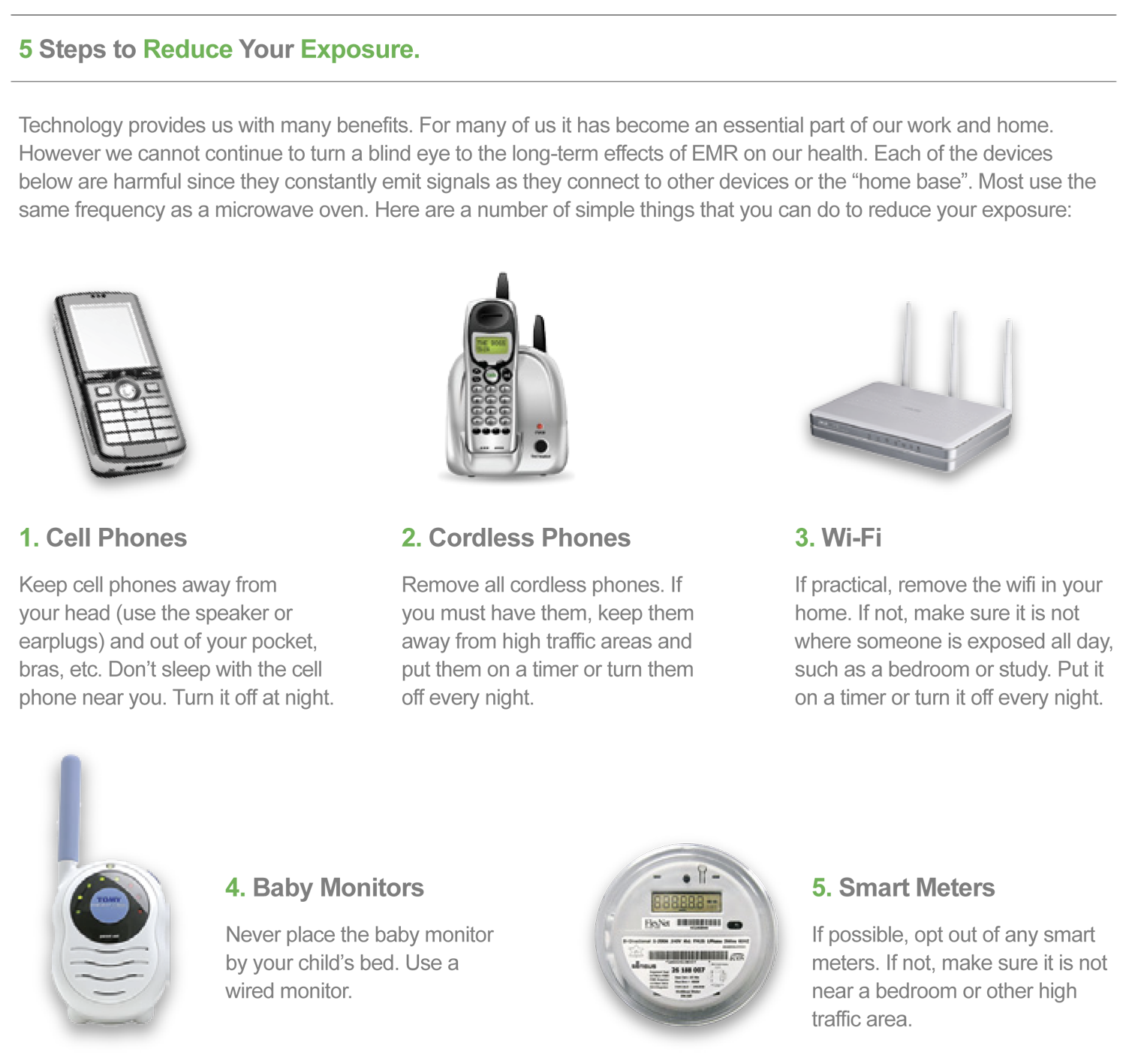
Ways to Reduce EMR Exposure

Ways to Reduce EMR Exposure

Related:

Continue reading

Still Have Doubts About Industry and Governance?

How Can We Lay Them to Rest?

WHY?

WHY?

Why aren’t we being protected from pollution, radiation and junk or GMO foods?

Why is there still a “controversy” mentioned in any mainstream media article about MCS/ES?

Why are corporations getting their way so often despite causing harm?

Here are more articles that add to what I shared in Are There Any Doubts?

Many thanks to Colin Woodard and The Portland Press Herald for this enlightening series:

By Colin Woodard

THE SERIES DAY TO DAY

SUNDAY: For two years, public servant Patricia Aho has overseen Maine’s environmental protection. But whom does she really serve? Our seven-month investigation points to her former corporate clients.

MONDAY: Led by a former chemical industry lobbyist, the Maine DEP has stalled efforts to regulate substances that are potentially harmful to children and to the development of unborn fetuses.

TUESDAY: So-called “product stewardship” regulations – even recycling efforts with industry and bipartisan support – find staunch resistance at the Maine DEP, where a former corporate lobbyist has taken the helm.

Continue reading

Fragrance-Free and Healthy Schools

I’ve updated this post here:

https://seriouslysensitivetopollution.wordpress.com/2013/08/16/fragrance-free-and-healthy-schools-updated/

Over 500 Global Scientists Sound New Alarm

Global colony collapse is really happening. Sitting back and ignoring it, wishing it would just resolve on its own, or thinking someone else is going to fix things is no longer an option.

We ALL have to take this seriously and show some love now if future generations are going to have any hope of anything resembling a decent quality of life.

“We must work hard to solve these global problems, starting today.”

Global scientists sign message of Scientific Consensus on Maintaining  Humanity’s Life Support Systems in the 21st Century:
Information for Policy Makers

Consensus Statement Illustration

As members of the scientific community actively involved in assessing the biological and societal impacts on global change,

we are sounding this alarm to the world.

For humanity’s continued health and prosperity, we all –individuals, businesses, political leaders, religious leaders, scientists, and people in every walk of life –must work hard to solve these five global problems starting today:

1) Climate Disruption        
2) Extinctions        
3) Loss of Ecosystem Diversity        
4) Pollution        
5) Human Population Growth and Resource Consumption

Continue reading