Category Archives: Pollution

Food, Fragrance, and Pollution

Sometimes when words fail me, images take their place. Lately words have been failing me, so I’ve been playing with my photo program. I thought I’d share some of the results with you here. You can click on them, to enlarge them.

eating for the world

What kind of a world are you eating for?

Continue reading

How To (Legally) Poison Your Baby’s Air

It should be illegal to sell products that disperse secret, unregulated, ingredients into the air people have to breathe, especially children.

Children need clean air to breathe! Clean air is air without petrochemicals in it.

fragranced baby poison 1These things emit hazardous chemicals. It is not cute or fresh to poison kids!

It’s time to stop and think about what is going into the air we expect children to breathe.

Breathing is not optional!

When children’s hospitals enact policies banning fragrance use on their premises, you know there are good reasons to be concerned:

Continue reading

If Chemicals Behave Like Drugs, Why Aren’t They Regulated Like Drugs?

 Good question!

Penelope Jagessar Chaffer TEDxBrussels 1

It’s a question I have asked many, many times, especially when dealing with fragrance chemicals and scent marketing.

Penelope Jagessar Chaffer wasn’t referring specifically to fragrance chemicals when she asked that question, but one set of the chemicals that she discusses in the following TEDX talk are often found in fragrances, laundry, and personal care products (but are never on the labels), and they have been implicated in many different adverse health effects, including the deformities of the penis that she elaborates on in this new video:

Continue reading

Fragrance Emitting Devices

What happens when you walk through a place that has fragrance chemicals in the air?

fragrance chemicals in the airThe chemicals attach to hair, skin, and clothing just like smoke does!

2nd hand smoke and fragrance

Some people can pass out after being forced to breathe fragrance chemicals.

Continue reading

Are Everyday Products Safe?

Sadly, too many of us have found out, with a loss of health or life, that they aren’t.

Here’s another short film about the problems with chemicals in everyday products and materials

UNSAFE: The truth behind everyday chemicals

Want to know where petrochemicals are hiding?

2012 petrochemical chart headerThere’s more:

petrochemical chart_2012 PDF download

 Please keep on informing yourself, then share what you learn with those around you.

In this day and age, we can’t depend on regulations and public policy to protect us.

It’s up to us to learn, and then demand better from manufacturers and regulators.

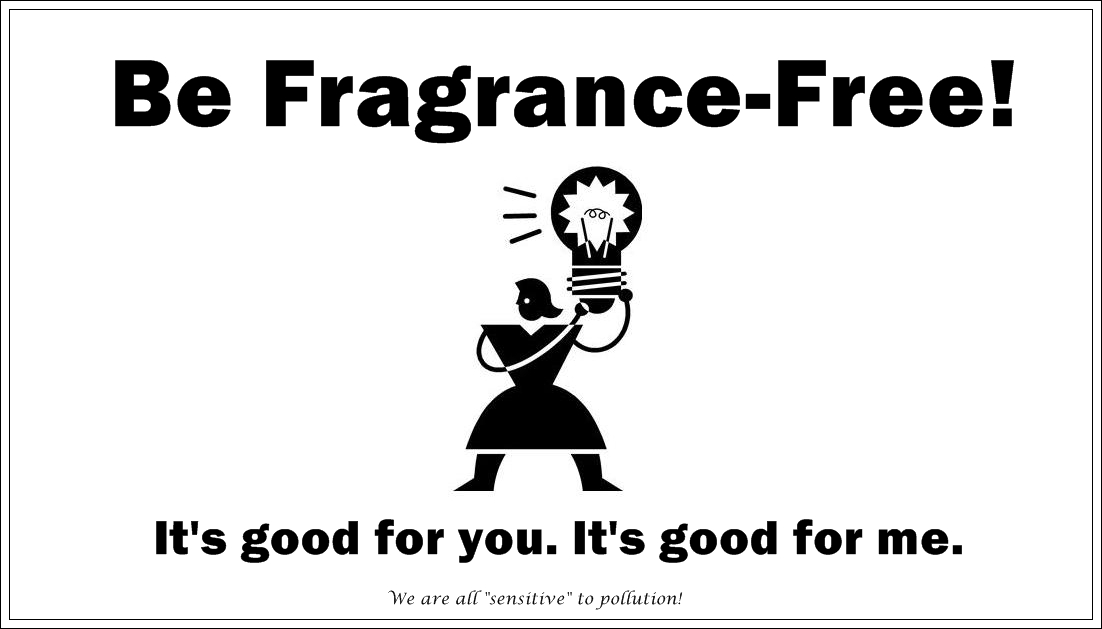
Be Fragrance-Free, Especially for the Children

It’s also good for you and good for me.

Being fragrance-free is especially good for children and fetuses, who are vulnerable to suffering developmental harms from chemical pollutants.

Very few fragrances these days are made from flowers and plants. Most are synthetic, petroleum based concoctions, including ingredients known to cause health harm, and  many more that have never been tested for health effects.

Fragrance is ubiquitous in indoor air, more prevalent than smoke ever was, and like smoke, fragrance also does not respect arbitrary boundaries. Remember smoking sections and how well those worked? Fragrance-free “areas” are just as ineffective. The volatile ingredients move throughout the air, everywhere and anywhere. They also cause second and third hand chemical contamination and health problems, just like smoke. This means that airborne fragrances settle into anything in the spaces they are found, and the residues from those items, your hands, hair,  or clothing, can also rub off on anything they come in contact with.

Breathing is not optional.

No-one should have to breathe toxic chemicals 24/7, especially children.

choose to be fragrance-free 3

or a stronger message

Continue reading

How Acceptable Are Your Levels?

 Do you know that you have hundreds of toxic chemicals in your body right now?

Do you know that our bodies weren’t designed to deal with 24/7 exposure to the kinds of substances we are breathing, ingesting, and absorbing all the time now?

If you have MCS/ES, then yes, you know. If you are involved with the environmental health movement, then yes, you know. If you watched the interview with Bruce Lourie that I shared earlier this year, about his book ToxIn ToxOut, then yes, you know. If you or someone you know has a health condition that has been linked to chemical exposures and pollution, then maybe you know… Otherwise, probably not…

How many of you have any idea what kinds of chemicals are in your body now, and what kinds of health effects they might be having on you, or on your eggs and sperm?

Have you agreed to be a chemical experiment (and are any of you being paid for it, or receiving funding to deal with the adverse effects that might happen or are happening)?

If you are like most of us, then you are completely unaware of what we are all being exposed to and the effects these exposures are having on our health. We still believe that products have to be safe if they are being sold to us. It’s hard to believe otherwise.

Like so many others, we don’t question this belief until something goes wrong in our own lives. Ed Brown was no exception. But after his wife suffered a couple of miscarriages, he got to asking

WHY?

And he made a film about his quest for answers:

Unacceptable Levels

Continue reading

Video: Everyday Chemicals and Other Toxins Affect Brain Development

child health

Please watch this important and very well done new video by Dr. Bruce Lanphear, where he discusses chemicals and other toxins that affect brain development in children (and can cause MCS/ES symptoms in others) and what we need to do about it.

Little Things Matter: The Impact of Toxins on the Developing Brain

Here’s a longer video presentation by him from Autism Canada

Excavating Environmental Risk Factors for Autism: Suspects and Strategies

Continue reading

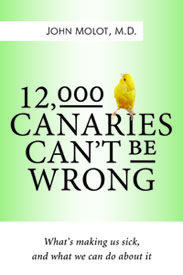
In a Doctor’s Own Words: A Toxic Legacy and 12,000 (+) Canaries Later


Dr. John Molot is a doctor who sees patients with complex, chronic, environmentally linked, and often disabling, health conditions. Although he is retiring from private practice, he is still a staff physician in the Environmental Health Clinic at Women’s College Hospital in Toronto.

He recently released a book, “12,000 Canaries Can’t Be Wrong“,  wrote a report in support of the Ontario Centre of Excellence in Environmental Health (OCEEH), and appears in a video presentation about the health effects of common  chemical exposures (see below).

Check these out:

12,000 Canaries Can’t be Wrong
What’s making you sick & what can you do about it

Books

12000Canaries_hiRessm

Continue reading

Video: Going Fragrance-Free PSA

Here’s a good three minute PSA from Frederick Community College about going fragrance-free:

More resources:

be fragrance-free 1

Fragrance chemical pollution is as harmful as smoke, and has serious short and long term impacts on health and productivity.

Continue reading