Tag Archives: sensitive to pollution

Air Cleaners, Filters, and Purifiers

Many of us have to breathe to stay alive. Okay, all of us have to breathe to stay alive. Some of us just need cleaner air than others, or our ability to think and function is severely impaired from inhaling common pollutants found in both outdoor and indoor air.

This is where air purifiers and filtration devices come in.

Here are links to a few good documents and websites to read before you spend any money, that discuss what to look for and what to avoid:

Continue reading

Safer Plastic Symbols Surprise!

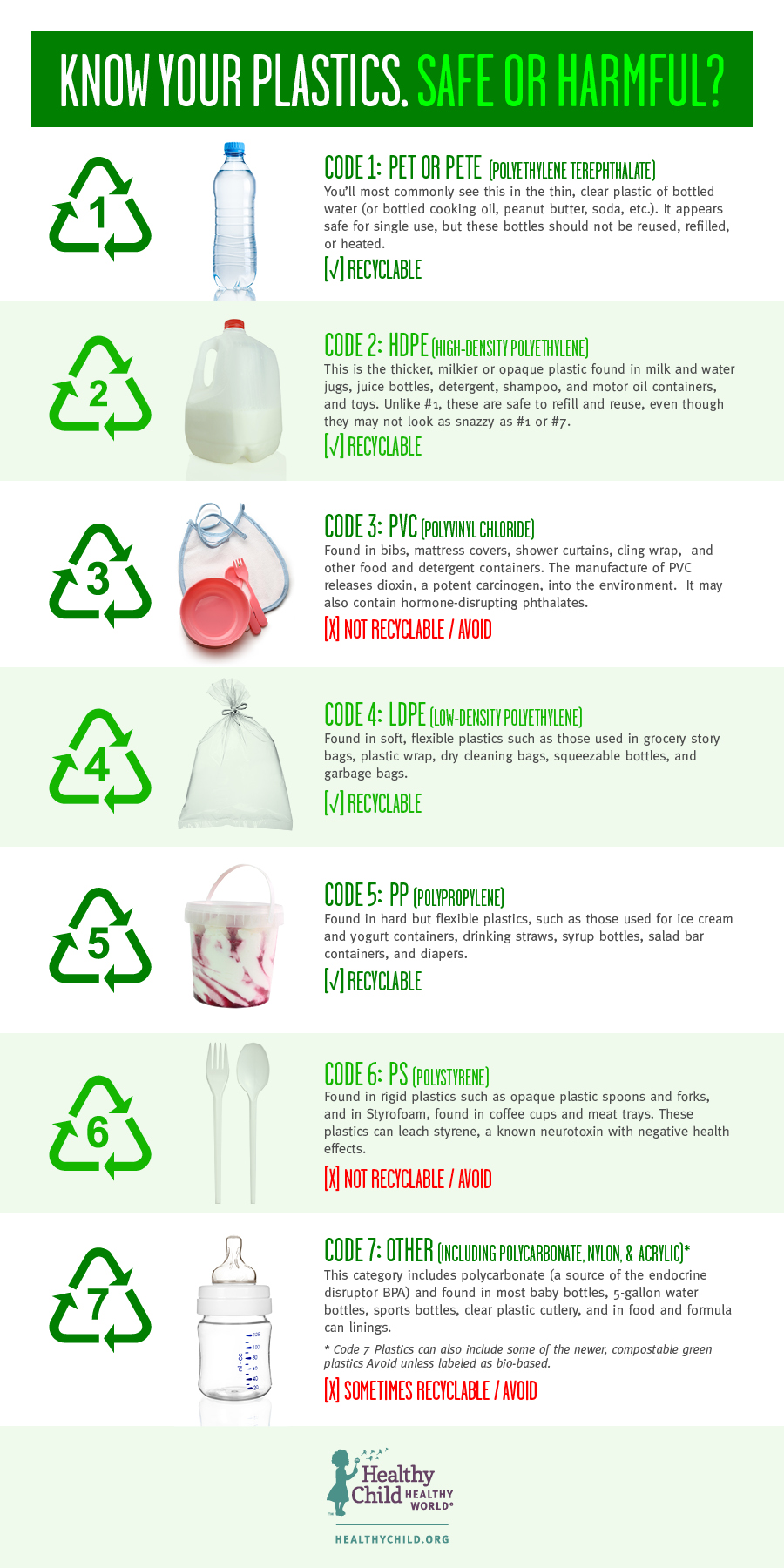
What if all the articles about safer plastics for foods and beverages were actually mistaken about these materials being safe around anything meant to be swallowed?

You know, the ones that say to avoid using containers with some symbols on the bottom, but those with other symbols are safe to use with your foods and drinks?

Like this one:

Plastics Safe or Harmful

HCHW_KnowPlastics900x1800_final

Guess what?

“The Society of the Plastics Industry (SPI) introduced its resin coding system in order to identify the various resins found in plastic bottles and rigid containers and to make sorting and recycling plastic bottles and containers easier for recyclers in Canada.

The code has no other purpose.

Despite the similarity in appearance between the SPI symbols and the Mobius loop, the presence of an SPI code does not indicate that the product is recyclable or is recycled locally.

Nor is it meant as a guide for safe use for food or beverage contact, or as an indicator of the intended use of the bottle or container…”

From: https://www.ic.gc.ca/eic/site/oca-bc.nsf/eng/ca02747.html

plastic symbols SPI

But that’s not all…

“According to a new study by the Food Packaging Forum, 175 chemicals with known hazardous properties are legally used in the production of food contact packaging in Europe and the U.S.”

!!!

Continue reading

Put Away Your Devices and Look Around

put away your devices

For some of us, this (electronic social media) is all we have to ease our isolation, not because people won’t put down their wireless devices (although this is a factor for reasons not brought up in the video), but because people won’t stop buying and using products made with fragrance and other toxic chemicals.

A lot of people and sites are sharing this video (it has been viewed over 17 million times in the week since it was posted, and with good reason). Too bad there is no mention of the adverse health effects wireless radiation can cause.

What else aren’t we seeing?

Report: RECOGNITION, INCLUSION AND EQUITY – THE TIME IS NOW

Many of us have been waiting for action for decades, let’s hope that this is the project that finally makes it happen. It has been a long time coming…

‘RECOGNITION, INCLUSION AND EQUITY – THE TIME IS NOW: PERSPECTIVES OF ONTARIANS LIVING WITH ES/MCS, ME/CFS AND FM’

Recognition Inclusion and Equity the Time is Now

From Varda Burstyn:

At long last, I am writing to let you know about four new groundbreaking reports – products of a 5-year initiative that I and colleagues began in 2008 – that present exciting new research on the three environmentally linked conditions of ES/MCS, ME/CFS and FM, and that develop a wonderful new model of care and support for those living with the conditions in Ontario.

Continue reading

Climate More Sensitive Than Previously Thought!

“the combustion of fossil fuel is the largest source” (EPA)

sensitive climate

Continue reading

A Canary’s Cry

When it’s hard to think in words, it’s sometimes easier to do pictures…

No More

Take Action:

Continue reading

How to Enforce a Fragrance-Free Policy

How to Enforce a Fragrance-Free Policy

“Make it clear that the policy applies to everyone”

effective enforcement

WHY?

Fragranced consumer products: exposures and effects from emissions

“Overall, 34.7 % of the population reported one or more types of adverse health effects from exposure to one or more types of fragranced products.”

“72.6 % were not aware that even so-called natural, green, and organic fragranced products typically emit hazardous air pollutants.”

“20.2 % of the population reported that if they enter a business, and smell air fresheners or some fragranced product, they want to leave as quickly as possible.”

“Significantly, 15.1 % of the general population reported that exposure to fragranced products in their work environment has caused them to become sick, lose workdays, or lose a job.”


Health and societal effects from exposure to fragranced consumer products (AU)

…”Finally, for public officials, the problem of “secondhand scents,” or indirect exposure to fragranced products, has parallels to secondhand tobacco smoke. Prevention from fragrance product exposure will enable individuals to work in their workplaces, attend school, and function in society without suffering involuntary harm.” …


More Resources:

Continue reading

Image

Which Side of the Fence?

Which Side

20 Petrochemicals to Avoid in Personal Care and Laundry Products


Re-posting with permission

20 of the most common Petrochemical Skin Care Ingredients to Avoid

The Organic Natural Beauty Directory urges all consumers to carefully read the ingredient labels on the products they intend to buy and be fully aware of what goes in them, that way you will know what to avoid. Ingredients are listed most used to least used (meaning that the first ingredient listed is what makes up the largest part of the product). It is extremely alarming to know that many major brands of skin care and personal care products contain petrochemicals in them.

It pains and angers me to see big beauty brands advertising on TV that they are ‘natural’ but when you look at their ingredients they may also contain some petrochemicals- so make sure you know your ingredients. This is why modern day consumers need to beware of ‘greenwashing’ and become educated on what the ingredients being used are.Your safest bet as a consumer is to choose products that contain all natural, whole and unprocessed botanical ingredients.

According to the ‘campaign for safe cosmetics website’.

“Many of these petrochemicals are known and scientifically proven to be toxic.”

“They can cause eye impairment, intestinal damage, kidney and liver problems, breathing problems, cysts, skin spots, rashes, premature aging and hair loss. Some are endocrine disruptors (that can cause hormonal disruptions and produce adverse developmental, reproductive, neurological, and immune effects), and some even carcinogenic (that can cause cancer, and in particular breast cancer)”.

Our skin is the largest organ in our body so it makes sense that we as consumers wake up & start taking control of what we feed ourselves.

Here is the A-Z list of the 20 most common petrochemicals used in personal care products:

toxic skull and bones

Continue reading

Human Rights, Property Rights and the Environment

Toxic Chemical Trespass

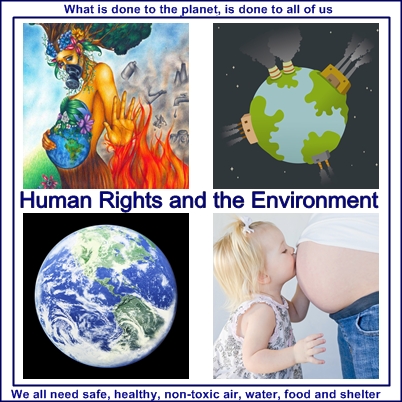
Human Rights and the Environment No More Toxic Chemical Trespass

Human Rights and the Environment
No More Toxic Chemical Trespass

Forgive us our (chemical) trespasses
By Carolyn Raffensperger
This is not a trespass in the property sense. It is a violation of our shared rights to a clean and healthy environment. Forgive us for destroying the Earth, our bodies, our communities, each other.
http://www.sehn.org/blog/?p=176

and

and this

What is done to the planet, is done to us…

Do We Not Have the Right to a Healthy Environment?

In Brazil, they now have the right to a healthy environment!

Learn more about Human Rights and the Environment here:

Continue reading