Category Archives: Accessibility

“Smart” Meter Trouble In Paradise

Ok, so the s-meters aren’t smart, and this really isn’t paradise, but this IS supposed to be safer housing for people with environmental sensitivities and there’s an issue here that isn’t getting resolved and could put a third person at risk of serious health harm.

I was hoping I wouldn’t have to write this post, but it has come to my attention that a unit here is being shown to prospective tenants, when that unit should remain empty until the contents of the attached utility cabinet are moved away from the building.

The empty unit is currently unsafe for anyone to live in, never mind someone with environmental “sensitivities”.

I have to warn people, no matter how desperate you may be for chemically safer housing, please DO NOT try to live in the currently vacant bachelor unit here if you value your life! Even if it doesn’t affect you immediately, it will.
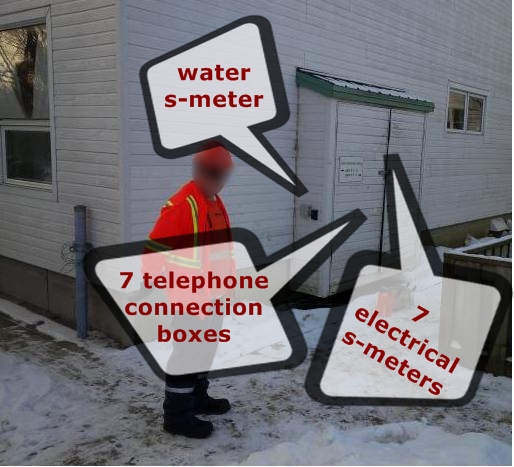
utility cabinet attached to bachelor unit wall

utility cabinet attached to bachelor unit wall

Above is the side view of the unit, the little windows on the left are above the sleeping area. A raised glass door technology cabinet divides that area from the “living room” in the front, which is on the other side of the utility cabinet. In the photo below you can see the rest of the living room window and the unit’s front door (taken on an angle from the next yard).

Continue reading

New Link: CHRC Policy On Environmental Sensitivities

The Canadian Human Rights Commission

Policy on Environmental Sensitivities

A PDF of the policy (which I copied here when I saw it had disappeared) is now available to download from the Canadian Human Rights Commission website, having been reviewed in January of 2014. (It’s not available to view as a simple web page).

The site also includes new links to download PDFs of the 2007 documents “The Medical Perspective on Environmental Sensitivities” and “Accommodation for Environmental Sensitivities: Legal Perspective”.

The_Canadian_Flag


Put Away Your Devices and Look Around

put away your devices

For some of us, this (electronic social media) is all we have to ease our isolation, not because people won’t put down their wireless devices (although this is a factor for reasons not brought up in the video), but because people won’t stop buying and using products made with fragrance and other toxic chemicals.

A lot of people and sites are sharing this video (it has been viewed over 17 million times in the week since it was posted, and with good reason). Too bad there is no mention of the adverse health effects wireless radiation can cause.

What else aren’t we seeing?

Verified Fragrance-Free Supply Chains

Due to the increasing numbers of people with allergies and sensitivities to, and injuries from VOCs and other fragrance ingredients, there is a growing need for fully verified fragrance-free supply chains.

Many of us need products and foods handled in such a way from beginning to end, as to prevent first, second and third hand fragrance and other chemical contamination.

Organic food that has been handled by someone with scented hand lotion, or that has sat in a store full of fragrance molecules will absorb those chemicals, and potentially be as toxic as food that has pesticide residues (for people who must, for medical and health reasons, avoid petrochemical exposures). Clothing, bedding toilet paper and other materials also absorb fragrances, which can be hard (if not impossible) to remove.

This presents a business opportunity for entrepreneurs, to provide a service for people whose health depends on it, as well as for those who wish to prevent health problems.

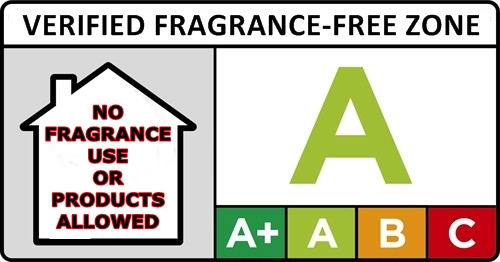
verified fragrance-free zone NO FRAGRANCE Continue reading

MCS/ES Awareness Month 2014

 It’s that time of year again. Welcome to MCS “Awareness” Month!

People with disabilities have the right to equal treatment and equal access

Barriers to access can be physical, attitudinal or systemic. Conveniences can also create barriers. If you are unable to remove a barrier to accessibility, consider what else can be done to provide services to people with disabilities. No-one should live without safe access to the necessities of life.

What is disability? (Ontario Human Rights Commission)

“Disability” covers a broad range and degree of conditions, some visible and some not visible. A disability may have been present from birth, caused by an accident, or developed over time. There are physical, mental and learning disabilities, mental disorders, hearing or vision disabilities, epilepsy, drug and alcohol dependencies, environmental sensitivities, and other conditions.”

Removing barriers and designing inclusively

Persons with disabilities face many kinds of barriers every day. These can be physical, attitudinal or systemic. …

Identifying and removing barriers also makes good business sense. As well as meeting the needs of customers or employees with disabilities, removing barriers can also help other people…

Employers, unions, landlords and service providers can start by doing an accessibility review of their facilities, services and procedures to see what barriers exist. You can then make an accessibility plan and begin to remove the barriers.

It is also helpful to create an accessibility policy and a complaints procedure. These steps will help you remove existing barriers and avoid making new ones. The best way to prevent barriers is to design inclusively

Barriers aren’t just physical. Taking steps to prevent “ableism” – attitudes in society that devalue and limit the potential of persons with disabilities – will help promote respect and dignity, and help people with disabilities to fully take part in community life…

The duty to accommodate

Even when facilities and services are designed as inclusively as possible, you may still need to accommodate the individual needs of some people with disabilities. Under the Code, unions, landlords and service providers have a legal “duty to accommodate” persons with disabilities. The goal of accommodation is to allow people with disabilities to equally benefit from and take part in services, housing or the workplace.

Accommodation is a shared responsibility. Everyone involved, including the person asking for accommodation, should work together, exchange relevant information, and look for accommodation solutions together…


Some Resources: Continue reading

Big News for Ontario

From the News Release:

“The province is providing nearly $560,000 to support two new annual fellowships over three years for a total of six new fellowships. They will allow family medicine graduates to complete an extra year of focused training in environmental health, and will help primary care providers like family doctors offer the right care to assess, diagnose and treat environmentally-linked health issues.”


“Environmental health is an emerging public health field that examines the relationship between the environment and human health. This includes the role of the environment in contributing to serious health conditions that can be disabling and even life threatening, such as environmental sensitivities, myalgic encephalomyelitis/chronic fatigue syndrome, fibromyalgia and other chronic, complex disorders. ”


“There is a growing recognition that our environment and our health are connected. Through these new fellowships, we can develop greater understanding of the links between health and the environment in order to provide better care to those suffering from complex chronic illnesses.”

~
~ Deb Matthews
Minister of Health and Long-Term Care


“The study of the environment’s effects on human health is an important emerging field of research. Support for investigating environmental impacts on health is emblematic of our government’s commitment to strengthen healthy communities.”

~
~ Jim Bradley
Minister of Environment

Full News Release:

Continue reading

Money, Masks and MCS

Here is yet another way petro-chemical and wireless pollutants and policies create barriers to access, barriers that personal actions and responsibility alone cannot overcome…

Background: Michellina  wrote about her masked experiences on her blog The-Labyrynth, which inspired Colleen to write about her mask breakthrough on her blog Life in the City with a Future, which inspired me to share her link and post on the subject here, which then inspired Suki to chime in here adding her experiences, as well as a link to some really great resources from from The (US) National Center for Independent Living on environmental health barriers to access, which links back here to one of my  posts! And here’s an example of just how prevalent fragrance chemicals are.

And then… my friend Melody posted this photo, which brings up another issue:

How can we have access to our money when wearing disability related “accessories”?

What about the masks we wear to be able to breathe cleaner air?

What about the masks we wear  to breathe? Or the hats and scarves we wear to keep some of the fragrance chemicals off of our hair? Or the special fabric head-coverings to protect from wireless radiation? These are necessary “accessories” which prevent further disability, and allow some of us to lead somewhat more normal lives, kind of like what wheelchairs are for people who can’t walk.

Do they have these signs (and policies) everywhere now?

How do you manage?

Continue reading

Wearing a Mask / Day 31 In the Pursuit of Love

Many of us (too many now) have to wear a mask to filter some of the pollutants out of the air we have to breathe. I guess I am lucky that I have not cared about what people think when I wear mine to protect my health.

Seriously "Sensitive" to Pollution

Seriously “Sensitive” to Pollution

For others, it’s not an easy decision, for a variety of reasons, and sadly, most of them have to do with a lack of understanding and acceptance in our communities.

In January, three bloggers that I am aware of have written about their mask wearing experience.

Continue reading

Allergic to a World Full of Cats?

Warning: This post contains many photos of cats.

What follows is something I thought was a great response by Kristine Kruszelnicki  to someone who trivialized her MCS and compared it to his cat allergy

(shared with her permission, and with many photos of cats added by me):

Continue reading

TTC launches wi-fi network at two subway stations

Great (not)… The TTC is erecting more accessibility barriers for people who are disabled with EHS, and it’s a big move backwards for protecting the health of children and pregnant women.

Accessibility wise, this is similar to removing ramps for people who are mobility disabled. It creates barriers to access and also subjects some people to further pain, suffering and disability.

Blanketing the subway system with microwave radiation is NOT a good idea when independent research shows enough harm caused by exposures that wireless is now declared a class 2 carcinogen…

Using the precautionary approach would be the wise thing to do.

See C4ST for more information about wireless technologies and health.

Frank Clegg, the former CEO and President of Microsoft Canada is the CEO of C4ST.