Category Archives: Chemicals

Chemical Brain Drain… What Are We Thinking?

This is the most significant issue I have with MCS/ES, the ways my brain (and functioning) are affected from exposures to chemicals in everyday products.

I suspect (and I am not the only one) that some of the bigger problems we are seeing in society now, are due to widespread neuro-toxic chemicals (in addition to wireless radiation) affecting too many people’s ability to think clearly.

Philippe Grandjean:

Our intelligence depends on the integrity of the complete organ. Even subtle effects, such as memory deficits, attention problems, or motor dysfunction, can seriously impact on our health. Thus, the brain differs substantially from other important organs, such as the kidney or the liver, where we can lead successful lives without maximal function…

Our brain functions are valuable to ourselves and to society. Data on exposures to lead, mercury, and pesticides suggest that the losses to society amount to hundreds of billions of dollars every year. This calculation is based solely on losses of income and does not take into account less tangible damages associated with chemical brain drain

Home

chemical brain drain 1

Known chemical brain drainers

(chemicals known to cause brain toxicity and neurological symptoms in humans)

Someone needs to check IFRA’s list of ingredients to see how many of these are used in fragrances, I think too many…

Continue reading

Parabens: endocrine disruptors in cosmetics and food?

Paul Whaley posted this eye-opening news at the Health & Environment blog:

Parabens: endocrine disruptors in cosmetics and food?.

“Parabens … are widely used as preservatives in cosmetics…  and have appeared in the news because of concern about their endocrine-disrupting potential, in particular their ability to mimic oestrogen…”

“However, people may be less aware of the use of parabens in foodstuffs, identifiable on labelling as additives E214-219. The most commonly-used parabens in food are methylparaben (food additive E218) and ethylparaben (E214)…”

I had no idea! And I’ve looked into a lot of contamination issues with foods! These are chemicals we wouldn’t normally think we are ingesting orally. Pesticides we now know about, some of us knew about phthalates, but parabens too?

Ok, it turns out some folks already knew, but only so far as those that are listed on labels, (and I haven’t bought much food requiring a label in years) but this new research shows them also appearing in foods that do not require ingredient labels! And these weren’t just the naturally occurring parabens, (as there are some, it turns out) but  synthetic parabens were also found!

phthalates and parabens are found in almost all supermarket foods that were tested

phthalates and parabens are found in almost all supermarket foods that were tested

I recently wrote about other research that confirmed how commonly phthalates are found in supermarket foods, contamination from fragrance and plastic, but it seems we have more reasons to be careful about the foods and drinks we choose:

From the Abstract: “Parabens are esters of p-hydroxybenzoic acid and are widely used as preservatives in cosmetics, pharmaceuticals, foodstuffs, including beverages”

Continue reading

Endocrine Disruption… Huh? Why Should We Care?

Many of us have no idea what “those people” are talking about when they mention endocrine disruptors. Sounds like something foreign and insignificant, or at least it did to me, until something caught my attention a few years ago.

It turns out that the endocrine system is a hugely busy and important system in our bodies, one well worth looking into and trying to understand. When we start to understand how important this system is, we might start to notice how we are (unwittingly) damaging ourselves, or rather, being damaged, because there are so many endocrine disrupting chemicals allowed into our daily lives now.

It is so much easier to stop causing harm (in whatever ways we are able) when we understand what the problems are, and so difficult, if not impossible, when we remain oblivious. In this case, sticking our heads in the sand will not only harm us, it has the potential to also harm our grandchildren and their grandchildren.

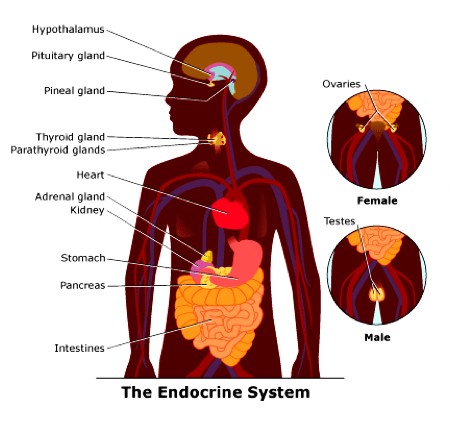
endocrine system


(image from EcoWatch, link below)

Continue reading

The Marketing of Febreze

The Marketing of Febreze
(and Other Ways We’ve Been Had)

The commercials and advertisements we see are almost all carefully crafted by teams of “scientists”so that they have the greatest impact possible, resulting in people believing that we NEED to buy and use these products for our lives to be complete.

Here’s how Febreze was marketed and we the people have been manipulated into buying and using an unnecessary and toxic product.

Some excerpts from an article well worth reading:

Febreze

How Companies Learn Your Secrets

By CHARLES DUHIGG

… “When they got back to P.& G.’s headquarters, the researchers watched their videotapes again. Now they knew what to look for and saw their mistake in scene after scene. Cleaning has its own habit loops that already exist. In one video, when a woman walked into a dirty room (cue), she started sweeping and picking up toys (routine), then she examined the room and smiled when she was done (reward). In another, a woman scowled at her unmade bed (cue), proceeded to straighten the blankets and comforter (routine) and then sighed as she ran her hands over the freshly plumped pillows (reward). P.& G. had been trying to create a whole new habit with Febreze, but what they really needed to do was piggyback on habit loops that were already in place. The marketers needed to position Febreze as something that came at the end of the cleaning ritual, the reward, rather than as a whole new cleaning routine.

Continue reading

OBGYs Advise Pregnant Women to Live As If They Have MCS/ES!

The Royal College of Obstetricians and Gynaecologists (RCOG) released a new paper regarding everyday chemical exposures during pregnancy, and confirmed that there are sufficient indications that all is not well, that some of these chemicals we are exposed to on a daily basis are linked to causing some serious health problems, so it is better to be safe than sorry and avoid as many exposures as possible during pregnancy.

It’s high time time doctors stop being afraid of the chemical and pharmaceutical companies to speak up and out about this!

I applaud them for finally having the courage!

Chemical Exposures During Pregnancy
(Scientific Impact Paper 37)

“the approach recommended is for such women to put ‘safety first’. That is, to assume that risk is present even when it may be minimal or eventually proven to be unfounded. This is often referred to as the ‘precautionary approach’.

The Advice

to reduce overall chemical exposure:

● use fresh food rather than processed foods whenever possible

● reduce use of foods/beverages in cans/plastic containers, including their use for food storage

● minimise the use of personal care products such as moisturisers, cosmetics, shower gels and fragrances

● minimise the purchase of newly produced household furniture, fabrics, non–stick frying pans and cars whilst pregnant/nursing

● avoid the use of garden/household/pet pesticides or fungicides (such as fly sprays or strips,rose sprays, flea powders)

● avoid paint fumes

● only take over–the–counter analgesics or painkillers when necessary

● do not assume safety of products based on the absence of ‘harmful’ chemicals in their ingredients list, or the tag ‘natural’ (herbal or otherwise).

RCOG Advice

If you substitute “woman” or “pregnant woman” with “person who has MCS/ES”, and change “minimize” and “reduce” to “avoid”, and “pregnancy” to “probably permanently”, you get a pretty good idea of what doctors (who often have no idea or training about MCS/ES) should be saying to people about life with MCS/ES.

But really, it’s good advice for everyone.

Please note that children should also be protected from these same exposures, as their brains and bodies are still developing and these exposures can interfere with normal development and daily functioning.

They did omit one other very important exposure to avoid during pregnancy, and that is exposure to wireless radiation from sources such as cell towers, WiFi and devices like mobile phones, DECT phones, and even wireless baby monitors!

What follows are more excerpts from the paper and the links to it

Continue reading

Fragrances in Pesticides?

And pesticides in fragrances…

We live in a messed up world.

 Signs > DANGER (OSHA) > Chemical & Pesticide

I am thinking that adding fragrance chemicals to  ‘CIDEs  makes people think they are not the hazardous killing poisons that they really are, and making them smell better can make them more attractive and harmful to children!

Note that some of the fragrance chemicals might be MORE harmful than the pesticides themselves, as if pesticides weren’t already harmful enough, but those don’t have to be listed, because they are considered “inert ingredients“.

Benzene, for example… It’s a legal fragrance ingredient…

Franny

Can someone explain this to me? How is all this a good idea?

Continue reading

Brain Diseases Affecting More People Earlier…

“Changing patterns of neurological mortality in the 10 major developed countries – 1979–2010”

“This has to be speculative but it cannot be genetic because the period is too short. Whilst there will be some influence of more elderly people, it does not account for the earlier onset; the differences between countries nor the fact that more women have been affected, as their lives have changed more than men’s over the period, all indicates multiple environmental factors.

Considering the changes over the last 30 years – the explosion in electronic devices, rises in background non-ionising radiation- PC’s, micro waves, TV’s, mobile phones; road and air transport up four-fold increasing background petro-chemical pollution; chemical additives to food etc.

There is no one factor rather the likely interaction between all these environmental triggers, reflecting changes in other conditions.

For example, whilst cancer deaths are down substantially, cancer incidence continues to rise; levels of asthma are un-precedented; the fall in male sperm counts – the rise of auto-immune diseases – all point to life-style and environmental influences.

These `statistics’ are about real people and families, and we need to recognise that there is an `epidemic’ that clearly is influenced by environmental and societal changes.”

~ Professor Colin Pritchard

Article: http://www.alphagalileo.org/ViewItem.aspx?ItemId=131020&CultureCode=en

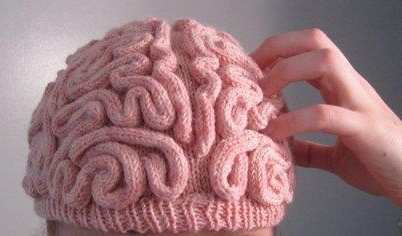
The only brain in my files...

Photo: While the article subject is serious, this is the only brain in my photo files, of a knitted beanie that made the rounds on fb…

Research Abstract: http://www.publichealthjrnl.com/article/S0033-3506%2812%2900467-2/abstract

Conclusions

“These results pose a major public health problem, as the epigenetic contribution to these changes, rather than longevity, have serious implications indicating earlier onset of neurological morbidity pressurizing families, health and social care services, with resource implications especially for Australia, Canada, Italy, Netherlands, Spain, the UK and the USA.”

Ask Major Retailers to Eliminate the Toxic 100+

Mind the Store

New Mind the Store initiative calls on the largest U.S. retailers to restrict the most Hazardous 100+ chemicals.

“It’s not feasible to ask the average person to keep 100+ chemicals in their head when they go to the store”

In fact, it’s usually impossible for us to find out if and where these chemicals are lurking, and they are lurking almost everywhere! Store buyers can, however, ask their suppliers to provide supply chain information on chemicals used, and can ask for safe, non-toxic products and materials for their customers.

“Our coalition came together around a shared critique of our government’s failure to protect the public from toxic chemicals and a shared platform for how to fix our policies. But most importantly we came together with a shared moral urgency to reduce the suffering caused by chronic diseases like cancer, disabilities and autism that are linked to chemical exposure.”

What is the Hazardous 100+ list?

Continue reading

Phthalates in Supermarket Foods

Finally.

Someone tested it.

And just like many of us who have MCS/ES have been saying for years:

Supermarket food is contaminated with fragrance and plastic chemicals.

supermarket food contaminated

Continue reading

Toxic Chemicals in Air “Fresheners” and Health Effects

Some people wonder what the fuss about air”fresheners”  is all about.

Air”fresheners” do not freshen the air. In fact, they make the air harmful to breathe!

Thank goodness we have people like Dr Anne Steinemann to tell us what some of the ingredients that harm our health actually are.

Continue reading