Category Archives: Environmental Health

If Chemicals Behave Like Drugs, Why Aren’t They Regulated Like Drugs?

 Good question!

Penelope Jagessar Chaffer TEDxBrussels 1

It’s a question I have asked many, many times, especially when dealing with fragrance chemicals and scent marketing.

Penelope Jagessar Chaffer wasn’t referring specifically to fragrance chemicals when she asked that question, but one set of the chemicals that she discusses in the following TEDX talk are often found in fragrances, laundry, and personal care products (but are never on the labels), and they have been implicated in many different adverse health effects, including the deformities of the penis that she elaborates on in this new video:

Continue reading

Fragrance Emitting Devices

What happens when you walk through a place that has fragrance chemicals in the air?

fragrance chemicals in the airThe chemicals attach to hair, skin, and clothing just like smoke does!

2nd hand smoke and fragrance

Some people can pass out after being forced to breathe fragrance chemicals.

Continue reading

Are Everyday Products Safe?

Sadly, too many of us have found out, with a loss of health or life, that they aren’t.

Here’s another short film about the problems with chemicals in everyday products and materials

UNSAFE: The truth behind everyday chemicals

Want to know where petrochemicals are hiding?

2012 petrochemical chart headerThere’s more:

petrochemical chart_2012 PDF download

 Please keep on informing yourself, then share what you learn with those around you.

In this day and age, we can’t depend on regulations and public policy to protect us.

It’s up to us to learn, and then demand better from manufacturers and regulators.

Be Fragrance-Free, Especially for the Children

It’s also good for you and good for me.

Being fragrance-free is especially good for children and fetuses, who are vulnerable to suffering developmental harms from chemical pollutants.

Very few fragrances these days are made from flowers and plants. Most are synthetic, petroleum based concoctions, including ingredients known to cause health harm, and  many more that have never been tested for health effects.

Fragrance is ubiquitous in indoor air, more prevalent than smoke ever was, and like smoke, fragrance also does not respect arbitrary boundaries. Remember smoking sections and how well those worked? Fragrance-free “areas” are just as ineffective. The volatile ingredients move throughout the air, everywhere and anywhere. They also cause second and third hand chemical contamination and health problems, just like smoke. This means that airborne fragrances settle into anything in the spaces they are found, and the residues from those items, your hands, hair,  or clothing, can also rub off on anything they come in contact with.

Breathing is not optional.

No-one should have to breathe toxic chemicals 24/7, especially children.

choose to be fragrance-free 3

or a stronger message

Continue reading

Being a Caring “Consumer”, Giver, and Receiver of Gifts

‘Tis the season when we are encouraged or expected to participate in mad shopping frenzies, buying products that are mostly toxic and usually generate vast quantities of waste to boot. On some level, I believe most people know that this isn’t working out so well for anyone, but it’s hard to know why it’s so hard for people to show love in ways that don’t involve disposable packaging and toxic materials that are advertised as being cool or trendy. Or maybe it’s the advertising that has something to do with it?

Thankfully, we do have available a plethora of alternative ways to show our love to friends and families, and the trendiness factor is growing. There are ways that are kinder, gentler, more personal, and usually much more appreciated

more love

I’d like to share some ideas and resources that I have found helpful. Some are newer while others have been around for years but are still very relevant now, if not more so.

I hope you find something that not only inspires you, but also makes your life easier and allows you to become more attuned to your own gifts and needs, as well as those of others.

Continue reading

How Acceptable Are Your Levels?

 Do you know that you have hundreds of toxic chemicals in your body right now?

Do you know that our bodies weren’t designed to deal with 24/7 exposure to the kinds of substances we are breathing, ingesting, and absorbing all the time now?

If you have MCS/ES, then yes, you know. If you are involved with the environmental health movement, then yes, you know. If you watched the interview with Bruce Lourie that I shared earlier this year, about his book ToxIn ToxOut, then yes, you know. If you or someone you know has a health condition that has been linked to chemical exposures and pollution, then maybe you know… Otherwise, probably not…

How many of you have any idea what kinds of chemicals are in your body now, and what kinds of health effects they might be having on you, or on your eggs and sperm?

Have you agreed to be a chemical experiment (and are any of you being paid for it, or receiving funding to deal with the adverse effects that might happen or are happening)?

If you are like most of us, then you are completely unaware of what we are all being exposed to and the effects these exposures are having on our health. We still believe that products have to be safe if they are being sold to us. It’s hard to believe otherwise.

Like so many others, we don’t question this belief until something goes wrong in our own lives. Ed Brown was no exception. But after his wife suffered a couple of miscarriages, he got to asking

WHY?

And he made a film about his quest for answers:

Unacceptable Levels

Continue reading

Flame Retardants, Health, and Deception

If you haven’t seen the documentary Toxic Hot Seat yet, you (probably) don’t know what you’re missing! If you read the Chicago Tribune’s award winning series “Playing With Fire” a couple of years ago, then you do have an idea of what the film is about, but it is still very worth watching. We all need to understand the implications of what is discussed in this film. It affects each and every one of us.

Safer Chemicals Healthy Families‘ are streaming the film for free until December 7, 2014. Check out their website for all kinds of great info and actions you can take!

Sign up here to receive the link to watch the film.

toxic hot seat

Here are resources and an infographic on how to address flame retardants at home:

Continue reading

Video: Everyday Chemicals and Other Toxins Affect Brain Development

child health

Please watch this important and very well done new video by Dr. Bruce Lanphear, where he discusses chemicals and other toxins that affect brain development in children (and can cause MCS/ES symptoms in others) and what we need to do about it.

Little Things Matter: The Impact of Toxins on the Developing Brain

Here’s a longer video presentation by him from Autism Canada

Excavating Environmental Risk Factors for Autism: Suspects and Strategies

Continue reading

In a Doctor’s Own Words: A Toxic Legacy and 12,000 (+) Canaries Later


Dr. John Molot is a doctor who sees patients with complex, chronic, environmentally linked, and often disabling, health conditions. Although he is retiring from private practice, he is still a staff physician in the Environmental Health Clinic at Women’s College Hospital in Toronto.

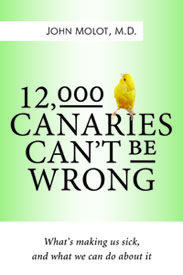
He recently released a book, “12,000 Canaries Can’t Be Wrong“,  wrote a report in support of the Ontario Centre of Excellence in Environmental Health (OCEEH), and appears in a video presentation about the health effects of common  chemical exposures (see below).

Check these out:

12,000 Canaries Can’t be Wrong
What’s making you sick & what can you do about it

Books

12000Canaries_hiRessm

Continue reading

Electromagnetic Fields: The Chemical Connection

“In other words, though work to reduce toxic chemical exposures can be viewed as quite distinct from efforts to address EMF exposures, both EMFs and EDCs can disrupt the critical signaling systems in the body and lead to problematic health endpoints.”

Nancy Hepp's avatarOur Health and Environment Blog

written by Elise Miller, MEd
CHE Director

Elise Miller, MEdAs you probably remember from your high school biology class, our bodies function using electrical impulses to communicate between cells, such as telling your heart muscles to contract or signaling your brain that you just stubbed your toe. Since everything relies on these signals, any breakdown or disruption in your body’s electrical system can become a real problem.

We also know that certain toxic agents, such as endocrine disrupting chemicals (EDCs), can alter our bodies’ hormonal messaging systems (which, by the way, uses electrical signals to communicate). When exposures to these chemicals, even in tiny amounts, happen during critical windows of development, then a wide range of health problems can result over a person’s lifetime.
So what do EDCs and electromagnetic fields (EMFs) have in common? As Henry C. Lai, professor of bioengineering at the University of Washington in Seattle and an expert…

View original post 434 more words