Category Archives: Housing

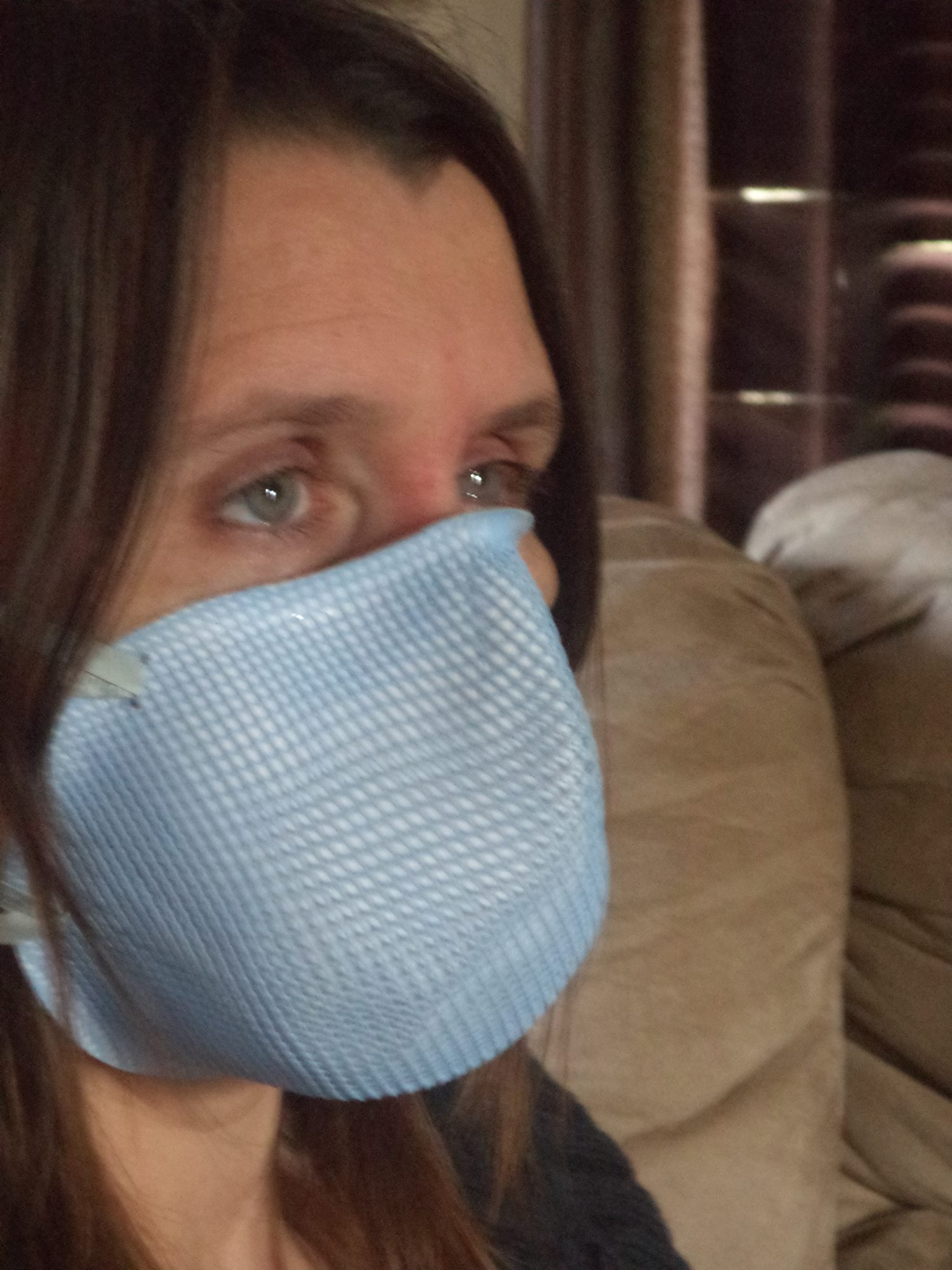
What I Wear In Bad Air :: Wendy


2016 Wendy Kearley

“I use my mask any time someone comes to my door, when maintenance people come in my home, when a nurse comes to take my blood. In an emergency I have to wear it going to & in the hospital, and any time chemicals infiltrate from outside, like wood smoke, Northern Pulp Mill, lawn mower exhaust,  snow blower exhaust, and vehicle exhaust, and laundry products. 

I’ve also had to wear it for a few days inside because they used plastic plumbing parts that made me very ill.”

~ Wendy Kearley

Wendy uses a 3M series 7502 silicone half mask with a 60926 filter.

For more info on masks, please see Continue reading

What I Wear In Bad Air :: E.P.


2016 E.P.

“I wear this whenever I leave the house, like when taking my child to the park, or walking by people and homes. I had to wear it indoors as well when I lived in an apartment building, because I get sick from exposure to wafting perfume, and dryer vent laundry scents in the air. Even outside it is impossible to avoid these scents blowing in the air and from people walking by.”

~ E.P.

For more info on masks see:

Continue reading

What I Wear In Bad Air :: Lisa M.


2016 Lisa M

“At one point I had to sleep in the mask when in a rental unit. There was smoke coming from a surrounding unit and toxicity from finish that was used on the floor. I typically use avoidance, but for situations where that is not completely possible the mask is used to help with some symptoms. One of the biggest issues I deal with is the impact of environmental triggers causing instant inflammation of my eyes. Since the mask does not help with that it has been necessary to wear it with glasses when avoidance is not possible.”

~ Lisa M.

For more info on masks see:

Continue reading

Update: Wendy is NOT a Widget and She Shouldn’t be Treated Like One

UPDATE:
The bureaucrats expect Wendy to leave the only safe and accessible home Wendy has access to, the sherriffs could be there any day, and there is still no other safe and accessible place for Wendy to move to!

In a kind and sane society, disabled people would be treated with respect and dignity, and safe and accessible housing would not be taken from them when there is no place else to go to.

We need to treat people with invisible, inconvenient disabilities better!

Wendy has a safe-for-her-home, the ONLY place she can now be and remain functional, but the bureaucrats only see that it is a 3 bedroom home and not the 2 bedroom home her doctors have said she (at minimum) needs.

She cannot go to the mall, to the hospital, to a library, or to an apartment where people smoke, use fragrances, pesticides, or have dryer vents spewing toxic laundry products her way.

The only kind, humane, and sane solution is that she should be allowed to remain where she is, until the province has built MCS/ES accessible housing that is safe for her to move to…

2016 W.K. 1


UPDATE May 3rd:

According to this CBC interview, the housing authority has extended Wendy’s stay until the end of July, although a week or so ago they had told Wendy that she only had until April 30th, and they have not informed Wendy or her lawyer about this news (she learned via the CBC).

Hers is the 1st interview: http://www.cbc.ca/maritimenoon/2016/05/03/chemical-sensitivity-eviction-pot-pardons-your-thoughts/

∴ Wendy is NOT a widget. Widgets can go anywhere. Wendy can’t. “Widget” is used in texts and speech, especially in the context of accounting, to indicate a hypothetical “any…

Source: Wendy is NOT a Widget and She Shouldn’t be Treated Like One

Webinar to Increase Smoke-Free Policies in Federally Assisted Housing (US)

Smoke and chemicals (such as fragrances, air “fresheners”, laundry products, pesticides, and other VOCs) do not respect property lines as they travel throughout space, often making others quite sick, even disabling them in their own homes. This is especially a problem in multi-unit housing, and where housing units are built close together.

This is also a very serious accessibility issue for people with MCS/ES, as there are few affordable housing options available, and most of these put people at risk of further  harm due to indoor air pollution issues, despite HUD and other federal agencies in the US and Canada recognizing MCS/ES as a disability that needs to be accommodated.

The following webinar is about addressing smoke, but the issues are applicable to other forms of indoor air pollutants as well. It should also be available as a podcast later.

For those of you who are interested and able,  the webinar is being offered on Wed, Aug 5, 2015 2:00 PM – 3:30 PM EDT by the Asthma Community Network

Breathing Easy at Home: Partnering to Increase Smoke-Free Policies in Federally Assisted Housing

live smoke free webinarMore info: Continue reading

Breath-taking: An architectural answer to one homeowner’s severe allergies

Safe, medically required, non-toxic, EMF/EMR safe housing CAN be built. I linked to another article and the architect’s website in the 1st comment below.
“Because Barbara Tudhope has severe allergies and acute sensitivities to dust, pollen, electromagnetic radiation (EMF) and a long list of construction materials, the couple designed their home to foster an environment that doesn’t cause her any adverse reaction.

… “Almost all construction and renovation uses building materials that off-gas volatile organic compounds [VOCs], and contractors generally pay little attention to electrical and magnetic fields in the homes they build,” says Mr. Tudhope, a business writer. “But both can have serious acute and chronic health consequences for someone like Barbara, and, in truth, for almost anyone.”

Featured Image -- 5368

“Smart” Meter Trouble In Paradise

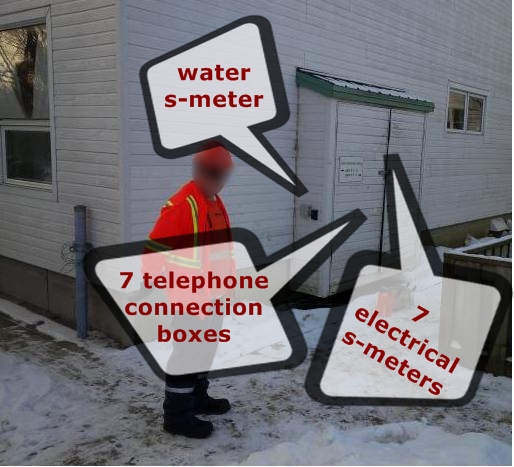
Ok, so the s-meters aren’t smart, and this really isn’t paradise, but this IS supposed to be safer housing for people with environmental sensitivities and there’s an issue here that isn’t getting resolved and could put a third person at risk of serious health harm.

I was hoping I wouldn’t have to write this post, but it has come to my attention that a unit here is being shown to prospective tenants, when that unit should remain empty until the contents of the attached utility cabinet are moved away from the building.

The empty unit is currently unsafe for anyone to live in, never mind someone with environmental “sensitivities”.

I have to warn people, no matter how desperate you may be for chemically safer housing, please DO NOT try to live in the currently vacant bachelor unit here if you value your life! Even if it doesn’t affect you immediately, it will.

utility cabinet attached to bachelor unit wall

utility cabinet attached to bachelor unit wall

Above is the side view of the unit, the little windows on the left are above the sleeping area. A raised glass door technology cabinet divides that area from the “living room” in the front, which is on the other side of the utility cabinet. In the photo below you can see the rest of the living room window and the unit’s front door (taken on an angle from the next yard).

Continue reading

Kim Palmer Was Allergic To the 20th Century

Kim was an award winning singer/songwriter/keyboardist originally from Toronto, Canada. She passed away October 23, 2006 after a long struggle with MCS, which developed after a gas leak and pesticide poisoning, among other things that she was exposed to during a short period of time.

She may have left us physically, but her music is still with us.

porcelain trailer

The following song is from her album titled “songs from a porcelain trailer”:

Continue reading

Pesticides in Shipping Containers and Contents

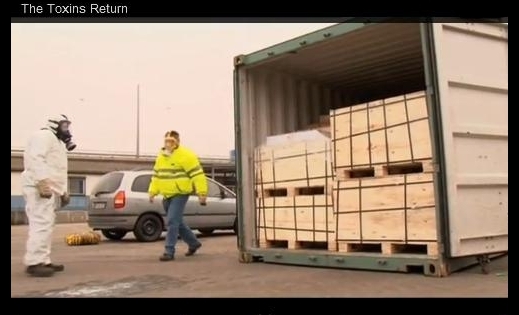
Did you know that there can be massive amounts of highly toxic pesticides used in the shipping containers, especially when products and materials are shipped over seas?

The Toxins Return

In a world where recycling is being encouraged, this presents some potentially serious  problems that aren’t being widely discussed. Some things have simply not been designed to be reused, and recycling toxic materials just spreads the contamination further afield, causing low level poisoning and some kinds of chronic health problems.

The trend to build all kinds of indoor furniture and garden beds out of pallets is quite troubling. The pallets used in these containers would also have absorbed the pesticides and be unsafe for re-use. This article describes other issues with pallets.

potentially dangerous pallet reuse google imagesScreen shot from google image search of reused pallets
Note potentially hazardous furniture for children and food use

Converting shipping containers into homes is another big trend (see below).

The following documentary depicts some serious problems related to clothing (as well as some other items that were shipped long distances) when saturated with health harming levels of pesticides. Manufacturing issues are also examined in this video.

Continue reading

Property Manager’s Guides to MCS

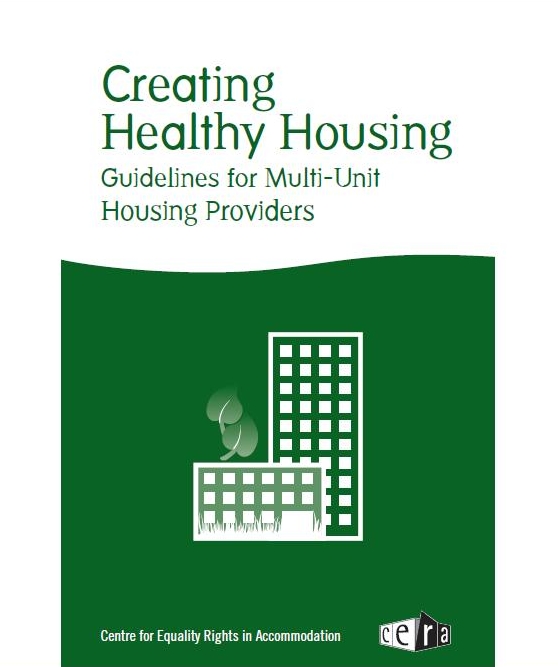
From the Centre for Equality Rights in Accommodation (CERA):

Environmental Sensitivities and Housing

Every year, CERA receives a significant number of calls from tenants being made ill from the poor indoor air quality in their apartment buildings. Most of these individuals suffer from environmental sensitivities and are particularly sensitive to contaminants in the air. With funding assistance from the Ontario Trillium Foundation, CERA recently launched HomeSafe, an initiative to educate tenants and multi-unit housing providers on strategies to improve indoor air quality and create healthier living environments.

The resources section has some excellent documents that are designed to “help landlords, property managers, and co-operative and condominium boards of directors reduce the health impacts associated with multi-unit housing and create living environments that are as safe and “green” as possible… and make their properties more attractive…”

For example:

Continue reading