Category Archives: Human Rights

UnStopped and Able Until…

I have heard that new ads are out and insinuating people will somehow feel richer  merely by inhaling mysterious blends of chemicals.  Please don’t be fooled. Seriously.

“Unstopables …  will add an indulgent level of luxurious scent to every load of your laundry. Add as much as you wish for up to 12 weeks* of scent enhancement so you can smell like the lifestyle you—and your wardrobe—deserve.”

They fail to mention that your neighbors who get migraines may think that the “scent enhancement” emanating from your dryer vent (which was designed to emit moisture, not chemicals) is not such a good thing for them, their asthmatic children, or for their aging parents who have lung disease and whose window is yards from your vent.

Apparently we also don’t deserve to know what we’d be inhaling if we use these things! P&G will only refer us to the self-regulated fragrance industry’s voluntarily disclosed list of over 3000 ingredients, most of which are petroleum derived. (Scroll down for a PDF of the list, which took quite a bit of sleuthing around their other website to find).

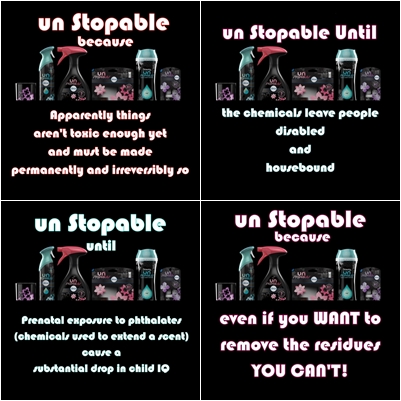
I’ve designed a few new ads for them, simplifying some of their marketing messages into plain English for you :

UnStopped and Able Until

There’s more, much more…

Continue reading

MCS/ES Accommodation Resources

When people develop MCS/ES, it can be extremely challenging maintaining access to jobs, housing, or other services due to the prevalence of indoor air pollution and pollutants, fragrance chemicals being a huge factor. When MCS/ES becomes disabling, it becomes a human rights issue requiring accommodation under the law in many places around the world.

Here then are some accessibility tools:

In the presentation from ADA Audio Conferencing – A program of the ADA National Network

One important point made was this:

MCS ES fragrance free policy

For people with EHS, a wireless-free policy is required, as well as other accommodations mentioned in the presentation.

Here are a few of the slides from Accommodating Persons with Environmental Sensitivities: Challenges and Solutions (which is available to download from the link below):

Continue reading

Random Thoughts About Having a Socially Inconvenient Disability

“I just love having a socially inconvenient disability”
~ said no-one ever

socially inconvenient 1said no one ever 2


“Having a disability that faces systemic barriers to access is so much fun.”
~said no-one ever

Larger versions follow:

Continue reading

It’s Not Personal, It’s The Chemicals

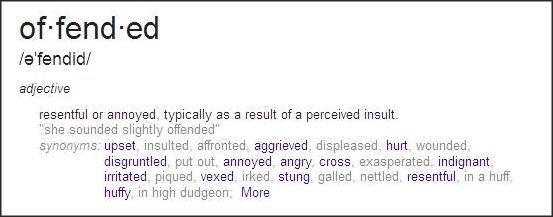
offended

Have you ever noticed how some people get offended when we are disabled by, or get sick from something in the products they’ve used?

What’s up with that?

???

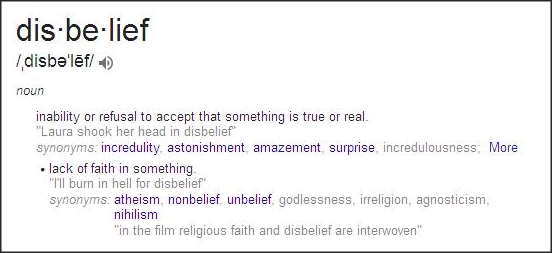
What about those who feign disbelief that we could be harmed by something they are using? Or that they could be using something that is harmful?

disbelief

While I am not up to delving into the psychological and emotional intricacies of those responses here, or how industry pays big money to create them, I did come up with a few simple images with variations of the following text:

It’s not you! It’s not personal! It’s the chemicals!

Fragrances, personal care, and laundry products
contain toxic chemicals that make it impossible
for some people to be around those who use them.

Continue reading

A Story That Needs To Be Heard: Part 1

beachy 1

I invite you to take 25 minutes of your life to listen to this audio documentary.

“Short Documentary of a Life With Health Challenges”

Continue reading

Air Cleaners, Filters, and Purifiers

Many of us have to breathe to stay alive. Okay, all of us have to breathe to stay alive. Some of us just need cleaner air than others, or our ability to think and function is severely impaired from inhaling common pollutants found in both outdoor and indoor air.

This is where air purifiers and filtration devices come in.

Here are links to a few good documents and websites to read before you spend any money, that discuss what to look for and what to avoid:

Continue reading

Home Dental Extraction SUCCESS (#1)!

This is just a brief post to rejoice about the successful home extraction of a rear molar that was causing me unbearable problems.

The dentist who did this takes seriously his oath to “do no harm” and did not use it as an excuse to do nothing, like most dentists and doctors are prone to doing when they don’t want to change the way they do things to accommodate someone with disabilities.

Continue reading

New Link: CHRC Policy On Environmental Sensitivities

The Canadian Human Rights Commission

Policy on Environmental Sensitivities

A PDF of the policy (which I copied here when I saw it had disappeared) is now available to download from the Canadian Human Rights Commission website, having been reviewed in January of 2014. (It’s not available to view as a simple web page).

The site also includes new links to download PDFs of the 2007 documents “The Medical Perspective on Environmental Sensitivities” and “Accommodation for Environmental Sensitivities: Legal Perspective”.

The_Canadian_Flag


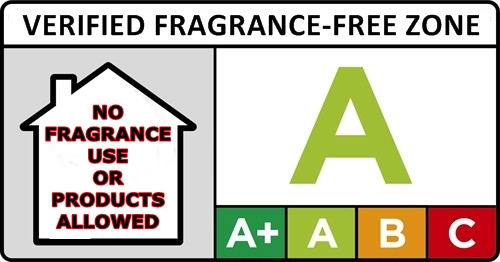
Verified Fragrance-Free Supply Chains

Due to the increasing numbers of people with allergies and sensitivities to, and injuries from VOCs and other fragrance ingredients, there is a growing need for fully verified fragrance-free supply chains.

Many of us need products and foods handled in such a way from beginning to end, as to prevent first, second and third hand fragrance and other chemical contamination.

Organic food that has been handled by someone with scented hand lotion, or that has sat in a store full of fragrance molecules will absorb those chemicals, and potentially be as toxic as food that has pesticide residues (for people who must, for medical and health reasons, avoid petrochemical exposures). Clothing, bedding toilet paper and other materials also absorb fragrances, which can be hard (if not impossible) to remove.

This presents a business opportunity for entrepreneurs, to provide a service for people whose health depends on it, as well as for those who wish to prevent health problems.

verified fragrance-free zone NO FRAGRANCE Continue reading

MCS/ES Awareness Month 2014

 It’s that time of year again. Welcome to MCS “Awareness” Month!

People with disabilities have the right to equal treatment and equal access

Barriers to access can be physical, attitudinal or systemic. Conveniences can also create barriers. If you are unable to remove a barrier to accessibility, consider what else can be done to provide services to people with disabilities. No-one should live without safe access to the necessities of life.

What is disability? (Ontario Human Rights Commission)

“Disability” covers a broad range and degree of conditions, some visible and some not visible. A disability may have been present from birth, caused by an accident, or developed over time. There are physical, mental and learning disabilities, mental disorders, hearing or vision disabilities, epilepsy, drug and alcohol dependencies, environmental sensitivities, and other conditions.”

Removing barriers and designing inclusively

Persons with disabilities face many kinds of barriers every day. These can be physical, attitudinal or systemic. …

Identifying and removing barriers also makes good business sense. As well as meeting the needs of customers or employees with disabilities, removing barriers can also help other people…

Employers, unions, landlords and service providers can start by doing an accessibility review of their facilities, services and procedures to see what barriers exist. You can then make an accessibility plan and begin to remove the barriers.

It is also helpful to create an accessibility policy and a complaints procedure. These steps will help you remove existing barriers and avoid making new ones. The best way to prevent barriers is to design inclusively

Barriers aren’t just physical. Taking steps to prevent “ableism” – attitudes in society that devalue and limit the potential of persons with disabilities – will help promote respect and dignity, and help people with disabilities to fully take part in community life…

The duty to accommodate

Even when facilities and services are designed as inclusively as possible, you may still need to accommodate the individual needs of some people with disabilities. Under the Code, unions, landlords and service providers have a legal “duty to accommodate” persons with disabilities. The goal of accommodation is to allow people with disabilities to equally benefit from and take part in services, housing or the workplace.

Accommodation is a shared responsibility. Everyone involved, including the person asking for accommodation, should work together, exchange relevant information, and look for accommodation solutions together…

 

Some Resources: Continue reading