Tag Archives: Chemicals

When Programmers Send Old Computers Into ICU and Palliative Care

My computer and old Operating System have seen better days. Things are crashing almost hourly now. I am so grateful that the original donor was twice able to get this computer back up again (with telephone advice) after a partial freeze and fully appearing meld-down, but it is still malfunctioning online, so I have to shut it down frequently, as the sites I use seem to have updated using technology that is no longer inclusive of XP and my  minimal RAM (adding more would be cost-prohibitive).

I  therefore find myself in critical need of a new computer, even with all the toxicity and adverse health risks involved, and without the time to mitigate them (like running things somewhere else that is also fragrance free, for however long it takes to off-gas everything).

Eeks! image from pixabay 2

Here are some details:

Continue reading

Scent-Free Buildings Guide from CCIAQB

From The Canadian Committee on Indoor Air Quality (CCIAQB) 

“This Module provides building owners and managers with information about the sources and effects of scents and fragrances. It also suggests ways to move toward scent-free buildings. The information covers scents and fragrances brought into a workplace by people wearing personal products such as perfume as well as those scents and fragrances that originate from custodial products such as washroom hand soap.”

scent-free buildings guide banner

Continue reading

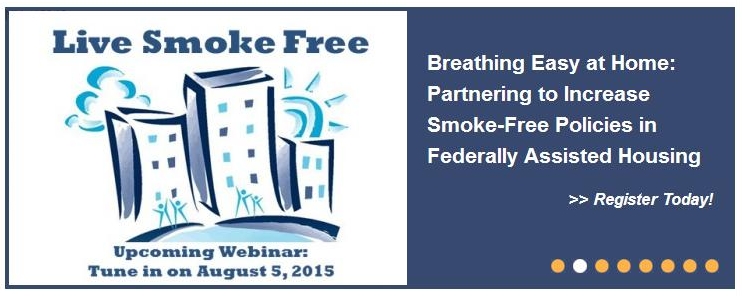
Webinar to Increase Smoke-Free Policies in Federally Assisted Housing (US)

Smoke and chemicals (such as fragrances, air “fresheners”, laundry products, pesticides, and other VOCs) do not respect property lines as they travel throughout space, often making others quite sick, even disabling them in their own homes. This is especially a problem in multi-unit housing, and where housing units are built close together.

This is also a very serious accessibility issue for people with MCS/ES, as there are few affordable housing options available, and most of these put people at risk of further  harm due to indoor air pollution issues, despite HUD and other federal agencies in the US and Canada recognizing MCS/ES as a disability that needs to be accommodated.

The following webinar is about addressing smoke, but the issues are applicable to other forms of indoor air pollutants as well. It should also be available as a podcast later.

For those of you who are interested and able,  the webinar is being offered on Wed, Aug 5, 2015 2:00 PM – 3:30 PM EDT by the Asthma Community Network

Breathing Easy at Home: Partnering to Increase Smoke-Free Policies in Federally Assisted Housing

live smoke free webinarMore info: Continue reading

Industry Approved Actions to Spare Your Air, Lungs, and Brain

.
If only the air was this good all the time!

If only the air was in the blue range all the time!

.

Sometimes summer air just plain sucks. It can and does cause all kinds of health problems. Here then are some tips from Air Quality Ontario on what we humans can do to reduce our exposure to harmful pollutants and our impact on outdoor air.
 .
Note that none of these suggestions are enforceable. They are entirely voluntary for those of us who manage to learn of their existence. Many of us only find out about these tips once we are so adversely affected by pollutants that we couldn’t do these things even if we wanted to, which means the tips are most useful for the people who aren’t personally affected enough (yet) to understand the need for them.
 .
(reducing industry impacts on air will just have to wait until enough of us demand it)
 …
 .
During a Special Air Quality Statement, there are a number of actions that you can take to help spare the air:

Continue reading

Why Exposure Monitoring Would Be Medically Validating

We (as a society) are facing unprecedented kinds of health problems and challenges that can easily (if you do any research) be explained by our 24/7 exposure to toxic chemicals in everyday products and materials, GMOs (and pesticides) in our “food” supply, and 24/7 exposure to unsafe levels of wireless radiation.

Harmful pollutants are now in our air, water, food, clothing, and you name it, it’s likely to be either made with toxic materials, or has 2nd or 3rd hand toxic chemical contamination from passing through a toxic environment. These exposures add up, and are messing with our health and well-being in ways that are not yet well-understood, but point to the urgent need to stop business as usual, and stop burdening our bodies with so many harmful pollutants that we were simply not designed to process.

There is money to be made by selling drugs, even if the drugs aren’t appropriate to the condition,  do nothing to heal what’s wrong, and often just make things worse, much worse.

Stephen Genuis is a researcher who has published many peer reviewed articles dealing with environmental health. In 2014 the official journal of the Canadian Family Physician published two of them. I shared the abstract from one of them last year.

I am going to “quote” extensively from the other article here, as most of you don’t follow the links, but will read what I have here.

Pandemic of idiopathic multimorbidity
Stephen J. Genuis, MD FRCSC DABOG DABEM

Canadian Family Physician June 2014 vol. 60 no. 6 511-514

“Sitting among colleagues in the private room of a swank eatery, I recently had the pleasure of participating in a pharmaceutical industry–sponsored medical education event allegedly exploring the management of patients presenting to their health providers with multisystem health complaints.

The animateur for the evening—an eloquent orator with impressive credentials—raised the issue of the rising prevalence of patients who present with a laundry list of ongoing and seemingly unrelated persistent complaints often including headache, joint pain, fatigue, brain fog, bloating, chemical intolerance,1 muscle aches, itchy skin, and so on.”

Continue reading

What We All Need Now: Personal Exposure Detection Devices!

.

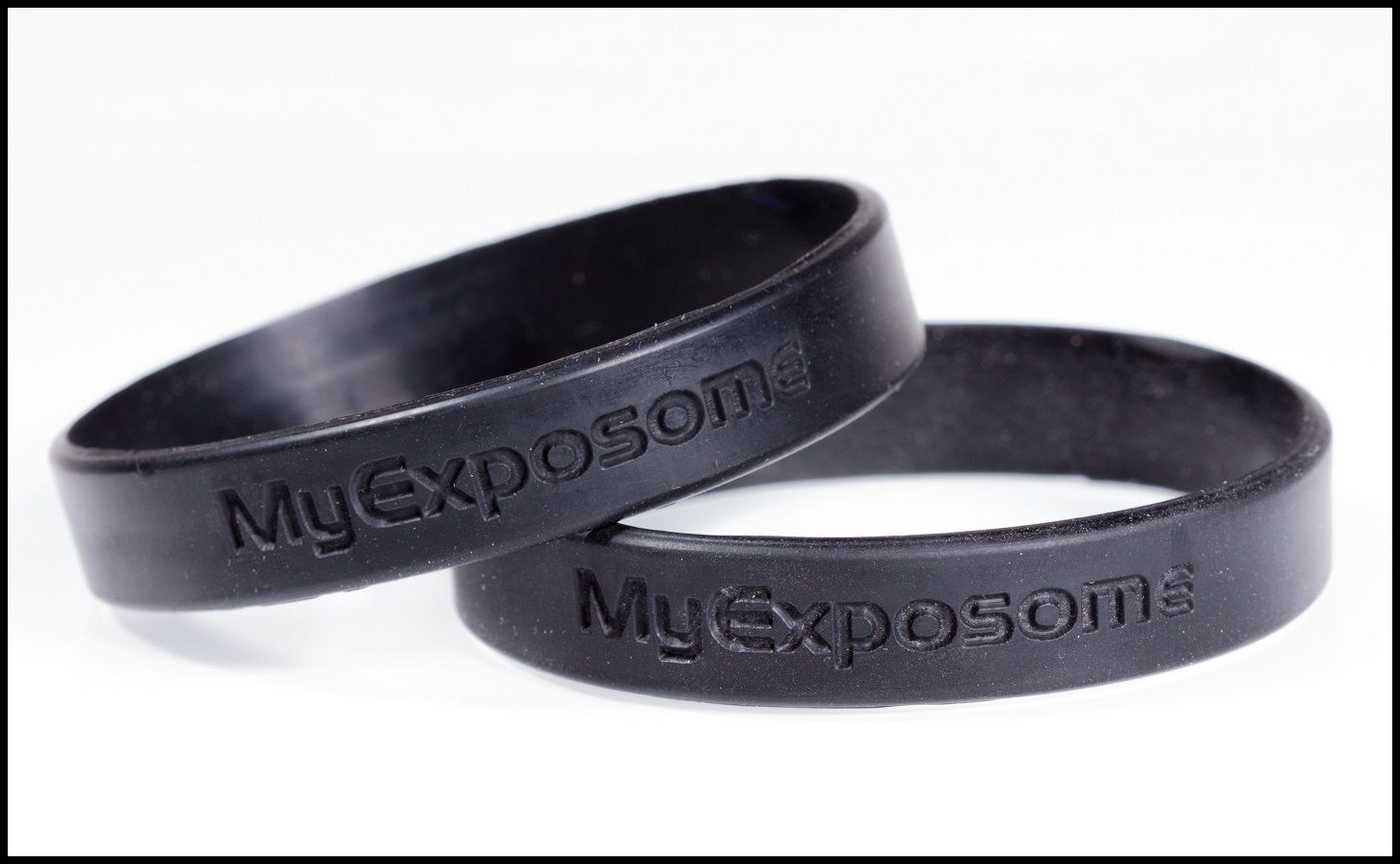
MyExposome has designed silicone wristbands (such as the ones worn in support of various causes) that are specially prepared to act as a sponge to absorb hundreds of different chemicals in our environment—the air, water, and even personal care products.

silicone-wristband-measures-1400-chemicals

The possibilities!

With all the toxic VOCs in everyday products,  the carcinogenic activity of the chemical cocktails we are exposed to on a daily basis, this is a great idea that can show people just how prevalent toxic chemicals have become, and how difficult it is to avoid them.

It would be really interesting to have a group of people with MCS/ES participate in some exposure measuring research, as those of us who have to practice extreme chemical avoidance for our health and well-being have some experiences that researchers will eventually find quite interesting.

Now, they would be able to see how difficult it is to avoid  these chemicals, even when making great efforts due to necessity (of course, different levels of MCS/ES dictate different levels of avoidance requirements and efforts too).

Continue reading

Optional “Inconvenience”

Guest post and images by Laura J Mac

What always strikes me during conversations about how to persuade service providers to accommodate our disability is how much extra work we have to do just to participate in simple survival stuff. I mean, “simply” tracking down professionals who are willing to accommodate is a chore and a half. The luxury of “having a good relationship” with a service provider falls way down on the list because it’s usually one or the other.

Laura J Mac 1

Nobody would think twice about someone who uses a mobility device asking if there are ramps and elevators but it seems that our need for fragrance-free and reduced chemical exposure is perceived as a “preference” rather than a medical necessity. That perception leads to the idea that accommodation of our disability is an “option” (and generally it’s an “option” that service providers aren’t willing to make available.) It’s not that we don’t “like” fragrance, these chemical exposures cause neurological and physiological problems that interfere with our ability to function on a daily basis.

Continue reading

MCS is International

People all over the industrialized world have been developing Multiple Chemical Sensitivities and Environmental Sensitivities, or Environmental Illnesses. We are exposed to so many petrochemical pollutants, in our air, water, foods, clothes, furnishings, homes, and elsewhere in daily life, substances which are now known to cause many kinds of adverse health effects, and some of us just have the epigenetic disposition to feel the effects faster and more extremely than others who may develop cancer or some other condition many years later.

Amelia Hill (aka the Amazing Amelia Hill) lives in Australia and developed very severe, or extreme MCS after not being properly diagnosed for too many years. A lack of proper diagnosis and precautionary measures usually results in a debilitating worsening of the condition, which is best addressed with avoidance of the triggering substances, and building up health in very targeted ways. This is much more difficult to do the longer one isn’t able to take the steps to avoid exposures and rebuild life with safe alternatives.

Amelia’s life is probably unlike any you have ever heard of (even mine) although there are many similarities between the experiences those of us who have severe MCS/ES share. Amelia is known as “amazing” because of the ways she handles her life.

You will see why here.

Amelia 01

Amelia’s story has been featured as the cover story in what may be South Australia’s most popular newspaper weekend magazine: Continue reading

Are Essential Oils Too Popular For Our Own Good?

Did you know that essential oils are not harmless?

Essential Oils have been, in limited circumstances,  a good thing. Some have useful healing properties when used medicinally in very specific and temporary ways, but too much of anything is not a good thing. Essential oils  are now used and diffused everywhere, and have become more of a serious health hazard than something beneficial. Indeed,  for an ever growing percent of the population they have become life-threatening accessibility barriers.

They can be sensitizers and allergens, and can cause other serious health problems too.
They can emit and create hazardous air pollutants. Some are made with synthetic ingredients, or from pesticided plants, and are processed using toxic solvents.

They are WAY over-used and over-promoted, and any beneficial uses the organic oils may have, risk being lost due to this careless over-use.

They should not be used as a popular way to make money the way they are now.

They should be kept for medicinal use under the guidance of qualified, trained professionals, and  not the MLM (multi-level-marketing) folks who are inventing new ways to use them so that they can sell more product.

Some people have severe adverse reactions to them, and their proliferation is causing new barriers to access, meaning people can’t access food from health food stores,  other essentials, or even alternative health care, because the oils are so prevalent and contaminating everything (1st, 2nd, and 3rd hand) in what should be healthy places with clean, fragrance-free air.

Fore more information, here are a few links to check out: Continue reading

Trust Us, They Said

We’re telling the truth… they implied!

These days, there are some who will stop at nothing to protect and increase their profits, no matter what the consequences. I’m grateful to the others who are sharing some wisdom on what is going on and how to spot the red flags.

First off, in this TEDx talk, veteran investigative journalist Sharyl Attkisson shows how astroturf, or fake grassroots movements funded by political, corporate, or other special interests very effectively manipulate and distort media messages.

I’ve noticed so many of those tactics used. Have you?


Next, the new film Merchants of Doubt from Robert Kenner and Kim Roberts, inspired by the book of the same name by Naomi Oreskes and Erik M. Conway, is  “a satirically comedic, yet illuminating ride into the heart of conjuring American spin”.

How do you decide who is trustworthy and who is not?