Tag Archives: health

The Trouble With Soot

Soot (and ‘by’products) from burning wood, diesel, coal or other fossil fuels are bad enough for the planet, but did you know that those particles attract harmful chemicals (secondary organic molecules) from the air so when we breathe them in, their adverse health effects can be multiplied?

smokestack earth

Here’s a must see two and a half minute video from The Allegheny Front, a radio program covering environmental issues in Pennsylvania.

Continue reading

“The Big Fix”… Why We Need Peace, Not More Ecocide…

The Big Fix 

The BP Deepwater Horizon Oil Spill

Watch.

It’s explanatory.

The oil industry is not about peace. This film documents one of the greatest cases of Ecocide in our time, and the story behind it. Sadly, it’s not over yet.

Ecocide is the extensive damage to, destruction of or loss of ecosystem(s) of a given territory, whether by human agency or by other causes, to such an extent that peaceful enjoyment by the inhabitants of that territory has been or will be severely diminished.

Help make Ecocide a crime:

http://eradicatingecocide.com/what-you-can-do/

fish filters

Bucky

Some Weblinks:

Continue reading

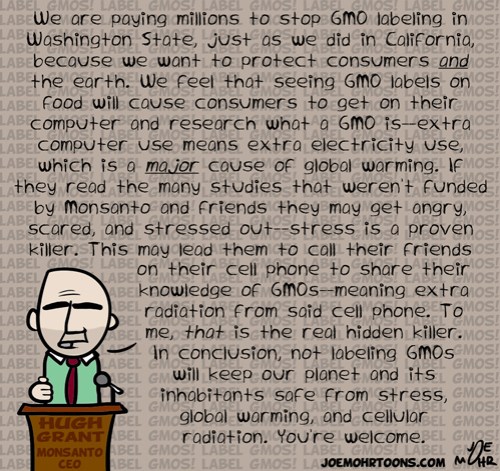
Monsanto’s reasons for fighting GMO labeling? It Loves You.

Thank you Joe!

Monsanto’s reasons for fighting GMO labeling? It Loves You..

How to Get Toxic Products Out of Stores

Would you like stores to stop selling everyday things that are full of harmful toxic chemicals?

What if you could feel better not only because you could be assured that the things you brought home were safe and healthy, but also because they were no longer full of the harmful chemicals that have been making you feel like crap?

In the absence of (and obstruction of) health protective regulations, we need to find other ways to get the changes happening that will allow ourselves and our grandchildren to live healthier lives.

Continue reading

Endocrine Disruption… Huh? Why Should We Care?

Many of us have no idea what “those people” are talking about when they mention endocrine disruptors. Sounds like something foreign and insignificant, or at least it did to me, until something caught my attention a few years ago.

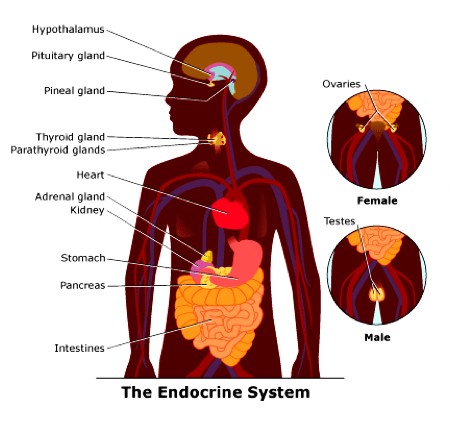
It turns out that the endocrine system is a hugely busy and important system in our bodies, one well worth looking into and trying to understand. When we start to understand how important this system is, we might start to notice how we are (unwittingly) damaging ourselves, or rather, being damaged, because there are so many endocrine disrupting chemicals allowed into our daily lives now.

It is so much easier to stop causing harm (in whatever ways we are able) when we understand what the problems are, and so difficult, if not impossible, when we remain oblivious. In this case, sticking our heads in the sand will not only harm us, it has the potential to also harm our grandchildren and their grandchildren.

endocrine system


(image from EcoWatch, link below)

Continue reading

OBGYs Advise Pregnant Women to Live As If They Have MCS/ES!

The Royal College of Obstetricians and Gynaecologists (RCOG) released a new paper regarding everyday chemical exposures during pregnancy, and confirmed that there are sufficient indications that all is not well, that some of these chemicals we are exposed to on a daily basis are linked to causing some serious health problems, so it is better to be safe than sorry and avoid as many exposures as possible during pregnancy.

It’s high time time doctors stop being afraid of the chemical and pharmaceutical companies to speak up and out about this!

I applaud them for finally having the courage!

Chemical Exposures During Pregnancy
(Scientific Impact Paper 37)

“the approach recommended is for such women to put ‘safety first’. That is, to assume that risk is present even when it may be minimal or eventually proven to be unfounded. This is often referred to as the ‘precautionary approach’.

The Advice

to reduce overall chemical exposure:

● use fresh food rather than processed foods whenever possible

● reduce use of foods/beverages in cans/plastic containers, including their use for food storage

● minimise the use of personal care products such as moisturisers, cosmetics, shower gels and fragrances

● minimise the purchase of newly produced household furniture, fabrics, non–stick frying pans and cars whilst pregnant/nursing

● avoid the use of garden/household/pet pesticides or fungicides (such as fly sprays or strips,rose sprays, flea powders)

● avoid paint fumes

● only take over–the–counter analgesics or painkillers when necessary

● do not assume safety of products based on the absence of ‘harmful’ chemicals in their ingredients list, or the tag ‘natural’ (herbal or otherwise).

RCOG Advice

If you substitute “woman” or “pregnant woman” with “person who has MCS/ES”, and change “minimize” and “reduce” to “avoid”, and “pregnancy” to “probably permanently”, you get a pretty good idea of what doctors (who often have no idea or training about MCS/ES) should be saying to people about life with MCS/ES.

But really, it’s good advice for everyone.

Please note that children should also be protected from these same exposures, as their brains and bodies are still developing and these exposures can interfere with normal development and daily functioning.

They did omit one other very important exposure to avoid during pregnancy, and that is exposure to wireless radiation from sources such as cell towers, WiFi and devices like mobile phones, DECT phones, and even wireless baby monitors!

What follows are more excerpts from the paper and the links to it

Continue reading

MCS/ES Symptoms and Environmental Incitants

sensitive to pollution 3

Information about the materials most likely to cause adverse health effects, and the kinds of symptoms commonly experienced from exposures, copied from the 2007 Canadian Human Rights Commission’s  document “The Medical Perspective on Environmental Sensitivities By: Margaret E. Sears (M.Eng., Ph.D.), and a few other resources and links follow:

Continue reading

Food and Personal Power

We are what we eat

So what does this have to do with personal power?

Or health?

And whose health are we talking about?

Our health? Farmer health? Land health? Industry and economic health?

Are these the same things or are they different?

Sometimes it’s hard to know. There is so much conflicting information out there. Even when we get an idea that what we are eating isn’t the healthiest choice for us, it can be overwhelming to sift through all the information out there to figure out where to start making changes (even without any allergies or sensitivities).

Plus, those packaged foods are so convenient when we are tired…

And that is where we start to lose personal power… even when we read the labels on those packages, there is so much crucial information that does not get put on any labels.

Knowledge is power.

We are what we eat.

Alice Walker power

We can have a lot more power when we know how to eat.

Eating healthy is a lot easier when we know what the issues are, why we need to make changes, and where to start. Not all of us have had good role models in the kitchen, we might be comfortable with the status quo, and changing our habits can seem daunting. So what to do?

Where do we start when we want to make a change?

eat food

Hey, what is wrong with those products anyway?

The good people at Healthy Child Healthy World have put together an amazingly comprehensive booklet, one that introduces the issues with our current food supply, and offers easy to understand tips on what we can do to choose smart, even on a budget. Don’t get turned off if you don’t have children, this book is a valuable resource for everyone!

Continue reading

GMO Food Labels

I see a little poster being shared all over facebook all the time telling people to look for a sticker starting with an 8 to warn us that the produce has been genetically modified.

Guess what?

We do not have laws to label GMO foods in North America, so you won’t see a sticker that starts with an 8 here! Not until we get laws to mandate them!

The original poster gives people such a false sense of reassurance.

So  I  modified it…

Continue reading

Harvard Medical School Associate Professor Speaks about MCS: Video

Dr. L. Christine Oliver is an Associate Professor of Clinical Medicine at Harvard Medical School and Co-Director of Occupational and Environmental Medicine at Massachusetts General Hospital.

This is an excellent half hour presentation.

Dr Oliver packs so much about the issues faced by people with MCS into the first 16 minutes of this video. If you can’t watch the whole video, at least watch this much.  Alison Johnson finishes off by reading from her important book Amputated Lives.

Alison Johnson is the author/producer/director of books and documentaries on Multiple Chemical Sensitivity. Visit http://www.alisonjohnsonmcs.com to download a transcript or to purchase her books or DVDs.

amputated-lives-chemical-sensitivity