Tag Archives: Human Rights

Down is Harder After Up

Alternate title: Be Grateful or Be Miserable!

I had some really good brain and body days in the early spring, enough that they left an imprint on me of how it felt to feel (relatively, and almost) normal. instead of the usual:
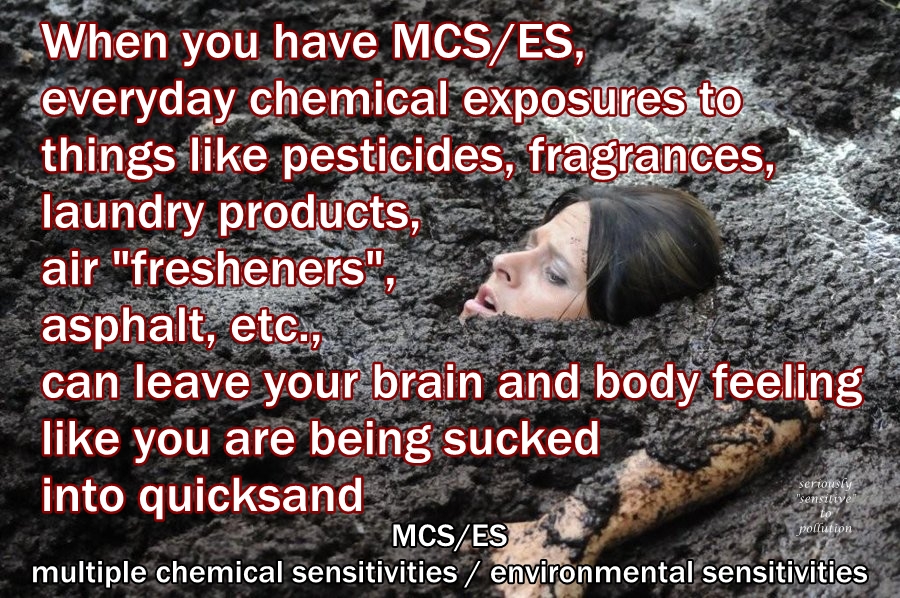
feels like quicksand-3

Then shit happened… (sorry, I don’t usually use language like that, but I’ve lost access to some parts of my vocabulary lately as a result of the toxic stuff I was exposed to).

Pesticides, dental infections and extractions, toxic products and materials (including trying to replace a SS kitchen kettle -simple, yes? Actually, NO), summer road work, more and more pesticides, heat,  VOCs, lack of ventilation and air filtration, which meant no ability to cook, and more…all of which resulted in some serious brain fog, cognitive problems,  and drastically reduced physical abilities.

Back to the drawing board…

After having some good days this year, I crashed again, and I haven’t been able to recover… much… There can be a few better mini-moments here and there if the outdoor air quality is exceptional and the breezes have been blowing the “right” way, but nothing like how well I was doing for a while in the spring.

Which makes it so much harder now, because I can actually remember what it was like to be more functional. It was so long ago before, that it didn’t really come into play or into my thoughts, as for so many years, I couldn’t remember what it was like to think clearly, or to function without effort, with relative ease.

Is it really too much to ask to be able to function with relative ease? To not have every thought, every action be like climbing a mountain or navigating an obstacle course?

Continue reading

V’s Canary Cries

Guest Post by V from the USA

This was originally posted to an online support group. V granted her permission to share it here. She has been able to put this part of her life story into words that so many of us find hard to express, and I thank her deeply for sharing her words with you too.


Canary V

It’s about 1:30 a.m. and this is about the time where I start to feel despair about everything in my life. I just can’t seem to adapt to the isolation and lack of a routine or purpose. Also, I can’t seem to find any pain meds for my chronic pain. I have been in physical pain for so long.

I know this post may seem disjointed which is apropos considering how I feel.

I AM so tired of spinning my wheels…Along with MCS I have so many other medical issues…non terminal that I know of but still…I have asthma and allergies.. I can’t be around dogs or cats, the weather determines my breathing status for the day and my physical mobility.

I can only eat about 10 things and it’s exhausting to try to rotate these foods and I spend excessive time trying to plan. Even planning a rotation I still get itching throat and sometimes a swollen throat with some of the ten things I think I can eat…it’s horrible to start eating and not know how I will feel ..

Continue reading

“Artificial scents have no place in our hospitals”

Canada’s top medical journal, the Canadian Medical Association Journal (CMAJ), says
Artificial scents have no place in our hospitals

Hospital NO Fragrance

“These patients may be involuntarily exposed to artificial scents from staff, other patients and visitors, resulting in worsening of their clinical condition. As patients,
family members and emergency physicians will attest, the attacks can be quite sudden and serious. There is little justification for continuing to tolerate artificial scents in our
hospitals.” …

Continue reading

Assistive Devices For People With MCS/ES

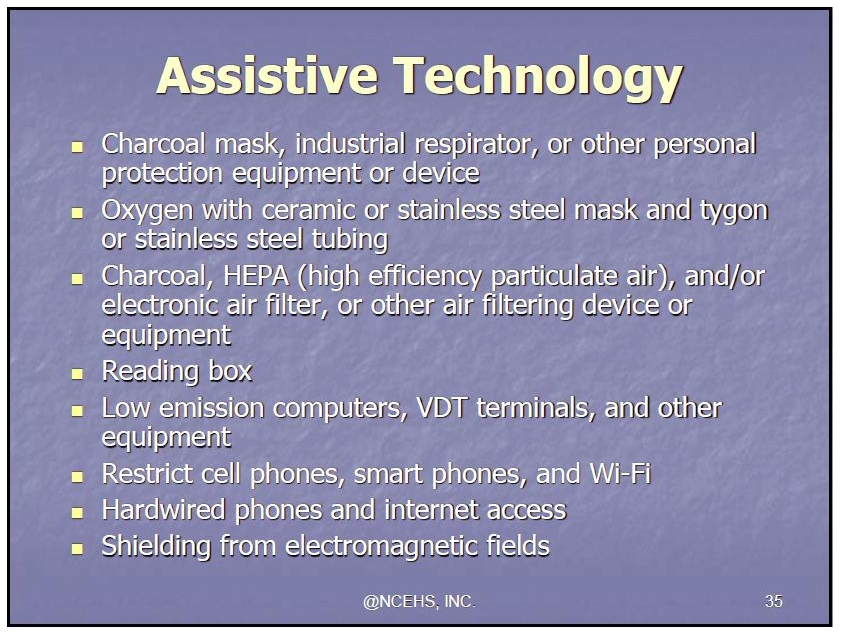
For people with MCS/ES, assistive devices can allow us to remain functional, independent, and able when we can’t control everything in our environments.

MCS ES assistive technologySlide with a few options from New MCS/ES Accommodation Resource

In addition to fragrance, chemical, and wireless free policies, these and other devices can help reduce or eliminate exposures to the pollutants that can otherwise completely disable people with MCS/ES. They can make the difference for people to remain employed when provided early enough, effectively minimizing the effects of MCS/ES.

Continue reading

Fragrance Free Environments and No Fragrance Spaces

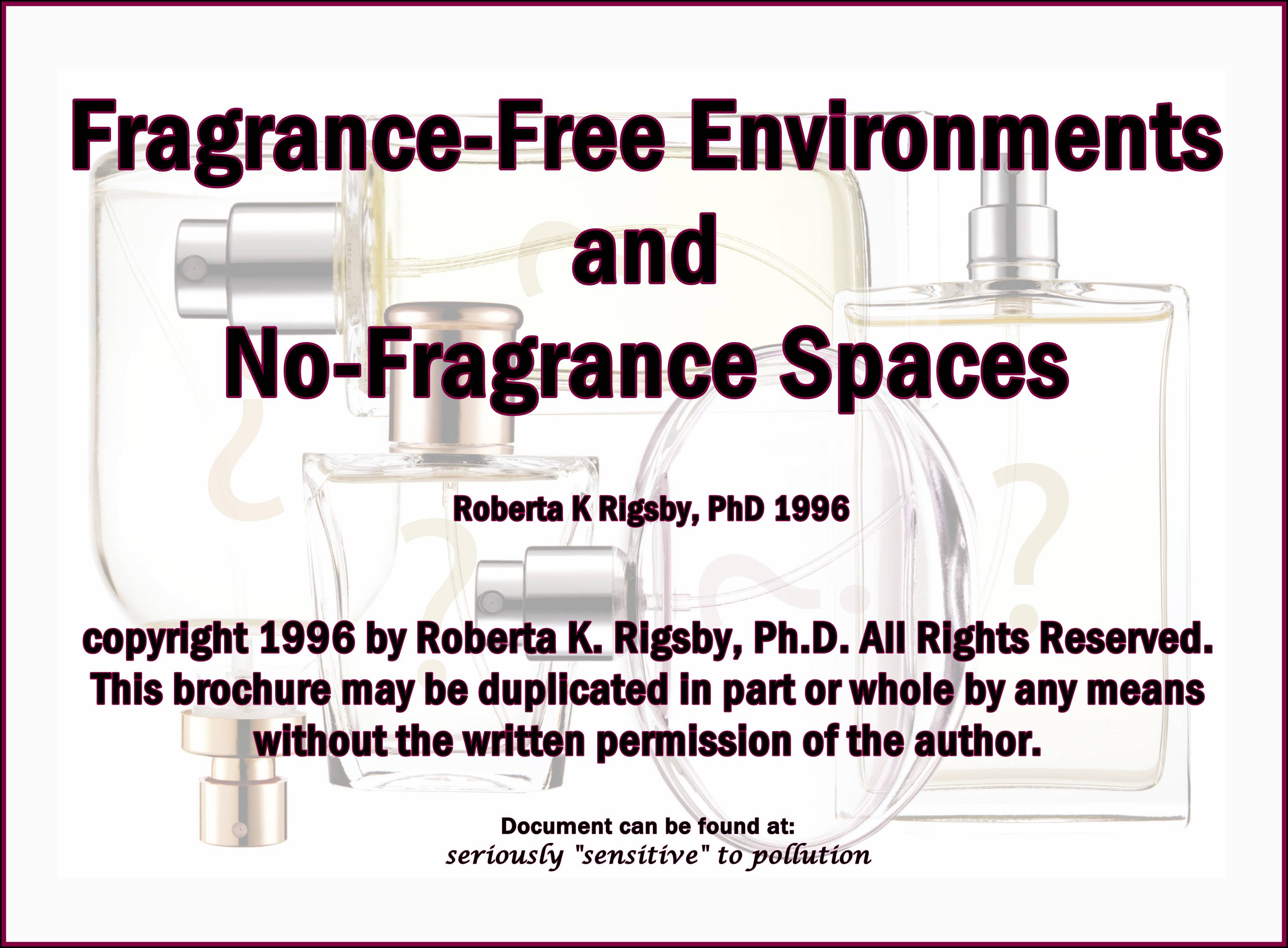
Someone shared a very good PDF handout with me the other day, one that I had never seen before. It gently explains to people why there is a problem with fragrance, why people may need to avoid fragrances, that it is not the smell, it’s not personal, and a few other bits of helpful information  The resource links are old and could be updated (somehow), but it’s otherwise a great tool to share with people who don’t understand.

I can’t find a link to share it from elsewhere, so I am posting it here to make it easily available.

Fragrance-Free Environments and No-Fragrance Spaces (PDF)

Fragrance Free Environments and No Fragrance Spaces

The text image is copied below.

Continue reading

In a Doctor’s Own Words: A Toxic Legacy and 12,000 (+) Canaries Later


Dr. John Molot is a doctor who sees patients with complex, chronic, environmentally linked, and often disabling, health conditions. Although he is retiring from private practice, he is still a staff physician in the Environmental Health Clinic at Women’s College Hospital in Toronto.

He recently released a book, “12,000 Canaries Can’t Be Wrong“,  wrote a report in support of the Ontario Centre of Excellence in Environmental Health (OCEEH), and appears in a video presentation about the health effects of common  chemical exposures (see below).

Check these out:

12,000 Canaries Can’t be Wrong
What’s making you sick & what can you do about it

Books

12000Canaries_hiRessm

Continue reading

Video: Going Fragrance-Free PSA

Here’s a good three minute PSA from Frederick Community College about going fragrance-free:

More resources:

be fragrance-free 1

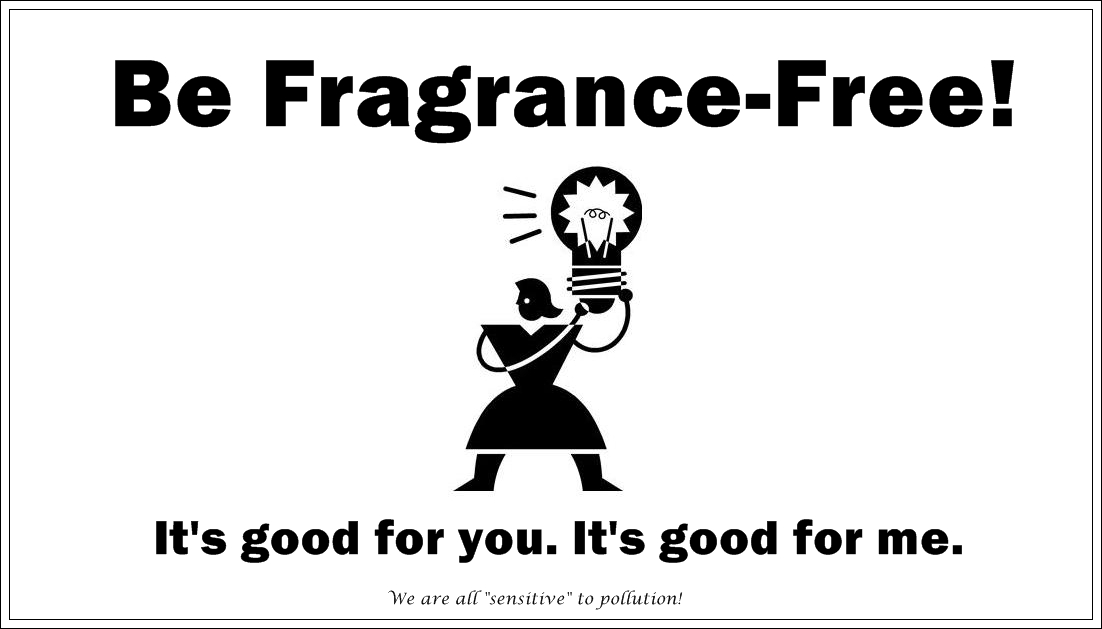
Fragrance chemical pollution is as harmful as smoke, and has serious short and long term impacts on health and productivity.

Continue reading

Support the Ontario Centre of Excellence in Environmental Health (OCEEH)

The Myalgic Encephalomyelitis Association of Ontario (MEAO), along with others, has been working on a plan to get proper health care and supports established for the hundreds of thousands of people in Ontario who are affected by the “often overlapping, commonly disabling and sometimes life-threatening conditions of ES/MCS (Environmental Sensitivities/Multiple Chemical Sensitivity), ME/CFS (Myalgic Encepahlomyelitis/ Chronic Fatigue Syndrome) and FM (Fibromyalgia).”

A quick, easy summary document of the features and benefits of the OCEEH  business case proposal for a comprehensive network of care and support has been sent to every MPP in Ontario. Here it is for you too (copied from the PDF 2014 OCEEH IN A NUTSHELL), so you can encourage your local elected representatives to support it in Ontario, and to support similar plans everywhere else in the world:

ONTARIO CENTRE OF EXCELLENCE IN ENVIRONMENTAL HEALTH (OCEEH)
‘IN A NUTSHELL’

“Five percent of Ontario’s population is affected by the often overlapping, commonly disabling and sometimes life-threatening conditions of ES/MCS (Environmental Sensitivities/Multiple Chemical Sensitivity), ME/CFS (Myalgic Encepahlomyelitis/ Chronic Fatigue Syndrome) and FM (Fibromyalgia).

As of 2010, over 568,000 Ontarians had been diagnosed with one or more of these conditions. This number grew from 439,000 in 2005, as reported in Statistics Canada’s Canadian Community Health Survey. It demonstrates prevalence comparable to diabetes, heart disease, cancer and effects of a stroke. These are very widespread conditions, and the 2010 figures are likely underestimates.

Recognition, diagnosis and treatment of these serious conditions are absent from Ontario’s health care system at present. Even though a commission of enquiry recommended services be put into place for ES/MCS as long ago as 1985, exclusion, discrimination and stigmatization of those living with these conditions have been the rule; and Ontario has lost physicians seeking to help these groups.

Continue reading

“Smart” Meter Trouble In Paradise

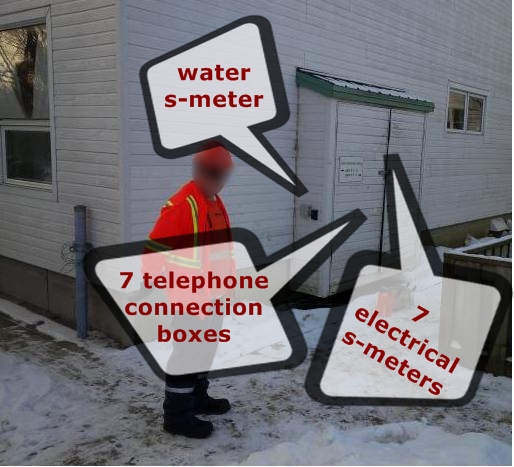
Ok, so the s-meters aren’t smart, and this really isn’t paradise, but this IS supposed to be safer housing for people with environmental sensitivities and there’s an issue here that isn’t getting resolved and could put a third person at risk of serious health harm.

I was hoping I wouldn’t have to write this post, but it has come to my attention that a unit here is being shown to prospective tenants, when that unit should remain empty until the contents of the attached utility cabinet are moved away from the building.

The empty unit is currently unsafe for anyone to live in, never mind someone with environmental “sensitivities”.

I have to warn people, no matter how desperate you may be for chemically safer housing, please DO NOT try to live in the currently vacant bachelor unit here if you value your life! Even if it doesn’t affect you immediately, it will.

utility cabinet attached to bachelor unit wall

utility cabinet attached to bachelor unit wall

Above is the side view of the unit, the little windows on the left are above the sleeping area. A raised glass door technology cabinet divides that area from the “living room” in the front, which is on the other side of the utility cabinet. In the photo below you can see the rest of the living room window and the unit’s front door (taken on an angle from the next yard).

Continue reading

Big News for Ontario

From the News Release:

“The province is providing nearly $560,000 to support two new annual fellowships over three years for a total of six new fellowships. They will allow family medicine graduates to complete an extra year of focused training in environmental health, and will help primary care providers like family doctors offer the right care to assess, diagnose and treat environmentally-linked health issues.”


“Environmental health is an emerging public health field that examines the relationship between the environment and human health. This includes the role of the environment in contributing to serious health conditions that can be disabling and even life threatening, such as environmental sensitivities, myalgic encephalomyelitis/chronic fatigue syndrome, fibromyalgia and other chronic, complex disorders. ”


“There is a growing recognition that our environment and our health are connected. Through these new fellowships, we can develop greater understanding of the links between health and the environment in order to provide better care to those suffering from complex chronic illnesses.”

~
~ Deb Matthews
Minister of Health and Long-Term Care


“The study of the environment’s effects on human health is an important emerging field of research. Support for investigating environmental impacts on health is emblematic of our government’s commitment to strengthen healthy communities.”

~
~ Jim Bradley
Minister of Environment

Full News Release:

Continue reading