People have asked for simple printable signs that can be posted at home or elsewhere. There are 2 versions of each sign, one being mostly black and white.

Click on the images below to save and print

People have asked for simple printable signs that can be posted at home or elsewhere. There are 2 versions of each sign, one being mostly black and white.
Click on the images below to save and print
Posted in Accessibility, Healthy Environment, Images, Policy
Tagged allergies, asthma, autism, chemical sensitivity, door signs, environmental sensitivities, fibromyalgia, fragrance-free, fragrance-free signs, IAQ, invisible disabilities, MCS, migraines, multiple chemical sensitivities, resources, signs
Please take a moment to feel your heart beating.
Not everyone can do this anymore.
While some progress has been made, it’s still too little,
too late for far too many people.
This will not change until more people who have MCS/ES come forward with their stories, and more healthy people start advocating and helping us in daily life, as well as pushing governments and medical institutions to pull their heads out of the sand (and industry pockets) and get into (at least) the 20th century as far as the very serious environmental and related health issues are concerned.
“Business as usual is a disaster”
Robert Watson
 “Unfortunately, many physicians, employers, family, and friends
are in effect assisting in suicide through their disbelief.”
(and neglect)
“The Consequences of Disbelief”
…
“Twelve years as an advocate for the chemically sensitive has led me to the sad realization that a large number of chemically sensitive people have taken their own lives and many others are inching ever closer to that decision because they find it such a daunting task to locate a safe place to live or work and are rapidly running out of money. And at the same time that they are engaged in this herculean struggle, far too many of them are facing a discouraging skepticism from those about them.”
From
“Amputated Lives: Coping with Chemical Sensitivity”
2008
By Alison Johnson
With a Foreword by L. Christine Oliver, M.D., Harvard Medical School
Links to several chapters of the book, where stories about people’s lives are featured are available here:
Posted in Accessibility, Chemicals, Community, Disability, Ecocide, Environment, Environmental Health, Human Rights, Mental Health, Policy
Tagged accessible housing, barriers, chemical sensitivity, discrimination., employment, environmental sensitivities, health care, Human Rights, invisible disabilities, MCS, multiple chemical sensitivities, systemic, toxic trespass
This article appears in The Job Accommodation Network’s
ENews: Volume 17, Issue 2, Second Quarter, 2019
JAN provides free, confidential technical assistance about job accommodations and the Americans with Disabilities Act (ADA).

Dig into developing a fragrance free zone
From the desk of Linda Carter Batiste, J.D., Principal Consultant/Legislative Specialist
Employees with fragrance sensitivity often need a fragrance free work environment to avoid triggering symptoms. However, it can be difficult to completely eliminate fragrances in some workplaces. Fragrance sensitivity can be triggered by not only perfumes and colognes, but also in some cases by personal products such as deodorant, shampoo, laundry detergent, and lotion. In workplaces with a lot of employees or in which the public has access, trying to control what products people use and enforcing a total fragrance ban can be virtually impossible. So what else can be done? Continue reading
Posted in Accessibility, Air Quality, Disability, Environmental Health, Fragrance, Human Rights, Policy
Tagged accommodation, allergies, asthma, chemical sensitivity, employment, environmental sensitivities, Fragrance, fragrance sensitivity, fragrance-free, fragrance-free policy, IAQ, invisible disabilities, job accommodation, MCS, work
It’s that time of year again!
⇓
 We’re only a little tired of folks keeping their heads in the sand for decades.
The good (and sad) news is:
we’ve multiplied too much to ignore anymore!
(and there are more joining our ranks every day)
Major brands have started making fun of us and are co-opting our language,
so we know we’re making progress, even if it seems slow.
SPEAKING UP MAKES A DIFFERENCE!
If you are new to this, to learn more about MCS/ES, you can start here:
Continue reading
Have you seen the new “the more the better” Gain detergent ad?
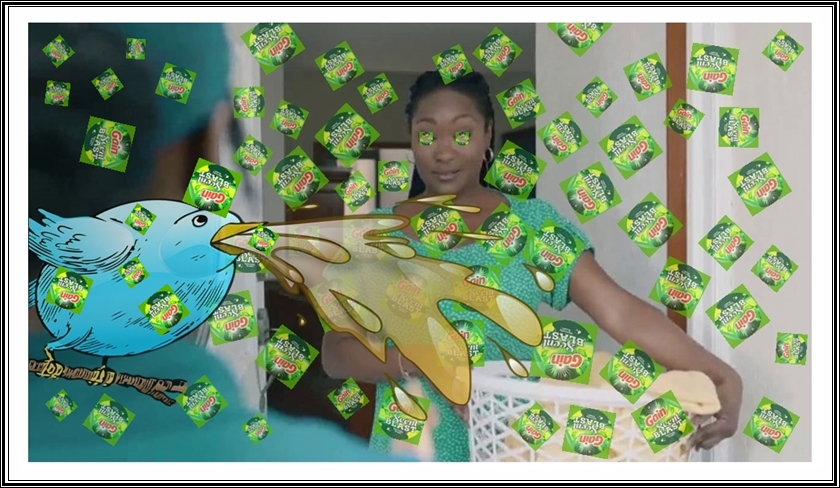
When the delivery woman tries her best not to puke from the Gain fumes,
the Gain user shrugs and the voice-over says:
“Hey, you can’t float everyone’s boat. Love it or hate it, it’s intense.”
!!!
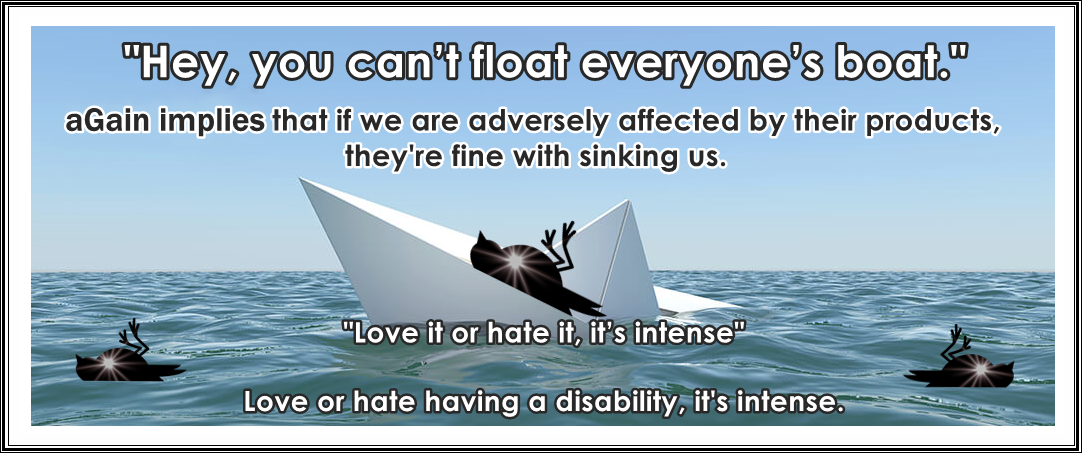
In other words, Gain implies they’re fine with sinking us
(More on what we all think about that later)
The ad starts off with a scene that already promotes an IAQ nightmare:
Posted in Accessibility, Air Quality, Disability, Environment, Environmental Health, Fragrance, Human Rights, Laundry, Pollution, Products
Tagged accessibility barriers, advertising, allergies, asthma, autism, bullying, cancer, chemical sensitivity, chemicals in clothing, child health, environmental sensitivities, false advertising, hazardous air pollutants, health, IAQ, invisible disabilities, laundry products, MCS, saatchi, scented candles, toxic trespass, VOCs
Hey Vagisil!
Aside from making women feel like they need products that are
totally unnecessary and can be all around harmful in general, it’s
TOTALLY NOT COOL
to appropriate disability language
to sell products
that harm people with said disability!

If you are ‘scentsitive’, it means you need to be scent-free!
Posted in Accessibility, Air Quality, Chemicals, Environmental Health, Fragrance, Human Rights, Products
Tagged allergies, asthma, chemical sensitivity, environmental sensitivities, fragrance chemicals, IAQ, invisible disabilities, MCS, multiple chemical sensitivities, personal care, scentsitive, video
Awareness is growing about the harmful effects of synthetic, artificial fragrances. This is with good reason, but now, many people have jumped onto the natural fragrance and essential oil (EO) bandwagons, believing them to be safe alternatives.
Is this a good thing?
Some believe so, after all, what could be wrong with something that’s natural?

It’s time to have a closer look.
Posted in Accessibility, Air Quality, Environmental Health, Fragrance, Health, Human Rights
Tagged allergies, asthma, autism, cancer, chemical sensitivity, environmental sensitivities, essential oils, fragrance-free, hazardous air pollutants, hospitals, IAQ, invisible disabilities, MCS, perfume, scent, VOCs
The Honourable David C. Onley, the 28th Lieutenant Governor of Ontario (2007-2014) was appointed to lead the Third Review of the Accessibility for Ontarians with Disabilities Act (AODA).
The report has now been released.
LISTENING TO ONTARIANS WITH DISABILITIES
REPORT OF THE THIRD REVIEW OF THE ACCESSIBILITY FOR ONTARIANS WITH DISABILITIES ACT, 2005
…
“For most disabled persons, Ontario is not a place of opportunity but one of countless, dispiriting, soul-crushing barriers”
…
Thanks to everyone who wrote in, those of us with environmental sensitivities have been recognized, and thanks to David C. Onley, we’ve been included in the report and the final recommendations:
In the SUMMARY OF RECOMMENDATIONS (on pg 80):
7. Ensure that accessibility standards respond to the needs of people with environmental sensitivities.
Other mentions of environmental sensitivities and details:
Two new petitions have been brought to my attention. Both of them are on change.org.
Please sign and share if you are able:
Make all health care facilities and services “fragrance free.”
…”Please ask the secretary of HHS to provide leadership on addressing this issue and require all health care facilities and service providers to be scent free.”…
and
Stop the Human Rights Violations of Disabled British Columbians.
…”Health supporting housing is needed for low income British Columbians living with MCS. Currently there is no safe, affordable housing in BC for people with this chronic illness. In fact, the housing that is available is making people with MCS more ill by exposing them to off gassing building materials, strong chemicals used in building maintenance, laundry venting, cigarette smoke, and toxicant containing household and body products used by fellow renters.” …
Recent research that conducted in three countries (United States, Australia, and the UK), found that 83.7% autistic adults reported adverse health effects from exposures to fragranced products, effects such as:
migraine headaches (42.9%),
neurological problems (34.3%),
respiratory problems (44.7%), and
asthma attacks (35.9%)
In particular,
62.9% of autistic adults report health problems from air fresheners or deodorizers,
57.5% from the scent of laundry products coming from a dryer vent,
65.9% from being in a room cleaned with scented products, and
60.5% from being near someone wearing a fragranced product.
Health problems can be severe, with 74.1% of these effects considered potentially disabling under legislation in each country. Further, 59.4% of autistic adults have lost workdays or lost a job, in the past year, due to fragranced product exposure in the workplace.
Results show that vulnerable individuals, such as those with autism or autism spectrum disorders, can be profoundly, adversely, and disproportionately affected by exposure to fragranced consumer products.
Posted in Accessibility, Autism, Child Health, Fragrance, Human Rights, Policy, Public Health
Tagged air freshener, Anne Steinemann, ASD, asthma, autism, chemical sensitivity, cleaning products, environmental sensitivities, fragrance-free, IAQ, invisible disabilities, laundry products, MCS, migraines, Neurological symptoms, scent, scent free
 | linda @ Seriously "S… on MCS/ES |
| linda @ Seriously "S… on The CDC and MCS |
 | Tabatha Schnorr on MCS/ES |
| Tabatha Schnorr on The CDC and MCS |
| linda @ Seriously "S… on MCS and Housing |
| linda @ Seriously "S… on Hospital Protocols for People… |


 Seriously "Sensitive" to Pollution