Tag Archives: fibromyalgia

Fibro Flare From Underwear

 fibro flare from underwear 1 Original image from GettyYes way…sighs…

Most of us wear underwear all the time. We don’t think much about it.

I remember when I used to be able to find decent 100% cottom undies with enclosed elastic waistbands at the dollar stores! I could throw them in the wash once, and they were good to go. Those were the days!

More recently, I’ve been disabled from a serious fibro flare caused by trace (?) levels of chemical residues from wearing organic undies that cost me $20 a pair. Even after soaking and washing them at least a dozen times, and then boiling them several times after.

Disabled?
Yes, disabled!

My alternate title for this post was Disabled by Underwear… Here’s what happened:

Continue reading

Home Dental Extraction SUCCESS (#2)!

Another One Bit the Dust

I survived my second home extraction on the weekend. It was a very infected tooth, an upper rear molar, one that I had somehow managed to retain a year longer than expected. It was actually the first one to get infected last year, but then the other tooth went ballistic, and by the time that extraction site healed, this tooth had calmed down enough to be very useful for eating with.

In hindsight, waiting so long may not have been such a great idea, as in the end, the infection was nasty. Very nasty. It put me into a terrible funk that was really difficult to push my way through, similar to the depression some kinds of mold can cause, and created the same challenges MCS/ES exposures cause, like brain fog, difficulty thinking and doing things, and a real lack of energy. And it stank when pulled. Really stank.

I am so grateful for the home visiting dentist in this area. Not only is he fragrance-free, but he is willing (and able!) to take other precautions to make things safe for me.

Last year, before my first home extraction, we discussed everything that was needed for the procedure, and what was necessary to make it as safe as possible for me.

This year I couldn’t find my old list (despite seeing it a month or 2 ago) and hoped he remembered his. This is what I do remember, and what we did:

Continue reading

Have Your Say For May

What if you had the chance to say one thing about your life with MCS/ES, and how it would change your life if it was understood?

May is MCS/ES Awareness Month (yet again… maybe some year we won’t need it to be, but this year, we still do), and this year, I would like to share some of your stories and insights.

this one thing

If you could tell the world ONE thing about your life with MCS/ES (or any other invisible disability that has MCS/ES as a symptom), what would it be?

How has this one thing affected your life?

If this one thing were changed, how would your life be different?

You could think of it as a conversation with someone you love, someone who loves you (or even a kind stranger), someone who wants to understand, and who is willing to do something for you, and/or to change the way they do things, in order to include you in life, and to help you with what you need or want to accomplish in life (for example).

This is your time to tell them this one thing, and how this change will impact your life for the better.

Here’s what I am asking for with your submissions: Continue reading

Being a Caring “Consumer”, Giver, and Receiver of Gifts

‘Tis the season when we are encouraged or expected to participate in mad shopping frenzies, buying products that are mostly toxic and usually generate vast quantities of waste to boot. On some level, I believe most people know that this isn’t working out so well for anyone, but it’s hard to know why it’s so hard for people to show love in ways that don’t involve disposable packaging and toxic materials that are advertised as being cool or trendy. Or maybe it’s the advertising that has something to do with it?

Thankfully, we do have available a plethora of alternative ways to show our love to friends and families, and the trendiness factor is growing. There are ways that are kinder, gentler, more personal, and usually much more appreciated

more love

I’d like to share some ideas and resources that I have found helpful. Some are newer while others have been around for years but are still very relevant now, if not more so.

I hope you find something that not only inspires you, but also makes your life easier and allows you to become more attuned to your own gifts and needs, as well as those of others.

Continue reading

In a Doctor’s Own Words: A Toxic Legacy and 12,000 (+) Canaries Later


Dr. John Molot is a doctor who sees patients with complex, chronic, environmentally linked, and often disabling, health conditions. Although he is retiring from private practice, he is still a staff physician in the Environmental Health Clinic at Women’s College Hospital in Toronto.

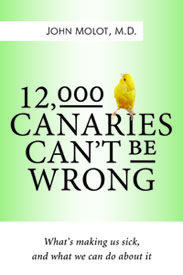
He recently released a book, “12,000 Canaries Can’t Be Wrong“,  wrote a report in support of the Ontario Centre of Excellence in Environmental Health (OCEEH), and appears in a video presentation about the health effects of common  chemical exposures (see below).

Check these out:

12,000 Canaries Can’t be Wrong
What’s making you sick & what can you do about it

Books

12000Canaries_hiRessm

Continue reading

Proclamations – City of Toronto – May 12th, 2014

Myalgic Encephalomyelitis/Chronic Fatigue Syndrome, Fibromyalgia and Multiple Chemical Sensitivities Awareness Day

proclamation-header-ford


Myalgic Encephalomyelitis/Chronic Fatigue Syndrome, Fibromyalgia and Multiple Chemical Sensitivities Awareness Day

May 12, 2014

WHEREAS Myalgic Encephalomyelitis/Chronic Fatigue Syndrome, Fibromyalgia and Multiple Chemical Sensitivities Awareness Day aims to raise awareness and end the stigma and discrimination that accompanies these chronic illnesses.

Over 568,000 individuals living in Ontario are afflicted with one of the three following chronic illnesses: Myalgic Encephalomyelitis/Chronic Fatigue Syndrome, Fibromyalgia or Multiple Chemical Sensitivities. Once diagnosed, an individual is often ill for years with as many as 70 per cent of sufferers becoming disabled for life.

Myalgic Encephalomyelitis, commonly known as Chronic Fatigue Syndrome, is a neurological and autoimmune disease characterized by overwhelming fatigue, pain, headaches, cardiac symptoms, immune disorders, dizziness and balance problems.

Fibromyalgia is characterized by severe musculoskeletal pain and tenderness in many areas of the body along with fatigue and sleep dysfunction, generalized or regional stiffness and in some cases neurological and cognitive symptoms. This pain can become strong enough to prevent people from working or engaging in physical activities for months and even years.

Multiple Chemical Sensitivities, also called Environmental Sensitivities or Intolerance, are initiated by an unusually severe sensitivity or allergy-like reaction to many different kinds of pollutants such as chemicals, perfumes and other environmental triggers.

Each year on May 12, communities across Ontario will join the Myalgic Encephalomyelitis Association of Ontario to increase awareness and educate the medical profession about these chronic conditions. Myalgic Encephalomyelitis/Chronic Fatigue Syndrome, Fibromyalgia and Multiple Chemical Sensitivities Awareness Day will raise funds to support the crucial services provided by the Myalgic Encephalomyelitis Association of Ontario and other organizations.

NOW THEREFORE, I, Mayor Rob Ford, on behalf of Toronto City Council, do hereby proclaim May 12, 2014 as “Myalgic Encephalomyelitis/Chronic Fatigue Syndrome, Fibromyalgia and Multiple Chemical Sensitivities Awareness Day” in the City of Toronto.

Myalgic Encephalomyelitis/Chronic Fatigue Syndrome, Fibromyalgia Day – Proclamations – City Clerk’s Office | City of Toronto.

 With thanks to MEAO (Myalgic Encephalomyelitis Association of Ontario)

Report: RECOGNITION, INCLUSION AND EQUITY – THE TIME IS NOW

Many of us have been waiting for action for decades, let’s hope that this is the project that finally makes it happen. It has been a long time coming…

‘RECOGNITION, INCLUSION AND EQUITY – THE TIME IS NOW: PERSPECTIVES OF ONTARIANS LIVING WITH ES/MCS, ME/CFS AND FM’

Recognition Inclusion and Equity the Time is Now

From Varda Burstyn:

At long last, I am writing to let you know about four new groundbreaking reports – products of a 5-year initiative that I and colleagues began in 2008 – that present exciting new research on the three environmentally linked conditions of ES/MCS, ME/CFS and FM, and that develop a wonderful new model of care and support for those living with the conditions in Ontario.

Continue reading

MCS/ES Page

I have finally added a Page to the top of the blog that deals with MCS/ES under the following headings:

MCS – Multiple Chemical Sensitivities, etc
Environmental Sensitivities
Categorical guidelines for levels of disability
Getting diagnosed
ICD Codes
Treatment Options
Mind and Brain
Support
Human Rights and Accommodations

https://seriouslysensitivetopollution.wordpress.com/mcses/

seriously sensitive to pollution

Accessible Customer Service – What to do When A Store is Too Polluted to Enter

Having invisible disabilities can present challenges most people don’t think of.

Modified from original image by Eurofin

Modified from original image by Eurofin

Indoor air can be too polluted for some of us to safely breathe. Those of us with MCS/ES can develop serious and life-threatening symptoms from breathing in toxic chemicals commonly found in indoor air. Even a mask may not be enough to protect us.

Or we may be having a bad Fibromyalgia flare and just be in too much pain to shop.

So what can we do when we need something?

Continue reading

Friendship and Fragrance

There are reasons people choose and enjoy isolation, but developing disabling adverse effects from the toxic chemicals in everyday products and materials is seldom one of them.

Do you know someone who says fragrances bother or disable them? Chances are pretty good that you do, now that 34.7% of the population experience adverse effects, ranging from mild to severe and disabling, from fragrance exposures.

When your friend, family member, or colleague informs you that something you use has an adverse effect on them, how would you respond?

Do you choose the friendship? Or the product?

Continue reading