Tag Archives: fragrance chemicals

Sometimes They Listen, Sometimes They Don’t

(This post is for us, not so much for those who’ve made it clear they can’t hear us)

There have been a lot of online arguments lately, where people just aren’t listening to each other. I know this phenomenon isn’t limited to what’s happening online either, especially when it comes to people choosing petroleum based fragrances (or other petrochemical products and materials) over family and friends, or worse, over the health of their children! (yes, it happens, and it’s happening far too often these days)

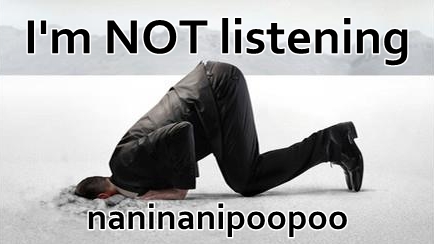
naninanipoopoo

(naninanipoopoo is something my kids used to say when they wanted me to know they weren’t going to listen to me)

Then, just like the fragrance industry is doing, by creating fragrances for absolutely everything, I too  was inspired to come up with a fragrance for that: Continue reading

Are Fragrances Drugs By Design?

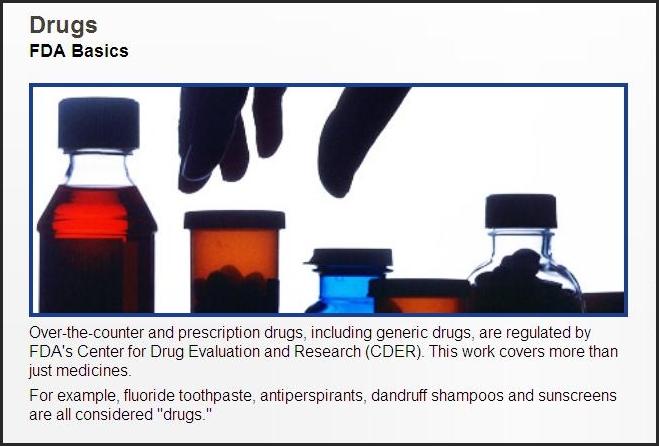
From the FDA

drugs FDA

Drug by definition:

drug 1

What about fragrances when they target our brains and brain functions, including moods and perceptions?

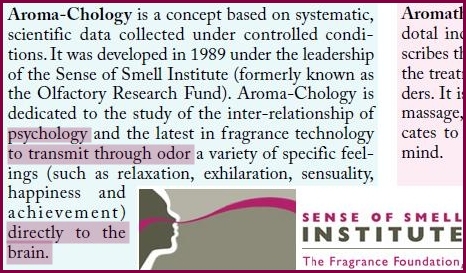
From the fragrance industry:

Aromachology and the brain

To use fragrance technology to transmit feelings directly to the brain

???

That sounds a lot like drugs to me!

From the FDA… Is it a drug?

Continue reading

How to Have Company (or Repairmen) In Your Home When You Have MCS/ES

Even when people try to be fragrance (and other chemical) free, they can have 2nd and 3rd hand residues from personal care, cleaning, and laundry products all over them. Air “fresheners” and scented candles are other items that leave residues on everything. It can take weeks to get it out of skin and pores, and longer to get it out of clothing and bedding, all the while re-contaminating the body and anything else that has contact with the fragranced surfaces or air.

rigmarole

Fragrance (and other toxic) chemicals are just all-pervasive now. Unless people are completely fragrance-free and stay out of fragrance filled places, they will have some degree of fragrance saturation in their clothes, skin, and hair. Some of the residues are also impossible to remove no matter how hard one tries, because of chemicals that are designed to penetrate and remain active for long periods of time (think of the  laundry commercials where they boast you can smell the fresh scent days later – except some of us can be affected years later, because that’s how permanent those chemicals are).

If people who use those products come to visit, not only can they leave us gasping for air (or worse) during their visit, they can leave chemical residues that will keep off-gassing from the couch and anyplace else they touched for days or weeks to come.

fragrance around a sofa

Depending on how severe one’s MCS/ES is,there are different things that can be done.

Continue reading

If Chemicals Behave Like Drugs, Why Aren’t They Regulated Like Drugs?

 Good question!

Penelope Jagessar Chaffer TEDxBrussels 1

It’s a question I have asked many, many times, especially when dealing with fragrance chemicals and scent marketing.

Penelope Jagessar Chaffer wasn’t referring specifically to fragrance chemicals when she asked that question, but one set of the chemicals that she discusses in the following TEDX talk are often found in fragrances, laundry, and personal care products (but are never on the labels), and they have been implicated in many different adverse health effects, including the deformities of the penis that she elaborates on in this new video:

Continue reading

Fragrance Emitting Devices

What happens when you walk through a place that has fragrance chemicals in the air?

fragrance chemicals in the airThe chemicals attach to hair, skin, and clothing just like smoke does!

2nd hand smoke and fragrance

Some people can pass out after being forced to breathe fragrance chemicals.

Continue reading

Severe MCS/ES… What Does It Mean?

To some degree, severe MCS/ES (like pain) is subjective. In other ways it’s a moving target, as we can be fine (or almost fine) one minute, and be completely incapacitated the next hour (day, week, or month) from an exposure, or combination of exposures. One day, a perfume exposure during lunch with friends might “just” give someone a throbbing headache for the rest of the day, but the next day, because there was also a cloud of diesel smoke, a fragrance contaminated piece of mail, someone installed wi-fi in the apartment next door, and someone else’s dryer vent was pumping out chemicals when we walked by with the dog, the same 3 breaths of perfume at the pet store we were trying to buy dog food from, could send us to bed for a week, or longer.

To make matters more difficult for others to accurately assess (and assumptions and clueless opinions are rampant where invisible disabilities are concerned), the recovery period, when most incapacity takes place, occurs when no-one is around to witness the effects, as many symptoms are delayed reactions. This means that people with severe MCS/ES are usually only seen during better moments, not when we’re at our worst.

severe mcs es

Something else I often see is that people’s ability to tolerate change and adversity varies greatly. Some people fall apart when faced with the slightest challenge, while others can endure unbelievably difficult circumstances and suffering without ever complaining.

One person’s severe is another person’s “just another day”. And, as I found out, when we think things are as bad as they can possibly be, they can get 1000 times worse (especially where brain function is concerned). This can really confuse people, ourselves included…

That said, there are tools that have been designed to help medical professionals assess all kinds of health and disabilities. And accurate assessment is especially important when applying for disability benefits.

What follows are a few tools that can help us understand. This information is not meant for acquiring disability benefits. I’m providing it for educational purposes only.

How can “sensitivity” symptoms affect life?

Continue reading

More Reasons and Resources to go Fragrance Free

If fragrances and the products they are added to didn’t contain so many seriously  harmful ingredients which pollute the air we all breathe, the clothing we wear, the water we drink, and the soil we grow the foods we eat in, there wouldn’t be a need to go fragrance-free. Strangely, the fragrance industry has seen fit to include a vast array of toxic, petrochemical pollutants and highly allergenic substances in their products.

Here are some resources to use in making schools, workplaces and homes safer places to be. Some are new, some I’ve already linked to in other places on this site.

Hope you find them helpful.

access safe

from  The CDC and MCS

The CDC Indoor Environmental Quality Policy from 2009 explicitly states:

“Fragrance is not appropriate for a professional work environment, and the use of some products with fragrance may be detrimental to the health of workers with chemical sensitivities, allergies, asthma, and chronic headaches/migraines.” …

Potential hazards include chemicals, biological agents, fragrant products, and physical conditions that may cause irritation, illness, or exacerbate existing health conditions” …

Continue reading

Verified Fragrance-Free Supply Chains

Due to the increasing numbers of people with allergies and sensitivities to, and injuries from VOCs and other fragrance ingredients, there is a growing need for fully verified fragrance-free supply chains.

Many of us need products and foods handled in such a way from beginning to end, as to prevent first, second and third hand fragrance and other chemical contamination.

Organic food that has been handled by someone with scented hand lotion, or that has sat in a store full of fragrance molecules will absorb those chemicals, and potentially be as toxic as food that has pesticide residues (for people who must, for medical and health reasons, avoid petrochemical exposures). Clothing, bedding toilet paper and other materials also absorb fragrances, which can be hard (if not impossible) to remove.

This presents a business opportunity for entrepreneurs, to provide a service for people whose health depends on it, as well as for those who wish to prevent health problems.

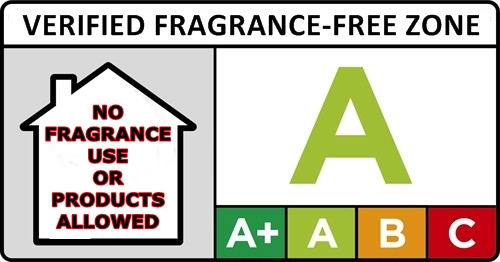
verified fragrance-free zone NO FRAGRANCE Continue reading

Everyday Toxic Trespass

Women’s Voices for the Earth has a great page about toxic ingredients commonly found  in products women, men and children are exposed to on a regular basis, usually everyday, even when we try not to be. Check it out, get informed, and take action to protect you, your family and the planet that supports our lives.

 Skin Deep

Take Action via WVE

Mind the Store

 Sadly, our current regulatory systems do more to protect those who are polluting us, than to protect our health. I don’t know how we are going to change this without a massive outcry, but we CAN stop buying the products we learn are harmful to us and to future generations.

The Skin Deep website has information about thousands of personal care products and ingredients, WVE has recipes to make your own, and then some, and Mind the Store is successfully calling on retailers to stop selling toxic products. We have more power than we know, but only when we use it!

Fragrance Decision Undermines EPA’s DfE Program

EPA’s Design for the Environment (DfE) Program (claims to) work “to reduce risk to people and the environment by finding ways to prevent pollution”, yet they recently began allowing DfE-endorsed products to contain fragrances.

Of the first 119 fragrance chemicals okayed for use, 93 have “hazard profile issues” such as being known sensitizers or lacking vital data!!!

“Researchers, pediatricians, and other health experts agree that “Scented chemicals increase risk that some per cent of exposed people will have allergic and hypersensitivity reactions. Allergic and asthmatic children are at especially high risk”

Those of us with MCS/ES, along with many others who now experience adverse or disabling health effects from fragrance chemicals rarely had them before being exposed to some supposedly safe petrochemicals (in everyday use) that tipped our bodies over an edge. For too many of us, it was from fragranced products that we first experienced and continue to experience chronic health problems.

So it is wonderful to see health experts formally urging the EPA to

SAY NO TO FRAGRANCES

No Fragrance

“Pediatricians and respiratory experts, including the American Lung Association and the American Academy of Pediatrics, wrote to the EPA Administrator today raising concerns about the health impact of the recent decision of the US EPA’s Design for the Environment program to allow fragrances.”

it is standard environmental health practice to discourage the use of air fresheners, scented products, and fragrances in homes and other indoor spaces.

We were surprised and deeply disappointed to learn that the Agency’s Design for the Environment program (DfE) created a “fragrance” category of chemicals for commercial and consumer cleaning products. The vast majority of chemicals listed — 93 of the 119 total — have “hazard profile issues” because they are identified in one of
Continue reading