Tag Archives: Fragrance

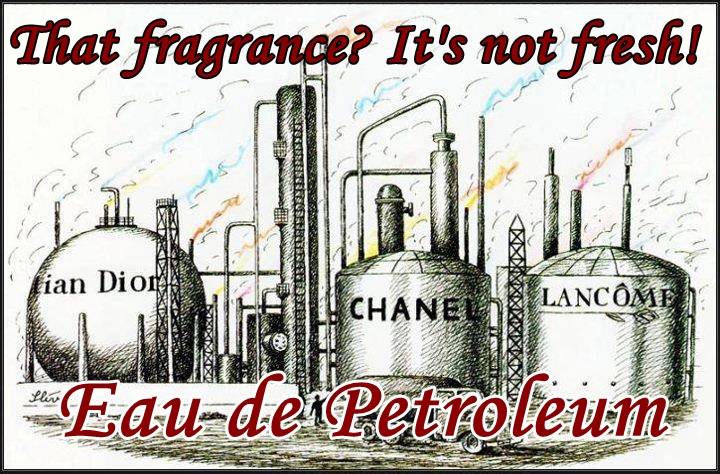
That fragrance? It’s not fresh!

eau de not fresh

That fragrance?  It’s not fresh!

Secret Scents How Hidden Fragrance Allergens Harm Public Health (WVE)

Toxic Chemicals in Fragranced Laundry Products and Health Effects

Toxic Chemicals in Air “Fresheners” and Health Effects

Fragrance Decision Undermines EPA’s DfE Program

Allergic to a World Full of Cats

(check the sidebar and tags for additional links)

Property Manager’s Guides to MCS

From the Centre for Equality Rights in Accommodation (CERA):

Environmental Sensitivities and Housing

Every year, CERA receives a significant number of calls from tenants being made ill from the poor indoor air quality in their apartment buildings. Most of these individuals suffer from environmental sensitivities and are particularly sensitive to contaminants in the air. With funding assistance from the Ontario Trillium Foundation, CERA recently launched HomeSafe, an initiative to educate tenants and multi-unit housing providers on strategies to improve indoor air quality and create healthier living environments.

The resources section has some excellent documents that are designed to “help landlords, property managers, and co-operative and condominium boards of directors reduce the health impacts associated with multi-unit housing and create living environments that are as safe and “green” as possible… and make their properties more attractive…”

For example:

Continue reading

Personal Care Products, Pesticides, Health and Water…

The Toxic Evidence Piles Up and Doesn’t Wash Away

We all breathe the air. We all drink water. We all eat. We all wash ourselves.

We should be able to do this safely.

SO WHY ARE

so many toxic chemicals used in everyday products and materials, and found in our air, in our water, in our food, and in our brains and bodies?

Did you consent to this?

New reports have been released about toxic chemicals and health harm from products and materials most of us are exposed to a multitude of times on a daily basis…

Personal care products and pesticides

Poisoning Our Future
“Poisoning Our Future: Children and Pesticides”

PAN AP launched a (free) book on insidious effects of pesticides on children

Continue reading

AXE (LYNX) Axed From Another School!

Children of all ages, as well as teachers, require healthy environments to thrive in. Schools, unfortunately, have notoriously poor indoor air quality.

One thing that contributes to poor IAQ is the use of fragrance chemicals in cleaning products, as well as in personal care and laundry products.

These chemicals do nothing to enhance the air quality, and much to induce cognitive and neurological impairments, sperm damage and respiratory problems.

Boys who overused sprays such as Axe Body Spray have prompted the Brandon School Division to ban perfumes and colognes.

Boys who overused sprays such as Axe Body Spray have prompted the Brandon School Division to ban perfumes and colognes. (Canadian Press) / via CBC

Over-use of these products is not the real problem.

The real problem is that these products contain toxic chemicals and serious allergens, and these chemicals and allergens do not respect personal boundaries or property lines, but trespass into everyone’s air, brains and bodies.

Continue reading

Fragrance-Free and Healthy Schools (updated)

Are you sick from sick schools?

How Healthy is Your SchoolTeachers and students suffer when school buildings are not healthy, sometimes even developing permanently disabling conditions as a result.

MCS/ES. Asthma. Autism. Learning disabilities. Behavior problems…

Unhealthy school buildings can present real barriers to access.

It shouldn’t be like that. You shouldn’t lose your health or your job or have your child’s health and future suffer because there’s something unhealthy in the air at school.

There are enough examples of the benefits of a healthy learning environment over an unhealthy one (from toxic chemicals, molds and wi-fi for example), and tools for how to make change happen.

Here are some resources (in no particular order):

Continue reading

Video: Secret Toxic Chemicals From the SC Johnson Family to Yours

GREAT spoofed commercial here! Telling it how it is!

Secret Toxic Chemicals: From the SC Johnson Family to Yours

For more info and action you can take:
Continue reading

The Marketing of Febreze

The Marketing of Febreze
(and Other Ways We’ve Been Had)

The commercials and advertisements we see are almost all carefully crafted by teams of “scientists”so that they have the greatest impact possible, resulting in people believing that we NEED to buy and use these products for our lives to be complete.

Here’s how Febreze was marketed and we the people have been manipulated into buying and using an unnecessary and toxic product.

Some excerpts from an article well worth reading:

Febreze

How Companies Learn Your Secrets

By CHARLES DUHIGG

… “When they got back to P.& G.’s headquarters, the researchers watched their videotapes again. Now they knew what to look for and saw their mistake in scene after scene. Cleaning has its own habit loops that already exist. In one video, when a woman walked into a dirty room (cue), she started sweeping and picking up toys (routine), then she examined the room and smiled when she was done (reward). In another, a woman scowled at her unmade bed (cue), proceeded to straighten the blankets and comforter (routine) and then sighed as she ran her hands over the freshly plumped pillows (reward). P.& G. had been trying to create a whole new habit with Febreze, but what they really needed to do was piggyback on habit loops that were already in place. The marketers needed to position Febreze as something that came at the end of the cleaning ritual, the reward, rather than as a whole new cleaning routine.

Continue reading

Fragrance-Free and Healthy Schools

I’ve updated this post here:

https://seriouslysensitivetopollution.wordpress.com/2013/08/16/fragrance-free-and-healthy-schools-updated/

Are There Any Doubts?

doubt

verb (used with object)
1.to be uncertain about; consider questionable or unlikely; hesitate to believe.
2.to distrust.
3.Archaic. to fear; be apprehensive about.

verb (used without object)
4.to be uncertain about something; be undecided in opinion or belief.

noun
5.a feeling of uncertainty about the truth, reality, or nature of something.
6.distrust.
7.a state of affairs such as to occasion uncertainty.
8.Obsolete . fear; dread.

Sometimes doubts can be useful, when they compel us to investigate things more thoroughly, but industry financed doubt has had a lot of harmful impacts

“Doubt is our product,” a cigarette executive once observed, “since it is the best means of competing with the ‘body of fact’ that exists in the minds of the general public. It is also the means of establishing a controversy.”

We are having our minds (and bodies) messed with in so many ways
and it can become overwhelming when we learn how bad some things really are.

Understanding what is happening can empower us so we can change course.

Read on to see some of the ways we are being had (globally), how some things are interconnected, and some tools we can use to help us work through our doubts.

Corporate Counterfeit Science
Both Wrong and Dangerous

Andrew Rosenberg, director, Center for Science & Democracy

“Last week, a New York Appeals Court ruled unanimously that that Georgia Pacific, a subsidiary of Koch Industries, must hand over internal documents pertaining to the publication of 11 studies published in reputable scientific journals between 2008 and 2012. At issue in the case: whether the firm can be held accountable for engaging in a “crime-fraud” by planting misinformation in these journals intending to show that the so-called chrysotile asbestos in its widely used joint compound doesn’t cause cancer.”

… “Asbestos is but one case of “ghost-writing” of counterfeit science for academic publications in an effort to market or cast doubt on scientific results.  Recently, the editors of the Public Library of Science (PloS) Medicine, a respected open-access scientific journal, published a series of articles highlighting how widespread the problem has become in the pharmaceutical field and the difficulties academic journals are facing as they try to combat the problem. …

As a scientist, it goes against my teaching and experience to accept that ghost-writing of fraudulent scientific papers in the name of commerce should be allowed to continue unabated. Not only does it undermine the entire scientific enterprise, it poses an enormous potential threat to the public.” …


Dr Margaret Chan

Director-General of the World Health Organization
(WHO)

“Under the pressure of these forces, chronic noncommunicable diseases have overtaken infectious diseases as the leading cause of morbidity, disability, and mortality. …

The globalization of unhealthy lifestyles is by no means just a technical issue for public health. It is a political issue. It is a trade issue. And it is an issue for foreign affairs.

Continue reading

OBGYs Advise Pregnant Women to Live As If They Have MCS/ES!

The Royal College of Obstetricians and Gynaecologists (RCOG) released a new paper regarding everyday chemical exposures during pregnancy, and confirmed that there are sufficient indications that all is not well, that some of these chemicals we are exposed to on a daily basis are linked to causing some serious health problems, so it is better to be safe than sorry and avoid as many exposures as possible during pregnancy.

It’s high time time doctors stop being afraid of the chemical and pharmaceutical companies to speak up and out about this!

I applaud them for finally having the courage!

Chemical Exposures During Pregnancy
(Scientific Impact Paper 37)

“the approach recommended is for such women to put ‘safety first’. That is, to assume that risk is present even when it may be minimal or eventually proven to be unfounded. This is often referred to as the ‘precautionary approach’.

The Advice

to reduce overall chemical exposure:

● use fresh food rather than processed foods whenever possible

● reduce use of foods/beverages in cans/plastic containers, including their use for food storage

● minimise the use of personal care products such as moisturisers, cosmetics, shower gels and fragrances

● minimise the purchase of newly produced household furniture, fabrics, non–stick frying pans and cars whilst pregnant/nursing

● avoid the use of garden/household/pet pesticides or fungicides (such as fly sprays or strips,rose sprays, flea powders)

● avoid paint fumes

● only take over–the–counter analgesics or painkillers when necessary

● do not assume safety of products based on the absence of ‘harmful’ chemicals in their ingredients list, or the tag ‘natural’ (herbal or otherwise).

RCOG Advice

If you substitute “woman” or “pregnant woman” with “person who has MCS/ES”, and change “minimize” and “reduce” to “avoid”, and “pregnancy” to “probably permanently”, you get a pretty good idea of what doctors (who often have no idea or training about MCS/ES) should be saying to people about life with MCS/ES.

But really, it’s good advice for everyone.

Please note that children should also be protected from these same exposures, as their brains and bodies are still developing and these exposures can interfere with normal development and daily functioning.

They did omit one other very important exposure to avoid during pregnancy, and that is exposure to wireless radiation from sources such as cell towers, WiFi and devices like mobile phones, DECT phones, and even wireless baby monitors!

What follows are more excerpts from the paper and the links to it

Continue reading