Category Archives: Policy

Help for How to Be Fragrance-Free

All it takes is a decision to go fragrance-free!

It should be easier than quitting smoking since there aren’t supposed to be addictive chemicals in fragrances, right?

Due to the fact that so many people are now experiencing adverse effects from fragranced products (34.7% in 2016), we are well on the way to having fragrance-free policies everywhere for the sake of protecting public health just as was done with smoking bans. It’s not just those of us who suffer immediate and disabling adverse effects from the products (1st, 2nd, and 3rd hand), but for everyone.

Here are some great resources (in no particular order) to help you go fragrance-free:

Continue reading

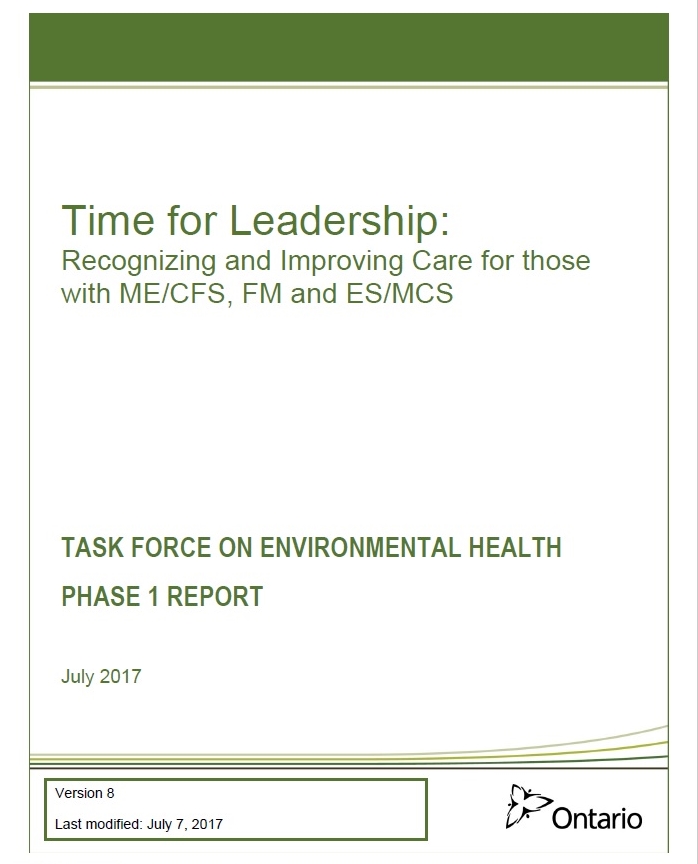
Province of Ontario Interim Report on ME/CFS, FM, and MCS/ES

The Province of Ontario’s Ministry of Health and Long Term Care’s long awaited Environmental Health Task Force Interim Report has finally been released!

“We found that, throughout the health care system and in society at large, there is:

•a lack of recognition of the seriousness and severity of these conditions
•a profound shortage of knowledgeable care providers
•a dearth of clinical tools to support and guide care
•a discouraging shortage of services and supports for people living with these conditions
•an absence of support for family caregivers.

The lack of knowledge and appropriate accessible care has devastating effects on Ontarians struggling with ME/CFS, FM and ES/MCS.

For those living with ME/CFS, FM and ES/MCS, the lack of recognition of these serious and debilitating conditions is as harmful as the lack of treatments. …

We urge the Minister to act now to raise awareness of these conditions and address the barriers that keep people with ME/CFS, FM and ES/MCS from getting the care and services they need.”

From the press release:

Continue reading

A Universally Recognized Accessibility Symbol for Environmental Sensitivities?


We need an easily recognizable accessibility symbol for non-toxic, wireless, VOC, scent, and fragrance-free places that show they are accessible to people with MCS/ES, asthma, COPD, migraines, and others who need healthy environments in order to remain functional and not become physically or cognitively impaired.

These signs would be used only in places that actually enforce the policies.

The standard accessibility signs have white symbols on blue backgrounds like these:


I’ve never seen anything like this to signify healthy wireless, scent, and fragrance-free indoor air, but these are some others I have found or assembled that might give a designer ideas to run with:

Continue reading

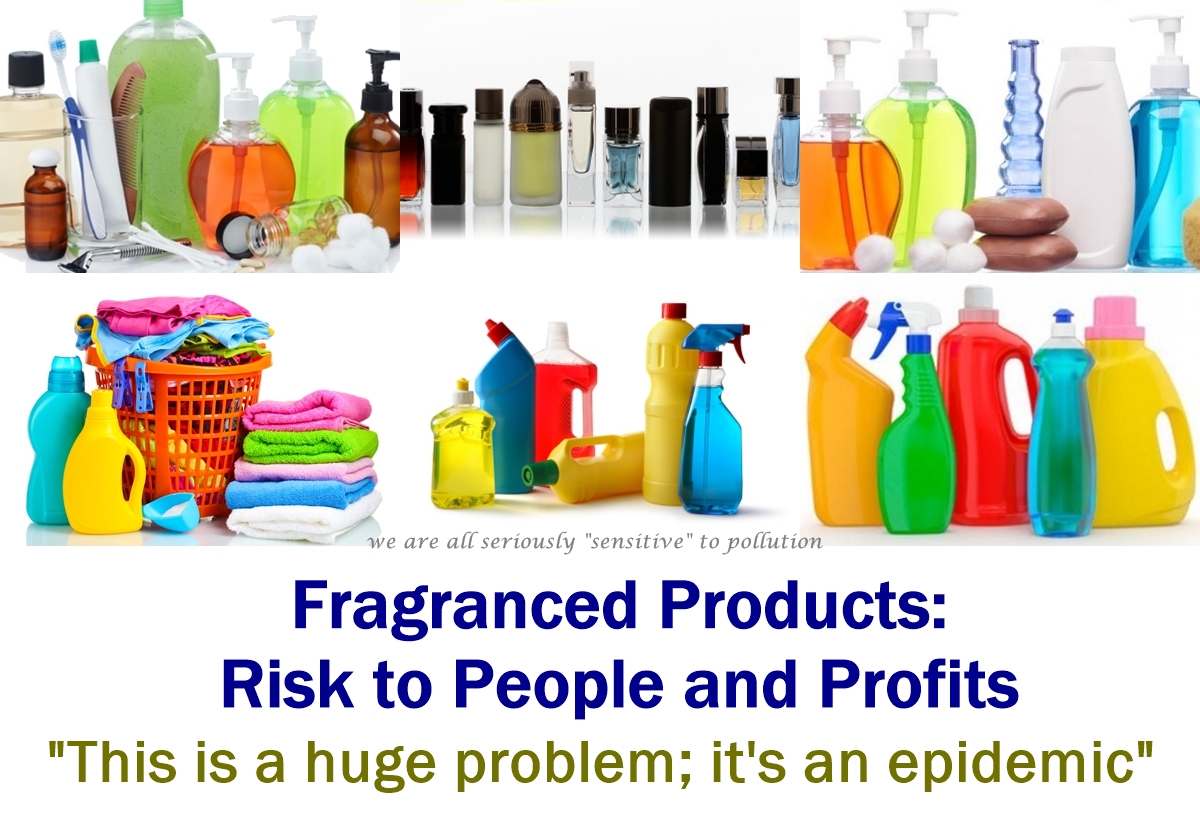
Fragranced Products: Risk to People and Profits

From Dr Anne Steinemann’s latest research
“Fragranced consumer products: exposures and effects from emissions”

“Basically, if it contained a fragrance, it posed problems for people” 


fragranced-risks

“This is a huge problem; it’s an epidemic”
says Professor Steinemann.

She is especially concerned with involuntary exposure to fragranced products, or what she calls “secondhand scents.

“Over 22% of Americans surveyed can’t go somewhere because exposure to a fragranced product would make them sick.”

“These findings have enormous implications for businesses, workplaces, care facilities, schools, homes, and other private and public places,” said Professor Steinemann. For instance, a growing number of lawsuits under the Americans with Disabilities Act concern involuntary and disabling exposure to fragranced products.”

Continue reading

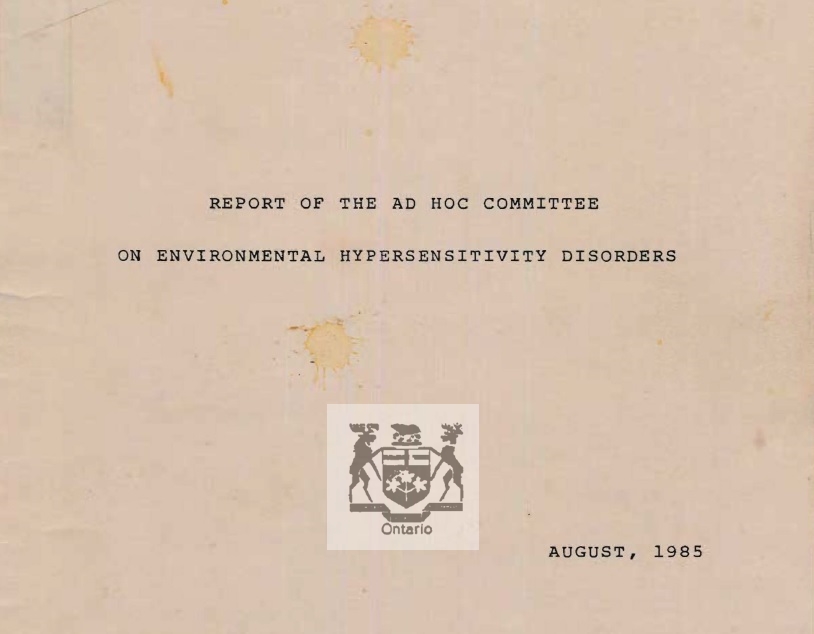
Ontario Reported on MCS/ES in 1985, Yet…

MCS/ES is not new. Over 30 years ago, the Province of Ontario created the “Committee on Environmental Hypersensitivity” and appointed George Thomson, a former provincial court judge, as chairman, with a mandate to study and “advise the Ministry of Health on the occurrence of environmental hypersensitivity in Ontario and on current methods of diagnosis and treatment. Further, the committee was to make recommendations to the ministry concerning future approaches to treatment and research that should be taken”

1985-ontario-report-cover-with-logo

From the the Legislative Assembly of Ontario Official Records for 17 December 1985:

Hon. Mr. Elston: Members of this House may also recall a six-member committee which was appointed in November 1984 to study a disorder which is known as environmental hypersensitivity, or 20th-century disease. The condition has been described as multiple sensitivities or allergies to a wide range of foods, chemicals and environmental substances.

Continue reading

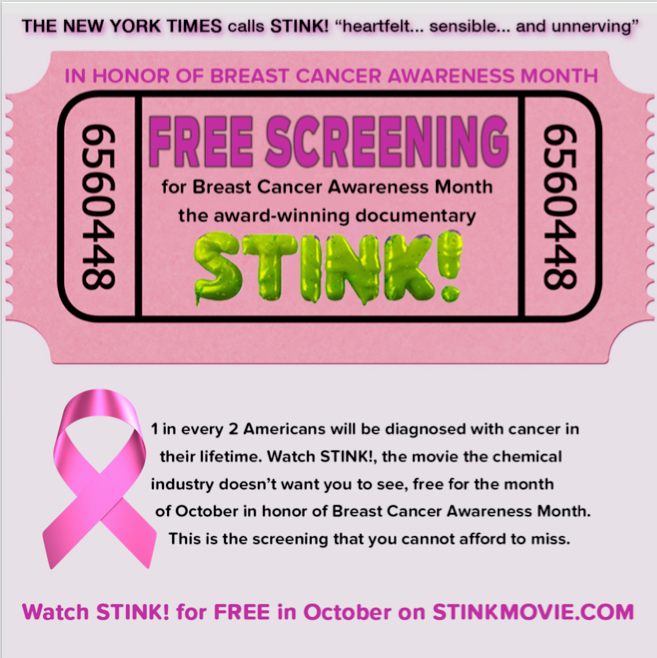
The Pinktober Special You Don’t Want to Miss!

At long last, here’s your chance to see STINK for FREE!

Please don’t miss this!
What you see could literally save your life!

If you want to learn more about pink ribbons and pinktober, you can get Breast Cancer Action’s  “Think Before You Pink Toolkit” here.

And for everyone’s sake:

Be fragrance (and toxic chemical stink) free. It’s good for you! It’s good for me!

http://StinkMovie.com/

Θ Θ

Why I LOVE Having Environmental “Sensitivities”

Guest post

In all of this I don’t have a permanent place to stay and paid rent to a landlord who won’t fix anything, my apartment insurance cut me off and won’t help with my possessions, my medicare health insurance is not covering the health aspect and my one doctor wants me to see a doctor out of province which is not covered, and my social assistance did not pay me my disability this month, and family does not understand any of this….At this point I have nothing to lose and everything to gain….I AM MOVING FORWARD!

~ Marie LeBlanc, Manitoba, Canada

brick-walking-8-abcde

Even the Cats Say: Let Wendy Stay!


Now that I have your attention

Here’s an awesome short video you need to see:

Continue reading

Ontario Announces the Task Force on Environmental Health

The Government of the Province of Ontario, specifically the Ministry of Health and Long-Term Care (MOHLTC) finally announced the establishment of a Task Force on Environmental Health.

Let’s hope this new project creates the long overdue and effective changes and access to basic services that are needed by people with environmentally linked, disabling,  chronic health conditions like MCS/ES, unlike the 1985 project which created a  600+ page report with recommendations that were largely ignored (see links below), which allowed these and other problems to fester and increase in severity and magnitude.

Ontario Task Force 2016

The news release about the new task force follows:

Continue reading

Update: Wendy is NOT a Widget and She Shouldn’t be Treated Like One

UPDATE:
The bureaucrats expect Wendy to leave the only safe and accessible home Wendy has access to, the sherriffs could be there any day, and there is still no other safe and accessible place for Wendy to move to!

In a kind and sane society, disabled people would be treated with respect and dignity, and safe and accessible housing would not be taken from them when there is no place else to go to.

We need to treat people with invisible, inconvenient disabilities better!

Wendy has a safe-for-her-home, the ONLY place she can now be and remain functional, but the bureaucrats only see that it is a 3 bedroom home and not the 2 bedroom home her doctors have said she (at minimum) needs.

She cannot go to the mall, to the hospital, to a library, or to an apartment where people smoke, use fragrances, pesticides, or have dryer vents spewing toxic laundry products her way.

The only kind, humane, and sane solution is that she should be allowed to remain where she is, until the province has built MCS/ES accessible housing that is safe for her to move to…

2016 W.K. 1


UPDATE May 3rd:

According to this CBC interview, the housing authority has extended Wendy’s stay until the end of July, although a week or so ago they had told Wendy that she only had until April 30th, and they have not informed Wendy or her lawyer about this news (she learned via the CBC).

Hers is the 1st interview: http://www.cbc.ca/maritimenoon/2016/05/03/chemical-sensitivity-eviction-pot-pardons-your-thoughts/

∴ Wendy is NOT a widget. Widgets can go anywhere. Wendy can’t. “Widget” is used in texts and speech, especially in the context of accounting, to indicate a hypothetical “any…

Source: Wendy is NOT a Widget and She Shouldn’t be Treated Like One