Tag Archives: invisible disabilities

MCS Awareness Month and Masks

May is MCS/ES Awareness Month

Due to the wide variety of chemical pollutants in our air these days, many people with MCS/ES have to wear a mask when leaving home (and sometimes even at  home) to prevent or reduce debilitating and disabling symptoms.

may is mcs es awareness month

Having an invisible (and inconvenient, or so we are told) disability is difficult, especially when many of the adverse effects are delayed and we have to deal with them in isolation, out of sight, out of mind, and without witness to our suffering.

If there’s any good that comes from wearing a mask or respirator in public (in addition to protecting our health a bit) wearing one when we have an invisible disability helps make us visible, and alerts other people that they too are at risk.

Breathing is not optional.

Pollution is!

Wearing a protective breathing device can minimize some of the damaging effects exposures to pollutants cause, but people often feel self conscious about wearing a mask, especially if we can’t find a “pretty” one that we are able to use, Continue reading


First Municipal Government Adopts Life Saving Plan for People With MCS/ES, CFS/ME, and FM

Good news for some people who have MCS/ES, CFS/ME, and FM

Tarragona SPAIN

RESCUE PLAN FOR PEOPLE WITH CENTRAL SENSITIVITY SYNDROMES:

THE CITY OF TARRAGONA (CATALONIA, SPAIN) IS THE FIRST MUNICIPAL GOVERNMENT THAT IMPLEMENTS IT!

The first municipal government that has stepped forward to implement this plan, is the City of Tarragona Municipal Government (Tarragona is a major city 100 kilometres south of Barcelona). In the plenary session held last November 30th, the “Institutional Declaration of support for people with Central Sensitivity Syndromes” was approved, which consists of a concrete programme of measures. This is a historical step.

In part, the agreement includes:

Continue reading

We Know (Some of You) Try


Guest post poetry by Sandy Lippert

You probably think you are all fragrance free,

But it doesn’t wash away so easily.

I’m certain of all your efforts and know how hard you try,

But when you come to visit, I’m just getting by.

I probably look just fine to you Continue reading

And The Winning Answer Is…

About a year ago I decided to give away an electronic item of some value that had belonged to my kids as they no longer wanted it and it had some chemical residues that prevented me from enjoying it (more too toxic tech issues). I posted it to a community giving group that is similar to Buy Nothing or Freecycle, where there are a lot of things given and received, for free (mostly clothing, toys, and small items).


community

As it was permitted to ask questions of respondents, I also decided to ask a question that people had to answer to be considered as a potential recipient.

Along with the description of the item, I posted:

*Please answer one of the following questions

1. Has anyone ever told you a product you use made them sick, and if so, how did you handle it?
or
2. If it hasn’t happened yet, how would you handle it if it did happen?

The responses included:

Continue reading

Can’t You Hear Me? Why Can’t You See I Need Your Help?

Guest post by Kelly N.

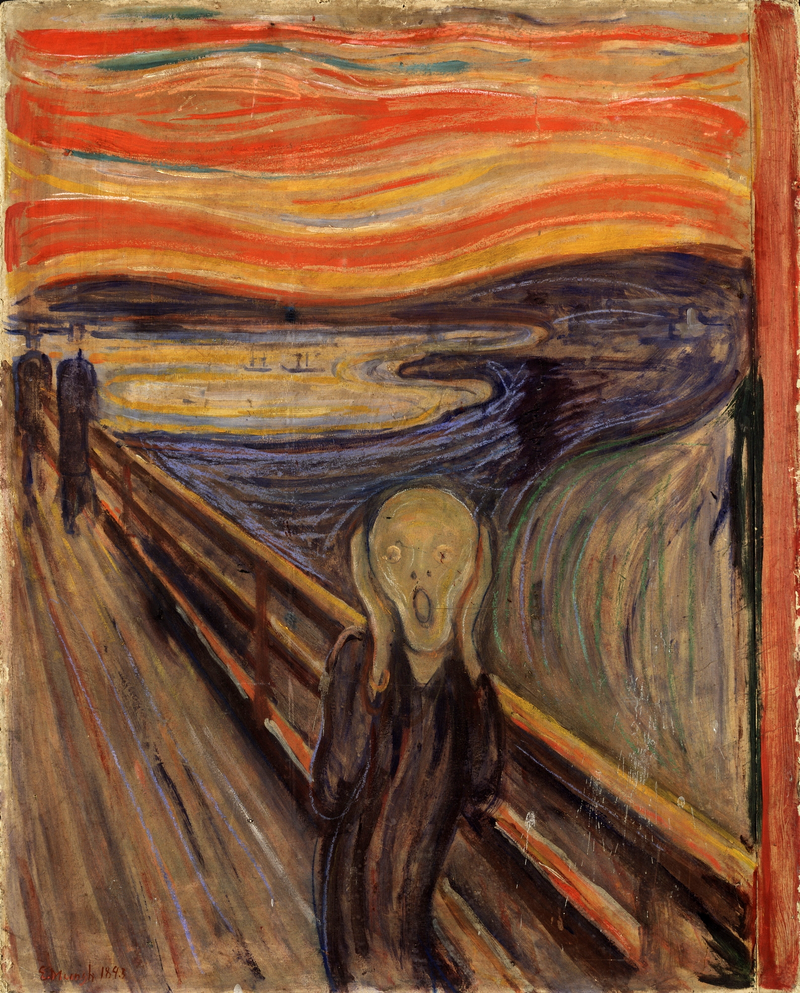
The Scream by Edvard Munch

The Scream by Edvard Munch

It’s the most heartbreaking thing when you realize that you have no one…. zilch zero that will help you!  All you are is a stranger in a strange land with no one hearing your plea.  All the faces look around and stare at you like you have no face, no meaning.

Continue reading

An Open Letter to the Scented

Guest post by Debbie Clark Seely

Dear friends,

I wanted to take the time to write this letter because we (the “unscented” community) are concerned for you. With it being the holiday season we are seeing multiple reports of friends and family members choosing to cut ties to their unscented loved ones rather than make the effort to visit them unscented. This perplexes us. It makes us feel like you are choosing scent over a human being. Continue reading

V’s Canary Cries

Guest Post by V from the USA

This was originally posted to an online support group. V granted her permission to share it here. She has been able to put this part of her life story into words that so many of us find hard to express, and I thank her deeply for sharing her words with you too.


Canary V

It’s about 1:30 a.m. and this is about the time where I start to feel despair about everything in my life. I just can’t seem to adapt to the isolation and lack of a routine or purpose. Also, I can’t seem to find any pain meds for my chronic pain. I have been in physical pain for so long.

I know this post may seem disjointed which is apropos considering how I feel.

I AM so tired of spinning my wheels…Along with MCS I have so many other medical issues…non terminal that I know of but still…I have asthma and allergies.. I can’t be around dogs or cats, the weather determines my breathing status for the day and my physical mobility.

I can only eat about 10 things and it’s exhausting to try to rotate these foods and I spend excessive time trying to plan. Even planning a rotation I still get itching throat and sometimes a swollen throat with some of the ten things I think I can eat…it’s horrible to start eating and not know how I will feel ..

Continue reading

The Effort and “Inconvenience” of Single-Handedly Trying to Remove Systemic Barriers to Access

.

When she needed accommodation, you won’t believe the rigmarole that ensued.

(unless you have MCS/ES)

equal opportunity 1

“They should not have to make significantly more effort to access or obtain service. They should also not have to accept lesser quality or more inconvenience.”

.

Someone with MCS (who wishes to remain anonymous) was asked about how her efforts to receive appropriate, safe, accommodation were going, so she could see a health care provider. She is one of a growing number of people who become disabled from exposures to toxic chemicals found in many everyday products and materials, especially in fragrances.

This is pretty much how the story goes:

She contacted a health care provider by phone and talked to a receptionist.

She asked her if they had a scent-free policy and was told they didn’t.

Continue reading

Optional “Inconvenience”

Guest post and images by Laura J Mac

What always strikes me during conversations about how to persuade service providers to accommodate our disability is how much extra work we have to do just to participate in simple survival stuff. I mean, “simply” tracking down professionals who are willing to accommodate is a chore and a half. The luxury of “having a good relationship” with a service provider falls way down on the list because it’s usually one or the other.

Laura J Mac 1

Nobody would think twice about someone who uses a mobility device asking if there are ramps and elevators but it seems that our need for fragrance-free and reduced chemical exposure is perceived as a “preference” rather than a medical necessity. That perception leads to the idea that accommodation of our disability is an “option” (and generally it’s an “option” that service providers aren’t willing to make available.) It’s not that we don’t “like” fragrance, these chemical exposures cause neurological and physiological problems that interfere with our ability to function on a daily basis.

Continue reading

Have Your Say For May by Amy

tilted momAmy from Florida shares this with us:

Q ~ If you could tell the world ONE thing about your life with MCS/ES (or any other invisible disability that has MCS/ES as a symptom), what would it be?

A ~ What I’d really like to tell the world about my life is a full explanation of MCS, such that everyone would understand it enough to prevent, treat and accommodate me and everyone with this illness. That seems like more than I could do even if I had a whole book rather than a blog post. So I will focus my answer on something a bit more manageable.

I would tell the world that the invisible nature of this illness affects me on many levels. Some of the substances I react to are invisible, though they are obviously detected by my body. Some of my symptoms are invisible to others, but are still felt by me and still limit my abilities. Most importantly, the primary survival mechanism of chemical sensitivity is avoidance, which means that I have to avoid public places. Thus, the sicker I am, the more invisible I am to my community. That invisible nature of this illness is the most devastating part for me.


Q ~ How has this one thing affected your life?

Continue reading