Category Archives: MCS/ES

It’s Only A Little Fragrance

How many times have we heard it’s “only a little fragrance”?

Telling a person with MCS/ES that there is “only a little fragrance”

is like

telling someone with Celiac Disease that there’s “only a little gluten”

or

 telling someone with a peanut allergy that there’s “only a little peanut”

or

telling someone who uses a wheelchair that there are “only a few steps”.

It’s not ok.

telling 103It’s NOT ok.

Individual images follow: Continue reading

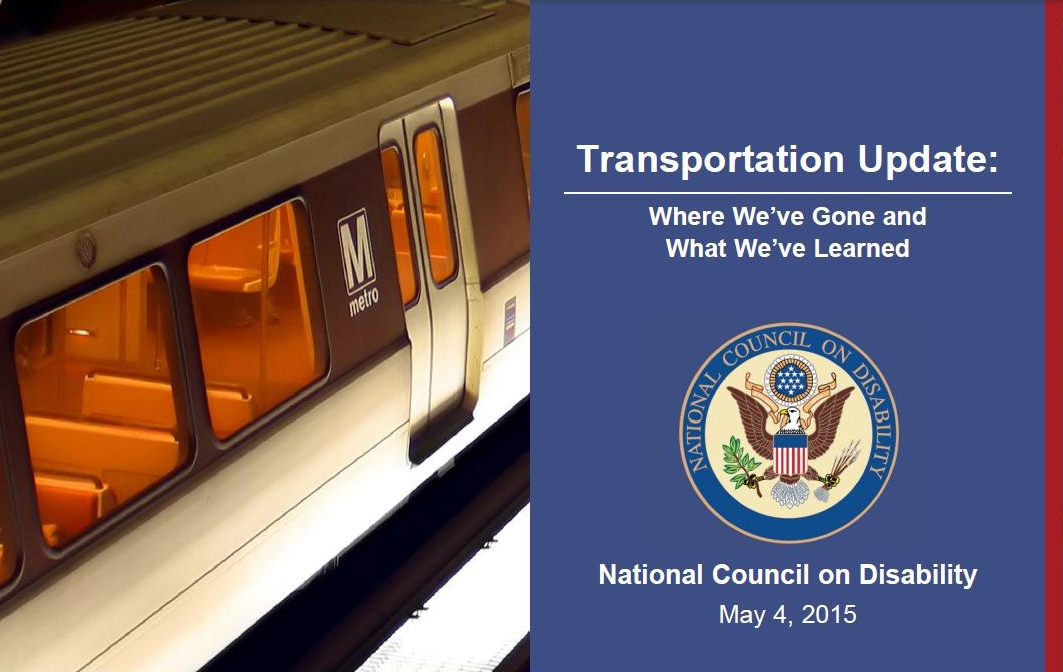
MCS and EHS Included in New National Council on Disability Transportation Report

Press Release from National Center for Environmental Health Strategies

~ Mary Lamielle

Transportation Update NCD

… excerpts …

National Council on Disability Transportation Report Addresses Chemical and Electrical Sensitivities; Recommends Changes in Policies and Practices to Improve Access

Continue reading

Have Your Say for May by Mimi

Mimi from Ontario, Canada has this to say to us:

I wish that you could accept that this is real and that your habits make me ill.

I wish you could understand how switching to fragrance-free products is such a small act that means a world of difference to me – literally.

It means being able to have a clear mind in order to work effectively and support myself, it means being able to receive hugs, it means not suffering every day.

Mimi

Multiple Chemical Sensitivity (MCS) Brochure

For your information, here are scans of the MCS brochure from the Environmental Health Clinic at Women’s College Hospital in Toronto, Ontario. Note that they see mostly patients with milder to middling MCS/ES (and there’s usually a 6-12 month wait list), as those with more severe MCS/ES are unable to access the clinic, it being in a regular hospital with hand sanitizers, hundreds of toxic people and plenty of unsafe materials everywhere.

MCS clinic brochure 2 exerpt 1a

The brochure is an introduction, and reducing exposures is always a good thing, but sometimes people with MCS/ES need to eliminate exposures to remain at all functional, and that’s where things become a lot more complicated, and why we need the OCEEH.

Continue reading

Home Dental Extraction SUCCESS (#2)!

Another One Bit the Dust

I survived my second home extraction on the weekend. It was a very infected tooth, an upper rear molar, one that I had somehow managed to retain a year longer than expected. It was actually the first one to get infected last year, but then the other tooth went ballistic, and by the time that extraction site healed, this tooth had calmed down enough to be very useful for eating with.

In hindsight, waiting so long may not have been such a great idea, as in the end, the infection was nasty. Very nasty. It put me into a terrible funk that was really difficult to push my way through, similar to the depression some kinds of mold can cause, and created the same challenges MCS/ES exposures cause, like brain fog, difficulty thinking and doing things, and a real lack of energy. And it stank when pulled. Really stank.

I am so grateful for the home visiting dentist in this area. Not only is he fragrance-free, but he is willing (and able!) to take other precautions to make things safe for me.

Last year, before my first home extraction, we discussed everything that was needed for the procedure, and what was necessary to make it as safe as possible for me.

This year I couldn’t find my old list (despite seeing it a month or 2 ago) and hoped he remembered his. This is what I do remember, and what we did:

Continue reading

About Those Fragrance-Free Laundry Products

Some of us have gone to great lengths to encourage others to use fragrance-free products, especially for laundry, as many of the chemicals in fragrances cause such  disabling effects for us.

Not only that, but fragranced laundry products pollute entire neighbourhoods with hazardous chemicals when pumped out of dryer vents (which were designed to emit moisture, not toxic chemicals), meaning that we (and others with asthma, migraines, COPD, etc) can’t sit or work outside in our gardens, open our windows for fresh air, or go for walks safely when other people are doing laundry with regular commercial  products (and when are they not?), because we could be felled at any time from the emissions.

Much to our chagrin, many of us have discovered that some fragrance-free products can also make us dizzy, cause breathing difficulties like asthma, create cognitive confusion and memory problems, give us headaches, chemical hangovers, and more.

This has caused all kinds of difficulties, not just for us, but for the people who switched products only to discover that their efforts were not “good enough” for us.

“Can’t they EVER be happy?  Why are they still complaining?”

Anne Steinemann’s recently published research regarding VOCs emitted from regular personal care, cleaning, and laundry products, (the popular ones used by most people in the “developed” world) sheds some much needed light on the problems.

So what did she find?

Continue reading

Wendy is NOT a Widget and She Shouldn’t be Treated Like One

Wendy is NOT a widget. Widgets can go anywhere. Wendy can’t.

“Widget” is used in texts and speech, especially in the context of accounting, to indicate a hypothetical “any-product”. Companies in such texts will frequently be given names such as “ABC Widgets” or “Acme Widget Corp.” to indicate that the particular business of the hypothetical company is not relevant to the topic of discussion.
(Widget economics – wikipedia)

“Economists often use the term widget to refer to an abstract unit of production.”

Wendy is NOT a widget as her local housing authority seems to believe. They have a capacity problem, but instead of addressing the need for improved (and accessible) capacity, they want to re-arrange people’s lives as if they were widgets, with little to no regard or understanding of the consequences.

INVESTOPEDIA EXPLAINS ‘Capacity’

“The widget manufacturer may be able to produce 150,000 widgets in a month. However, due to downtime because of equipment maintenance and worker illness, only about 130,000 widgets can actually be produced per month. Over the long run, a business can increase its capacity and output by acquiring more factors of productions. For example, if market demand for widgets spikes, the widget manufacturer can buy more equipment and hire more workers, and thus increase its capacity to 175,000 widgets per month.”

Wendy is not a widget. She is a living, breathing, human being, a human being with a complex, chronic environmentally linked condition and disability related needs, needs that widgets don’t have.

Wendy Kearly photo by ADAM MACINNIS – THE NEWS

Wendy Kearly photo by ADAM MACINNIS – THE NEWS

The housing authority from which Wendy rents her safe home has deemed her over-housed, and are in the process of evicting her, despite the fact that Wendy has no other option for medically required, safe housing available, and no safe access to any of the other places most people take for granted (see below).

In the following audio interview with Wendy, among other things, she talks about the process her grown children take to detox themselves enough to be able to safely visit with her, so that she is able to safely hug them when they come to town.

Continue reading

The Ontario Centre of Excellence in Environmental Health Has a Website

Recognition Inclusion and Equity  is the name of the new website for the OCEEH. Their comprehensive reports and other information about this much needed project can all be found there now. Please check it out and also “like” their facebook page if you are on facebook.

Why? From their website:

MISSION

Our overarching goal is to achieve ‘recognition, inclusion and equity’ for people living with the often painful and disabling conditions of ES/MCS (environmental sensitivities/multiple chemical sensitivity), ME/CFS (myalgic encephalomyelitis/ chronic fatigue syndrome) and FM (fibromyalgia).

At present, more than 568,000 patients with these conditions lack the normal rights, benefits, policies, programs and facilities that Ontario makes available to those with conditions of comparable severity and prevalence.  …

CONDITIONS OF COMPARABLE SEVERITY AND PREVALENCE

Continue reading

Have Your Say For May

What if you had the chance to say one thing about your life with MCS/ES, and how it would change your life if it was understood?

May is MCS/ES Awareness Month (yet again… maybe some year we won’t need it to be, but this year, we still do), and this year, I would like to share some of your stories and insights.

this one thing

If you could tell the world ONE thing about your life with MCS/ES (or any other invisible disability that has MCS/ES as a symptom), what would it be?

How has this one thing affected your life?

If this one thing were changed, how would your life be different?

You could think of it as a conversation with someone you love, someone who loves you (or even a kind stranger), someone who wants to understand, and who is willing to do something for you, and/or to change the way they do things, in order to include you in life, and to help you with what you need or want to accomplish in life (for example).

This is your time to tell them this one thing, and how this change will impact your life for the better.

Here’s what I am asking for with your submissions: Continue reading

Laundry Woes Six Years Later

6 years

Continue reading