Tag Archives: cancer

20 Petrochemicals to Avoid in Personal Care and Laundry Products


Re-posting with permission

20 of the most common Petrochemical Skin Care Ingredients to Avoid

The Organic Natural Beauty Directory urges all consumers to carefully read the ingredient labels on the products they intend to buy and be fully aware of what goes in them, that way you will know what to avoid. Ingredients are listed most used to least used (meaning that the first ingredient listed is what makes up the largest part of the product). It is extremely alarming to know that many major brands of skin care and personal care products contain petrochemicals in them.

It pains and angers me to see big beauty brands advertising on TV that they are ‘natural’ but when you look at their ingredients they may also contain some petrochemicals- so make sure you know your ingredients. This is why modern day consumers need to beware of ‘greenwashing’ and become educated on what the ingredients being used are.Your safest bet as a consumer is to choose products that contain all natural, whole and unprocessed botanical ingredients.

According to the ‘campaign for safe cosmetics website’.

“Many of these petrochemicals are known and scientifically proven to be toxic.”

“They can cause eye impairment, intestinal damage, kidney and liver problems, breathing problems, cysts, skin spots, rashes, premature aging and hair loss. Some are endocrine disruptors (that can cause hormonal disruptions and produce adverse developmental, reproductive, neurological, and immune effects), and some even carcinogenic (that can cause cancer, and in particular breast cancer)”.

Our skin is the largest organ in our body so it makes sense that we as consumers wake up & start taking control of what we feed ourselves.

Here is the A-Z list of the 20 most common petrochemicals used in personal care products:
toxic skull and bones

Continue reading

Are There Any Doubts?

doubt

verb (used with object)
1.to be uncertain about; consider questionable or unlikely; hesitate to believe.
2.to distrust.
3.Archaic. to fear; be apprehensive about.

verb (used without object)
4.to be uncertain about something; be undecided in opinion or belief.

noun
5.a feeling of uncertainty about the truth, reality, or nature of something.
6.distrust.
7.a state of affairs such as to occasion uncertainty.
8.Obsolete . fear; dread.

Sometimes doubts can be useful, when they compel us to investigate things more thoroughly, but industry financed doubt has had a lot of harmful impacts

“Doubt is our product,” a cigarette executive once observed, “since it is the best means of competing with the ‘body of fact’ that exists in the minds of the general public. It is also the means of establishing a controversy.”

We are having our minds (and bodies) messed with in so many ways
and it can become overwhelming when we learn how bad some things really are.

Understanding what is happening can empower us so we can change course.

Read on to see some of the ways we are being had (globally), how some things are interconnected, and some tools we can use to help us work through our doubts.

Corporate Counterfeit Science
Both Wrong and Dangerous

Andrew Rosenberg, director, Center for Science & Democracy

“Last week, a New York Appeals Court ruled unanimously that that Georgia Pacific, a subsidiary of Koch Industries, must hand over internal documents pertaining to the publication of 11 studies published in reputable scientific journals between 2008 and 2012. At issue in the case: whether the firm can be held accountable for engaging in a “crime-fraud” by planting misinformation in these journals intending to show that the so-called chrysotile asbestos in its widely used joint compound doesn’t cause cancer.”

… “Asbestos is but one case of “ghost-writing” of counterfeit science for academic publications in an effort to market or cast doubt on scientific results.  Recently, the editors of the Public Library of Science (PloS) Medicine, a respected open-access scientific journal, published a series of articles highlighting how widespread the problem has become in the pharmaceutical field and the difficulties academic journals are facing as they try to combat the problem. …

As a scientist, it goes against my teaching and experience to accept that ghost-writing of fraudulent scientific papers in the name of commerce should be allowed to continue unabated. Not only does it undermine the entire scientific enterprise, it poses an enormous potential threat to the public.” …


Dr Margaret Chan

Director-General of the World Health Organization
(WHO)

“Under the pressure of these forces, chronic noncommunicable diseases have overtaken infectious diseases as the leading cause of morbidity, disability, and mortality. …

The globalization of unhealthy lifestyles is by no means just a technical issue for public health. It is a political issue. It is a trade issue. And it is an issue for foreign affairs.

Continue reading

OBGYs Advise Pregnant Women to Live As If They Have MCS/ES!

The Royal College of Obstetricians and Gynaecologists (RCOG) released a new paper regarding everyday chemical exposures during pregnancy, and confirmed that there are sufficient indications that all is not well, that some of these chemicals we are exposed to on a daily basis are linked to causing some serious health problems, so it is better to be safe than sorry and avoid as many exposures as possible during pregnancy.

It’s high time time doctors stop being afraid of the chemical and pharmaceutical companies to speak up and out about this!

I applaud them for finally having the courage!

Chemical Exposures During Pregnancy
(Scientific Impact Paper 37)

“the approach recommended is for such women to put ‘safety first’. That is, to assume that risk is present even when it may be minimal or eventually proven to be unfounded. This is often referred to as the ‘precautionary approach’.

The Advice

to reduce overall chemical exposure:

● use fresh food rather than processed foods whenever possible

● reduce use of foods/beverages in cans/plastic containers, including their use for food storage

● minimise the use of personal care products such as moisturisers, cosmetics, shower gels and fragrances

● minimise the purchase of newly produced household furniture, fabrics, non–stick frying pans and cars whilst pregnant/nursing

● avoid the use of garden/household/pet pesticides or fungicides (such as fly sprays or strips,rose sprays, flea powders)

● avoid paint fumes

● only take over–the–counter analgesics or painkillers when necessary

● do not assume safety of products based on the absence of ‘harmful’ chemicals in their ingredients list, or the tag ‘natural’ (herbal or otherwise).

RCOG Advice

If you substitute “woman” or “pregnant woman” with “person who has MCS/ES”, and change “minimize” and “reduce” to “avoid”, and “pregnancy” to “probably permanently”, you get a pretty good idea of what doctors (who often have no idea or training about MCS/ES) should be saying to people about life with MCS/ES.

But really, it’s good advice for everyone.

Please note that children should also be protected from these same exposures, as their brains and bodies are still developing and these exposures can interfere with normal development and daily functioning.

They did omit one other very important exposure to avoid during pregnancy, and that is exposure to wireless radiation from sources such as cell towers, WiFi and devices like mobile phones, DECT phones, and even wireless baby monitors!

What follows are more excerpts from the paper and the links to it

Continue reading

Sand, Tar, Oil, Gas, Frack, Health, Life, Fail ?

clean-up-your-mess-love-mother

This is not only an environmental crisis, although that is bad enough since we all depend on clean air and water for basic survival, this is also a health and human crisis.

The quest for and extraction of fossil fuels has reached a level that is threatening us all.

Reality Check: Canada’s Oil Sands

“Each fact included in Oil Sands Reality check is carefully researched, referenced and reviewed by a scientific advisory committee. This website was created as a resource for citizens, media, investors and decision makers who wish to participate in a more informed debate about the impacts of oil sands development.”

http://oilsandsrealitycheck.org/ and  http://tarsandssolutions.org/

  ♦

Continue reading

RoundUp: You, the Kids, Pets, Neighbors, Food, Air and Water too

In my post about GMO labeling, I saw the need for a post dedicated to RoundUp aka Glyphosate, but it’s hard to separate the two (GMOs and glyphosate) since most GMOs are designed to be grown with the use of RoundUp aka Glyphosate.

As I was writing, this post kept growing and growing (unlike anything sprayed with glyphosate) and contains something like 42 external links, just in case anyone wants to go nuts exploring the research… There’s probably enough info here without following any of the links (but please do sign the petitions at least) and you can bookmark the post in case you ever need to go deeper.

I’ve tried to break up some of the links with a few photos and a video, so hopefully it doesn’t look too busy, but it got to the point I really don’t know how to edit it without just saying something like

“GMOs and RoundUp aka glyphosate = REALLY REALLY BAD for everyone
and everything except company profits”

and deleting the rest, but after all the work I did, I just can’t do that. Someone else might be capable of turning this into several posts, but I’m not that someone else. Yet… Who knows who I will be when I regain all my brain functions? Anyway, consider this fair warning!

There is so much evidence of harm (REALLY BIG LONG TERM HARM) caused by eating foods that have RoundUp aka Glyphosate used on them (which would be most  processed and packaged foods that are not certified organic), but we are also breathing it in, drinking it, and tracking it into our homes from lawns that it gets sprayed on, pissing it out of our bodies, and making people, pets and farm animals sick (or dead) as well as killing unintended plants with pesticide drift drift drift and more drift, since it easily blows off the property it is applied to, and then affects the plants, critters and people next door too (toxic trespass).

This stuff is designed to KILL, and it isn’t selective. It will kill some things quickly, and some things slowly (and we are composed of some things it can kill slowly).

“Each year in the United States more than 1 billion pounds of synthetic pesticides – insecticides, herbicides, rodenticides and fungicides – are applied in agriculture, homes, schools, parks, playgrounds and daycare centers. The National Toxicology Program has found in animal bioassays that a number of widely used pesticides are carcinogenic. Case-control epidemiologic studies have found consistent, modest associations between pesticide exposures in utero and in early childhood and acute lymphocytic leukemia, childhood brain cancer and childhood non-Hodgkin’s lymphoma. Rates of childhood leukemia are consistently elevated among children who grow up on farms, among children whose parents used pesticides in the home or garden, and among children of pesticide applicators.” ~ Philip J. Landrigan, MD, chairman of the Department of Community and Preventive Medicine and professor of pediatrics at the Mount Sinai School of Medicine in New York City

This may be one of the most insidious everyday poisons we are exposed to.

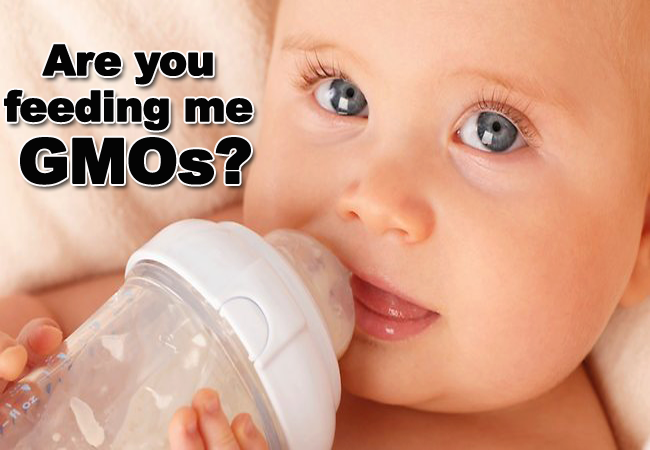
GMO Baby

Baby Formula Manufacturers Seek To Avoid GMO Labeling With Last-Minute Amendment (Maine Organic Farmers & Gardeners)

“The herbicide sprayed on most of the world’s genetically engineered crops—and gets soaked into the food portion—is now linked to “autism … gastrointestinal issues such as inflammatory bowel disease, chronic diarrhea, colitis and Crohn’s disease, obesity, cardiovascular disease, depression, cancer, cachexia, Alzheimer’s disease, Parkinson’s disease, multiple sclerosis, and ALS, among others.”

Continue reading

Brain Diseases Affecting More People Earlier…

“Changing patterns of neurological mortality in the 10 major developed countries – 1979–2010”

“This has to be speculative but it cannot be genetic because the period is too short. Whilst there will be some influence of more elderly people, it does not account for the earlier onset; the differences between countries nor the fact that more women have been affected, as their lives have changed more than men’s over the period, all indicates multiple environmental factors.

Considering the changes over the last 30 years – the explosion in electronic devices, rises in background non-ionising radiation- PC’s, micro waves, TV’s, mobile phones; road and air transport up four-fold increasing background petro-chemical pollution; chemical additives to food etc.

There is no one factor rather the likely interaction between all these environmental triggers, reflecting changes in other conditions.

For example, whilst cancer deaths are down substantially, cancer incidence continues to rise; levels of asthma are un-precedented; the fall in male sperm counts – the rise of auto-immune diseases – all point to life-style and environmental influences.

These `statistics’ are about real people and families, and we need to recognise that there is an `epidemic’ that clearly is influenced by environmental and societal changes.”

~ Professor Colin Pritchard

Article: http://www.alphagalileo.org/ViewItem.aspx?ItemId=131020&CultureCode=en

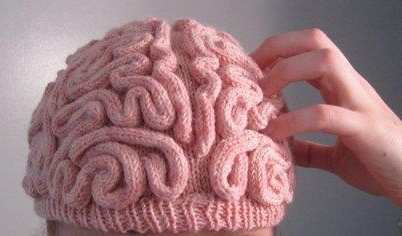
The only brain in my files...

Photo: While the article subject is serious, this is the only brain in my photo files, of a knitted beanie that made the rounds on fb…

Research Abstract: http://www.publichealthjrnl.com/article/S0033-3506%2812%2900467-2/abstract

Conclusions

“These results pose a major public health problem, as the epigenetic contribution to these changes, rather than longevity, have serious implications indicating earlier onset of neurological morbidity pressurizing families, health and social care services, with resource implications especially for Australia, Canada, Italy, Netherlands, Spain, the UK and the USA.”

2013… Friends, I Remember and Won’t Forget

skeleton 2

The world lost three amazing women and I lost three good friends in the first three months of this year. Linda left her poisoned body behind in January. Janine left her poisoned body behind in February. Connie left her poisoned body behind  in March.

I’m pretty sure MCS was not mentioned on any of their death certificates, but MCS  certainly had a far greater impact on each their lives, and their family lives than any listed cause of death did.

Continue reading