Tag Archives: EHS

MCS/ES Research

research MCS ES ...

I’ve created a Research PAGE with links and downloads to a variety of scientific offerings and resources, especially for those who want more published “proof” that MCS is “real”.

May your friends, family and medical professionals be reassured by the evidence.

Electromagnetic Fields: The Chemical Connection

“In other words, though work to reduce toxic chemical exposures can be viewed as quite distinct from efforts to address EMF exposures, both EMFs and EDCs can disrupt the critical signaling systems in the body and lead to problematic health endpoints.”

Nancy Hepp's avatarOur Health and Environment Blog

written by Elise Miller, MEd
CHE Director

Elise Miller, MEdAs you probably remember from your high school biology class, our bodies function using electrical impulses to communicate between cells, such as telling your heart muscles to contract or signaling your brain that you just stubbed your toe. Since everything relies on these signals, any breakdown or disruption in your body’s electrical system can become a real problem.

We also know that certain toxic agents, such as endocrine disrupting chemicals (EDCs), can alter our bodies’ hormonal messaging systems (which, by the way, uses electrical signals to communicate). When exposures to these chemicals, even in tiny amounts, happen during critical windows of development, then a wide range of health problems can result over a person’s lifetime.
So what do EDCs and electromagnetic fields (EMFs) have in common? As Henry C. Lai, professor of bioengineering at the University of Washington in Seattle and an expert…

View original post 434 more words

A Story That Needs To Be Heard: Part 2

Noise Sensitivity and “Frequency Effects”

beachy 1

The following sound-video is 6 1/2 minutes long and adds some detail to one of the health challenges described in

A Story That Needs To Be Heard: Part 1

(please listen to Part 1 first, if you can)

Here is Part 2

Continue reading

A Story That Needs To Be Heard: Part 1

beachy 1

I invite you to take 25 minutes of your life to listen to this audio documentary.

“Short Documentary of a Life With Health Challenges”

Continue reading

Teaching Doctors About the Health Effects of Wireless Technology

Health Effects of Wireless Technology Dr

The updated contents of this post may now be found here:

Learning About the Health Effects of Wireless Technology

https://seriouslysensitivetopollution.wordpress.com/2015/01/11/learning-about-the-health-effects-of-wireless-technology/

Breath-taking: An architectural answer to one homeowner’s severe allergies

Safe, medically required, non-toxic, EMF/EMR safe housing CAN be built. I linked to another article and the architect’s website in the 1st comment below.
“Because Barbara Tudhope has severe allergies and acute sensitivities to dust, pollen, electromagnetic radiation (EMF) and a long list of construction materials, the couple designed their home to foster an environment that doesn’t cause her any adverse reaction.

… “Almost all construction and renovation uses building materials that off-gas volatile organic compounds [VOCs], and contractors generally pay little attention to electrical and magnetic fields in the homes they build,” says Mr. Tudhope, a business writer. “But both can have serious acute and chronic health consequences for someone like Barbara, and, in truth, for almost anyone.”

Featured Image -- 5368

“Smart” Meter Trouble In Paradise

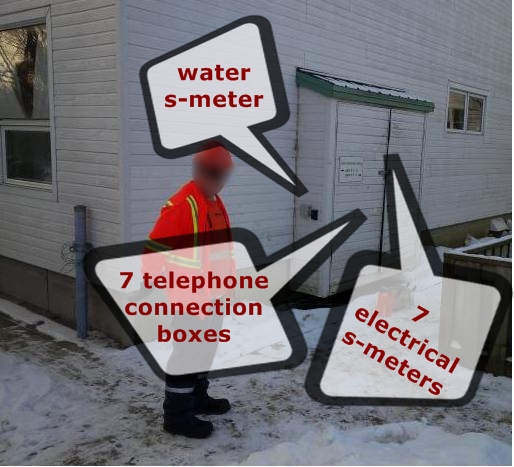
Ok, so the s-meters aren’t smart, and this really isn’t paradise, but this IS supposed to be safer housing for people with environmental sensitivities and there’s an issue here that isn’t getting resolved and could put a third person at risk of serious health harm.

I was hoping I wouldn’t have to write this post, but it has come to my attention that a unit here is being shown to prospective tenants, when that unit should remain empty until the contents of the attached utility cabinet are moved away from the building.

The empty unit is currently unsafe for anyone to live in, never mind someone with environmental “sensitivities”.

I have to warn people, no matter how desperate you may be for chemically safer housing, please DO NOT try to live in the currently vacant bachelor unit here if you value your life! Even if it doesn’t affect you immediately, it will.

utility cabinet attached to bachelor unit wall

utility cabinet attached to bachelor unit wall

Above is the side view of the unit, the little windows on the left are above the sleeping area. A raised glass door technology cabinet divides that area from the “living room” in the front, which is on the other side of the utility cabinet. In the photo below you can see the rest of the living room window and the unit’s front door (taken on an angle from the next yard).

Continue reading

Kim Palmer Was Allergic To the 20th Century

Kim was an award winning singer/songwriter/keyboardist originally from Toronto, Canada. She passed away October 23, 2006 after a long struggle with MCS, which developed after a gas leak and pesticide poisoning, among other things that she was exposed to during a short period of time.

She may have left us physically, but her music is still with us.

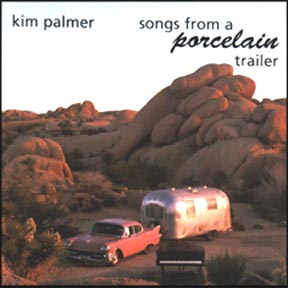
porcelain trailer

The following song is from her album titled “songs from a porcelain trailer”:

Continue reading

MCS/ES Awareness Month 2014

 It’s that time of year again. Welcome to MCS “Awareness” Month!

People with disabilities have the right to equal treatment and equal access

Barriers to access can be physical, attitudinal or systemic. Conveniences can also create barriers. If you are unable to remove a barrier to accessibility, consider what else can be done to provide services to people with disabilities. No-one should live without safe access to the necessities of life.

What is disability? (Ontario Human Rights Commission)

“Disability” covers a broad range and degree of conditions, some visible and some not visible. A disability may have been present from birth, caused by an accident, or developed over time. There are physical, mental and learning disabilities, mental disorders, hearing or vision disabilities, epilepsy, drug and alcohol dependencies, environmental sensitivities, and other conditions.”

Removing barriers and designing inclusively

Persons with disabilities face many kinds of barriers every day. These can be physical, attitudinal or systemic. …

Identifying and removing barriers also makes good business sense. As well as meeting the needs of customers or employees with disabilities, removing barriers can also help other people…

Employers, unions, landlords and service providers can start by doing an accessibility review of their facilities, services and procedures to see what barriers exist. You can then make an accessibility plan and begin to remove the barriers.

It is also helpful to create an accessibility policy and a complaints procedure. These steps will help you remove existing barriers and avoid making new ones. The best way to prevent barriers is to design inclusively

Barriers aren’t just physical. Taking steps to prevent “ableism” – attitudes in society that devalue and limit the potential of persons with disabilities – will help promote respect and dignity, and help people with disabilities to fully take part in community life…

The duty to accommodate

Even when facilities and services are designed as inclusively as possible, you may still need to accommodate the individual needs of some people with disabilities. Under the Code, unions, landlords and service providers have a legal “duty to accommodate” persons with disabilities. The goal of accommodation is to allow people with disabilities to equally benefit from and take part in services, housing or the workplace.

Accommodation is a shared responsibility. Everyone involved, including the person asking for accommodation, should work together, exchange relevant information, and look for accommodation solutions together…

 

Some Resources: Continue reading

Money, Masks and MCS

Here is yet another way petro-chemical and wireless pollutants and policies create barriers to access, barriers that personal actions and responsibility alone cannot overcome…

Background: Michellina  wrote about her masked experiences on her blog The-Labyrynth, which inspired Colleen to write about her mask breakthrough on her blog Life in the City with a Future, which inspired me to share her link and post on the subject here, which then inspired Suki to chime in here adding her experiences, as well as a link to some really great resources from from The (US) National Center for Independent Living on environmental health barriers to access, which links back here to one of my  posts! And here’s an example of just how prevalent fragrance chemicals are.

And then… my friend Melody posted this photo, which brings up another issue:

How can we have access to our money when wearing disability related “accessories”?

What about the masks we wear to be able to breathe cleaner air?

What about the masks we wear  to breathe? Or the hats and scarves we wear to keep some of the fragrance chemicals off of our hair? Or the special fabric head-coverings to protect from wireless radiation? These are necessary “accessories” which prevent further disability, and allow some of us to lead somewhat more normal lives, kind of like what wheelchairs are for people who can’t walk.

Do they have these signs (and policies) everywhere now?

How do you manage?

Continue reading