∴
“I just love having a socially inconvenient disability”
~ said no-one ever


∴
“Having a disability that faces systemic barriers to access is so much fun.”
~said no-one ever
∴
Larger versions follow:

∴
“I just love having a socially inconvenient disability”
~ said no-one ever
∴
“Having a disability that faces systemic barriers to access is so much fun.”
~said no-one ever
∴
Larger versions follow:
Posted in Accessibility, Disability, Human Rights
Tagged EHS, invisible disabilities, MCS, MCS/ES, sensitive to pollution, systemic barriers
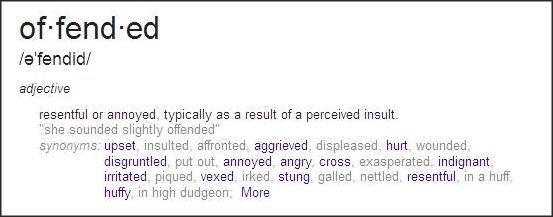
Have you ever noticed how some people get offended when we are disabled by, or get sick from something in the products they’ve used?
What’s up with that?
???
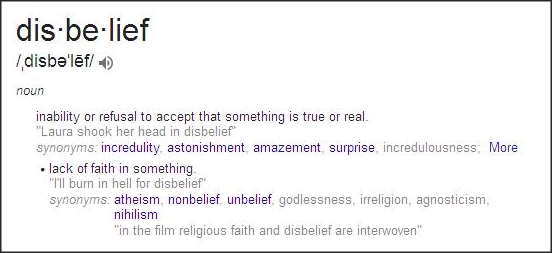
What about those who feign disbelief that we could be harmed by something they are using? Or that they could be using something that is harmful?
While I am not up to delving into the psychological and emotional intricacies of those responses here, or how industry pays big money to create them, I did come up with a few simple images with variations of the following text:
It’s not you! It’s not personal! It’s the chemicals!
Fragrances, personal care, and laundry products
contain toxic chemicals that make it impossible
for some people to be around those who use them.
Posted in Chemicals, Disability, Fragrance, Health, Human Rights, Public Health
Tagged Fragrance, indoor air quality, It's not personal, It's not you, laundry products, MCS/ES, multiple chemical sensitivities, multiple chemical sensitivity, personal care, personal care products, petrochemicals, sensitive to pollution, toxic trespass
If you haven’t seen the documentary Toxic Hot Seat yet, you (probably) don’t know what you’re missing! If you read the Chicago Tribune’s award winning series “Playing With Fire” a couple of years ago, then you do have an idea of what the film is about, but it is still very worth watching. We all need to understand the implications of what is discussed in this film. It affects each and every one of us.
‘Safer Chemicals Healthy Families‘ are streaming the film for free until December 7, 2014. Check out their website for all kinds of great info and actions you can take!
Sign up here to receive the link to watch the film.

Here are resources and an infographic on how to address flame retardants at home:
The ideas and photos I am sharing are not designed specifically for people with MCS/ES, but they can be easily adapted to meet our needs.
The majority of people who celebrate Christmas do it with decorations, parties, and gifts, perhaps with a visit to church, if possible. For people with MCS/ES, all of these traditions, as currently practiced, can be seriously problematic, if not downright impossible.


Please watch this important and very well done new video by Dr. Bruce Lanphear, where he discusses chemicals and other toxins that affect brain development in children (and can cause MCS/ES symptoms in others) and what we need to do about it.
Little Things Matter: The Impact of Toxins on the Developing Brain
∴
Here’s a longer video presentation by him from Autism Canada
Excavating Environmental Risk Factors for Autism: Suspects and Strategies
Posted in Autism, Brain, Chemicals, Environmental Health, Neurotoxicity, Pollution, Pregnancy, Toxic Trespass
Tagged blood brain barrier, body burden, brain development, Bruce Lanphear, child health, EDCs, environment, exposures, lead, Little Things Matter, MCS, mercury, pesticides, petrochemicals, phthalates, Research, sensitive to pollution, smoke, toxic chemicals, toxins
Dr. John Molot is a doctor who sees patients with complex, chronic, environmentally linked, and often disabling, health conditions. Although he is retiring from private practice, he is still a staff physician in the Environmental Health Clinic at Women’s College Hospital in Toronto.
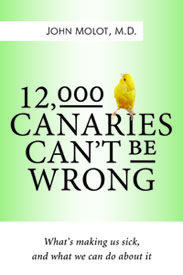
He recently released a book, “12,000 Canaries Can’t Be Wrong“, wrote a report in support of the Ontario Centre of Excellence in Environmental Health (OCEEH), and appears in a video presentation about the health effects of common chemical exposures (see below).
Check these out:
12,000 Canaries Can’t be Wrong
What’s making you sick & what can you do about it
Posted in Chemicals, Disability, Environmental Health, Fragrance, Health, MCS/ES, Pollution
Tagged allergies, autism, canaries, cancer, chronic illness, Dr. Molot, environment, fibromyalgia, health care access for people with MCS/ES, Human Rights, indoor air quality, MCS/ES, multiple chemical sensitivities, OCEEH, petrochemicals, sensitivities, toxic chemicals
Here’s a good three minute PSA from Frederick Community College about going fragrance-free:
∴
More resources:
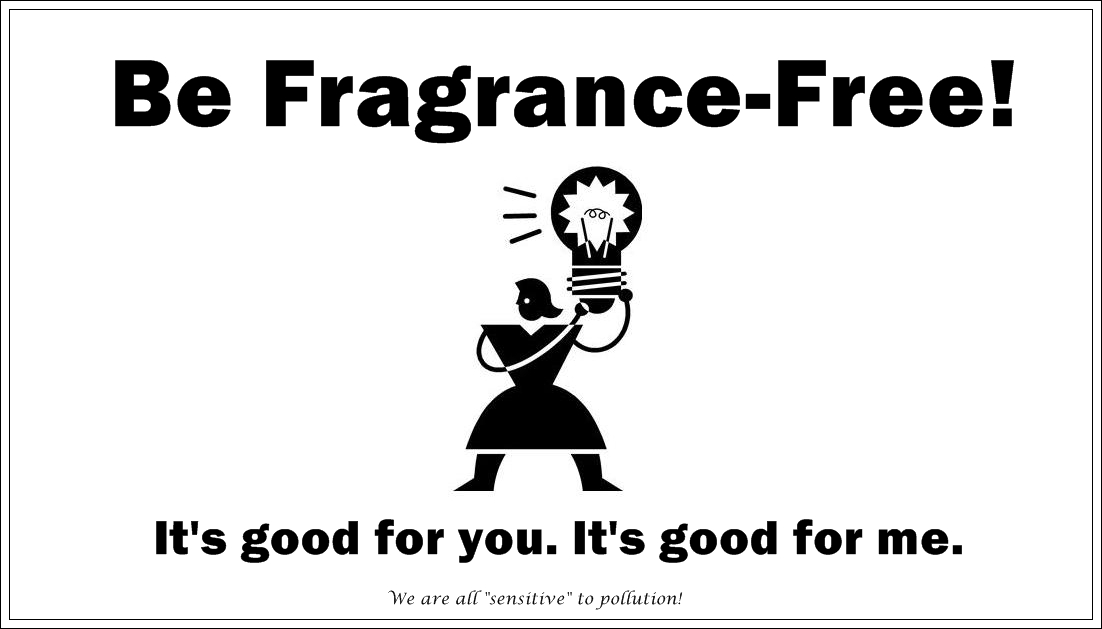
Fragrance chemical pollution is as harmful as smoke, and has serious short and long term impacts on health and productivity.

I’ve created a Research PAGE with links and downloads to a variety of scientific offerings and resources, especially for those who want more published “proof” that MCS is “real”.
May your friends, family and medical professionals be reassured by the evidence.
“In other words, though work to reduce toxic chemical exposures can be viewed as quite distinct from efforts to address EMF exposures, both EMFs and EDCs can disrupt the critical signaling systems in the body and lead to problematic health endpoints.”

written by Elise Miller, MEd
CHE Director
 As you probably remember from your high school biology class, our bodies function using electrical impulses to communicate between cells, such as telling your heart muscles to contract or signaling your brain that you just stubbed your toe. Since everything relies on these signals, any breakdown or disruption in your body’s electrical system can become a real problem.
We also know that certain toxic agents, such as endocrine disrupting chemicals (EDCs), can alter our bodies’ hormonal messaging systems (which, by the way, uses electrical signals to communicate). When exposures to these chemicals, even in tiny amounts, happen during critical windows of development, then a wide range of health problems can result over a person’s lifetime.
So what do EDCs and electromagnetic fields (EMFs) have in common? As Henry C. Lai, professor of bioengineering at the University of Washington in Seattle and an expert…
View original post 434 more words
Posted in Chemicals, EMF, Environmental Health, Health
Tagged EHS, EMF/EMR, endocrine disruption, living with MCS / ES, wireless

The following sound-video is 6 1/2 minutes long and adds some detail to one of the health challenges described in
A Story That Needs To Be Heard: Part 1
(please listen to Part 1 first, if you can)
Here is Part 2
Posted in Brain, Disability, EMF, Environmental Sensitivities, Health, Wireless
Tagged disability, discrimination., EHS, EMF, frequencies, Housing, Lyme Disease, MCS, MCS/ES, multiple chemical sensitivities, new products, noise, sensitivity, sound, wireless, wireless dangers
 | linda @ Seriously "S… on MCS/ES |
| linda @ Seriously "S… on The CDC and MCS |
 | Tabatha Schnorr on MCS/ES |
| Tabatha Schnorr on The CDC and MCS |
| linda @ Seriously "S… on MCS and Housing |
| linda @ Seriously "S… on Hospital Protocols for People… |


 Seriously "Sensitive" to Pollution